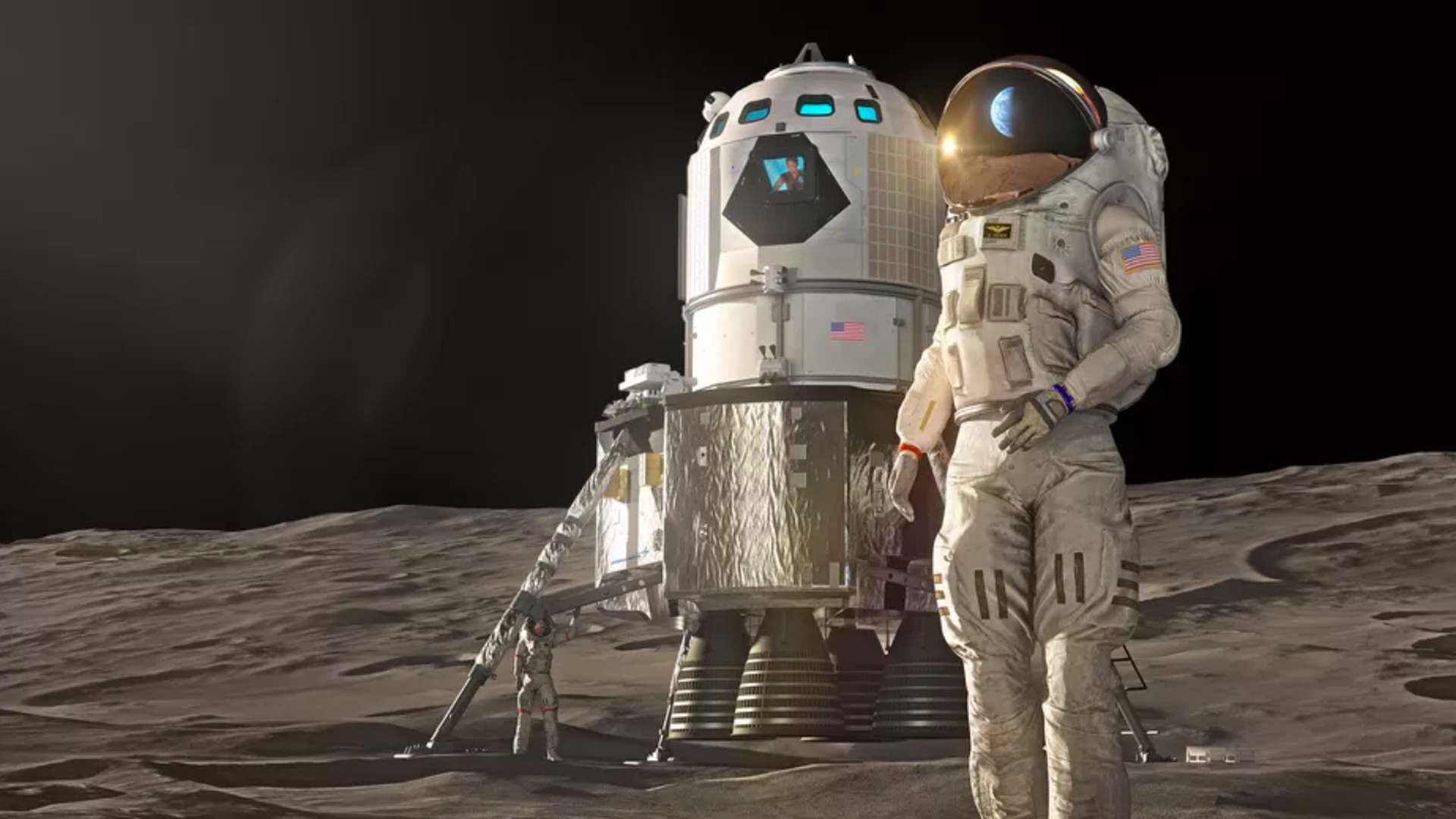
Lockheed Martin has a plan to get NASA astronauts back to the surface of the moon by 2024, the company revealed during the National Space Symposium in Colorado last week.
The bottom line: The plan would take its Orion Multi-Purpose Crew Vehicle — which the government contractor has been developing for the better part of a decade for previous space exploration plans — and direct it to the moon.
Details: The plan would require a test flight of the Orion with its European Service Module on NASA’s Space Launch System rocket in June 2020, with the first crewed test flight in late 2022.
- Between the 2 flights, NASA would need to create what Lockheed Martin is calling the Phase 1 Gateway — a small habitation module and propulsion module in orbit around the moon that Orion would dock with.
- In 2024, NASA would need to launch a moon lander to the Gateway, and from there a crew could launch to the Gateway and then land on the lunar surface.
Yes, but: It's not clear if NASA will take Lockheed Martin up on its proposal.
- The agency hasn't revealed a specific plan to get back to the moon by 2024, but officials are having conversations with the private sector to determine how to accelerate their timetable.
- NASA is looking to hedge its bets against further delays in the development of its SLS mega-rocket. As a substitute, the agency looked into using a commercial rocket, like SpaceX's Falcon Heavy, or United Launch Alliance's Delta IV Heavy to launch the Orion.
What to watch: NASA says it will need help from commercial partners to make the 2024 landing deadline a reality.
But, but, but: If NASA wants to use Lockheed's architecture, the space agency will likely need to start funding it now.
What we're hearing: Other experts have told Axios that a near-term funding ramp-up is vital to accomplishing the 2024 target, with or without Lockheed's participation. To that end, NASA administrator Jim Bridenstine is preparing a new funding request to Congress for the lunar program.