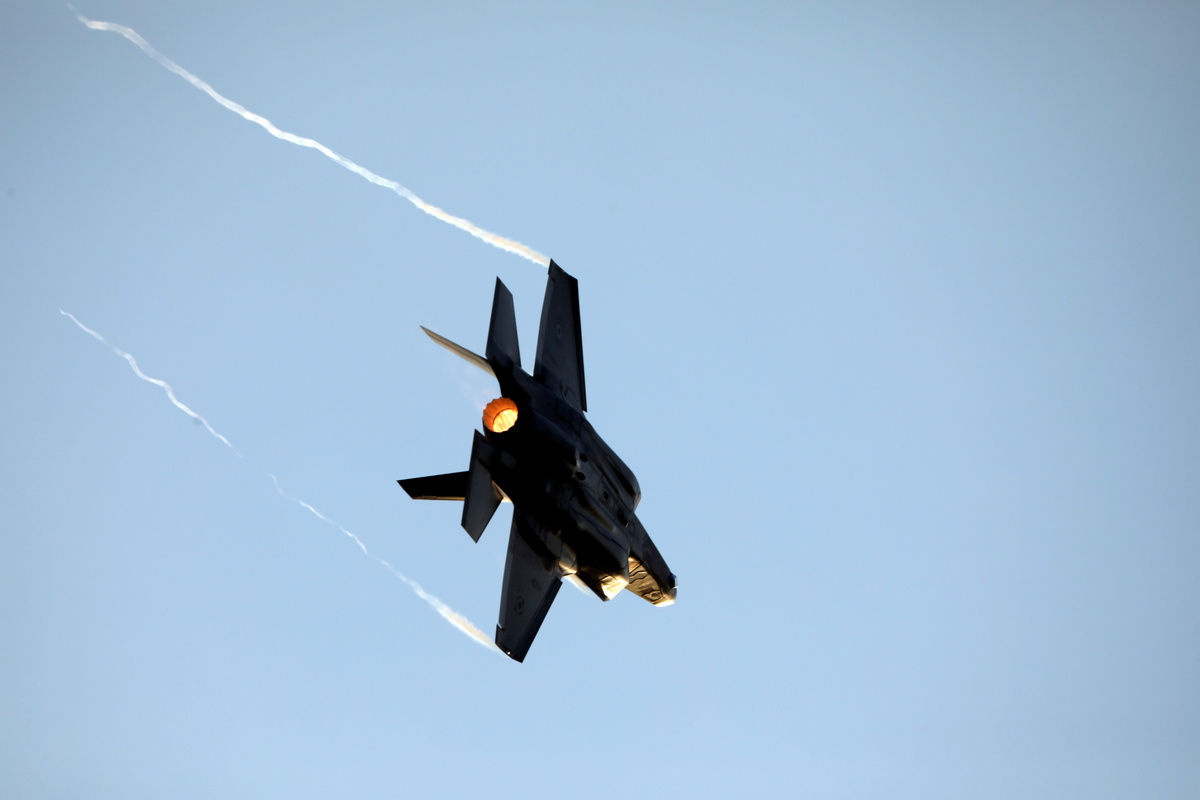
AVALON, Australia (Reuters) - Lockheed Martin Corp expects it will take around 15 to 20 years to bring the cost per flight hour of the F-35 below fourth-generation fighter jets such as the F-16, the head of the F-35 programme said on Wednesday.
The U.S. Air Force, the largest global customer for the F-35, has launched a push to drive down the cost of flying and servicing F-35s to the same levels as current fighters without stealth capabilities.
Lockheed Martin Vice President and General Manager F-35 Program Greg Ulmer said there was an effort to lower the cost per flight hour to $25,000 (18,879 pounds) by 2025 but further savings would take longer.
"Today it is different customer by customer but I think $35,000 per flying hour is a good number," he told Reuters in an interview at the Australian International Airshow.
"If we project that out based on the initiatives we have in place, we believe as we move out to the 2035-2040 timeframe we can get that cost down to under what a fourth gen is today," in the range of $20,000-25,000 per flight hour.
Initiatives involved in lowering the cost to $25,000 an hour include reducing the number of mechanics needed to support each plane, Ulmer said.
Lockheed is also looking to refine diagnostic systems to reduce false alarms as well as to ensure there are proper spare parts available for maintenance and repairs.
Lockheed Martin Vice President and General Manager Training and Logistics Services Amy Gowder said the United States had been late to install enough capacity for F-35 repairs due to delays in funding approvals.
"The U.S. has been very slow to fund that in the depots specifically like Hill Air Force Base," she said. "They should have started those projects a few years ago."
That was becoming increasingly problematic as more planes were added to the fleet, Gowder said.
"When you have 180 aircraft it is probably okay. Now we have 300. It is the scale of the volume increases which is why there is a concern," she said.
"That is putting more pressure on the supply chain in the near term."
The U.S. Air Force did not respond immediately to a request for comment outside usual business hours.
Operating costs were a big issue when military officials from the United States, Israel and F-35 user nations in Europe - Britain, Italy, Norway, Denmark, Turkey, the Netherlands - met in Germany in September last year.
Experts say the U.S. Air Force could cut back its planned purchases of the aircraft unless it can lower the flying costs.
(Reporting by Jamie Freed; additional reporting by Mike Stone in Washington; Editing by Stephen Coates)