The decline in South Korean visitors to Japan continues unabated, spurred by the deterioration in bilateral relations.
The number of South Koreans who came to this nation in October fell 65 percent from a year earlier to a near-record low, and the number of foreign visitors to Japan overall also declined. This has dealt a significant blow to the aviation and tourism industries of both Japan and South Korea, and there are calls for Japan to increase the number of visitors from a wide range of regions to reduce its dependence on neighboring countries, which is greatly affected by political risks.
Zero regular flights
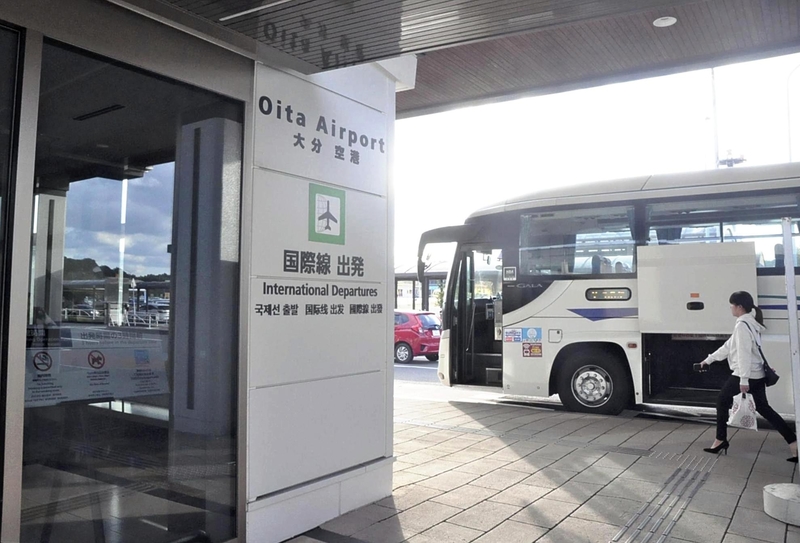
The international terminal at Oita Airport in Kunisaki, Oita Prefecture, was crowded with South Korean passengers until this summer. On Tuesday, however, the entrance was locked because South Korean low-cost carrier (LLC) T'Way Air suspended all flights connecting Oita and three South Korean cities in August. At present, the airport has no regular international flights.
The drop in passengers at Oita Airport is huge when you consider the fact that international passengers there reached a record of about 140,000 in fiscal 2018. The airport spent about 1.3 billion yen to expand the terminal, only to close it three months later.
Sometimes there are no passengers on the bus bound for Yufuin Onsen hot spring.
"We plan to keep the route, but as things stand, it won't be profitable," said a spokesperson of operator Kamenoi Bus Co. based in Beppu in the prefecture.
Many South Korean tourists flocked to Oita Prefecture for hot springs or golf, accounting for about 60 percent of all foreign visitors to the prefecture.
"Since July, the number of South Korean visitors has decreased by about 90 percent compared to last year," said Taichiro Hayashi, 44, president of the Sekiya Resort Group, which operates ryokan inns in Beppu.
According to the Land, Infrastructure, Transport and Tourism Ministry, the number of international flights scheduled between Japan and South Korea in winter (from the end of October to the end of March 2020) was 707 a week, down more than 40 percent from the summer (from the end of March to the end of October).
Flights at 16 airports, including Oita Airport, between Japan and South Korea have been reduced or suspended, with local airports feeling the effects most.
The decline in the number of travelers has also had an impact on South Korean airlines, with that nation's six major airlines reporting a net loss for the July-September quarter. Air Seoul, an LLC affiliated with Asiana Airlines that has 12 branches in Japan, decided to suspend operations at six branches, including one in Toyama. People concerned lament that the hurdles are high for restarting those flights.
Dependence on China risky
Amid the drastic decline in South Korean tourists, visitors from China have become increasingly important. The number of Chinese tourists to Japan hit a record high of 730,000 for October, accounting for about 30 percent of the total.
However, there are risks in relying on China. When Japan-China relations deteriorated after Japan nationalized the Senkaku Islands in 2012, the number of Chinese visitors to Japan fell below the previous year's levels for about a year.
To avoid depending on visitors from South Korea and China, where worsening bilateral relations can easily affect the tourism industry, Japan needs to increase the number of visitors from the United States, Europe and other countries. Although those countries are far from Japan, visitors from there are likely to stay long-term and they tend to buy more.
Visitors from Britain and Russia in October set a record for the month, apparently due to many of the Rugby World Cup participants being from distant locations. According to a Yomiuri Shimbun survey, the average length of their stay reached 18 days. Consumption including food and drink is said to have exceeded 100 billion yen, making the case a tourism model for the future.
Read more from The Japan News at https://japannews.yomiuri.co.jp/