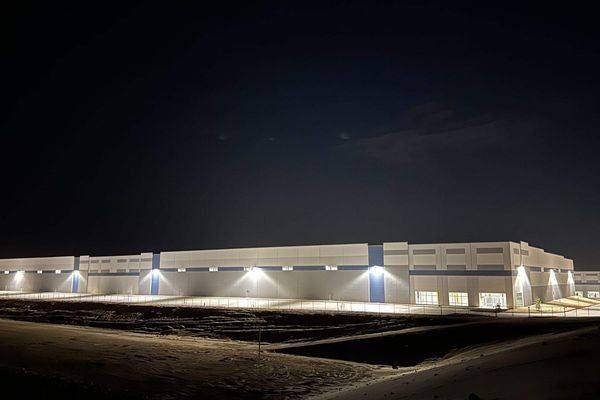
'I'm [still] sitting in the railway station' ...
Commemorating Paul Simon's resourceful
use of British Rail's creative timekeeping.
Photograph: Don McPhee
Some cities take their pop heritage seriously. Hamburg, for instance, is about to cement its connection with a certain band by its own Beatlesplatz. A local radio station recently launched a campaign to raise money for what sounds like an attraction that will be well worth visiting: lifesize statues of the Fab Four, and one of Stuart Sutcliffe, will be planted atop a giant vinyl record in the centre of their old stamping ground, the Reeperbahn, the whole tableau encased in bullet-proof glass to deter super-fans from scampering away with one.
Hamburg's effort on behalf of a band that wasn't even German ought to shame British cities, which are reluctant to celebrate their own heroes. With the exception of Liverpool and its Beatles industry, and London, with its smattering of blue plaques, most places don't big up their famous pop sons and daughters. Perhaps it just doesn't occur to local councils to highlight whatever bit of rock eventfulness happened on their patch. However, they're really missing a trick.
There's hardly a town in the country without its own piece of music history. Places you wouldn't expect to feature on the radar - because they're not Manchester or Leeds or Glasgow - are actually full of connections, and when you think how keen local authorities are on "rebranding," it's surprising they haven't jumped at the chance to amp up their tourist appeal. Fans will come on the flimsiest of excuses, as witnessed by the fact that Widnes station gets Americans romantically pacing the platform because Paul Simon wrote Homeward Bound there while waiting for a train.
Bradford could be exploiting its links to agit-rockers Fun-Da-Mental, New Model Army and Terrorvision. Sunderland has produced an inordinate number of successes for a place its size, including Dave Stewart, the Futureheads and the Kane Gang. Sheffield, the hotter-than-hot home of the Arctic Monkeys and Long Blondes, and with a history that includes Pulp and the Human League, should be right up there with Liverpool, offering bus tours and suchlike. A few years ago, the city did open a Lottery-funded pop museum, but this rather ignominiously closed after failing to attract enough visitors. Where they got it wrong, of course, was in associating rock'n'roll with a "museum". Far better, possibly, to have directed visitors to the site of the disco where the Human League's Phil Oakey met Joanne Catherall and Susan Sulley and invited them to join his band. And imagine (I'm not kidding) what a statue of ex-Atomic Kitten squeaker Kerry Katona - realistically styled with satin basque and pinched smile - could do for her home town of Warrington.