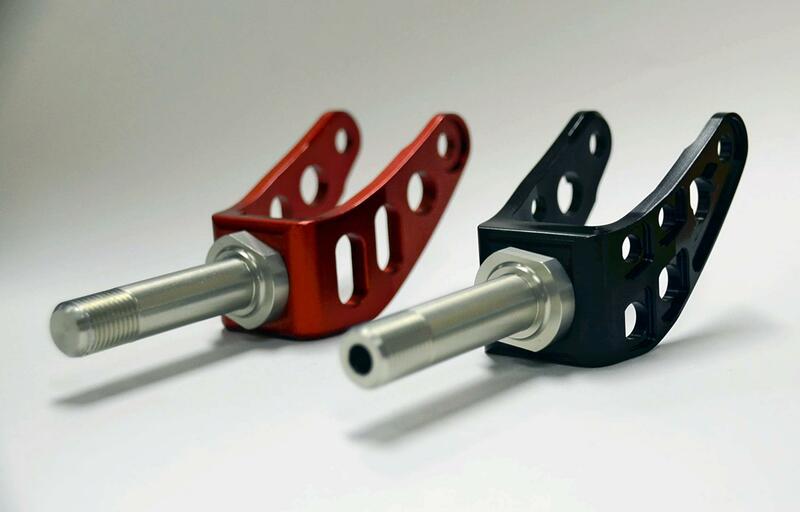
Craftsmen in Tokyo's factory district in Ota Ward have been pooling their efforts to improve components of wheelchairs used by the Japanese wheelchair basketball team. Items related to the casters, three to four small wheels attached to each wheelchair, have been newly designed and manufactured to be much lighter while still maintaining their integrity.
-- Lateral cooperation
According to the ward's industrial promotion organization, the "fork" and "shaft"-- metal fittings that support the casters -- have been improved. To improve maneuverability, the usual steel components were replaced with a lighter aluminum alloy, and they were designed in such a way as to reduce the weight to about half -- 59 grams -- of a conventional product.
About 110 units have been delivered to a wheelchair manufacturer in Gifu Prefecture, from which about half of the nation's athletes procured the wheelchairs they use.
The ward's factories are characterized by their advanced technology and the lateral ties between them. They have collaborated to produce many products for the global market, including the creation of a bobsled for the 2018 Pyeongchang Winter Games.
-- Lightweight yet sturdy
The project to produce wheelchairs for athletic use began in 2017 as a part of a promotion by the metropolitan government to develop sports equipment for the disabled through regional cooperation. In collaboration with a Gifu Prefecture wheelchair manufacturer with ties to many top athletes, the association began designing parts and creating prototypes at factories in Ota Ward.
In March of the following year, a wheelchair equipped with the new parts, the "Ota Tokyo Model," was unveiled.
Since 2019, at the Gifu manufacturer's request, development has been focused on the casters. In response to the Games' one-year postponement, the project worked to further reduce the new parts' weight by a few more grams.
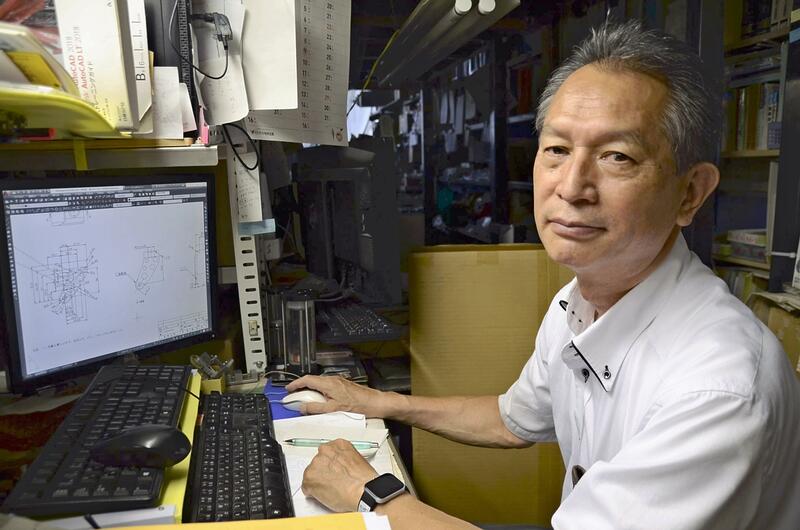
"We increased [the number of] holes in the fork and processed the metal to be thinner. We also hollowed out the center of the shaft, making it lighter while still maintaining its integrity," said Mitsuyoshi Kaseda, 68, who was in charge of the design.
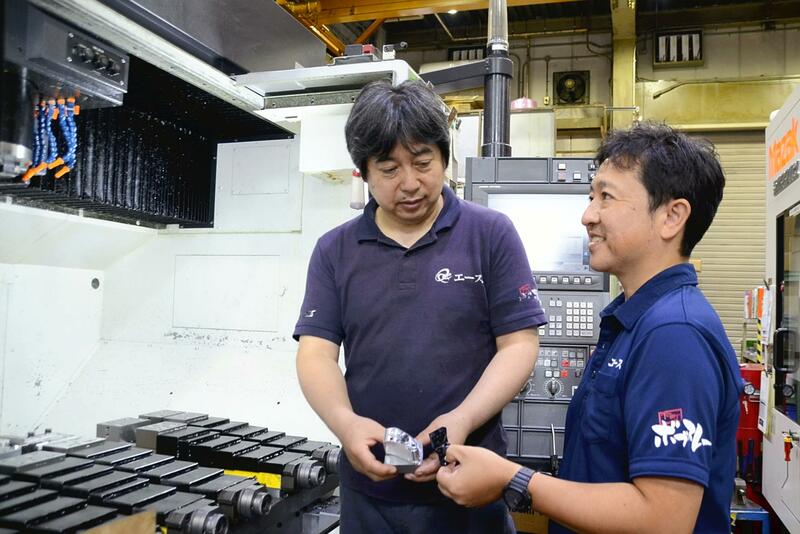
The shaft was processed by a metal processing company in the ward. "We hope [our] parts will bring out the athletes' best performance," said company president Toshikazu Funakubo.
-- Labor of love
As the craftsmen were unable to go see the athletes try out the products for themselves amid the coronavirus pandemic, they instead received video messages in which the athletes gave their impressions of the item this spring.
"I felt like I could turn faster and get a better start," said Akira Toyoshima, while Reo Fujimoto commented, "It's lightweight and durable."
The local government also gathered messages of support from the craftsmen and delivered them to the athletes.
Osamu Nishimura, 50, president of the metal processing company that processed the forks, offered his hope for the team's success, saying, "It took quite a bit of effort and time to arrive at this finished product, but making the athletes happy was our number one goal. All of us here are rooting for the team."
The inclusion of the improved parts in sports wheelchair catalogs from here on out is under consideration.
Read more from The Japan News at https://japannews.yomiuri.co.jp/