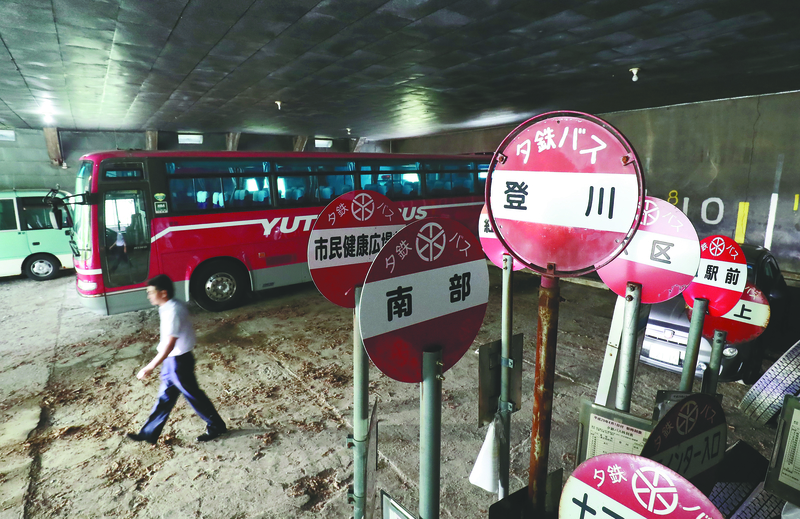
More than 10 bus stop signs remain at the Yutetsu Bus parking area in Yubari, Hokkaido -- set up along two routes that the company terminated in October last year.
"It was partly due to a decline in the number of passengers, but we also couldn't secure enough drivers," said 58-year-old Akihiro Harada, the chief of the Yutestu Bus Yubari branch office.
There used to be 33 drivers at the branch office 20 years ago, but the number has declined to 13, with an average age of 58. The Yubari branch line of the JR Sekisho Line will be decommissioned in April next year, and the closed route taken over by Yutetsu Bus.
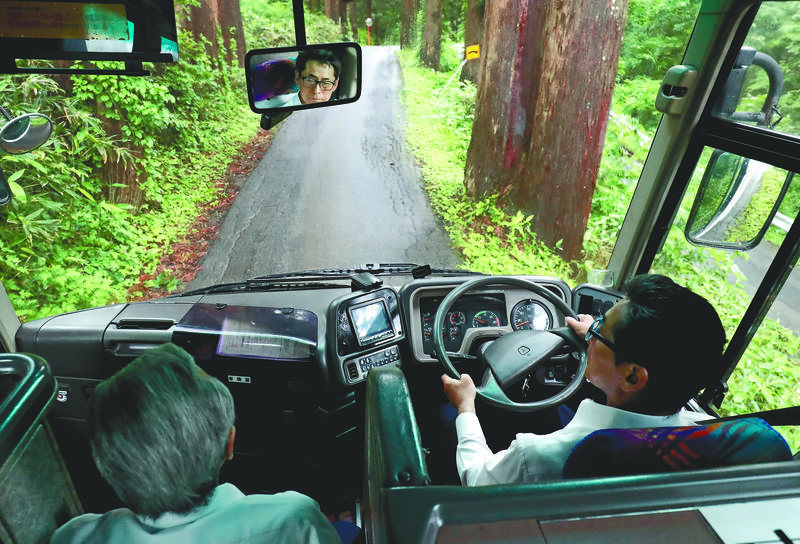
"We're hanging in there with the sole determination of supporting local passengers," said Harada, who also drives buses. "When I see the familiar faces of elderly women, I'm determined to work hard again."
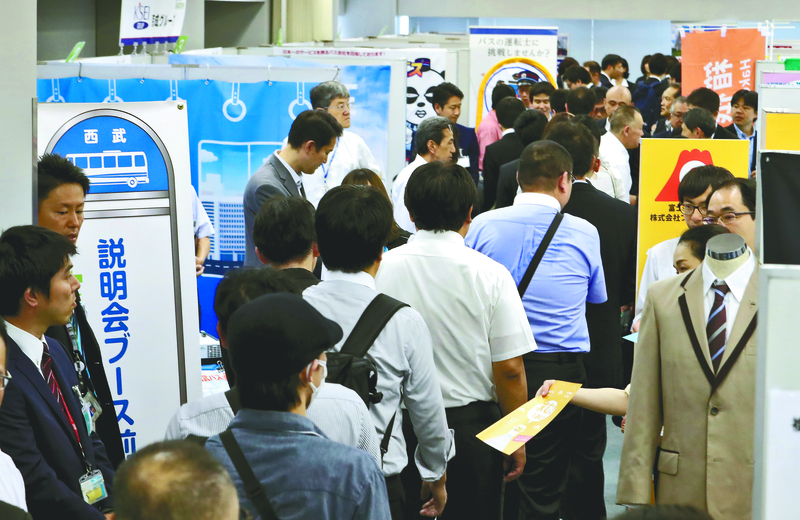
The shortage of bus drivers is a serious problem, particularly in rural areas. According to a Land, Infrastructure, Transport and Tourism Ministry survey conducted in 2016 on 350 bus companies across the country, about 81 percent said they suffered from a driver shortage, and about 17 percent of them said they had no choice but to consider reducing the number of services or canceling or suspending routes.
The bus industry is working to address the problem. In spring last year, seven local bus companies and two municipalities made investments to establish a vocational school in Tsuruoka, Yamagata Prefecture. The school is aimed at people who are licensed to operate large buses, and teaches techniques and imparts knowledge on how to drive bus routes.
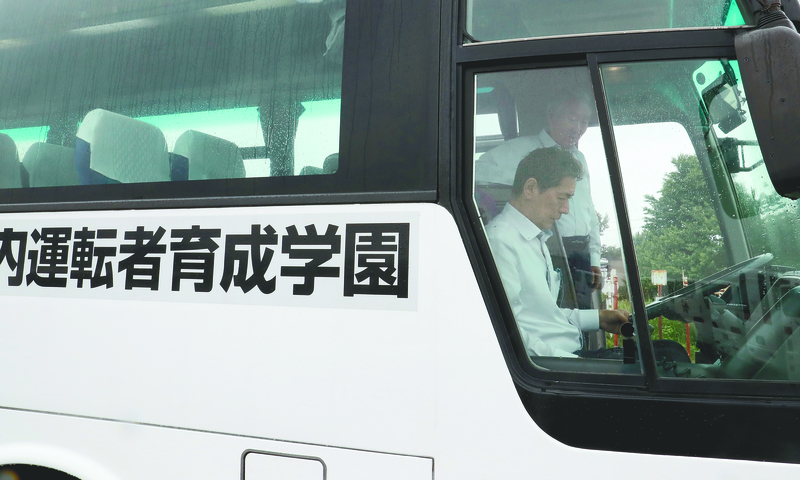
School principal Kaoru Kobayashi, 62, said: "There's demand for buses to transfer children as a result of the elimination and consolidation of elementary and junior high schools. The number of tourists is also increasing. We want to train drivers who will contribute to our community."
Hamamatsu-based Enshu Railway Co. began actively hiring female drivers in 2014, and today 30 of about 600 Enshu bus drivers are women. According to the transport ministry, the percentage of female bus drivers was 1.7 percent in fiscal 2016.
Driver Kozue Fukada, 36, who came to pick up her 1-year-old son at a nursery school, said: "It's hard to be a driver while raising a child. But my dream is to be the bus driver for my son's school excursion someday."
Read more from The Japan News at https://japannews.yomiuri.co.jp/