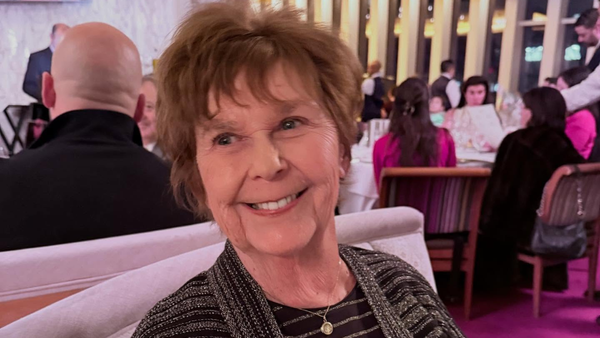
Tougher bail measures for accused domestic violence offenders proposed by the Queensland opposition after the death of Teresa Bradford were already available to police prosecuting her husband, legal figures say.
The Gold Coast woman was allegedly murdered by her estranged husband on the Gold Coast last week. David Bradford was on bail on charges of assaulting and choking his wife and it has prompted a push to make it harder for alleged domestic violence offenders to gain release from custody.
Tim Nicholls, the Liberal National party leader, said the opposition would table a bill that put the onus on alleged perpetrators to prove why they should be released.
However, a police document seen by Guardian Australia suggests David Bradford could have been placed in a show cause position when he applied for bail this month after spending 44 days in custody over an alleged attack on his wife in November.
In the objection to bail affidavit, police said he had used a knife and box cutters during an incident in which he taped his wife’s mouth shut, threatened to kill her, and beat her so badly she “lost control of her bladder and bowels”.
However, police did not mark a box on the form noting that a weapon was “used, or threatened to be used”, which under section 16 of the Bail Act could have forced Bradford to show cause. Bradford is believed to have killed himself after taking his wife’s life while their children were present at the family home in Pimpama.
The president of the Queensland law society, Christine Smyth, told Guardian Australia: “In the Teresa Bradford matter, there was a weapon used and where a weapon is used, that is a show cause aspect.”
However, Smyth opposes any move to place all alleged offenders in show cause positions for bail, saying it would slow the progress of 23,000 domestic violence applications heard by already overworked courts each year.
Bail changes would not address the root causes of domestic violence, which needs increased government funding for anger management programs, drug and alcohol rehabilitation, and mental health services for offenders and victims, she said.
The LNP also wants to legislate an alert system so alleged victims would be told when bail or parole was being considered for the accused.
Teresa Bradford was scared for her safety and wanted to relocate with her four children but was not told of her husband’s release until after the bail hearing, her friends have said.
“I owe it to all those people who have died, I owe it to my kids, I owe it to all Queenslanders to act,” Nicholls said on Sunday.
Nicholls said of victim alerts that “unbelievably there is currently no legislative provisions to allow this to occur in Queensland”. Victims are currently informed at the discretion of police, or sometimes via the Working Against Violence Support Service or Legal Aid.
Sonia Anderson, whose daughter Bianca was murdered by her partner at the age of 22 in 2010, said she hoped “politicians from all sides support the LNP’s legislation”.
“It just needs to stop, I don’t want any parent to have to go through what I have been through,” Anderson said.
“It is what is needed and it is the right thing to do.”
Smyth said victim alerts were “supposed to already take place and victims should always be told of the bail status”.
The proposed changes to obtaining bail were “really an approach which says, ‘let’s put all our resourcing into punishment’, when in fact the lens should be on the prevention and supporting people through this process”, she said.
“Our hearts and minds go out to the families affected by domestic violence every day and particularly in this case, it is without a doubt a tragedy.
“In the wake of these type of incidents, I can see the attraction of people looking for solutions because it’s so confronting.
“But they are not achieved by pouring resourcing into the punishment. Offenders in these circumstances, who often face mental health issues, are not thinking of the consequences of their actions.
“The solutions have to be well considered and they are complex. And these simple suggestions, which have an appeal, in the long run cause more damage than they solve.”
The decline in free legal representation to low-income victims and offenders through a 30% cut in federal funding to community legal centres from July was a further “recipe for disaster”, Smyth said.
A “flood of self-represented litigants” – when coupled with the proposed bail changes – would lead to longer, contested matters that would further clog the courts, she said.
Smyth said a positive legislative reform could take place around a formal process of keeping a magistrate informed of any change in a defendant’s mental health condition, which was not currently in place.
David Bradford at the time of his arrest had checked himself in to a Gold Coast hospital mental health unit, according to the document submitted by police when they successfully opposed bail in November.
They asked he be kept in custody “for his own welfare and the welfare of his family”. He took medication for depression and “left several notes for the victim stating that he ‘wished he died’”, they said.
“Given the defendant’s fragile mental state he is an unreasonable risk of causing self-harm or harm towards others.”
Smyth’s concerns about bail changes were backed by the Queensland council for civil liberties, which said they would mean more overcrowding in prisons and “further aggravate the problem” of false domestic violence accusations in family court disputes.
Terry O’Gorman, The vice-president of the Queensland council for civil liberties, said the bail changes were “unnecessary and would see alleged perpetrators spend many months on remand before their cases are heard, some of whom will be found not guilty”.
He said denial of bail was a significant factor in overcrowding of Queensland jails.
While Bradford’s death was a tragedy that could not be ignored, one case was not enough to show “a systemic problem with the domestic violence bail system”, he said.
“False allegations of domestic violence are frequently made including to advance the Family Court cases of warring spouses.
“Shifting the onus of proof on domestic violence bail hearings will further aggravate the problem and cause innocent domestic violence accused to spend many long months in jail only to be acquitted or have the case later dropped.”