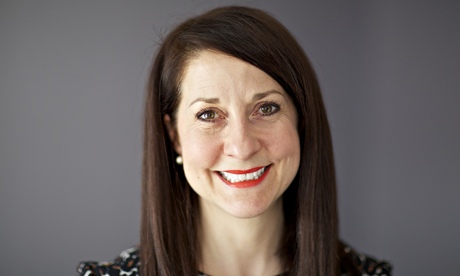
After just one term as an MP, Liz Kendall already attends Labour’s shadow cabinet meetings, as shadow minister for care and older people. It’s a sign of her stock in the party and importance to Ed Miliband of her brief. Her knowledge of health policy and refreshing ability to talk plain English rather than NHS wonkspeak makes her an articulate advocate of Labour’s 10-year plan for the NHS, to offer “whole-person care” through the integration of health and social care services in England. She helped Miliband and the shadow health secretary, Andy Burnham, launch Labour’s health manifesto this month in Pudsey, Yorkshire, and is mentioned as a possible contender for the role of health secretary if Labour wins the electionand Miliband puts Burnham in a different job.
A huge fan of the NHS – “it’s the embodiment of British values and Labour values” – she also believes it needs to change. A couple she met while campaigning locally illustrates why, she says. “It was a mum and dad in a park with their kids. The dad hadn’t wanted to talk, really. But he came to see me a while later at one of my community drop-ins. He was really upset and told me that his wife had diabetes and had had a foot amputated because of that. They’d needed a grab-rail so she could have a bath. But it hadn’t turned up for nine months. She’d ended up going into hospital [again] and when she came out, things had changed and she needed a wetroom downstairs. But when they finally came round to instal it, it was four days after she’d died. I don’t know if that situation could have been prevented, but I’m pretty damn sure it could have been.
“It’s an example of how our NHS and care services are still focused on the old challenges and problems, and not on what we face now. In 1945, life expectancy was 65, people died from infectious diseases and accidents, so a hospital-based model was what was absolutely required. Now it’s long-term conditions and people living much longer. If Aneurin Bevan was alive today and had to create a health system fit for the future, it would be a national health and care service, and it would be predominantly focused in the community, about prevention – one fully joined-up service, which is better for people and better value for money for taxpayers.”
“It’s our mission as a party to create that national health and care service, because people are frightened about the future and frightened about the future of the NHS. My mum said to me last week, ‘Liz, old people are scared of getting ill’,” she adds.We meet the day David Nicholson, the NHS’s former chief executive, has warned that all political parties are ignoring the true scale of the NHS’s growing financial mess. While he was right to do so, she finds it “extremely frustrating” that much-needed reform of the way the NHS operates has been largely absent from the health debate in the run-up to 7 May.
“The NHS needs to change fundamentally. It’s a fragmented service when it should be joined-up. It’s a last-minute crisis intervention service when it should be about prevention. It’s a sickness service when it should have promoting health as its core. Crucially, it doesn’t do enough to help people to help themselves,” she says. Yes, she admits, she does want people to take more personal responsibility for their health, discussion of which often leads to claims that poorer people are being stigmatised. “I’ve got 35,000 people in Leicester who have three or more long-term conditions, and they are under 65,” Kendall exclaims.
Implementing Labour’s 10-year plan will see a lot of hospital activity being done elsewhere. “The hospital of the future will start in people’s homes,” she says. “I don’t think we want to think so much about buildings. I’ve seen phenomenal work in Leicester where people with chronic obstructive pulmonary disease use telecare to measure their own oxygen levels, and if they need to change their meds they get a phonecall from a nurse who has seen the results of their readings. So we will have more district and community nurses supporting people at home.”
But will a culturally conservative organisation like the NHS be able to deliver the transformation envisaged? “I see some of the most radical thinking in the NHS, and some of the most conservative thinking,” she replies. She defends Labour’s risky decision not to guarantee the NHS the extra £8bn a year more by 2020 that NHS England boss Simon Stevens has asked for. “We aren’t going to try and con people by making a promise when we can’t show exactly how it’s funded. The Liberal Democrats and the Tories [who have pledged it] have not said where that money is going to come from, and it will not wash with people. We’ve said an extra £2.5bn [a year] and where that’s going to come from. We do need more money into the NHS, but it must be tied to reform.” Stevens, like her an ex-Labour adviser, may find that uncomfortable.
While Labour sees integration of health and social care as an urgent national priority, it would not compel it through legislation. So how could the party ensure it did happen? Personal care budgets, and replacing some NHS tariffs with new integrated year-of-care budgets would concentrate minds, and make the relevant organisations follow the money and thus work together, Kendall believes. She is much taken with the rollout of personal budgets among people with mental health conditions in Northamptonshire. “I am a strong champion of personal health and social care budgets. They are only controversial because people don’t understand they are a way of ensuring a publicly funded health service delivers truly personalised care and support.”
She denies flatly that Labour’s integration plan would involve another top-down reorganisation of the NHS, a fear voiced by King’s Fund chief executive Professor Chris Ham and many others. “There no way on God’s fair earth that it would amount to another reorganisation. I don’t believe that. It’s the job of government to say, ‘This is our vision – one point of service, one team – but how you deliver that locally is down to you.’”
So financial incentives would force organisations to work together, but not to merge? Burnham has said that is how it would work. Kendall disagrees: “They may well do [merge] over time, and we’re already seeing some people do that.” She cites much closer working between some clinical commissioning groups and also health and wellbeing boards, which would become key NHS bodies under a Labour government.
Curriculum vitae
Age: 43.
Lives: Leceister.
Family: Partner, comedian Greg Davies.
Education: Watford Grammar School for Girls; Queens’ College, Cambridge, history BA.
Career: 2011-present: shadow minister for care and older people; May 2010-present: Labour MP for Leicester West; 2007-10: director, Ambulance Service Network; 2004-07: adviser to secretary of state for health, Patricia Hewitt MP; 2002-04: director, Maternity Alliance; 2000-04: senior researcher for health, social care and children’s early years, IPPR thinktank; 1998-2000 researcher for health inequalities, Kings Fund.
Public life: Member of the GMB, the Co-operative party and the Fabian Society.
Interests: Running, travel and travel writing, pub quizzes.