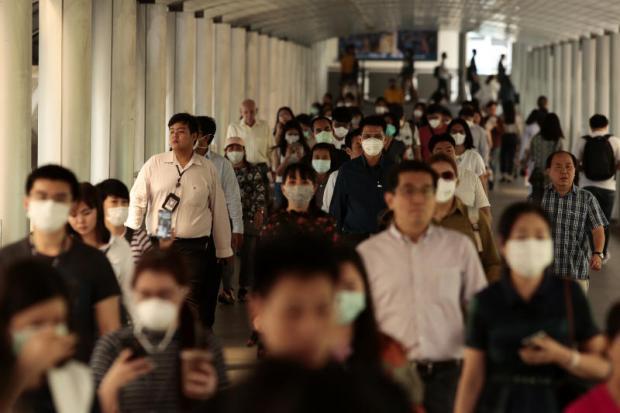
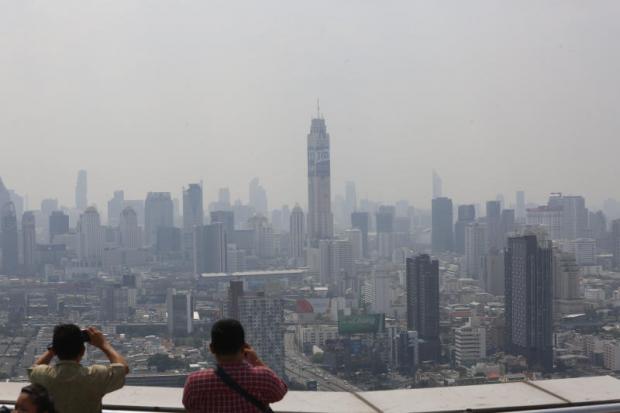
Although the PM2.5 crisis appears to have subsided in Bangkok, many parts of the country, especially the North and Northeast, are still suffering from poor air quality.
The minuscule air particles are known to have a drastic impact on health. Short-term effects include skin and eye irritation as well as other respiratory problems. But far more worrying is the fact that PM2.5 is a carcinogen -- a substance capable of causing cancer.
Indeed, while many of us are unaware of it, carcinogens are all around us, explains pulmonologist Dr Pratan Wateesatogkit. And prolonged exposure is likely to lead to malignancy.
What are carcinogens?
Carcinogens are present in all substances that can cause cancer. They can be derived from organic substances such as the nitrogen released by burning wood or charcoal. Carcinogens also include inorganic substances such as the heavy metals chromium, cadmium, lead and arsenic, which can be found in polluted air.
Generally, the two main sources of carcinogens are air and food. In the air, it comes from the exhaust fumes of vehicles, factories, industrial processes and construction sites, as well as UV radiation. In food, carcinogens are most commonly found in processed meat and deep-fried and grilled food. The recent PM2.5 crisis has raised awareness of airborne carcinogens, but we have long been exposed to them.
The International Agency for Research on Cancer (IARC), part of the World Health Organization (WHO), has classified substances into the following categories: Group 1 is substances known to be carcinogenic to humans; Group 2A is substances that are probably carcinogenic to humans: Group 2B is substances that are possibly carcinogenic to humans; Group 3 is substances whose carcinogenicity to humans is unknown; and Group 4 is substances that are probably not carcinogenic to humans. Particulate matter (PM) is in Group 1.
How long does it take for carcinogens to show their effects?
Carcinogens must accumulate for years before developing into cancer. However, studies show that people who are surrounded by smokers or living in a big city are more likely to develop cancer than those living in cleaner environments. So the environment one lives in is crucial. Even when the air quality improves, those living near busy roads should consider using air purifiers and wearing masks.
How does the human body react to carcinogens?
Once they enter the human body, leukocytes -- part of the body's immune system -- work to counteract them. However, in cases of more severe exposure, the carcinogens will attach themselves to cells which can induce gene mutations that often result in cancer and can cause deterioration of DNA-controlling cancers. The more they are destroyed, the higher the risk of cancer, which can develop anywhere in the body that is exposed to the carcinogenic substance. For example, PM2.5 can cause lung, liver and bladder cancer, while the larger PM10 particles can cause oral and throat cancer.
Cancer is a long-term effect. What are the short-term risks of carcinogen exposure?
The most significant short-term risk is lung disease. It affects the respiratory system and can lead to pneumonitis (inflammation of lung tissues), bronchitis (inflammation of the bronchial tubes) and allergies. These can especially occur in children and can result in adult onset emphysema, a type of chronic obstructive pulmonary disease characterised by shortness of breath.
Additionally, exposure to carcinogens in the air can lead to coronary heart disease and stroke. Short-term effects usually occur in those who already have problems with the lungs, heart or brain, with children and the elderly the most at-risk. Pregnant women are also vulnerable, as exposure to carcinogens can affect foetus growth or cause premature birth.
Which groups are most at-risk of cancer when exposed to carcinogens?
Children and adults under 30 are the highest-risk groups, as their cells have not yet completely developed. PM2.5 or other carcinogens can induce gene mutations more easily, whereas this is less likely to occur in those over 30. However, as stated previously, cancer will not be detectable immediately, as it takes approximately a decade until the symptoms become evident.
Today, cancer is most commonly found in people in their 40s. Carcinogens are more dangerous for adults who already have cancer. Those with a family history of cancer are also at heightened risk because of the chances of inheriting cell mutations from their parents. Those who work directly in polluted environments such as construction sites, factories or polluted outdoor environments also tend to be at greater risk.
How can we protect ourselves from the dangers of carcinogens?
Try to avoid toxic environments; don't smoke or stay outdoors for extended periods, and avoid traffic-congested roads. Always wear a mask when going out and avoid exercising or lifting heavy objects in polluted weather, as such activities cause you to inhale more deeply. Healthy foods, especially those high in vitamin C and antioxidants, are known to help. Do your best to stay fit and healthy; overweight persons tend to have less effective immune systems, and high fat-cell concentrations can cause inflammations which weaken the body.
Do you have any policy recommendations for dealing with this matter?
Activities that produce carcinogens should be controlled, including exhaust fumes from factories and diesel vehicles, and pollution from construction sites.
Since these are proven causes of cancer, they in turn increase state healthcare expenditure. The government should be serious about tackling this issue and take citizens' health into account. More pollution monitoring stations should be installed to cover all areas and air should be constantly monitored.