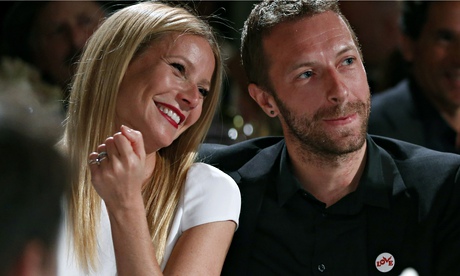
Katherine Woodward Thomas was on a yoga retreat last March in Costa Rica, trying to get away from it all to work on a new book proposal. What she didn’t know was that, thousands of miles across the globe, Gwyneth Paltrow and Chris Martin were in the process of announcing their divorce. As Woodward Thomas was perfecting her downward dog, a statement was being posted on Paltrow’s Goop website outlining the couple’s decision. It was headed “Conscious Uncoupling”.
Woodward Thomas, a psychologist based in Los Angeles, had never met Paltrow or Martin, but she had coined that same term some years earlier when the experience of going through her own divorce had led her to examine the ways in which separation could be made as amicable as possible.
“My inbox was flooded,” Woodward Thomas recalls. Within days, she had a book deal. The result – Conscious Uncoupling: 5 Steps to Living Happily Even After – is now about to be published and offers a self-help guide to ending a romantic relationship “without toxicity and only with mutual supportiveness”.
A licensed marriage and family therapist, Woodward Thomas has drawn extensively on her own experience. In 2004, she published Calling in the One: a bestseller which offered a 49-day programme to attract a lifelong partner. So when her own 10-year marriage ended in divorce in 2011, she readily admits she felt shame and embarrassment. “When I felt inferior for being single again, I asked myself: where’s that expectation coming from and who set the standard?” she says.
She started researching the historical roots of the “happy ever after” myth and discovered it gained currency in Venice 400 years ago, at a time when the average lifespan was 35 years and when the class system was so ingrained that many impoverished women aspired to escape it by marrying into a noble family. “It was a fantasy,” Woodward Thomas explains. “That’s what I’m challenging. We’re at a time when our lifespan has more than doubled, when we live in an upwardly mobile society where we aspire to personal development almost as much as marriage. We need to update the goal of the relationship.”
Woodward Thomas’s guide for ending a marriage with mutual respect is relatively straightforward on paper, if not in practice. She advocates building a post-divorce relationship with the care and thoughtfulness you would a marriage, placing ethics over emotion, putting the needs of any children at the core of a new partnership (she and her ex have a 14-year-old daughter) and accepting responsibility for your own failings without bitterness so that you can move on having learned as much as possible about yourself.
One way of doing this, she suggests, is “through the simple gesture of offering a blessing to our former partners” (she cites the example of a man who bowed to his wife as she was leaving him, as a gesture of respect for her decision). She also advises showing restraint in talking about the breakup, no matter how much rage you might feel. “When you speak disrespectfully of your former partner, you not only diminish that person but you diminish yourself as well,” she writes.
But what if one partner has been cheated on or physically abused? “That insult is so severe that you’re always going to demand amends,” she acknowledges. “But the amends don’t have to come from another person, they can come from yourself… You can promise yourself never to treat your own feelings as if they don’t matter: they do. Even if the breakdown of the marriage was 97% the other person, that gives you a 3% opportunity for growth. That’s the 3% you need to focus on not to be walled off from love in your future. Conscious uncoupling is always going to be about examining your own part in the dynamic. We can’t change the hurt, but we can say: ‘I will go on and change.’”
Conscious Uncoupling by Katherine Woodward Thomas is published by Yellow Kite, £14.99. To order a copy for £11.99, go to bookshoptheguardian.com