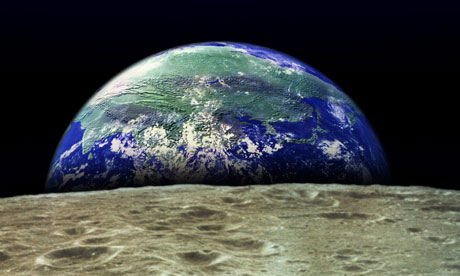
WWF has pioneered the concept of a "one planet" limit – the planet carrying capacity. It is an attempt to define planetary system sustainability, how much resource can be taken from the planet and how much waste it can absorb in any one year. WWF's latest Living Planet Report (2010) tells us we are now living 50% above this planetary limit.
The concept of "planetary boundaries" has been advanced by the work of the Stockholm Resilience Group. They have created a framework of nine planetary boundaries which attempts to define system limits for carbon, ozone, nitrogen/phosphorous, water extraction, land-use, biodiversity loss, aerosol loading, chemical pollution and ocean acidification.
What is emerging here is a description of "what is a healthy natural system", how big it is, how intact and connected and how much biodiversity it contains. This is critically important information. It clarifies what levels of ecosystem services can be expected from this healthy system, how much carbon cycling it can cope with and how large an amount of renewable resources can be harvested.
For us to put the natural systems back in balance, we will need to safeguard system health by creating governance mechanisms: markets and law that manage this operating system, its resources, its pollutant loading and extractions. In short, as a global society we will need to understand what nature does for us and build that value into all our decision making.
For businesses this means understanding your dependence on ecosystem services: what is the cost associated with reduced ecosystem services and what can you do to be sure of continued ecosystem support. For example, for an agricultural company extracting water from a river, an investment in a drip irrigation system is good "do less bad" strategy, but playing an active part in the governance of the river to guarantee water quality and flow is "making a net positive contribution – a payment for an ecosystem service." This would be an example of an enlightened company that understands and safeguards the value it gets from the natural world and playing an active role in a good transition.
Oliver Greenfield is the head of sustainable business and economics at WWF-UK
This content is brought to you by Guardian Professional. Become a GSB member to get more stories like this direct to your inbox