When the antiquated changing rooms at Jeffrey Humble playing fields in Liverpool were burned out in 2012 it was, according to Barry Kushner, “the low point for an area that had been suffering for 10 years”. Three years on a new £750,000 community facility stands on the same site, a symbol of recovery and testament to the importance of investment in grassroots football, when it comes. “It has restored hope,” adds Kushner, a local Labour councillor for the Norris Green ward that incorporates the playing fields where Wayne Rooney, Jamie Carragher and Steve McManaman started out.
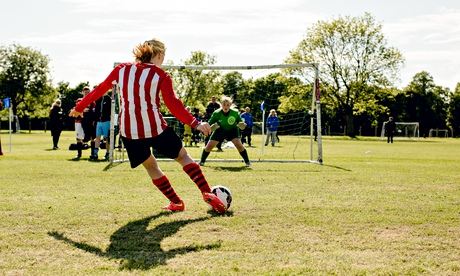
While Fifa is engulfed in its latest corruption scandal, 600 under-16s from 47 Premier League and Football League clubs converged on Jeffrey Humble for the annual Premier League Kicks Cup. The event marked the official opening of the Liverpool venue, funded by the Premier League and the FA Facilities Fund to the tune of £650,000, delivered by the Football Foundation, with a further £100,000 provided by the Merseyside Youth Association charity that has managed the site since 1927. Talk of football as a vehicle for hope could not have been more timely given the disgrace unfolding in Zurich.
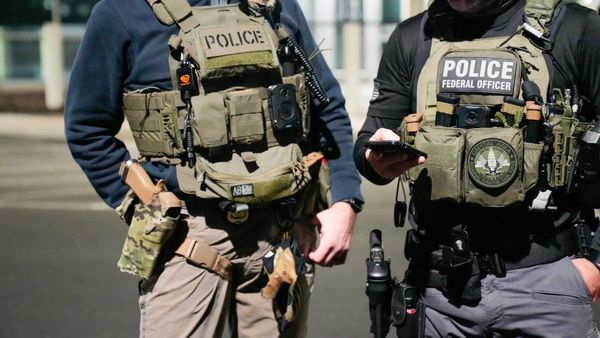
The Premier League Kicks programme is run in partnership with Sport England and police forces nationwide. Almost 43,000 young people have been involved in the free football, coaching and refereeing opportunities offered by the community schemes at 50 professional clubs, with 75% of the hundreds of venues involved located in the top 30% most deprived areas in the England and Wales.

Workshops on the dangers of drug and alcohol abuse are a fundamental part of the project. At the Kicks Cup, an all-day event that ended with Newcastle United winning the girls’ under-16s tournament and West Ham United the mixed/boys’ under-16s prize, there was a money management workshop for youngsters who, in many cases, were away from their local areas for the first time. Crime and antisocial behaviour incidents have fallen by up to 48% in some of the areas targeted by the Kicks programme, which offered Wilfried Zaha and Raheem Sterling a route into the game.
Also present at Jeffrey Humble was the former Premier League referee Chris Foy. A former policeman and schools officer, Foy said: “We’ve got 600 kids out there playing football, from every part of the country. We’ve got different nationalities, different religions, lads and girls, and everybody is integrating. Everyone is in it together for one common thing and that’s to play football. This isn’t just about taking kids off street corners, this is about educating them and building really good friendships.”
The Premier League Kicks Cup, played on 24 pristine pitches in Liverpool this year and on Hackney Marshes in 2014, proved a resounding success. The new facility on Jeffrey Humble – the vision of MYA’s operations manager Liam Corcoran – has already had a positive affect on grassroots football in the area. More than 2,000 youngsters attached to the Walton & Kirkdale League use the playing fields each weekend and adults’ football is returning to the site now that it contains suitable changing rooms. Meanwhile, the addition of a community hall that can be used by local residents and be hired out to help the MYA with the running costs broadens its appeal beyond football.
Gill Bainbridge, the chief executive of MYA, said: “We have been working out of portable cabins and using portable toilets for the past few years. We had a lot of incidents of vandalism even before the arson attack. We had quad-bikers churning up the pitches and fencing that wasn’t fit for purpose.

“Now, with the community room we have built with the investment, the community feels that it has an investment in the facility and people are far more likely to look out for it if it is something their families can use. If the kids feel they have something that belongs to them, they are far less likely to vandalise it. Everyone is getting something out of it and that is in keeping with our idea to be a more integral part of the local community.”
Bainbridge used her speech at the opening ceremony to request a 3G pitch from the Premier League. It was a reminder that, for successes such as the event at Jeffrey Humble, there is far more to be done.
The government, the Football Association and the Premier League – which originally promised to invest 5% of its total broadcasting rights into the grassroots game but now says it gives approximately 3% – have cut funding to the foundation stone of the sport in recent years. Public sector cuts have prompted local authorities to hike pitch fees, putting several historic amateur leagues out of business, while the future of 66-year-old Hallen AFC is in jeopardy after Almondsbury Parish Council increased the club’s ground rent from £12,000 to £20,000 a year. The club’s 76-year-old groundsman, Terry Henderson, offered up his life savings to help Hallen’s running costs for another year. This is the grim situation facing the volunteers who keep grassroots football alive in Britain. The investment at Jeffrey Humble and in the Kicks programme, however, demonstrates the far-reaching benefits.
As councillor Kushner reflects: “People were very sceptical and disillusioned around here. There was anger and frustration. Most of the conversations I had when I was elected in 2012 were along the lines of: ‘This won’t happen, that won’t happen, there’s no facilities here for young people.’ Now it is totally different. Now the conversation is more about: ‘How can we do this?’ or ‘Why hasn’t that opened yet?’ The area has changed completely.
“There are 200 houses being built up the road, shops are opening up and we have two new schools. People can see all these improvements taking place and are taking notice. We have adults playing football on this site now, there has been investment not only in the facility but in the quality of the pitches, the grass and the drainage, and it is a great facility for the area. Antisocial behaviour has fallen more here than anywhere else in the city, by 4%-5%. What is going on here has had a significant impact.”