In February, when I attended the launch of the No Second Night campaign in Liverpool, I really hoped that it would be a success.
Just seven months ago, the local authority and five neighbouring authorities signed up to a campaign to end the problem of rough sleeping by December this year.
However, it seems that homelessness in Liverpool has increased during this period, according to government figures. The statistics suggest it has increased by 17% from July 2011 to June 2012 compared to the same period the previous year. Latest figures show that 678 people applied to Liverpool city council as homeless.
The city's elected mayor, Joe Anderson, has promised to tackle the issue. He described the statistics as: "deeply concerning." They show the most vulnerable people in our communities are bearing the brunt of the recession, he said.
Anderson vowed to take a lead in helping those left without somewhere to live, adding that the city has already launched innovative schemes to help those sleeping rough.
No Second Night Out was set up by Homeless Link, which delivers monthly briefings to government on homelessness and works with charities, councils and faith groups.
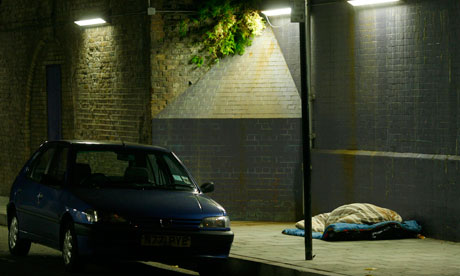
In Liverpool, a study of rough sleepers found nine people were sleeping rough on the streets. Four years ago, during the Capital of Culture year, the figure was much higher. A further analysis by Homeless Link found that Liverpool saw a 200% rise in the number of rough sleepers between 2010 and 2011.
Rick Henderson, the chief executive of Homeless Link, said Liverpool is leading the way in tackling rough sleeping through its commitment to the No Second Night Out initiative. He pointed out that ending rough sleeping is about more than getting people off the streets and public services need to work together to ensure rough sleepers get the support they need to get their independence back.
The life expectancy of a rough sleeper is much lower than average - just 42 years old. And the reasons why people find themselves sleeping rough are clearly complex, from relationships breaking down, to issues with alcohol or drug abuse.
No Second Night Out began as a pilot project in inner London in April 2011. Its ethos is: "There is no reason for anyone to sleep rough for a second night." It delivers a 24/7 emergency service for rough sleepers.