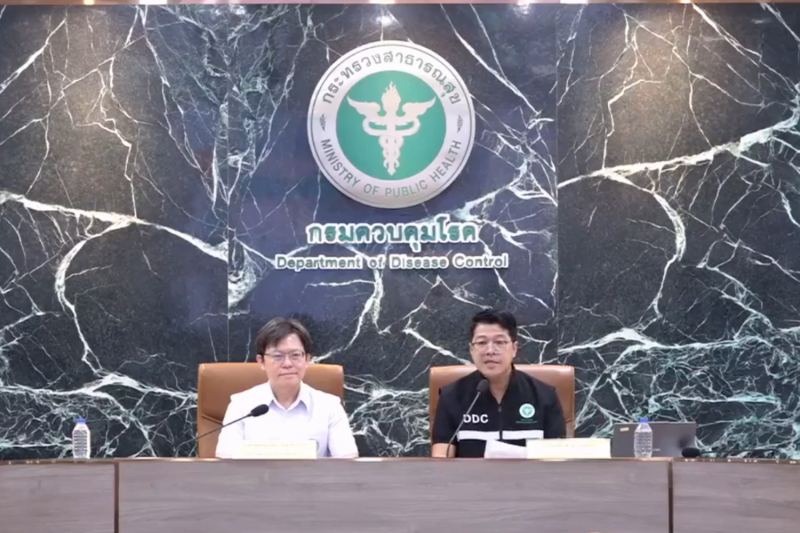
The liver fluke infections found among university freshmen in the northeastern province of Maha Sarakham early this month were not linked to any particular somtam shop in the area, the Department of Disease Control reported on Wednesday.
Public alarm greeted reports on July 7 that more than 4,000 university students had initially been detected with the infection (opisthorchiasis). Wide-ranging inspections were subsequently carried out at restaurants in the province.
Public health officials said the unusually large number was obtained using urinary antigen test kits (UATs), which do not deliver an absolute result.
Stool examinations were later conducted with 309 samples sent from Rajabhat Maha Sarakham University. The tests confirmed only four infections, Dr Wichan Bhunyakitikorn, director of the Division of Epidemiology, said on Wednesday.
Other parasites were also detected from the samples, including four with intestinal flukes, five with tapeworms, two with threadworms and one with whipworms.
For Mahasarakham University, which had reported 4,233 infections, Dr Wichan said the figure was only from a screening process and health authorities were coordinating to obtain the samples for further examination.
Related: New liver fluke test under review
As the liver fluke is a parasite associated with human consumption of raw or undercooked freshwater fish, the ordered inspections targeted the use of undercooked fermented fish, known as pla ra, at somtam shops near the universities.
However, the follow-up investigation indicated the first-year students came from different hometowns, and the times of their infections did not match.
Therefore, the situation could not be linked to restaurants or food sources in the area.
From 2016 to 2025, the average liver fluke infection rate nationwide has also decreased continuously, from 16.2% to 2.5%, the department added.
Bile duct cancer rates in Thailand are among the highest in the world, with raw fish consumption in the Northeast a major contributing factor. Provinces that still need monitoring in some areas are Phayao, Phrae, Nakhon Phanom, Mukdahan and Chaiyaphum, health officials said.