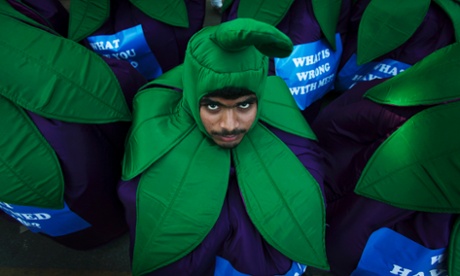
After months of anxiety, an Indian judge ruled this week that government restrictions on Greenpeace’s foreign funding were illegal. But the atmosphere remains tense. A leaked report by India’s recently elected government revealed that it believes foreign-funded NGOs are “negatively impacting economic development”.
This mainly referred to protests about dirty energy and mining projects, but the Intelligence Bureau also said that international organisations were highlighting “caste discrimination, human rights and big dams” to “discredit India at global forums”.
But despite ambitions to become a world leader in space exploration, the country is still struggling to fulfil many development goals around poverty, malnutrition and maternal mortality - not to mention gender inequality and sanitation.
Can the government and NGOs work together to address those issues? Or is a thorn in the government’s side the best position for civil society in India? Join us on Thursday 29 January from 1-3pm GMT to discuss how NGOs can work most effectively in Modi’s India.
The live chat is not video or audio-enabled but will take place in the comments section (below). Get in touch via globaldevpros@theguardian.com or @GdnGlobalDevPro on Twitter to recommend someone for our expert panel. Follow the discussion using the hashtag #globaldevlive
The panel
Divya Raghunandan, programme director, Greenpeace, Bangalore, India, @draghuna
Divya joined Greenpeace India in 2008 and has overseen all the campaigns run by the NGO on climate and energy, sustainable agriculture and oceans.
Saket Mani, youth representative, World We Want 2015, Pune, India, @SaketMANI
Saket represents India youth in the UN’s innovative participation campaign, World We Want 2015. He is interested in global youth engagement in development.
Rujuta Teredesai, co-founder and director, Equal Community Foundation, Pune, India, @RujutaTH
Rujuta set up the Equal Community Foundation in 2009. It focuses on engaging men to end violence and discrimination against women.
Parvinder Singh, campaigner and civil society activist, New Delhi, India, @parvindersingh1
Parvinder has over 14 years’ experience working with international NGOs in India, including ActionAid, ChristianAid, Avaaz.org and Oxfam.
Biraj Patnaik, principal adviser, Office of Supreme Court Commissioners on Right to Food, New Delhi, India
Biraj is a right-to-food activist. The Supreme Court Commissioners monitor government food programmes to ensure implementation of court orders.
Pallav Patankar, programmes director, The Humsafar Trust, Mumbai , India, @pallav01
After a corporate career, Pallav joined HIV prevention and LGBT rights NGO Humsafar in 2009. He organises Queer Azaadi Mumbai, the city’s LGBT pride parade.