“Young people should care about the environment for one morbid reason – we’re the ones who’ll be affected most by climate change,” says Jack Stapleton, 19, a student at the University of Sussex.
Issues such as man-made climate change and resource depletion are no longer just something for future generations to worry about, they’re happening now and will affect young people the most.
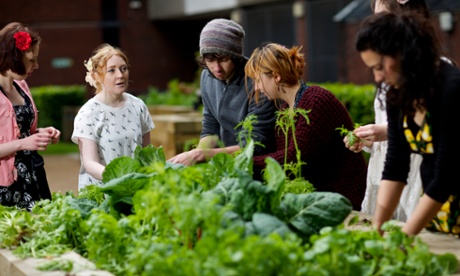
Many students want to be more sustainable and are finding creative ways to do so, from setting up food growing projects to taking part in environmental protests on campus and designing potentially revolutionary technologies to purify water.
But when you’re studying and struggling to make ends meet, it might not always feel possible to do your bit for the environment and it may feel like the day-to-day changes you make don’t make much of a difference.
That’s why we’ve brought together a panel of students and environmental activists to discuss how you can be more environmentally friendly as an individual, as well as affect wider change in society – and why it matters.
Our Q&A will ask:
- How can students live sustainably on a budget?
- Do the things individuals do really make a difference?
- How can students help affect wider societal change?
- How can student environmental campaigns be more effective?
You can post your question in the comment section below or join us from 1pm on Thursday 8 October to follow the discussion live.
The panel
Piers Telemacque, vice president for society and citizenship at the National Union of Students (NUS), @Pierschickenboy. Piers leads on sustainability work at NUS and is also a community organiser and campaigner.
Tess Riley, journalist at the Guardian and deputy editor of Guardian Sustainable Business, @tess_riley. Tess studied at Cambridge University, where she wrote a sustainable living column for Varsity newspaper. She also has a masters in international development and globalisation at SOAS. She has a background in activism and community work.
Tom Pashby, elected campaigns officer on the national executive committee of the Young Greens of England and Wales, @TPashby. Tom is leading on the Young Greens’ actions around the Paris climate talks. He went to Plymouth University to study environmental science, and was an elected part-time student representative, with the portfolio for environment and sustainability. This included chairing the Environment and Sustainability Forum.
Alisha Patel, founder of the Healthy Planet Society at the University of East Anglia (UEA), @ueahp. Alisha is a third year medical student who is one of the founders of the UEA healthy planet society. UEA Healthy Planet is a student-led society which raises awareness about climate change and its global impacts.
Laura Grossmann, student, volunteer for Sussex in Transition. Laura is in her third year of an international relations and development degree at the University of Sussex. She is involved in a VegBox Scheme on campus and a food co-op. She also co-founded Sussex in Transition, a platform for all things green and sustainable on campus.
Catrin Darsley, environmental officer at the University of East Anglia (UEA), @SustainableUEA. Catrin connects the various elements of the Sustainable Ways agenda through communications networks and awareness events. She aims to raise awareness and promote pro-environmental behaviours across UEA.
Jack Miller, PhD Student, University of Sussex and activist with Fossil Free Sussex, @SusFossilFree. Jack has been an activist with the Fossil Free Sussex divestment campaign for two years, during which he has been involved in a number of student demos and talks. He is a firm believer that grassroots campaigns can be one of the most effective and satisfying ways for students to become engaged with the sustainability agenda.