And so to bed
Well, not quite. But we’ve reached the end of the 2015 WEPs annual event. It’s been an incredible couple of days and I would like to thank all the speakers for their fantastic insights, and thanks to everyone who has been following the live blog.
I’m trying to come up with a way of summarising the messages that have been shared during the conference. While it’s impossible to communicate everything, there are a few points that have really resonated with me, that I think it’s worth repeating.
The theme for this year’s International Women’s Day was ‘Make it Happen.’ This is a direct call to action, and one that we can all take on board. There are now around 1000 companies that have signed up to the WEPs. If we all spread the word among our business contacts and personal networks, that number could increase tenfold - or even more. Making internal changes is a hugely positive move, but we need to look outside ourselves and talk about what we’re doing and why.
By opening up this dialogue and putting equality, diversity and fairness at the heart of business, we can take a real step forward in creating a world that future generations can be proud to be a part of.
Davis acknowledges that she is in a strong position to instigate change, as she can go directly to her peers in the industry and point out the unconscious bias that many of them are displaying.
We can’t suddenly snap our fingers and solve inequality, but there is one place we can make an instant change: on our screens, she says.
We can change the future through what people see. If they see it they can be it.
The Geena Davis Institute on Gender in Media has completed a global gender in media study. The landscape is bleak: one of the most troubling findings was that the percentage of fictional women in the workforce was lower than the percentage in society.
Looking at the proportion of female directors globally, just 7% are women. In the US it’s even lower: 4%. However, with a female director behind the camera, the percentage of female characters on screen rises.
Despite all the progress in gender diversity in recent years, the ratio of male to female characters on screen hasn’t changed since 1946. This stat really drives home the fact that modern media is not reflecting real life: something that is potentially harmful to young girls.
Small tech issues, hang on in there. My laptop seems to have decided that today is over... back shortly with more updates from Geena Davis’ speech.
Closing remarks from Geena Davis, Academy Award-Winning Actor, Founder and Chair of the Geena Davis Institute on Gender in Media
We know from extensive research that media images are an incredibly powerful force in shaping negative images of women and damaging self esteem, Davis says.
However, media and media images can be equally powerful as a force for good. Media can be the cure for the damage it has created.
Davis’ TV role as a female president has apparently had a direct effect on the number of people who would vote for a female president.
Apparently Geena Davis is on her way... watch this space.
The 2015 WEPs event stakeholders statement
This ten point statement draws on themes identified by WEPs stakeholders and proposes a way forward for government, business and other stakeholder collaboration and partnership to advance gender equality.
We have all been invited to stand and pledge our commitment to these principles and demonstrate our support. You can read the full statement here. This is a hugely important movement and one which I would urge everyone to get involved with - pledge your support and spread the word through your network.
And we’re back. More updates on the way... we have one final session, followed by closing remarks from Geena Davis.
Next up is Melsa Ararat, Director of the Corporate Governance Forum, and Professor of Management & Strategy at Sabanci University, School of Management.
She shares the shocking statistic that three women are killed in Turkey every day through domestic violence. Ararat conducted a survey to look at how partner violence affects women in leadership positions. They found that violence had affected a huge number of women, across all levels of education and seniority. One in every five educated women in management positions is exposed to domestic abuse.
Businesses have the power and the capacity to influence the community and society. Violence negatively affects work performance, and stops women developing their full potential. Businesses have a role in play in stamping out this issue, she explains, creating a culture of zero tolerance towards inequality at work and initiating policies that can help to protect employees from violence.
Selin Oz, Marketing and Communications Officer, Entrepreneurial Banking, Garanti Bank is talking about the importance of supporting women entrepreneurs.
Women can be more risk averse, she says, which is why role models and group support is so important. Garanti Bank is tailoring products to meet the needs of female entrepreneurs and has created a support package to help women build their business.
Neha Misra, Chief Collaboration Officer at Solar Sister, begins by explaining the concept of ‘energy poverty.’
Energy poverty means 1.6 million people in the world, a quarter of humanity, are living in absolute darkness - with no access to electricity, or cooking technology.
Solar Sister creates vital access to clean energy technology by building and extending the supply chain through women’s rural networks. Solar Sister provides the women with a ‘business in a bag’, a start-up kit of inventory, training and marketing support. The women become their own bosses, creating sustainable businesses.
Big change can come from really small stuff.
We’ve just been shown a video, The Beauty of Red, made by Menstrupedia, highlighted by Mills as a great example of a disruptive business, challenging ingrained stereotypes and helping to educate young women.
Panel: exploring key models for business, investing and networks
This is the final panel discussion of the conference, moderated by Katherine Miles, Consultant at Deutsche Gesellschaft für Internationale Zusammenarbeit GmbH (GIZ) and Development Director, Global Business Initiative on Human Rights.
Jo Confino has asked Broderick if she can offer any advice to people about being disruptive when they don’t feel they have the power to do so.
Broderick says that you have power in certain spheres - use that power to disrupt. If you don’t have the influence to make a difference on a national level then reach out to those who can.
Broderick is sharing more examples of how the ‘male champions of change’ are taking steps to fight for gender equality in the workplace.
The first is a move towards flexible working, so that work and care do not need to sit at opposite ends. ‘We need to turn the expectation that people are available 24/7 around - everyone, from the CEO down should work on a flexible schedule,’ she explains.
Another is the ‘panel pledge’: the group have pledged not to speak at any events that do not have a fair representation of women.
The final message is to always ask the question. 50:50, if not, why not? Unless we actively and intentionally include women, the system will unintentionally exclude them.
Updated
Lets not pretend that there aren’t already established norms: men invented the system, men largely run the system, men need to change the system.
This is a quote from a man who is part of a group, compiled by Broderick, bringing together some of the most powerful men in the country to drive gender diversity.
Elizabeth Broderick, Sex Discrimination Commissioner, Australian Human Rights Commission and Chair, WEPs Leadership Group
Elizabeth Broderick starts by asking why change is so slow. She believes we haven’t embraced the diversity challenge on an emotional level. Our ingrained beliefs are clashing with the case for change.
If we want to deliver equality for women, we have to focus on men.
It’s not about men speaking for us, it’s about working in partnership and standing side by side, she says.
We asked Sallie Krawcheck to share the one key message she would like to communicate to conference delegates today. Here is what she had to say.
Jo Confino has brought the discussion round to climate change. If women were in positions of power, would we be able to solve some of the major issues facing the planet today?
Women tend to have a longer term perspective, they tend to think more in terms of relationships, responds Krawcheck.
So women will save the planet? he asks.
‘Well, you said it...’
Gender bias doesn’t go away because we want it to. Krawcheck uses an example of a man and a woman, both described as ‘aggressive’ - it was seen as a positive in the male candidate, while it was a negative for the woman. She acknowledges that at the time, she didn’t realise this was a biased reaction.
Krawcheck suggests three action points.
Firstly, we need to invest our time, share ideas, leads and thoughts. Who you know is what you know, so take time to network. She states firmly that this is a better approach than quotas.
Secondly, we must use our voice. Have the conversation with our company, asking them to align with our values.
Finally: investment. Our investments can be hugely powerful, if they are directed towards companies that make a difference.
Krawcheck is speaking passionately about how women should embrace what makes them different, what they bring to the table.
Women drive a positive through economic engagement. Men’s number one reason for accepting a job is money. For women, it is meaning and purpose.
There is much discussion is about ‘fixing’ women, making them act like men. What if we ask them to act like women? To bring this sense of meaning and purpose into the workplace.
This drive for meaning and purpose extends to where the money is invested. ‘Emerging investors’ - mainly women and millennials - want to make a profit and a positive impact. What if Wall St offered the opportunity to invest with purpose - the dollars are so big that this could make an impact very quickly.
Keynote remarks: Sallie Krawcheck, Chair, Ellevate
Sallie Krawcheck will be delivering her keynote during lunch. She describes herself as a ‘recovering research analyst.’
Good things happen when women and money come together.
When women are in senior positions, there are, among other things, higher returns on capital, lower risk, greater innovation, lower gender pay disparities... Diverse teams outperform smarter teams.
But we all know this already. I want to shift the frame and expand the discussion, she says.
She uses Wall St as an example. ‘Diversity in corporate America has gone sideways in recent years. In banking it has gone backwards’.
This has been a really interesting session - what has stood out for me is the importance of visible changes and policies. It isn’t enough for a company do make internal changes quietly, it needs to shout about it, share best practice and encourage other companies to do the same.
There is also a strong business case for improving diversity and female empowerment: share these statistics, and others will follow.
The active management of talent drives more progress than passive commitments.
Aniela Unguresan, Founder, EDGE Certified Foundation.
The motherhood pay gap has been raised again. How can we get past the stereotypes about working mothers and flexible working?
Dan Briskin believes that there should be a flexible approach to work for all employees, not just women;not just mothers. This allows everyone to ‘lean in’ or ‘lean back’ at different times in their career. He describes a policy that Gap initiated which measures results not when or where you work.
The flexibility programmes have an impact when both men and women use them equally - helping to remove the stigma that sometimes accompanies flexible working, says Aniela Unguresan, Founder of EDGE Certified Foundation.
If you had all of the resources in the world, what would you hope to achieve, asks Carmen Niethammer.
Anka Wittenberg: ‘We don’t need a diversity and inclusion officer anymore; that it is simply part of our DNA.’
33% is the threshold where an under-represented group starts to have a voice.
Anka Wittenberg, Chief, Diversity and Inclusion, SAP Germany, is pointing out that a lot of products do not cater for women (she uses the example of cars, and the fact that there is nowhere to put a purse or bag), even though women are the main consumer. This is because the entire design team is made up of men.
According to the company’s research, the industry that retains the best female talent throughout the pipeline is utilities, followed by oil and gas. She believes this is because these are industries where female talent is scarce, so these companies are taking care of the female talent that they have.
The discussion has moved on to one of the most common issues for women in the workplace: balancing caregiving commitments with work.
Avra Siege, Director of Public Policy and Strategic Partnerships, Care.com explains that women represent 40% of primary breadwinners in America, and in two thirds of families both parents work. Yet women still remain the main caregivers - 50% of workers are caring for someone else. Because care is so limited, and so many companies don’t account for care commitments; this is pushing a lot of women out of the workplace.
Companies need to share best practices, putting a spotlight on these issues and create healthy competition. Through the SheWorks programme, Care.com has increased their maternity leave - Siege quotes a stat about the benefits of maternity leave: children of women who took maternity leave had 5% higher wages by age 30.
Heloisa Covolan, Director of Sustainability, Itaipu Binacional describes the steps her company has taken to advance gender equality in the workforce in a very male dominated industry.
Itaipu Binacional held a number of workshops with all the women in the company in Brazil and Paraguay - two areas with different cultures but a lot of the same issues. These workshops resulted in a number of HR changes, such as special conditions for pregnant employees and more flexibility for parents.
In 10 years, there has been a 100% increase in women in management positions.
Dan Briskin, VP of HR and Employee Relations at Gap says that the company’s motto is ‘do more than sell clothes.’
We know 65% of the purchase decision in our sector are made by women, he says. Being in tune with those customers is crucial for the business.
What’s good for women is good for business.
Pay equity, career mobility and flexibility are the cornerstones of Gap’s approach to gender equality. The company undertook a transparent pay analysis - there is currently no pay gap between male and female employees. The company has also raised the minimum hourly wage. Applications for employment has increased as a result, as has employee retention.
The company also has a programme called PACE, geared towards the women in the company’s supply chain. More info here.
Principles into practice - workplace
After a brief coffee break, we’re back. For the next hour or so, there will be four different sessions running in different locations. The session I’ll be covering will explore the cutting edge policies and practices that are creating and improving employment opportunities for women and how these strategies can be scaled up to overcome persistent challenges and barriers.
Carmen Niethammer, Employment Lead, Gender Secretariat, International Finance Corporation is leading the session. My British accent has already caused some amusement, which is always a good start...
Here are a few of the tweets from this morning’s panel discussion.
To end this #inequality that we talk about, we've got to use technology. - #WEPs audience participant
— WEPs (@WEPrinciples) March 11, 2015
No woman should ever have to ask her partner's permission to save her own life. @BruceCampbell #WEPs #EqualityMeansBusiness
— L'Oréal Diversity (@lorealdiversity) March 11, 2015
"@WEPrinciples:Confidence and self-esteem are powers that can bring out untapped potential. - @Jiniminitini #WEPs"
— Nili Majumder (@NiliMajumder) March 11, 2015
A few final thoughts from the panel:
We should expect equality, not have to ask for it, says Gregorczyk.
Patel: ‘We should all continue to be mentors for young women. You can use technology to learn technology - we should all be encouraging children to think about how technology works and show them what computer science really is.’
Button: ‘We need to solve the inequality issue both from the bottom up - through education - and from the top down, by supporting women and helping them rise up through the industry.’
Disparity is widening, and it’s an issue of access. So many people in the world don’t have access to a mobile phone, says Bruce Campbell, therefore they can’t benefit from the progress that technology offers. Private companies need to focus on this and concentrate on increasing access so that we can start to close this gap.
In the 90s there were more female computer science grads than there are now, what happened? asks an audience member.
Telle Whitney responds:
Image is one of the biggest issues that we face. Many women don’t see themselves as computer scientists - they have an idea that you just sit in front of a computer and type.
The people we’re developing in STEM right now won’t be in the workplace until 2030, argues Meagan Gregorczyk. We can’t wait that long. She points out that while education and encouraging more women to study STEM subjects is hugely important, we also need to focus on the women who are working in the industry right now, and how we can open up more opportunities for them.
One audience member has pointed out that no one yet has really focused on the importance of education. You can’t begin the process of change when people are already in the workplace, he says - you have to start teaching children about the importance of diversity and equality at a very young age.
Bruce Campbell, Director, Technical Division at UNFPA is asking us to focus on the young girls coming up through the education system and thinking about the role that tech will play in their life and work. Can we remove the barriers that may hold them back? What role can tech play in removing these barriers?
Women are the ones who go out and buy a lot of the tech and appliances around the house, yet none of these products are being created by women, Jinisha Patel, Organizer of the International Women’s Hackathon, points out.
The subject of role models comes up again: ‘If I didn’t have a computer science teacher who believes in me, I wouldn’t be studying tech,’ Patel says.
We want girls to have role models who work in tech, says Candace Button of Facebook. She emphasises the importance of networks: building a support group of people inspire you. Would it have been better if half of my role models were female? she asks. Of course.
Meagan Gregorczyk, Director, HR, CA Technologies is making an important point about the language we use to talk about women in tech.
I hear so many stories about the barriers to women in the tech industry. I think we have a responsibility to talk about the industry in a positive way - there are women running companies and leading in the tech industry, and we need to talk more about this, she says. We need to work on creating a more inclusive environment.
Panel: tech and women's rights
The first panel of the day is focussing on the tech industry and will be moderated by Telle Whitney, CEO and President, Anita Borg Institute for Women and Technology.
She begins by talking about the impact of technology on our lives - looking to the future, tech innovation has the potential for empowering women, their families and their lives worldwide.
Whitney goes on to share some sobering stats: only 18% of computer science graduates in the US are women. Women hold between 10 and 15% of the senior positions in tech. In the tech industry, only 7% of the venture capital goes to women-owned businesses.
Belinda Parmar wrote a great piece for us recently about the importance of changing these stats by transforming some ingrained stereotypes about the industry.
Here we go - opening remarks, day two
Ursula Wynhoven, General Counsel & Chief, Governance and Social Sustainability, UN Global Compact and Kristin Hetle, Director of Strategic Partnerships, UN Women are welcoming delegates. They are repeating a key message from yesterday about the crucial role of the private sector in driving forward gender equality.
Hetle says she listened to yesterday’s speakers with ‘a rising feeling of joy.’ I can really relate to this - yesterday was an incredibly positive day, full of success stories. There is a long way to go, but I think it is important not to forget how far we’ve come and celebrate our successes.
Barriers has fallen between business and women’s organisations and governments.
Updated
Yesterday was incredibly inspiring, I still can’t believe quite how much was packed into four hours! As I have a brief moment of calm before today begins in earnest, now seems like a good time to share some of the tweets from the event so far. Follow us on @gdnwomenleaders for more updates, or check out #WEPs.
Women & girls' empowerment is essential to economic and social progress. That's why it's important to have biz on board. @LizBroderick #WEPs
— WEPs (@WEPrinciples) March 10, 2015
“@WEPrinciples: When women have confidence and self esteem, we are going to have something wonderful. -Luz María Jaramillo @PavcolSAS”#WEPs
— Empower Women (@Empower_Women) March 10, 2015
Women's rights are human rights. Human rights are women's rights #UNSG #WhenWomenThrive #WEPS http://t.co/j9vvl6Y7YJ pic.twitter.com/2N0Sa5O9xq
— Mercer (@MercerInsights) March 10, 2015
Day two: welcome back
Welcome back to the Women’s Empowerment Principles annual event. It’s day two, and we have a new venue, the Wyndham New Yorker hotel, and a slightly different format - today will be much more interactive, with panel discussions, breakout sessions and networking. The closing remarks will be delivered by the fantastic Geena Davis around 5pm EDT/9pm GMT.
That's all for now!
I’m off to give my eyes a bit of a screen break and enjoy all the fine wine New York has to offer. I’ll be back tomorrow, kicking off at 9am EDT/1pm GMT.
One more thing...
Thanks to a computer glitch at a rather crucial moment, a couple of updates on Hillary Clinton’s keynote address got a little lost in the internet void.
I’d just like to add in a link to No Ceilings: The Full Participation Project, and a report that has been produced in partnership with the Bill and Melinda Gates Foundation, which Clinton mentioned in her address. As you’ll see if you take a look, the report includes a huge number of inspiring stories, as well as a wealth of data to help us understand how far we’ve come and how far we have to go when it comes to gender equality and women’s empowerment across the world.
Closing remarks from H.E. Zorana Mihajlović, Deputy Prime Minister, and Minister of Construction, Transport & Infrastructure, Republic of Serbia
Mihajlović is of four women in Serbian government.
She says that there is a long way to go in Serbia when it comes to gender equality: at job interviews, women are often told that the job is ‘not suitable for women’ and more remarks are often made about appearance than what they have to say. Only 10% of women are in the leading positions in companies.
Each country must create conditions where everyone has an equal chance to work.
In Serbia, 75 companies signed the WEPs to commit to equality, an important step forward.
We must fight for this every second; women and men.
Mihajlović ends by saying ‘thank you for your commitment, she says. Let’s keep moving and let’s keep working.’
González asks, what is the one change you would like to make to your company this year? She also suggests several hashtags for this discussion: #inclusivevaluechains #doinggoodanddoingbusiness and #businessforthelongterm
Barbara Landmann
I’d like to see at least 20% more women join me as one of the top 200 women at our company. If we set those goals in a very transparent way, and measure our progress I believe we can achieve this.
Karla Rodriguez Helgueros
To continue to empower women and get them out of their homes and replicate our success throughout the state.
This panel is looking for suggestions for how to move ‘faster and bigger’ to close the gender pay gap and achieve gender equality, so each panelist will share thoughts and personal experiences.
Maurice Sehnaoui, Chairman General Manager, BLC Bank
BLC was the first bank in the region to join with the global women’s alliance and sign the WEPs agreement.
There is a need to work with financial institutions so they understand the gender bias when it comes to lending to women. In 2012, there was an increase of 69% in loans to women and every year this amount is doubling. ‘Within the bank itself, what is important is having equal opportunities for both genders, so we are reaching parity without discrimination,’ Sehnaoui explains.
Actions speak louder than words. We need to eliminate bias - this is difficult but very important in a man’s world.
Barbara Landmann, Senior Vice President, Field Force Operations, Alcatel-Lucent
The gender pay gap the company’s French unit reduced from 7% to 1% in the space of one year. This is something the company is working to replicate in other regions. Landmann repeats the importance of having a plan and measuring progress and success.
What you measure will improve.
Gustavo Perez Berlanga, Vice President, Corporate Social Responsibility, Restaurantes TOKS
Perez Berlanga starts by emphasising the important of responsible business, of focussing on something more than just money.
He shares an inspiring story about a project aimed to empower women in the Central Mountains of Guanajuato in Mexico.
The women started a business producing marmalade, and first made under $80 USD per month. In 2006, the Toks restaurant chain started a partnership with these entrepreneurs and in 2014, these women sold more than $500,000 USD to the restaurant chain.
He introduces Karla Rodriguez Helgueros, Project Manager, Cuerpos de Conservacion de Guanajuato Foundation - one of the women from the project.
I believe this company giving us their hand gave us an opportunity. We need more companies like this to generate and grow all over the world.
Panel discussion: call for a new business/UN paradigm
It’s time for the final panel discussion of the day, moderated by Arancha González, Executive Director, International Trade Centre.
First up, here is what González has to say about what the WEPs mean to her.
The WEPs are more than just a set of principles. They are a movement bringing together businesses, civil society and governments from all over the world around the simple idea that investing in women’s economic empowerment is about investing in our societies. It’s Annual Event provides an invaluable opportunity to exchange compelling data and case studies about women’s economic empowerment, share them with the public via social media, and take the messages home to convince more corporations to sign up to the principles. Every current signatory could undertake to mentor ten new ones very year in a virtuous chain to expand the movement around the world.
Updated
Symon Brewis-Weston, Chief Executive Officer, Sovereign Assurance is the final award winner.
It’s not just changing the numbers, it’s about changing the culture. If we don’t do something totally different, things are not going to change.
Jean Pascal Tricoire, Chairman & Chief Executive Officer, Schneider Electric begins by saying that, in terms of gender equality, we are nowhere near where we should be.
When you work in technology and energy, it isn’t a very female industry, he explains. It is an economic imperative for the company to achieve an equal workforce.
First we have to train men with gender awareness sessions, so people understand where the problem is, you also need to support women so they lean in and take the opportunities available.
Tricoire says that the WEPs have provided an important framework for changes within the company. It’s not an easy transition, he says, but it is something that women and men must work on in partnership.
Angélica Fuentes, Chief Executive Officer, Omnilife and Founder, Angelíssima; Founder and Chair of the Angélica Fuentes Foundation is the next winner.
On my watch, I wanted to create a different culture, Fuentes says. She wanted women to believe they can be more than simply a daughter, a wife or a mother.
‘Words definitely move, but example pulls.’ She says she wants to be an example and a role model to her young daughter, who is here today.
Alexander Wrabetz, Director General, Österreichischer Rundfunk is next.
‘When we started this process, it was clear we needed a plan. For this purpose, we implemented an equal opprtunity plan, with three main elements.’ First, we have set quotas for all areas where women are underrepresented, he says. This has reduced the gender pay gap - there is a special budget dedicated to this cause.
Secondly, it is about changing the culture of an organisation. All employees have attended an equality workshop and the company is encouraging more men to take parental leave (we are shown a video of an employee talking about the benefits of taking leave and spending time with his son).
As a media company, we have a responsibility to our viewers and listeners - we have an underrepresentation of female experts, he explains, as women tend to be more modest, they question whether they are the right person. ‘There are no men-only discussions now in my company.’
Frank Vettese, Managing Partner and Chief Executive, Deloitte Canada is the first award winner.
I recently stopped talking about diversity and started talking about inclusion. It’s about the inherent value of each person and an organisation must be flexible to draw that out.
We’re taking direct action to change the composition of our leadership, he continues. Two of the five service areas of the company are now lead by women. The composition of the company’s 30 person board went from three women to eight recently and as of tomorrow, the new CEO in the US is a woman. (This is met with a flood of applause.)
WEPs CEO Leadership Awards
Elizabeth Broderick, Sex Discrimination Commissioner, Australian Human Rights Commission and Chair, WEPs Leadership Group has stepped up to introduce the awards.
If we don’t actively and intentionally include women, the system will exclude them.
An audience member, a student, has pointed out that there is a pipeline problem: we need to see WEPs in our textbooks and reflected where it all begins, in the classrooms. There is all round agreement.
Another audience member has asked about the role of men in women’s empowerment. Each panelist offers some thoughts...
Shanaaz Preena: ‘We run gender sensitivity awareness programmes, sensitising the men, empowering the women and setting a level playing field. A lot of men are amazed at how much they weren’t aware of.’
Luz María Jaramillo de Méndez: ‘This is really an issue that we have to be aware of - if we don’t work shoulder to shoulder, men and women - we will not achieve anything. We’ve seen a lot of issues in a world led by men, we need to learn from history.’
Kalpona Akter: ‘Until we work together, nothing will change. We need to be at the same table and discuss the issue.’
Karin Finkelston: ‘The key point is that most of the business leaders are men. We need to take this up a notch in terms of letting people know the business case in empowering women.’
Shanaaz Preena, Group Director, Human Resources, MAS Holdings is is sharing inspiring stories of the women their organisation has worked with, empowering them, giving them the opportunity to work and learn skills that allow them to support their families.
Karin Finkelston, Vice President, IFC Global Partnerships, World Bank Group starts by saying how inspiring it is to be here among so many wonderful stories.
Empowering women economically is key, she says. Investing in female entrepreneurs is a big part of this. Information is key: ‘data not only measures progress, it inspires it.’
Next is Luz María Jaramillo de Méndez, President, Pavimentos Colombia S.A.S, who talks about the steps her company has taken to promote gender equality - 50% of the company’s executive management group are women.
‘They say that in Colombia when you get a job you have a high risk that your boss will be a woman,’ she jokes. An audience member asks why there are so many women leaders in business in Colombia.
Women are very studious, we work hard, she says. Women often take the lead, the role of a working mother is very common.
Kalpona Akter, executive director of the Bangladesh Centre for Worker Solidarity is the first panelist to speak.
‘There is a long road ahead for women’s empowerment; women are silenced in the factories and at home,’ she says. ‘There is fear of losing our jobs, we are told we are worthless and shouldn’t be leaders.’
Workers voices, especially those of women need to be included and listened to.
She describes the crucial role that global corporations can play: if they take meaningful action in their supply chain, much can be done in improving lives.
She introduces a young guest, an 18 year old girl who was working in a factory building when it collapsed. She is still waiting for compensation, as are over a thousand workers and families. She wants to let the world know that while women need these jobs, they want to work with dignity.
Panel: not business as usual
Minor tech drama there... updates to follow!
In the meantime, we’re moving on to the first of our panel discussions. Moderator Linda Tarr-Whelan, Former US Ambassador to the UN Commission on the Status of Women and Delegate to Fourth World Conference on Women has stepped up. She explains that each panelist with have four minutes to answer a question, followed by a 20 minute Q&A.
‘The business case for gender equality is also the human case. The WEPs community coming together marks the beginning of a new stage, a different kind of relationship between the business community and the UN,’ says Joe Keefe.
Joseph Keefe, President & Chief Executive Officer, Pax World Management and Chair, WEPs Leadership Group
As a businessperson, I have to look to the research. The key to building a more profitable business is inclusion. Where women are empowered, society prospers.
Mary Robinson, United Nations Special Envoy for Climate Change
We have to take a combined approach, seeing that climate change, gender and human rights are all integrated.
‘I’m very aware from travelling around the world that there is a difference of perception in different parts of the world about climate change’, Robinson says.
Human-induced climate change might put countries out of business. This doesn’t conform to the universal declaration of human rights.
What will out grandchildren say about what we did and didn’t do in 2015? ‘We need an alliance, to have a safe world for our children, grandchildren and their children.’
She thanks delegates for all their work so far, and says that our role now is to pass the baton to a new generation.
Clinton says these issues are still deeply personal for her. Her mother was born in a time where there weren’t a lot of opportunities for women - but she always encouraged her daughter to work hard and believed in herself.
We are here to build on the progress of the past and seize the promise of the future.
She asks everyone to stop for a moment and think of the women who have made a difference in our lives. The relatives, the teachers...
Clinton reminds us to remember those women and men on the frontlines, doing the sometimes dangerous work of holding up the possibility of freedom.
There has never been a better time in history to be born a woman. But we’re still not there yet. More than 30 million girls never go on to secondary school. Every year more than a million girls are never born because of gender biased sex selection. More than half the nations in the world still have no laws preventing domestic violence.
Rights have to exist in practice, not just on paper. They have to be made real in people’s lives.
Clinton begins by harking back to Beijing and the Platform for Action, reflecting on the progress so far. The momentum for change is here, she says. She applauds everyone who has worked to make sure the stories of women and girls are not lost. The progress of the past 20 years was not an accident.
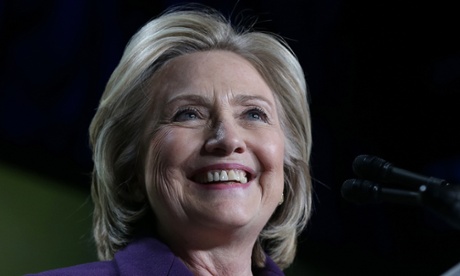
Keynote address: Hon. Hillary Rodham Clinton
The full participation of women and girls is the great unfinished business of the 21st century - and not just for women. For everyone.
H.E. Ban Ki-moon, United Nations secretary general stands to add his welcome. He describes the launch of the WEPs, explaining that the ambition was to deeply engage businesses on gender equality and sustainability. Nearly 1000 companies have now made a commitment to implement the guiding principles.
He asks for everyone’s help - spreading the word among business networks and encouraging more business leaders to join the movement and commit to the WEPs. ‘We need to work together and hold ourselves and others accountable.’
Women’s rights are human rights, human rights are women’s rights.
Phumzile Mlambo-Ngcuka, under-secretary-general and executive director, UN Women is welcoming delegates, including a ‘future president’ - this is immediately met with deafening applause.
And we're off...
The Guardian’s Jo Confino takes to the stage first. He welcomes everyone to the event, commenting on the excitement and energy in the room. He has asked for a minute’s silence, giving everyone the opportunity to remember those who have come before us and paved the way.
A bit of background
The Women’s Empowerment Principles were launched on International Women’s Day 2010, providing guidance to businesses on empowering women in the workplace, marketplace and community. You can read more about them here.
This year is particularly important as it marks the twentieth anniversary of the Beijing Platform for Action, launched at the United Nations Fourth World Conference on Women in 1995. This mission statement has played a key role in many of the developments in gender equality and women’s empowerment in recent years.
Welcome to the Women's Empowerment Principles annual conference
Hello from sunny New York! Over the next couple of days we’ll be reporting live from the WEPs annual conference. We’ll be chatting to attendees and speakers, sharing highlights from the event and keeping you up to date with all developments.
This is a chance for the business community, as well as leaders from government and the UN, to discuss the advancement of gender equality in the workplace and beyond.
If you’d like to have a look at the programme, read about what’s coming up and find out more about the speakers, all the information you need is here. The impressive lineup of speakers includes Hillary Clinton, who will deliver the keynote address this afternoon.