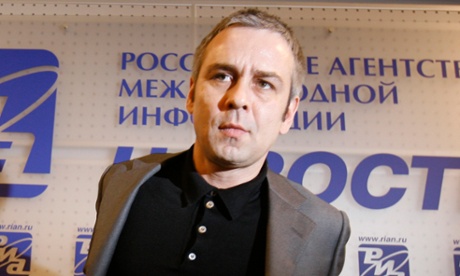
One of the two men accused of murdering the Russian spy Alexander Litvinenko has made an unexpected last minute offer to give video evidence from Moscow to a public inquiry considering the dissident’s fatal poisoning.
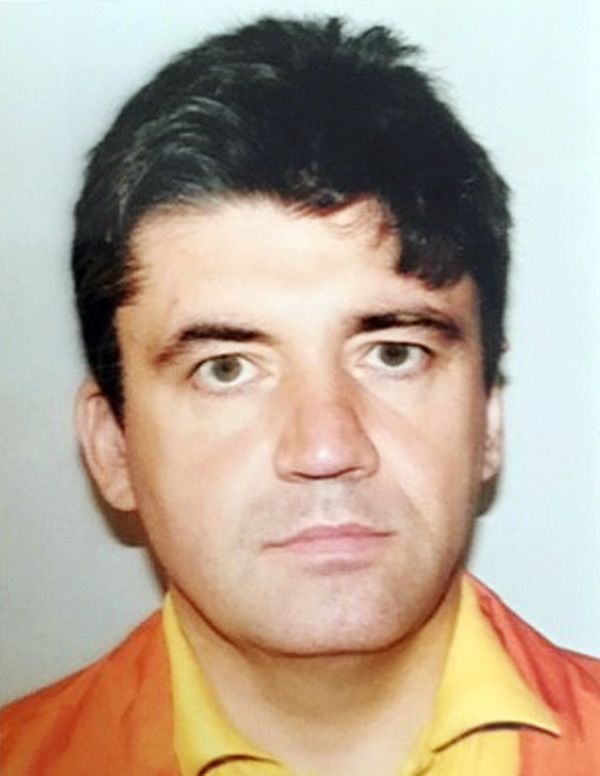
In an extraordinary twist, Dmitry Kovtun has written to the inquiry saying that he is willing to be cross-examined over the murky events of November 2006. Kovtun and another Russian, Andrei Lugovoi, are accused of slipping radioactive polonium-210 into Litvinenko’s tea in a hotel in Mayfair. They deny wrongdoing.
Both men had announced they were boycotting the inquiry, which was set up by the Home Secretary, Theresa May, and chaired by a high court judge, Sir Robert Owen. The inquiry has so far heard 28 days of evidence. Owen was due to hear closing statements at the end of March, before considering classified government documents in a series of closed sessions in April.
On Thursday, however, the counsel to the inquiry, Robin Tam QC, said Kovtun had got in touch asking to be made a “core participant” in the proceedings. Core participants include Litvinenko’s widow, Marina, and her son, Anatoly, the Metropolitan police, the Home Office and the Atomic Weapons Establishment. Tam said it was “highly regrettable” that Kovtun had made his application “so late in the day”.
Ben Emmerson QC, acting for Marina Litvinenko, said it could not be assumed that Kovtun was acting in good faith. “This is an unexpected, to say the least, development,” he said, adding that the police should interview Kovtun under caution, and not allow him to merely “read a scripted document prepared by other people”. It was unclear when he might give evidence.
After their meeting with Litvinenko, Lugovoi and Kovtun fled back to Moscow. The Crown Prosecution Service has charged them both with murder and has issued an international warrant for their arrest. Russia’s president, Vladimir Putin, has categorically refused to extradite them, however. In 2007 the then Labour government expelled four Russian diplomats in protest, with Moscow following suit.
Since Litvinenko’s murder, Lugovoi has become a celebrity politician. He won a seat in Russia’s Duma for the ultra-nationalist Liberal Democrat party. He frequently appears on TV chat shows and recently shared his theories as to who might have murdered Boris Nemtsov, the opposition politician gunned down outside the Kremlin in February. Last week Putin awarded Lugovoi the “order of the fatherland”, an apparent snub to the British inquiry and a sign that Lugovoi enjoys the Kremlin’s warm support.
Kovtun, by contrast, has enjoyed less success and has a lower profile. The inquiry has heard compelling evidence suggesting that he imported the polonium used to poison Litvinenko via northern Germany. He flew to Hamburg on 28 October 2006, and stayed with his German ex-wife for two nights before flying to Gatwick on the morning of 1 November 2006, when he met Litvinenko.
German detectives subsequently found a trail of radiation left by Kovtun in his ex-wife’s home, including on a teddy bear belonging to one of her children, and in the bedroom where he slept. They also tracked down a colleague from the Hamburg restaurant where Kovtun had previously worked as a waiter.
The colleague – referred to only as D2 – met Kovtun shortly before he flew to the UK. Kovtun allegedly confessed to D2 that he was carrying a “very expensive poison”, and was looking for a cook in London who might put the poison in the food or drink of a “traitor”. High readings of polonium were also found in Kovtun’s bedroom at the Millennium Hotel, in Mayfair, where the meeting with Litvinenko took place.
The inquiry continues.