The loch was strangely quiet, as if awaiting the first summer migrants, the sand martins and swallows. They would soon be hawking low over the water seeking insects after their long journey from Africa. It seems incredible that such tiny birds can make this journey that includes crossing the Sahara desert.
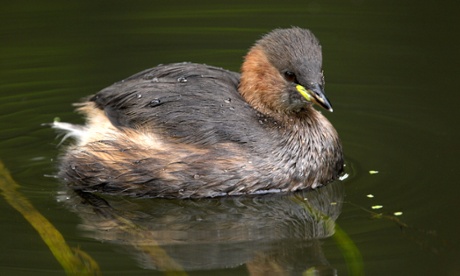
A mute swan, the female or pen, was on its huge nest on an island. The male, or cob, was nearby, ready to see off any intruders, and that included a pair of coot that came too close. Goldeneye and mallard were out on the open water but what attracted my attention was a dumpy little bird nearer to where I was sat on the bank. It was a little grebe and I was close enough to see the tiny yellow patch at the base of its small beak. The overall plumage was dark brown, in contrast to the chestnut neck and cheeks and the pale feathers below its tail. It was much smaller than the moorhens that were squabbling, as only moorhens can, nearby.
The little grebe was searching for food – which varies from insects to small fish – and some of its dives seemed to take a very long time. Then something must have startled it, as it suddenly stared upwards, as if a bird of prey were flying over, and slowly sank under the water, as if wanting to be inconspicuous. I just lost sight of it for about two minutes that, to me, seemed much longer but then binoculars revealed the grebe’s clever escape strategy. It had gone into the nearby sedge bed and only its beak and head were jutting out of the water. Whatever the disturbance was, it would have been very difficult for any predator to spot that bird with so much of it under the water. Then the grebe reappeared on the water and carried on fishing as if nothing had happened, and I never did find out what moved it to take such drastic action.