Imagine a kind of blind book tasting – you are given a novel without an author’s name on the cover and your task is to work out who wrote it. You quickly discover that most of the action is set on the Scilly Isles during the first world war, one of the main characters is a child who survives the sinking of a ship and the story is a tearjerker practically from page one. Oh, yes – there’s a horse involved as well.
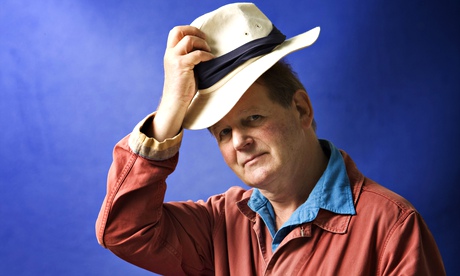
Such a novel could only have been produced by one writer… the author of The Wreck of the Zanzibar, Kensuke’s Kingdom and War Horse. Michael Morpurgo has used these ingredients before with varying levels of success, but this time he has poured all his favourite themes and obsessions into one big story.
In the opening pages we meet young Alfie Wheatcroft and his parents Jim and Mary. They live on the island of Bryher, and survive by fishing and farming. One day Alfie bunks off school to go fishing with his dad, and they find a mysterious girl on another island that is supposed to be uninhabited. She is injured and almost dead of starvation and exposure, so they take her back to Bryher.
To begin with, the only word the girl utters sounds like “Lucy”. So they call her Lucy Lost and try to work out how she ended up marooned alone in the Scilly Isles. Gradually she responds to the family’s love, particularly the tender ministrations of Alfie’s mum. Lucy displays various talents – she can draw, play the piano and ride, her relationship with a grumpy horse, Peg, doing them both some good.
She still refuses to speak, however, even when she has to go to school with Alfie. Up to this point the rest of the island’s inhabitants have been intrigued by her, but before long she falls under the shadow of suspicion. Is she staying silent because she is German? Intense wartime paranoia and the claustrophobia of a small community soon makes life very difficult for Lucy and the Wheatcrofts.
The truth of Lucy’s backstory is revealed in chapters told from her viewpoint – although Lucy has another name. We find out the ship involved in the story was the Lusitania, notoriously torpedoed in the Atlantic just off Ireland by a U-boat in May 1915, and also that not all U-boat captains left the survivors of sinkings to drown. Lucy’s silence is explained by the trauma of what she has experienced.
The story has its faults. At 437 pages it is way too long, especially for a “middle-grade” novel. It starts well, but the first half is slow and should have been trimmed. And the lengthy extracts from the journal of the local doctor who treats Lucy could easily have been cut. Several of the secondary characters – a bully, a nasty headteacher and a crazy uncle – feel rather perfunctory.
One accusation sometimes levelled at Morpurgo’s books is that of sentimentality – the sense that the story is suffused with a level of emotion it doesn’t earn. But that is always a danger when a writer tackles big subjects, and they don’t come much bigger than war and how it affects the young and innocent. This might not be vintage Morpurgo, but it is still a pretty good read.
• Tony Bradman is the editor of Stories of World War One (Orchard), published earlier this year. To order Listen to the Moon for £9.49 (RRP £12.99) go to bookshop.theguardian.com or call 0330 333 6846.