Liquid cats, crocodile bets and didgeridoos win Ig Nobel science prizes
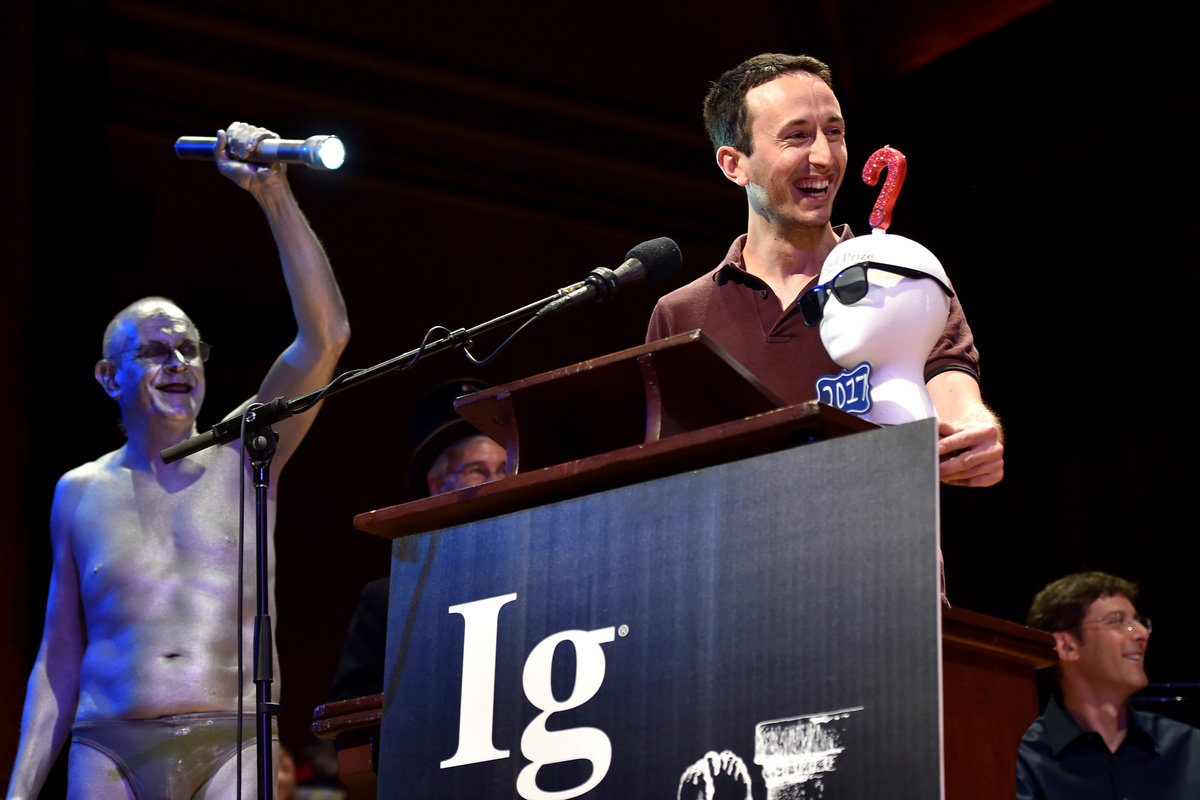
Marc-Antoine Fardin accepts the Ig Nobel prize for Physics for his study, "Can a Cat Be Both a Solid and a Liquid," during the 27th First Annual Ig Nobel Prize Ceremony at Harvard University in Cambridge, Massachusetts, U.S. September 14, 2017. REUTERS/Gretchen Ertl
CAMBRIDGE, Mass. (Reuters) - Scientists taking on the deep questions of whether cats are liquid or solid, how holding a crocodile influences gambling and whether playing the didgeridoo can help cure snoring were honored Thursday at the Ig Nobel Prize spoof awards.
The prizes are the brainchild of Marc Abrahams, editor of the Annals of Improbable Research, and are intended not to honor the best or worst in science, but rather to highlight research that encourages people to think in unusual ways.
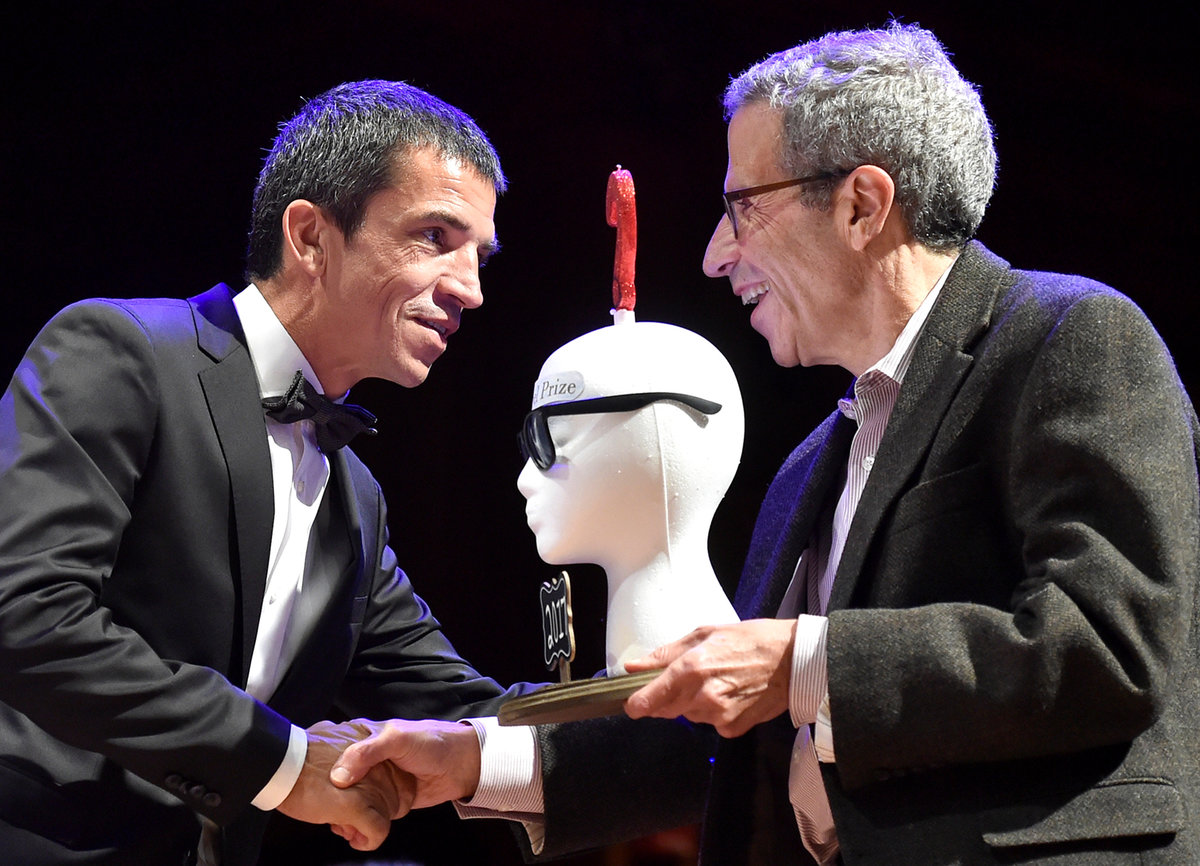
Luis Pallares Aniorte, of Spain, accepts the Ig Nobel prize for Obstetrics, for his group study showing that a developing fetus responds more strongly to music that is played electromechanically inside the mother's vagina than to music played electromechanically on the mother's belly, during the 27th First Annual Ig Nobel Prize Ceremony at Harvard University in Cambridge, Massachusetts, U.S. September 14, 2017. REUTERS/Gretchen Ertl
"We hope that this will get people back into the habits they probably had when they were kids of paying attention to odd things and holding out for a moment and deciding whether they are good or bad only after they have a chance to think," Abrahams said in a phone interview.
Some of the honorees tend towards the spurious: French researcher Marc-Antoine Fardin's 2014 study "Can a Cat Be Both a Solid and a Liquid?" was inspired by internet photos of cats tucked into glasses, buckets and sinks. The winner of the Ig Nobel in physics used mathematical formulas to conclude that active young cats and kittens hold their physical shape longer than older, lazier felines.
Other work on the prize list has clearer potential for practical applications.
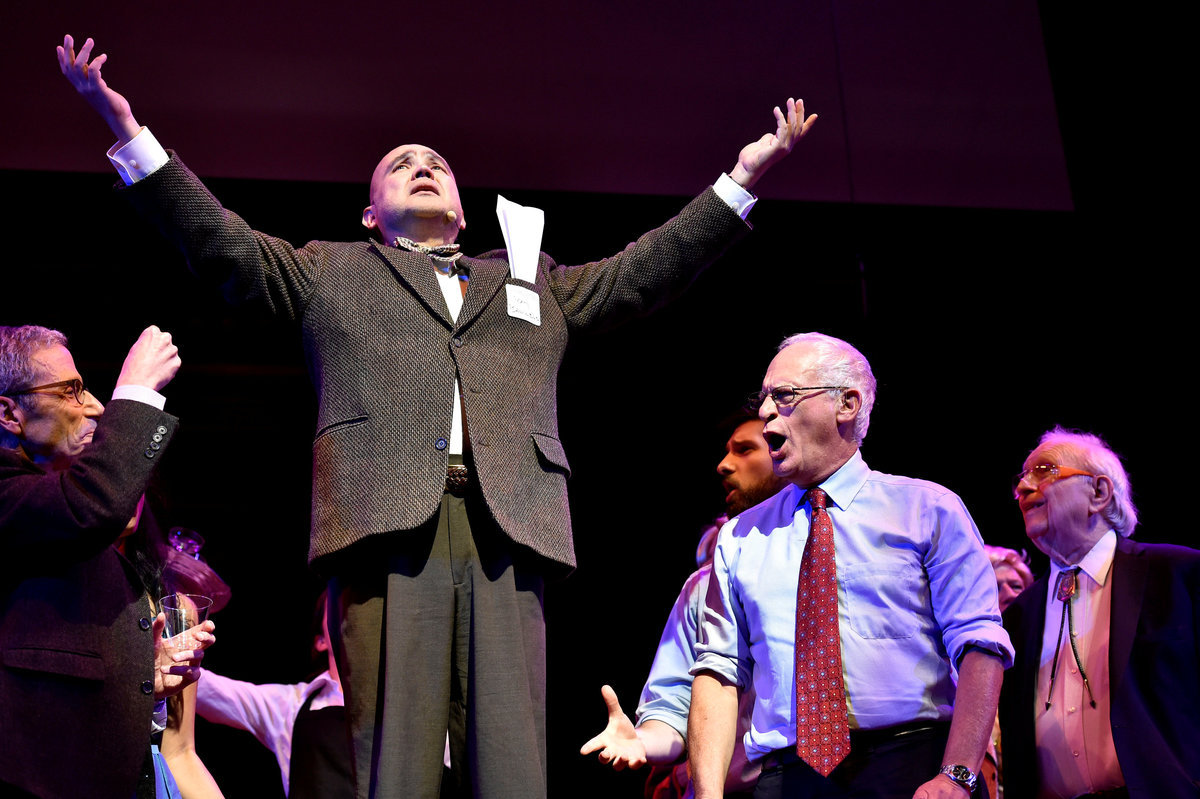
Soloist Ray Bauwens performs the final act of The Incompetance Opera as he is surrounded by Nobel laureates Eric Maskin, left, Oliver Hart, second from right, and Roy Glauber, right, during the 27th First Annual Ig Nobel Prize Ceremony at Harvard University in Cambridge, Massachusetts, U.S. September 14, 2017. REUTERS/Gretchen Ertl
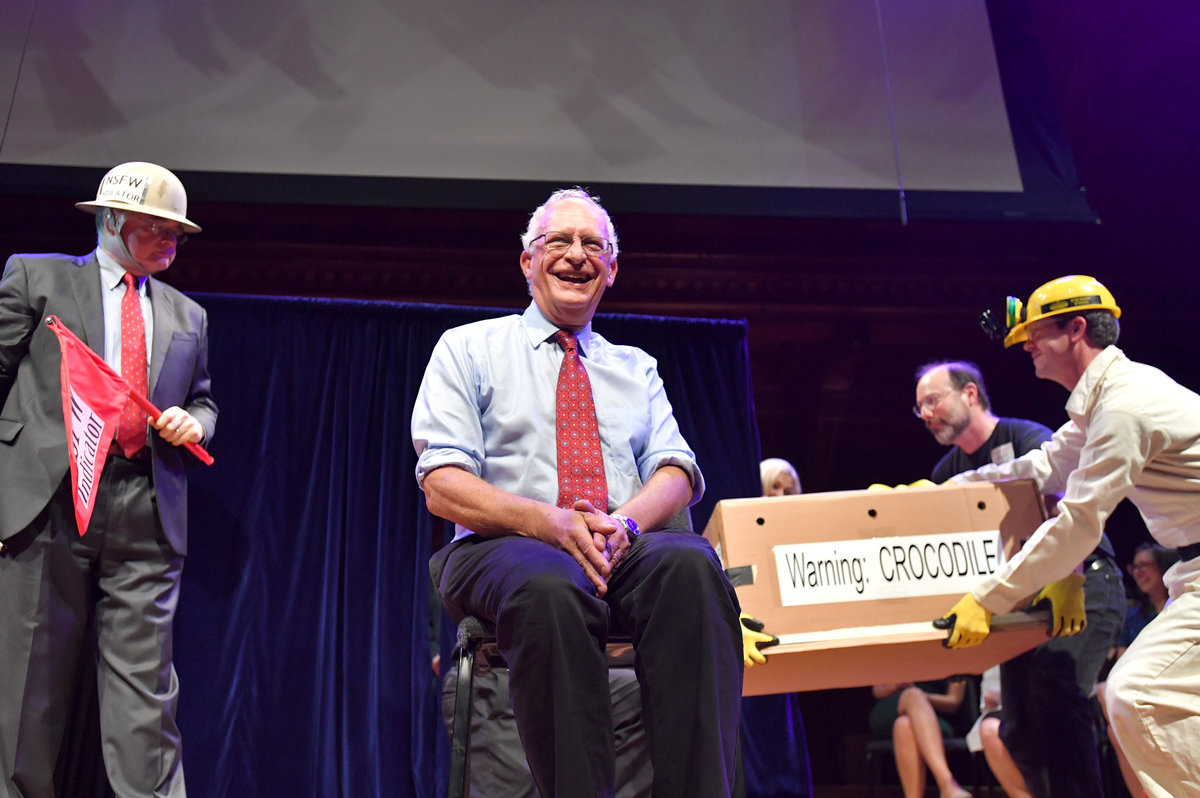
Economics winners Matthew Rockloff and Nancy Greer conducted an experiment in which problem gamblers and non-problem gamblers handled 1-meter (3.3-foot) long crocodiles before playing a simulated slot machine.
The 2010 study, conducted on 103 people in Queensland, Australia, found that problem gamblers were likely to place higher bets after handling the reptiles, as their brains had misinterpreted the excitement of holding a dangerous animal as a sign they were on a lucky streak.
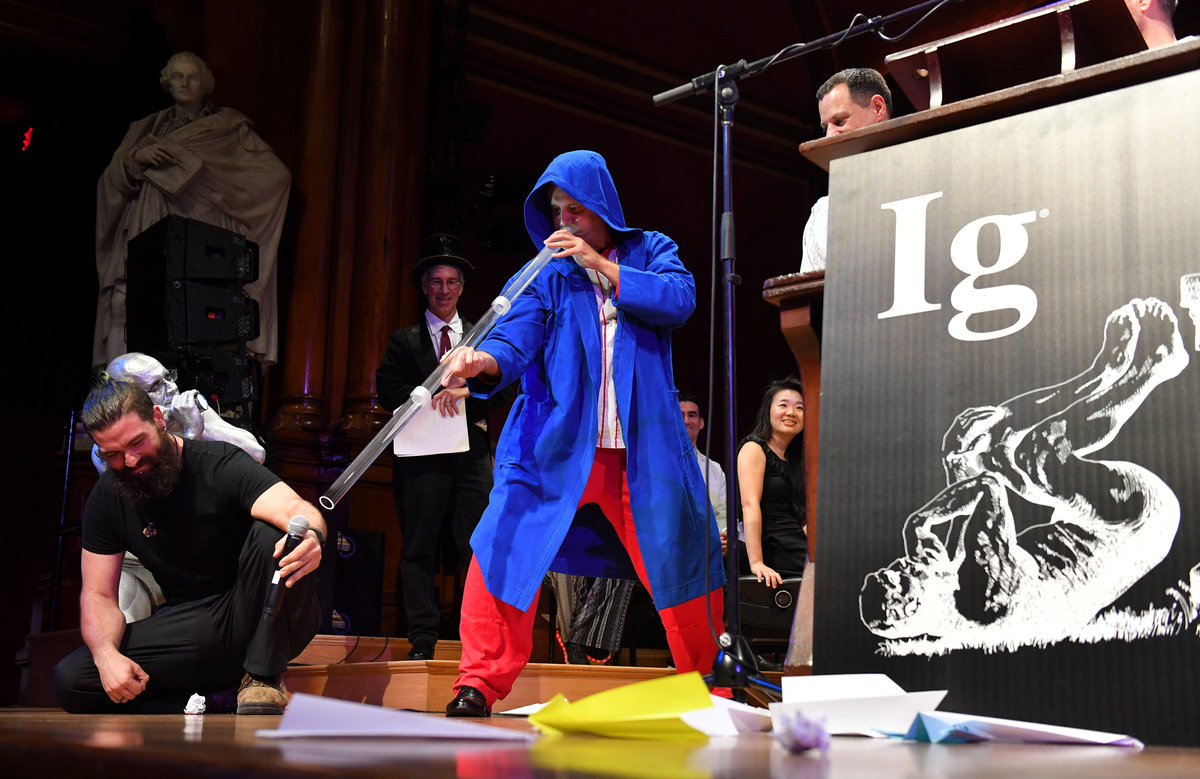
A multi-national team of six researchers won the Peace Prize for the 2005 paper "Didgeridoo Playing as Alternative Treatment for Obstructive Sleep Apnea Syndrome: Randomized Controlled Trial."
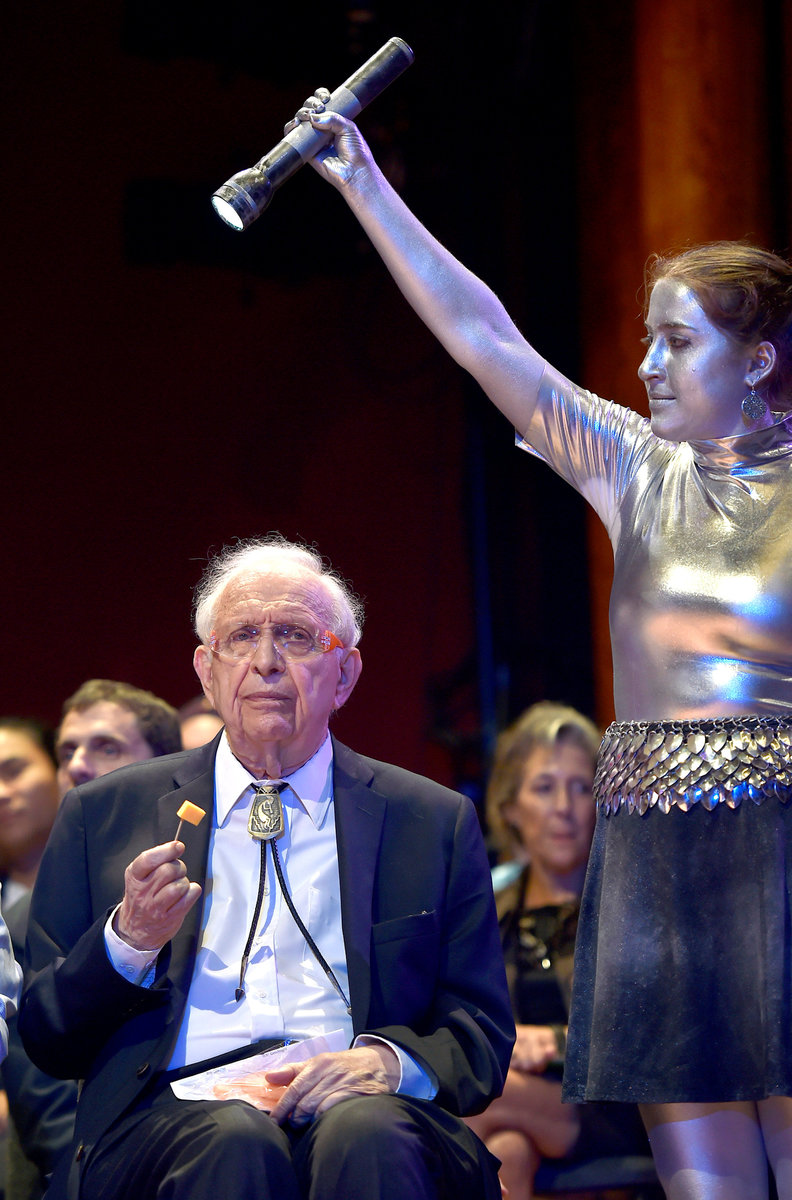
Nobel laureate Roy Glauber holds a piece of cheese as human spotlight Madeline Pelz looks on during the presentation of the Ig Nobel prize in Medicine for the study, "The Neural Bases of Disgust for Cheese," during the 27th First Annual Ig Nobel Prize Ceremony at Harvard University in Cambridge, Massachusetts, U.S. September 14, 2017. REUTERS/Gretchen Ertl
The conclusion that the Australian wind instrument might be of some benefit was based not the didgeridoo's droning tone, but rather that the daily practice involved a lot of blowing, and may have strengthened the upper respiratory tract, making breathing easier.
The awards, now in their 27th year, are to be handed out by actual Nobel Prize winners in a ceremony at Harvard University on Thursday.
"They are unusual approaches to things," Abrahams said. "It would be difficult for some people to decide whether they are important or the opposite. If you had sleep apnea for a long time, the didgeridoo thing would sound quite intriguing."
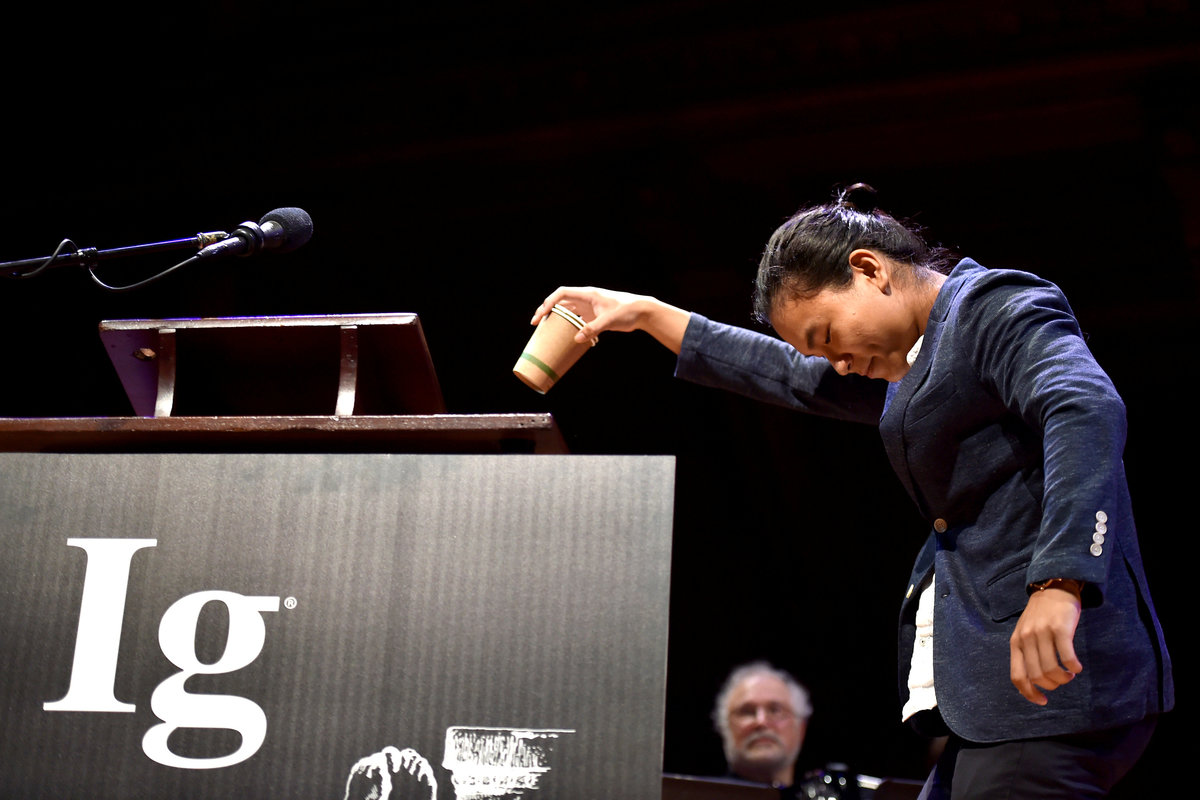
Jiwon Han, a student at the University of Virginia, demonstrates what happens when a person walks backwards while carrying a cup of coffee after being awarded the Ig Noble Fluid Dynamics Prize for "A study on the Coffee Spilling Phenomena in Low Impulse Regime," during the 27th First Annual Ig Nobel Prize Ceremony at Harvard University in Cambridge, Massachusetts, U.S. September 14, 2017. REUTERS/Gretchen Ertl
(Reporting by Scott Malone; Editing by Frances Kerry)
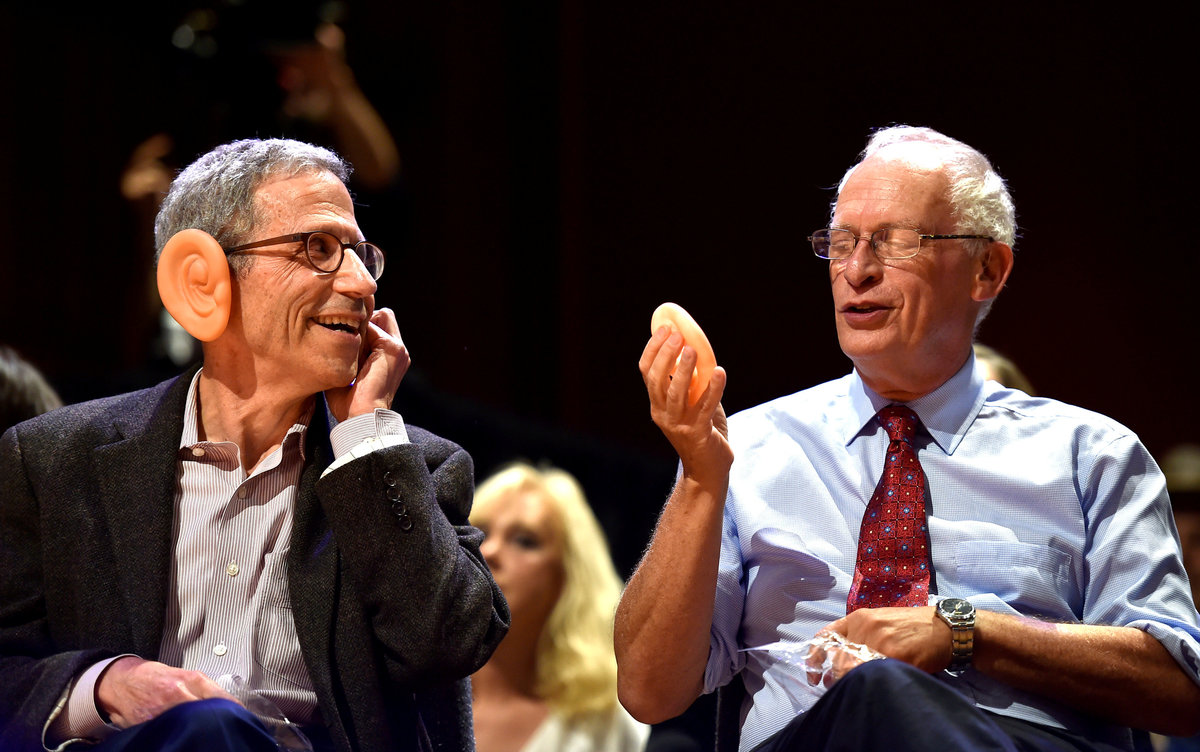
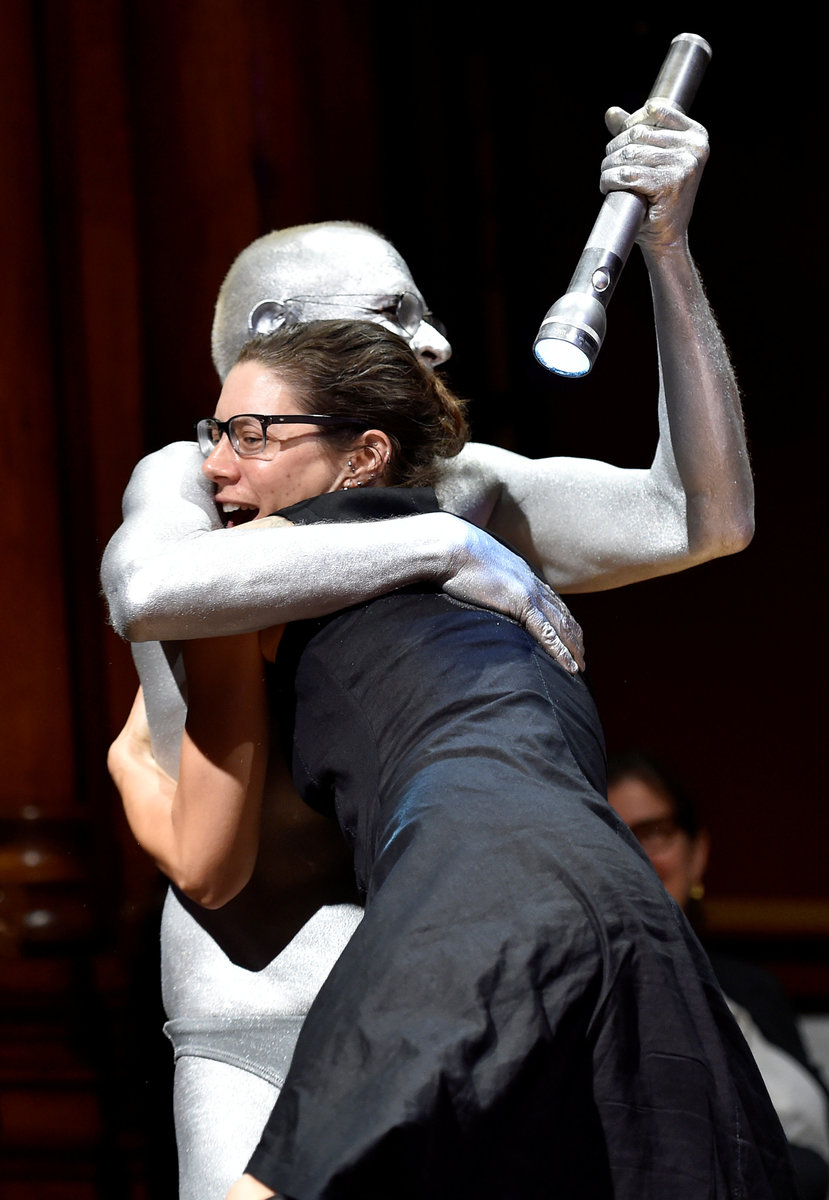
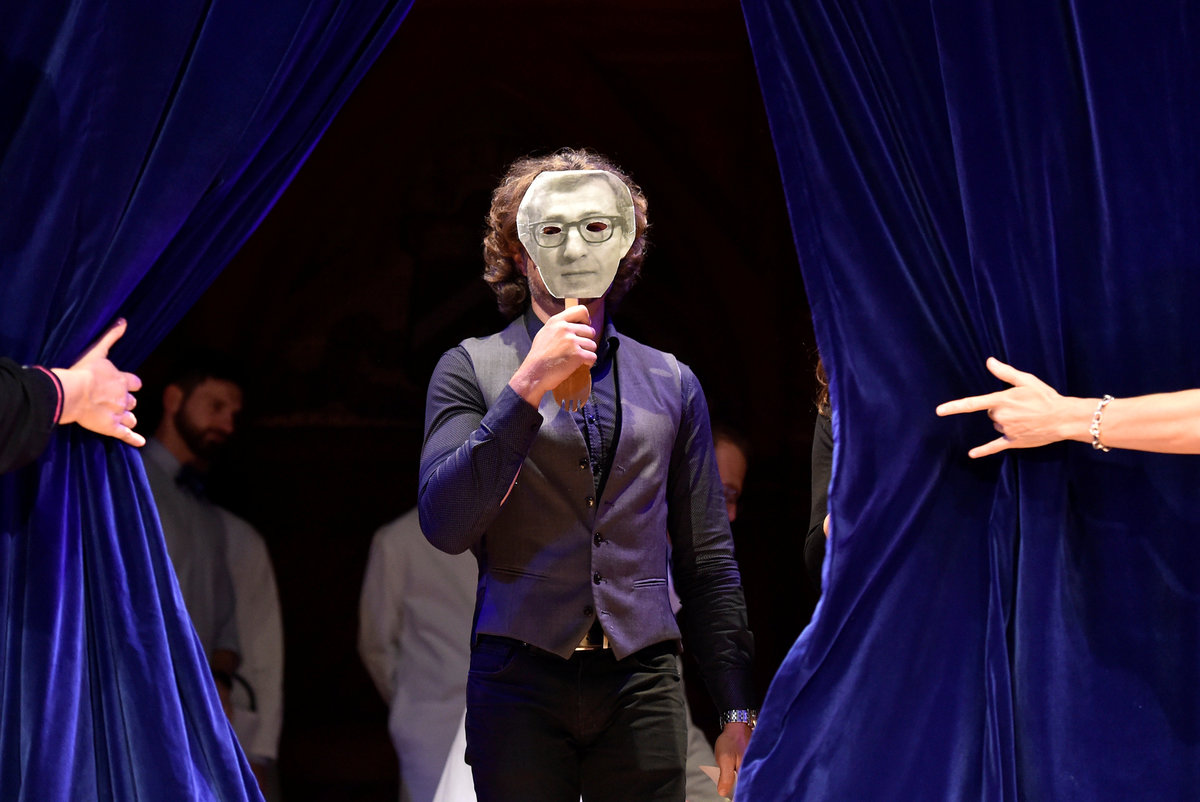
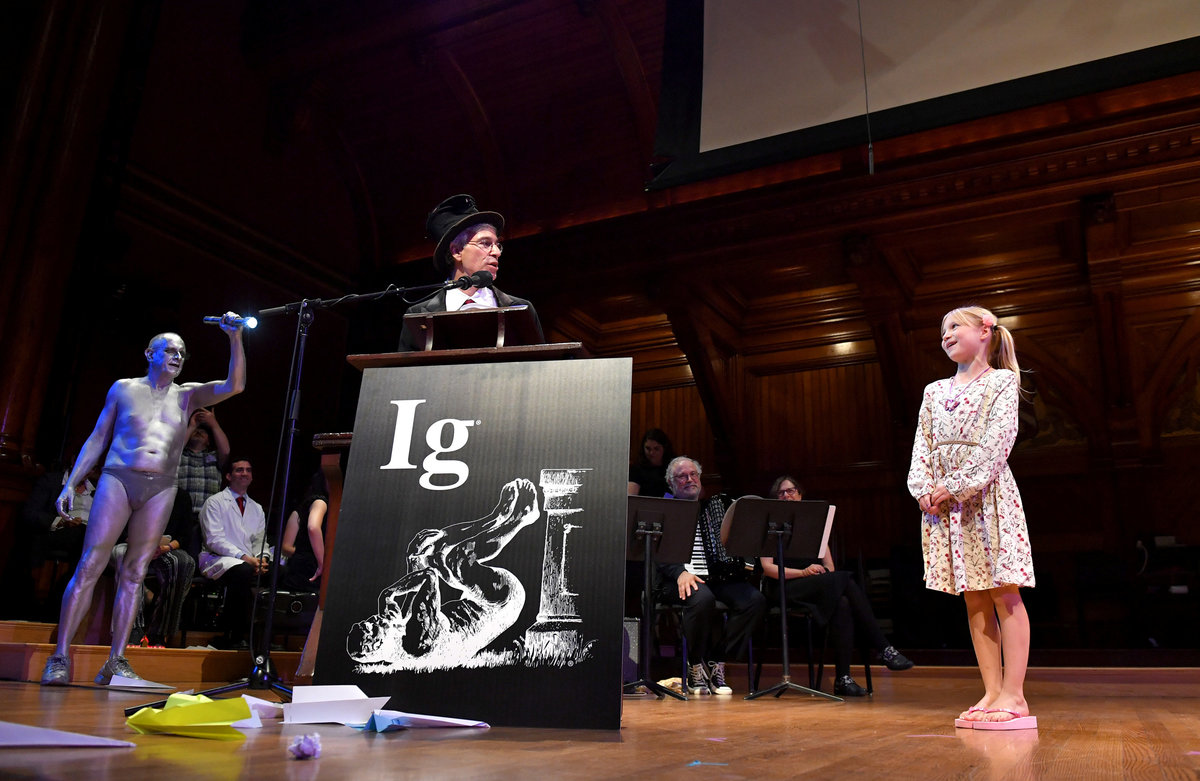
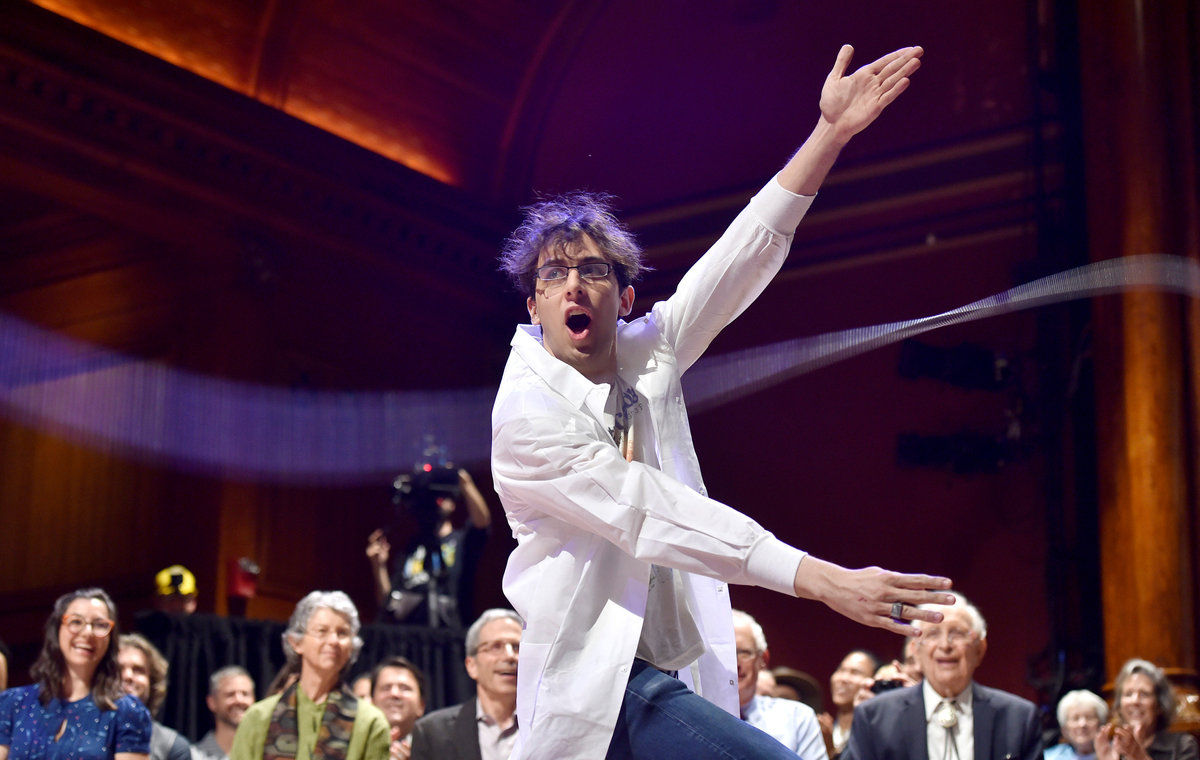
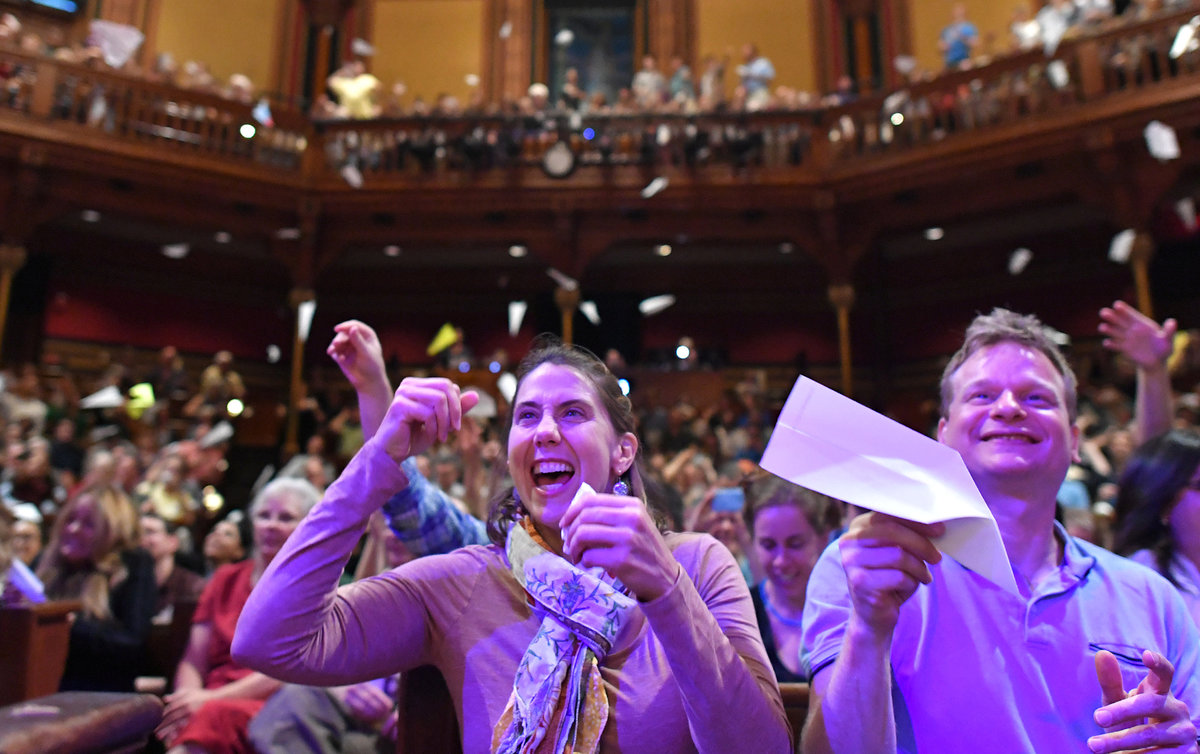
Eric Maskin, 2007 Nobel laureate in Economics, left, and Oliver Hart, 2016 Nobel laureate in Economics, try on plastic ears during the announcement that "Why Do Old Men Have Big Ears," won the Anatomy Prize during the 27th First Annual Ig Nobel Prize Ceremony at Harvard University in Cambridge, Massachusetts, U.S. September 14, 2017. REUTERS/Gretchen ErtlEmily Holman, of Cambridge, Mass., hugs Jim Bredt, the human spotlight, after winning "The Empty Box" prize during the 27th First Annual Ig Nobel Prize Ceremony at Harvard University in Cambridge, Massachusetts, U.S. September 14, 2017. REUTERS/Gretchen ErtlMatteo Martini, Lecturer in Psychology at the University of East London, U.K., appears to receive the Ig Noble prize in Cognition for his group study titled, "Is That Me or My Twin? Lack of Self-Face Recognition Advantage in Identical Twins" during the 27th First Annual Ig Nobel Prize Ceremony at Harvard University in Cambridge, Massachusetts, U.S. September 14, 2017. REUTERS/Gretchen Ertl"Miss Sweetie Poo," played by Dorothea Hartig, right, demonstrates to Master of Ceremonies Marc Abrahams how she will let award recipients know that their speech is going too long, with her repeated phrase, "I'm bored" during the 27th First Annual Ig Nobel Prize Ceremony at Harvard University in Cambridge, Massachusetts, U.S. September 14, 2017. REUTERS/Gretchen ErtlOliver Hart, 2016 Nobel laureate in Economics, center, participates in a demonstration for the Ig Noble Economic Prize titled, "Betting on Electronic Gaming Machines is Intensified by Reptile-Induced Arousal," during the 27th First Annual Ig Nobel Prize Ceremony at Harvard University in Cambridge, Massachusetts, U.S. September 14, 2017. REUTERS/Gretchen ErtlPerforming chemist Michael Skuhersky participates in a Moment of Science during the 27th First Annual Ig Nobel Prize Ceremony at Harvard University in Cambridge, Massachusetts, U.S. September 14, 2017. REUTERS/Gretchen ErtlDidgeridoo instructor Alex Suarez, center, demonstrates the Ig Nobel Peace prize-winning study, "Didgeridoo Playing as Alternative Treatment for Obstructive Sleep Apnoea Syndrome," during the 27th First Annual Ig Nobel Prize Ceremony at Harvard University in Cambridge, Massachusetts, U.S. September 14, 2017. REUTERS/Gretchen ErtlSally Buta, left, and Mike Scott, both of Arlington, Mass., throw paper airplanes during the 27th First Annual Ig Nobel Prize Ceremony at Harvard University in Cambridge, Massachusetts, U.S. September 14, 2017. REUTERS/Gretchen Ertl
Sign up to read this article
Read news from 100’s of titles, curated specifically for you.