The strong and complementary connections between agriculture and health seem obvious: farms should grow nutritious produce to improve health, and healthy employees make better farm labourers.
But these links have long been neglected during discussions on global trade and international development. Today the realities of the interactions between agriculture and health across the world are often perverse. Rich countries, for example, export unhealthy, fast-food diets associated with chronic diseases (including heart disease and diabetes) to poor countries, yet they simultaneously import healthy produce from those same poor countries.
Last month such complex and important dilemmas took centre stage at the inaugural conference in London of the Leverhulme Centre for Integrative Research on Agriculture and Health (LCIRAH) – a five-year £3.5m initiative to explore these issues and more. The event was held to galvanise interdisciplinary discussions between experts from the agriculture and health sectors.
Feeding a projected population of nine to 10 billion worldwide by 2050 was flagged up as a major challenge. So too was the rising demand for animal products and the ever-increasing proximity of animal and human populations. Both factors are likely to increase the risk of animal-to-human disease transmission - bird flu and Ebola are prime examples of diseases able to jump the species barrier in this way.
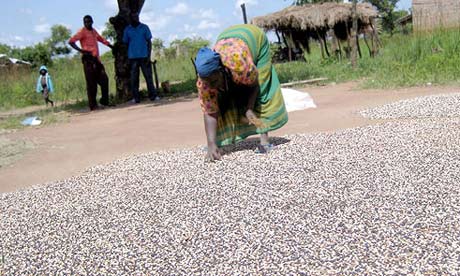
The international dimensions of health and agriculture mean both issues will have implications for people everywhere, including those living in Katine, north-east Uganda, where the Guardian is monitoring and supporting a development project. Katine's own agricultural challenges, including the thorny subject of land ownership, were raised in a recent blog post by Madeleine Bunting, discussing how to raise Africa's agricultural productivity.
Unhealthy diets
Much of the Leverhulme conference focused on the consequences of changing diets. Professor Ricardo Uauy, of the London School of Hygiene and Tropical Medicine, said the number of overweight people in the world is 1.2 billion, surpassing the 800 million who are undernourished. He also raised the spectre of average global life expectancy falling because of poor diets and inactive lives.
His analysis stressed how the emphasis on providing energy is misplaced, and how micro-nutrients for health, such as iodine, iron and vitamin A, have been sidelined. Globally, four carbohydrate-rich and micro-nutrient-poor crops – rice, maize, wheat and potato – represent 65% of food produced, compared to much healthier pulses at only 2%. He called for a new model of nutrition based on better and balanced diets – quality rather than quantity – and recommended growing our own food to produce healthy fruit and vegetables and promote exercise.
Prof Harriet Friedmann, of the University of Toronto, echoed many of these concerns. "The unhealthy diets of the north are now coming to the global south," she said.
Friedmann pointed to inequality within the global food market, especially since exporters in the south are now expected to produce out-of-season produce for supermarkets in rich countries. This produce, such as flowers or avocadoes, is often too expensive or unsuitable for providing a balanced diet for local people.
Poverty and ill-health were shown to occur mainly in rural and agricultural communities. Dr Stuart Gillespie, of the International Food Policy Research Institute, talked of the relationship between malnutrition and HIV. People living with HIV are six times more likely to die if they are malnourished than those without the virus, even if they have access to antiretroviral (ARV) drugs.
Treatment was also undermined during the recent rise in food prices when people living with HIV sold their drugs to buy food. Severe food shortages in Katine last year resulted in some people living with HIV/Aids reducing their anti-retroviral (ARV) dosages because they didn't have enough food with which to take them. ARVs need to be taken with food to avoid severe side effects.
There was consensus from speakers and panellists at the event about the enormity and increasing intensification of the challenges to address the complex connections between agriculture and health over the next few decades. Recommendations included sharing objectives between sectors and providing career incentives to encourage interdisciplinary working. It was clear from the event that action is crucial.
Guy Collender is senior communications officer at the London International Development Centre (LIDC) – an academic organisation that facilitates interdisciplinary research and training. The Leverhulme Centre is a project facilitated by the LIDC.