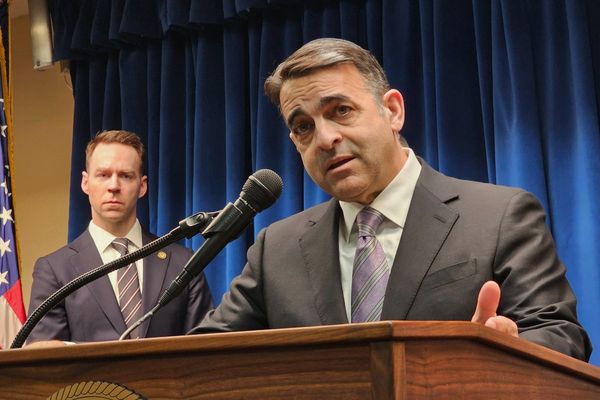
WASHINGTON _ Senate Judiciary Chairman Lindsey Graham said he will move forward with a plan to let Americans sue the Chinese government over the coronavirus pandemic by amending a law that protects foreign countries from lawsuits in U.S. courts.
"Now the time has come for us to put on the table new tools to deal with an old problem," Graham, a South Carolina Republican, said. "I cannot think of a more compelling idea than to allow individual Americans, or groups of Americans, to bring lawsuits against a culprit _ the Chinese government _ for the damage done to their family, to our economy and to the psyche of our nation."
Graham said his committee will consider legislation to amend the 1976 Foreign Sovereign Immunities Act. GOP Sens. Marsha Blackburn, Tom Cotton and Josh Hawley have offered separate proposals to allow lawsuits against China over the virus.
The law was last amended in 2016 when Congress, over the objections of the Obama administration, voted to let victims of terrorism sue any foreign government _ not just designated terrorist states _ for sponsoring terrorism. The change revived lawsuits against Saudi Arabia over the Sept. 11, 2001, terrorist attacks.
Some lawmakers on the Judiciary panel, including top Democrat Dianne Feinstein of California, voiced skepticism about the proposals, saying the U.S. should focus on its own response to the virus and the failure to prevent a widespread outbreak that has caused more than 120,000 deaths.
"How can China be held responsible for decisions the federal and state governments are making now?" Feinstein said.
One witness told the committee that changing the law regarding sovereign immunity could backfire against the U.S.
"The United States has the most to lose from weakened immunity rules," said Chimene Keitner, a professor of international law at the University of California's Hastings College of Law in San Francisco. "Private litigation will not force China to negotiate."
But Graham said he wanted "as many levers to get China to change" as possible. "We're going to vote on this bill."