At a recent summit in New York to announce the UN’s sustainable development goals, UN secretary Ban Ki-moon declared that these simply will not be achieved “without full and equal rights for half of the world’s population, in law and in practice”. The UN’s goal of universal access to energy is no exception: the world’s poorest women desperately need power for their homes, including, crucially, the lights for their children to read by.
“Energy [access] is not just a poverty issue. All around the world, especially across Africa, it’s a woman’s issue,” says Derrick Hosea, founder of OneLamp, a Ugandan social enterprise that aims to expand access to affordable clean energy by selling and delivering solar lights to those at the bottom of the economic pyramid, paid for via text messages. “Because energy is for household use, mothers and children bear the brunt of its impact.”
Women are “the neck of society”, explains Caroline Wamuyu, a member of the projects team at Green Energy Africa, a Kenyan organisation that provides communities with solar and wind technologies. “A single mother in a rural area will be the one to feed her children, take care of the animals, clean and do the laundry. And she’ll still be the source of income for her family.”
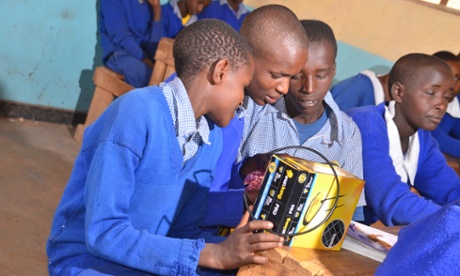
As Wamuyu points out, energy access is fundamental to educating people in the developing world. By not providing mothers with electricity, she says, children will find it harder to learn to read and write.
Yet the World Bank estimates 1.1 billion people live without electricity. Many of these people are unable to find steady employment – and tight household finances mean not being able to afford to send children to school. Any home study often has to be done by the light of toxic and expensive kerosene lamps. Moreover, when it comes to educating children, there is gender bias: a family might only have enough money to send one children to school – and it will usually be a boy. Only two out of 35 countries in sub Saharan Africa have gender parity in schooling, says Unicef. Those without schooling will inevitably struggle to find decent work in the future.
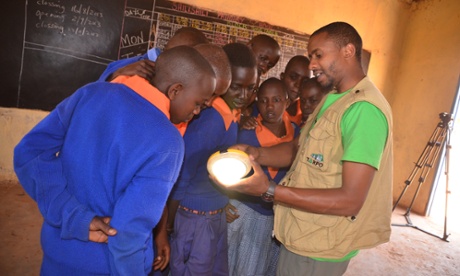
It’s a vicious cycle, but how it can be broken? Hosea believes that a big part of the solution is solar lamps, targeted at children. Schools offer an easy distribution channel where children can take solar lamps home to help their studies and to benefit their mothers. They are also a way to engage young people, especially girls, in engineering, and to become “advocates of a clean energy future”, he says. OneLamp shows its commitment to gender equality by being run mostly by women, who are responsible for 90% of its operations. One of its key aims is to increase literacy rates at primary schools across Uganda.
Recognising both the potential benefits of solar lamp distribution in general and in particular for the girls and women who make up 70% of those in rural areas affected by poverty, Enel Green Power and Enel Foundation have set up their own energy project: Powering Education, in partnership with the NGO Givewatts,The Coca-Cola Company and the Global Shapers Community of the World Economic Forum. One of key long-term aims is to help close the gender gap that exists in energy access and education.
The project was launched in Amboseli National Park in Kenya towards the end of 2013. The first phase saw around 300 lamps handed out and a number of indicators, including school performance, evaluated. The next phase will see some 800 lamps handed out across 60 schools, and will place more focus on how access to clean energy affects households.
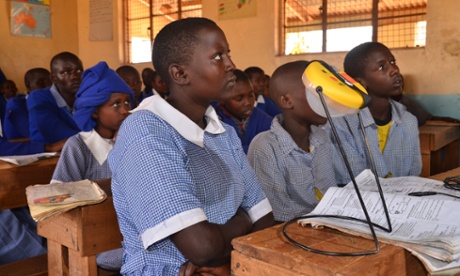
Mauro Ometto, leader of the Powering Education project and working in the Business Development of Enel Green Power in East Africa, says that in the first phase the aim had been to distribute lamps equally, but due to “the demographic composition of schools in the sample” it ended up being a 56/44 percentage distribution weighted in favour of boys. Nevertheless, initial results showed no gender imbalance when it came to how this solar energy access improved educational performance. The results showed an average 17% increase in study time for girls and boys.
“From a research standpoint, you might expect to see heterogeneous effects of lamps between girls and boys, due to certain attitudes to study, and varying household responsibilities. However, it turns out that the effects of the lamps aren’t significantly different,” says Ometto.
A key benefit from the project so far has been the way solar lamps help reduce energy costs when households switch from kerosene: results showed a reduction in weekly lighting bills of 10-15%. “Such savings were reinvested by [families evaluated] in education and, surprisingly, in sanitation – the construction of a proper toilet next to the house,” he says.
Another potential lesson for the project’s next phase is that the lamps could facilitate education outside schools. For instance, adults with low literacy skills, including mothers, might be able to take evening classes, improving their employability and ultimately, perhaps, earning enough to send children to school or buy solar lamps themselves.
Though the project has so far given out lamps for free, there is some debate about whether they should actually cost something. Ometto says that, while pricing a product too high will obviously restrict how many households can access it, distributing it for free is seen by some in the sector as undermining the market.
“All our lamps have been given out for free. The main reason for this was to control the actual number of lamps in use within each school and class, and make sure our analysis was robust from a research point of view,” Ometto says. “In the future, we’re considering analysing the economic factors [influencing] the adoption of solar lighting. If we do, we won’t [hand them out] for free, but adopt different distribution models currently used, such as pay-as-you-go solutions.”
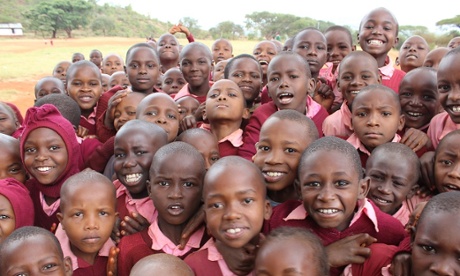
He also expects to see “a threshold relation” between household income and the impact of solar lamps: in other words, above a certain level of income the impact of a solar lamp may be insignificant.
While Ometto and his team determine the best model of distribution and pricing, OneLamp’s Hosea is certain that women should be at the centre of any model they come up with. The One Lamp solar lights can be bought directly from the organisation, paid for via text message, and are then delivered to the buyer in one to three days by female matatus [private minibus] drivers. OneLamp also trains rural women, usually shop owners, to act as retailers, paying for lamp orders via texts and selling the lights on to those without mobiles. These retailers can also train customers with mobiles who come in to their shops to order the lamps themselves.
“To end energy problems in African households we need a cultural revolution, and women have a pivotal role to play,” says Hosea.
Content on this page is paid for and produced to a brief agreed with Enel, sponsor of the energy access hub on the Guardian Global Development Professionals Network.