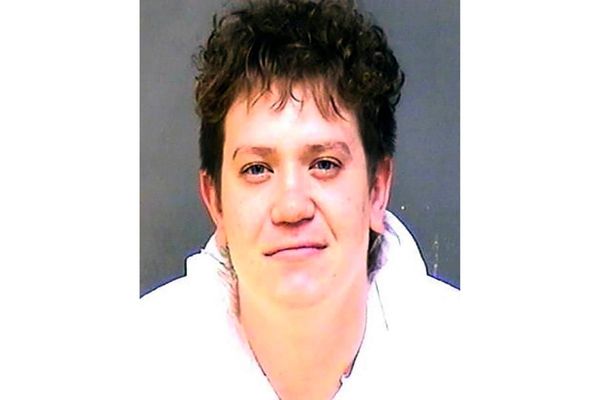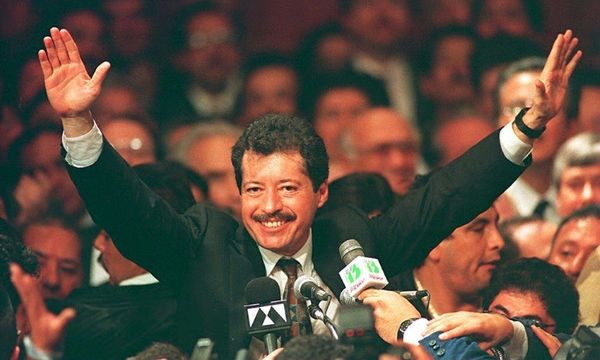

Indicted Ald. Edward Burke (14th) has a choice to make in 90 days now that the City Council has unanimously approved the latest in a seemingly endless string of ethics reforms.
The revised ordinance championed by Mayor Lori Lightfoot states: “No official or employee may derive any income, compensation or other tangible benefit from providing opinion evidence as an expert against the interests of the city in any judicial or quasi-judicial proceeding before any administrative agency or court.”
Steve Berlin, executive director of the Chicago Board of Ethics, has issued a written interpretation of that language.
According to Berlin, it prohibits aldermen from representing private clients or receiving “compensation or anything of value for such representation” in “certain types of cases before noncity administrative agencies” including cases that “could affect the relative tax burden of city residents.”
The language is tailored to prevent Burke from doing what he’s done for decades — and what got him in trouble with the feds.
His law firm specializes in property tax appeals. He has won millions in property tax reductions for scores of clout-heavy clients, including Donald Trump. He’s gotten away with it simply by recusing himself from City Council votes involving clients doing business with the city or other agencies of local government.
Before those votes, however, he would preside over behind-the-scenes deliberations on those matters and decide which items did and did not get on the agenda of the Finance Committee he chaired.
From now on, simple recusals won’t be enough.
The aldermen who stands accused in a 14-count racketeering indictment of using the city as a “criminal enterprise” to squeeze businesses to hire his law firm has been forced to choose: stop handling property tax appeals; divest himself from Klafter & Burke; or step down as alderman.
If he does none of those, he would face daily fines up to $5,000 for each offense.
Burke could not be reached for comment on his intentions.
Ald. Patrick Daley Thompson (11th), nephew and grandson of Chicago mayors, said the new ordinance poses no such conflict for him. He handles property tax appeals, but only outside the city.
Ald. Ray Lopez said the language does not go nearly far enough. At Wednesday’s City Council meeting, he introduced an ordinance that would prohibit all outside employment and mandate that aldermen serve their constituents full-time.
That’s not the only change in what Lightfoot has called the first of many ethics reform ordinances aimed at cleaning up a City Council that has sent more than 30 current or former members to prison since 1970.
The ordinance approved Wednesday by a 50-to-0 vote also:
• Empowers Inspector Joe Ferguson to enforce his own subpoenas, grants him full auditing and investigatory oversight over the City Council and authorizes investigations up to five years after an offense occurs, instead of just two years after an alleged violation.
• Raises the maximum fine for “high-level” ethics violations to $5,000, up from the $2,000 recently levied against Burke, though the Board of Ethics had recommended $20,000. The $500 limit for “low-level” violations would double to $1,000.
• Broadens the definition of lobbyists to include nonprofits, but waives their registration fees and pushes the effective date to Jan. 1. Only those “paid or otherwise compensated” would be required to register.
Yet another Lightfoot ordinance introduced Wednesday empowers the corporation counsel to release Ferguson’s reports whenever they involve “sustained findings regarding conduct that either is associated with a death or is, or may be, a felony as defined in the Illinois Criminal Code and is of a compelling public interest.”
Two high-profile IG reports kept under wraps by former Mayor Rahm Emanuel fit that description: the police shooting of Laquan McDonald and the death of David Koschman.
After twice being cleared by the Chicago Police Department when his uncle, Richard M. Daley was mayor, Richard J. “R.J.” Vanecko pleaded guilty on Jan. 31, 2014 to involuntary manslaughter for throwing a punch that killed Koshman in 2004.
That followed a Chicago Sun-Times investigation that led to the appointment of a special prosecutor.
Vanecko was given a 30-month sentence — 60 days in jail, 60 days on home confinement and the rest on probation — for the crime he committed when he was 29 years old.
Three years ago, old-guard aldermen led by Burke and former Budget Committee Chairman Carrie Austin (34th) kept the Burke-controlled, $100 million-a-year workers’ compensation program walled off from scrutiny by Ferguson.
Program audits that Ferguson routinely conducts to determine whether taxpayer money is being wasted and whether programs can be run more efficiently were placed off-limits when it came to the City Council.
Now, Burke and Austin are in the federal crosshairs. Neither alderman was in any position to marshal opposition to Lightfoot’s plan. Both voted for it.