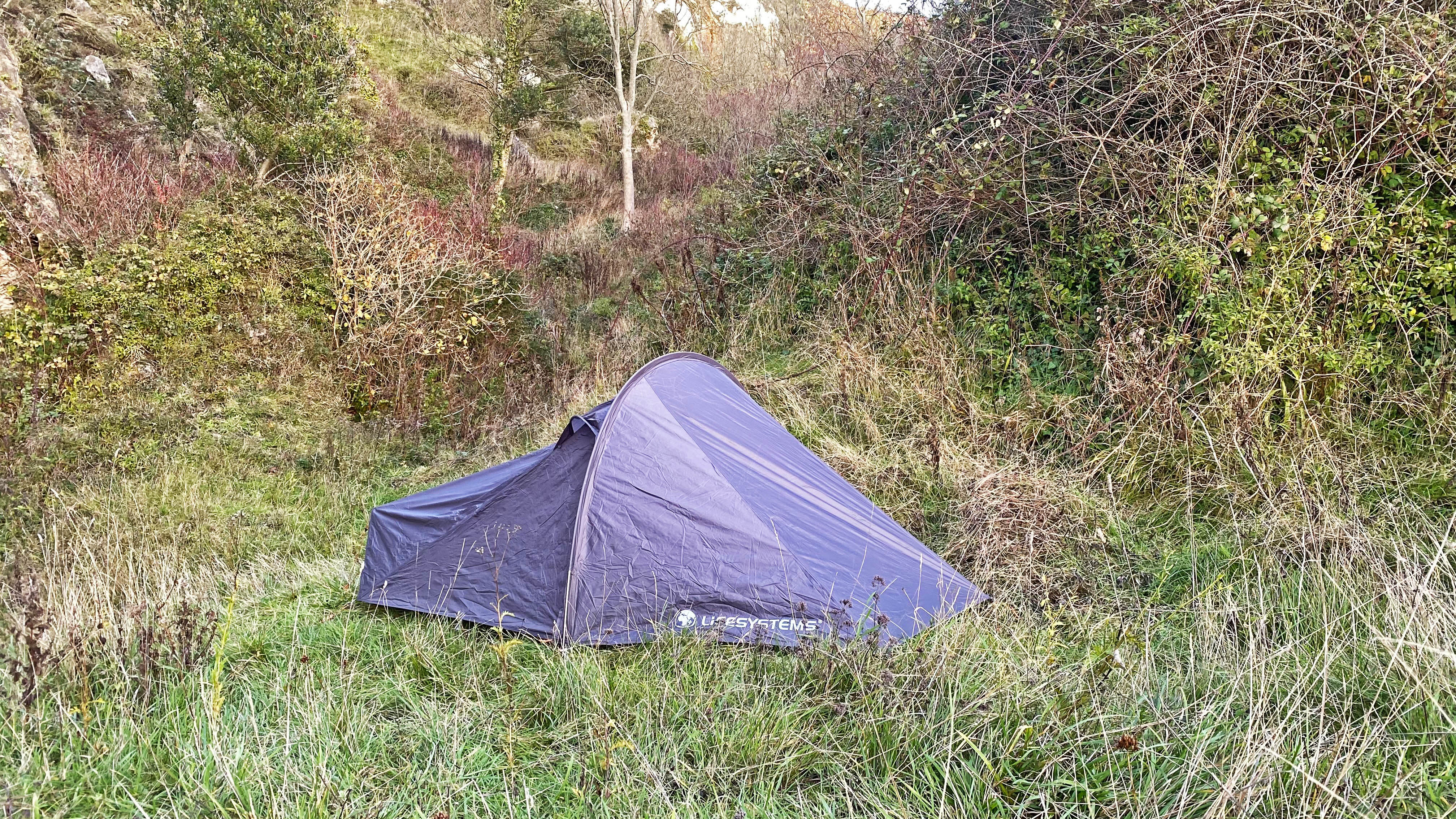
A company that specialises in producing gear for adventure travel and outdoor pursuits, British brand Lifesystems has been making good safety equipment, including bivvy bags and emergency shelters, for some time, but this is their first foray into the backpacking tent market, so I was very interested to see what they came up with.
My first impressions of the Solo Peak tents were positive: with one main pole and a mostly mesh inner, it’s light to carry and fits easily into a hiking backpack or even a larger running pack, and the design looked decent. The proof in the pudding, of course, would be how it performed once I had it pitched, out on the trail.
I took delivery of this tent late in the year, so although it’s not really designed with winter in mind, timing dictated that I test it – and myself (and my colder weather sleeping bag and camping mat) – in the challenging conditions of late November and early December in wet and wild England (see what we do for you guys?). Packing my bag and staring at a bleak forecast, I was desperately hoping it would be as good as it looked. Read on to see how I fared.
Lifesystems Solo Peak Tent review
Price and availability
The Solo Peak tent is available now directly from Lifesystems and also from online and brick-and-mortar retailers, including Decathlon. Full price it is £229.99 (~$306 / €262 / A$463) for the main tent, with extras such as the Footprint (£29.99) and the Porch (£19.99) costing more. (I highly recommend getting the footprint.)
You can also get an extra peg set for £7.99 (and you only get enough stakes to peg the Solo Peak out properly with the standard set-up, so it's worth having some spares).
Specifications
- Style: Lightweight, single pole shelter
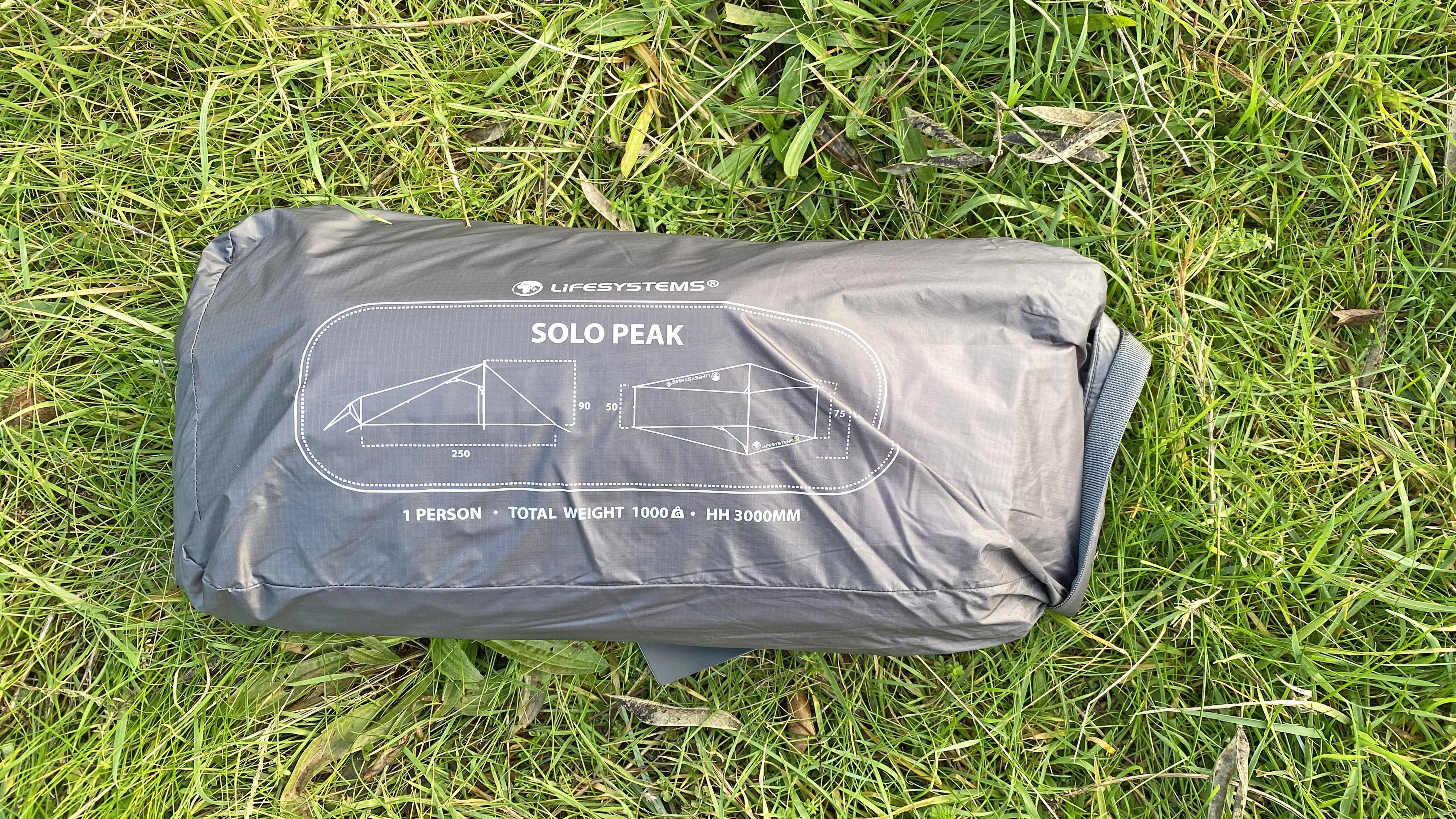
- Pack size: 32 x 15 x 12cm
- Inner dimensions (W x L): 75–50cm x 250cm
- Peak height: 90cm
- Weight: 1000g
- Seasons: 3
- Capacity: 1 person
- Vestibules: 1
- Fly fabric: 20D Siliconised nylon with taped seams (HH 3,000mm)
- Groundsheet: Nylon (HH 3,000mm)
- Poles: 2
- Pegs: 10
- Pitch time: 5–10 minutes
- Colour: Grey
- Extras: Footprint / Porch / Peg set
Design and materials
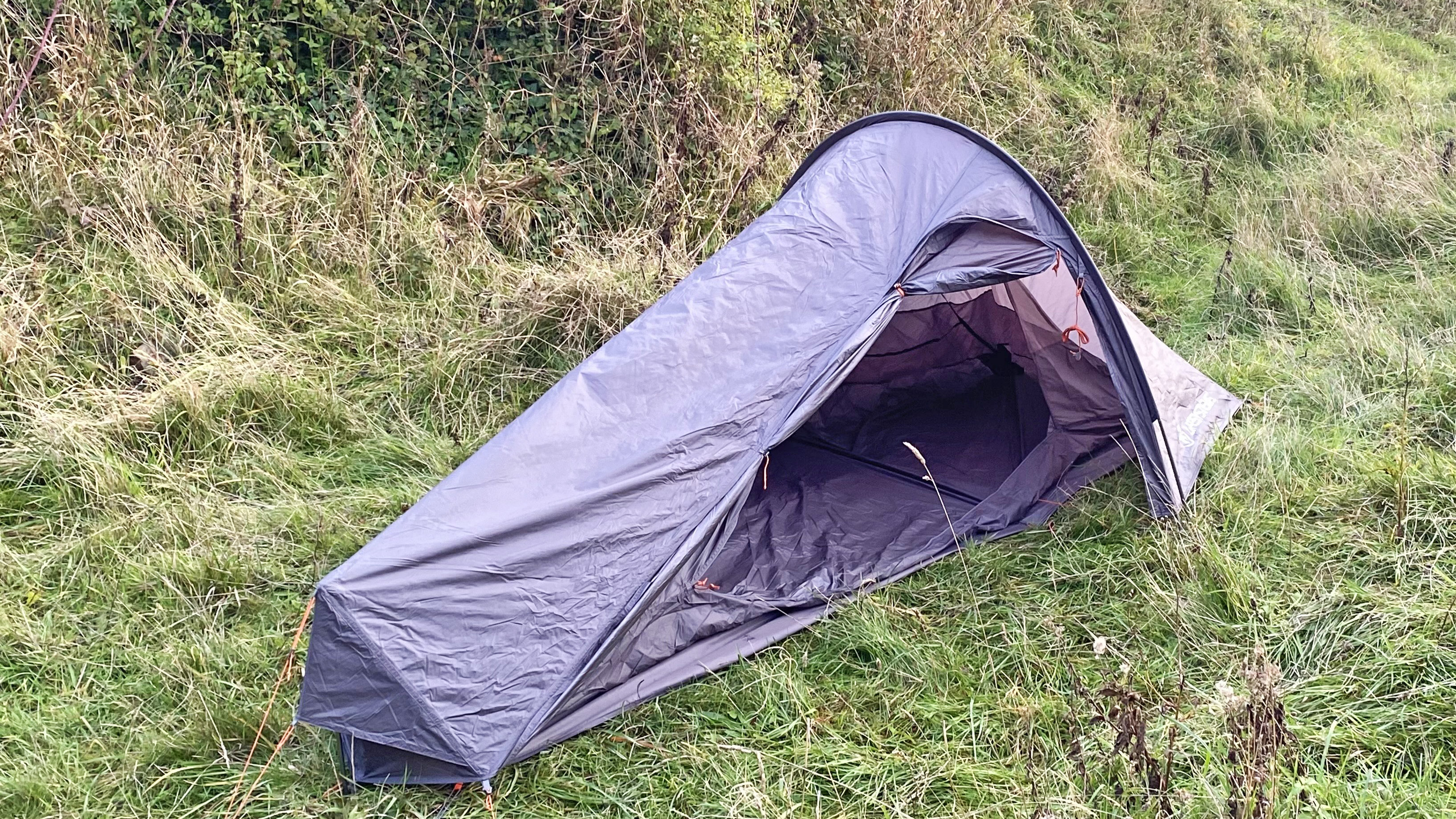
The Solo Peak tent is made primarily with 20D siliconised nylon – a good option for a tent where low weight is the absolute priority. The seams are taped, and both the fly and the groundsheet have a hydrostatic head rating of 3,000mm, which is impressive for such a lightweight and reasonably priced shelter.
The inner has a bucket floor to keep water from seeping in, but is primarily made of mesh, which is why the carry weight is so low. This does affect the tent's thermal properties (see below), making it best suited to non-winter adventures and more modest peaks.
There is one main pole that slides through a sleeve in the fly sheet, and the two ends then slot into sockets. This creates the hoop that provides the shelter's main structure. A small pole then needs to be fitted to the foot end of the fly, after which you peg out the sheet and tension it.
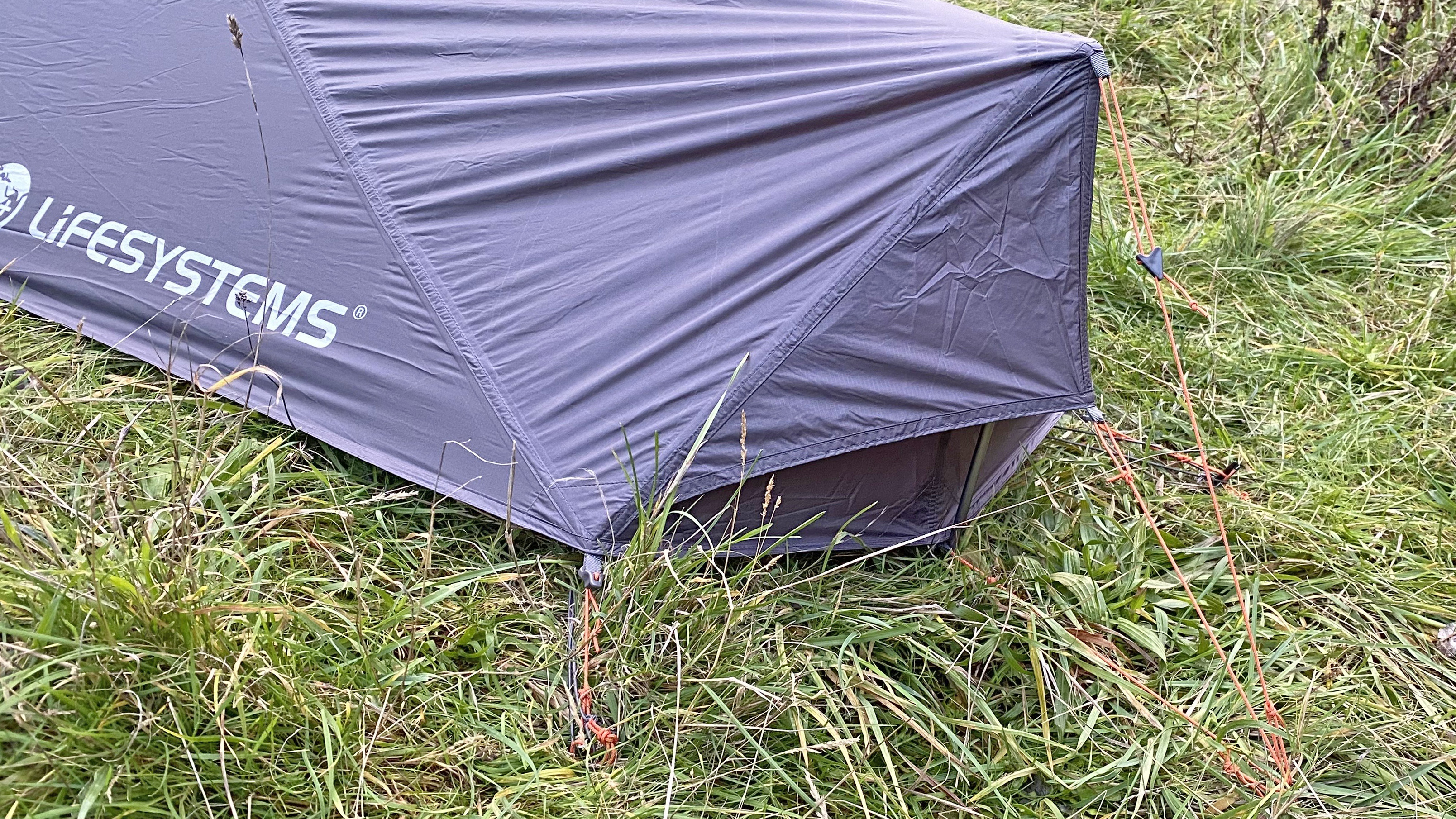
The tent arrives pre-assembled, with the inner already attached to the fly with a series of clips, which is intended to make pitching faster and fuss-free, but the first time I put this tent up (in a cutting late-November wind), I found this to be confusing, and soon detached the inner from the outer. In my opinion, it’s far easier to pitch the fly on its own, and then you can clip the inner into place in a mere minute.
The components are all good-quality, and the tent comes with YKK anti-snag main zips, 1.8 mm Dyneema guy-lines and lightweight aluminium poles and pegs (the latter are fitted with quick pull cord loops to make it easier for you to pull them out of the ground).
A pole repair kit is included, and the square-shaped stuff sack isn’t too tight (an absolute blessing when you want to break camp and move on quickly). Lastly, the neutral colour allows you to be very discreet while wild camping.
Performance
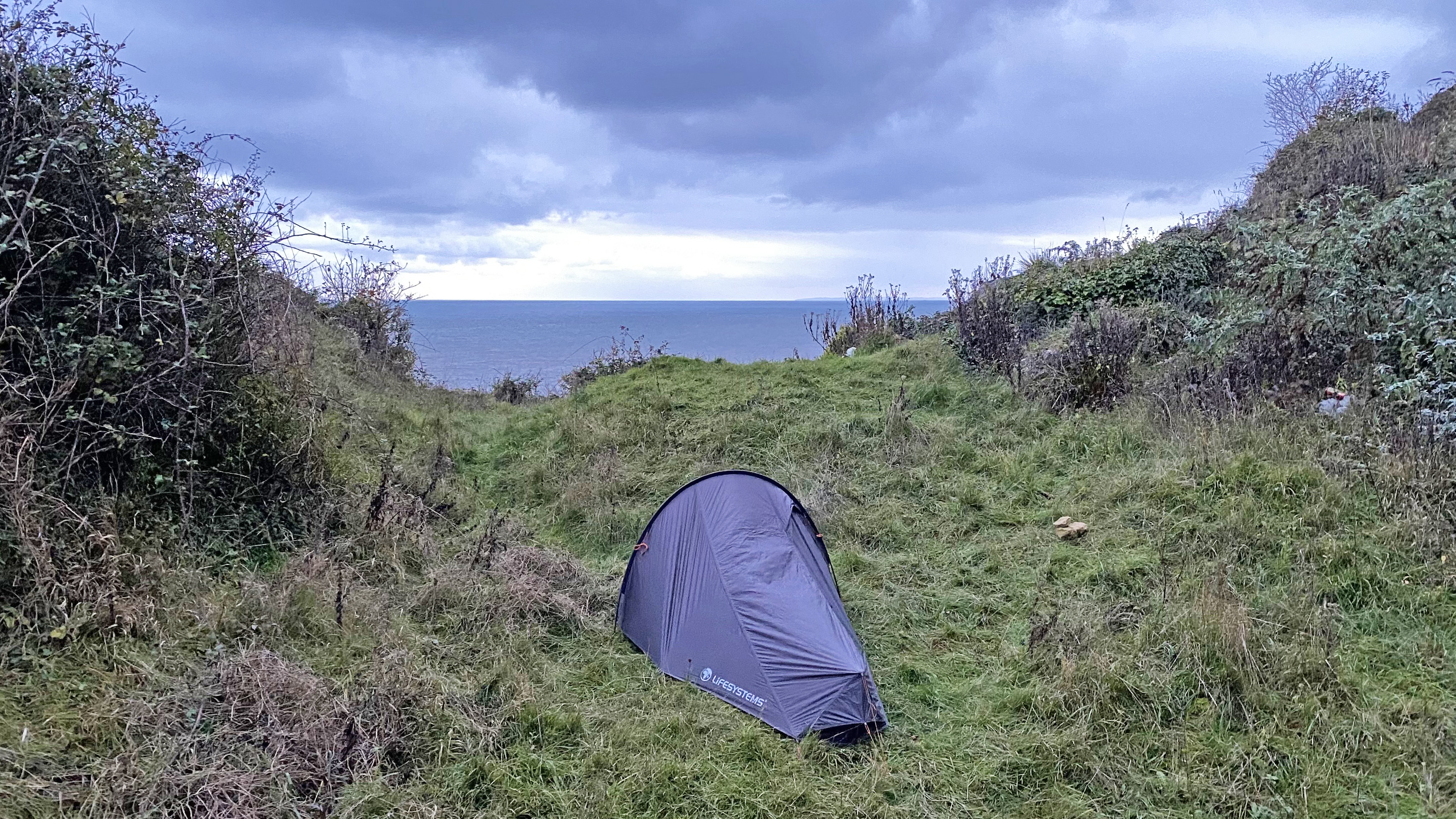
Did I mention that I tested this tent in November and December? Well, I did, and on my maiden voyage with the Solo Peak, it absolutely lashed it down with rain overnight, and the wind blew a hooley. But the tent stayed put and kept me completely dry, and considering it’s not designed or intended as a winter shelter, that’s pretty impressive.
Achieving the correct amount of tension is a little bit of a faff (and some confusing loops and hoops on the fly appear to be there for stakes to go through, but if you do peg them all out, the profile of the tent is impacted). If you don’t get it right and tension the rig nicely and taut, the fly sheet can be very noisy in the wind. As with all tents, you tend to refine the process a little bit every time you pitch it.
As per above, I found it easier to pitch the Solo Peak fly first, and then attach the inner – rather than wrestle with the whole shebang in the wind. The design of this tent means you can quickly get the outer up, keep your kit dry while you tension it, and then get in and out of the elements while you fix up the inner.
It’s also easier to dry the layers separately and fold them all away, but some people may prefer to keep the inner attached to the fly.
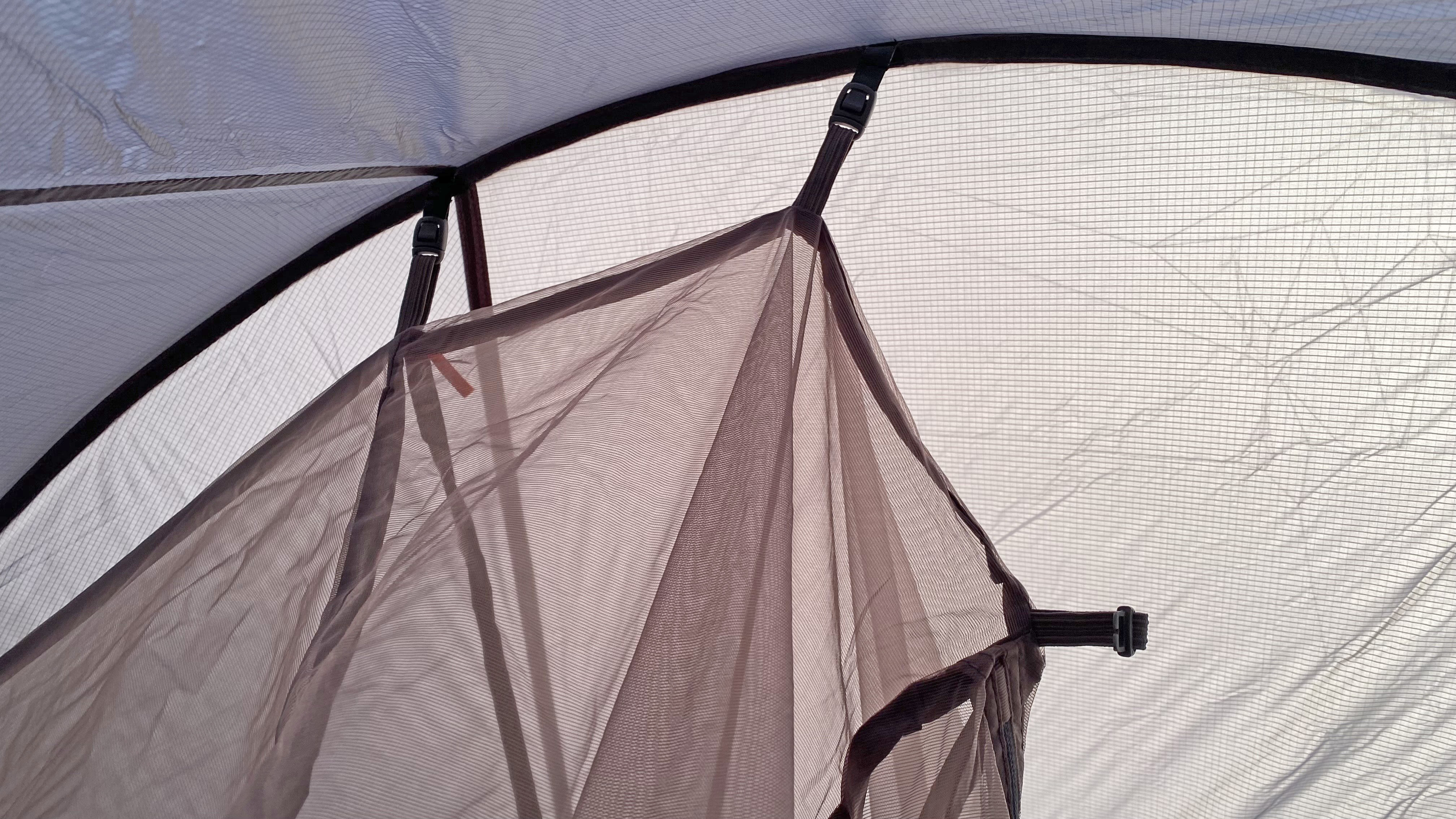
As the name suggests, this shelter is intended for solo adventures (or at least people who like their own room, rather than sharing) who are travelling fast and light, so it’s obviously relatively compact – the hiking equivalent of a capsule hotel room.
As such, the shape tapers from 75cm at the head and shoulders end to 50cm at the feet. This is no place for doing yoga or swinging cats, but once inside the tent, I found it to be spacious and long enough for me (and I’m a fairly tall bloke – 186cm), with a reasonable amount of headroom (100cm) for sitting up and getting sorted.
I love the fact that there is a decent-sized vestibule on this tent – a rare luxury on a one-person ultralight shelter. This means you can stash your pack and hiking boots somewhere they’re not exposed to the elements, without cluttering or muddying the main compartment.
If you invest in the optional Porch (which is a bit basic and feels overpriced, in all honesty), you could potentially shelter from light rain while using a camping stove (as ever, great caution is needed when using a stove close to a tent).
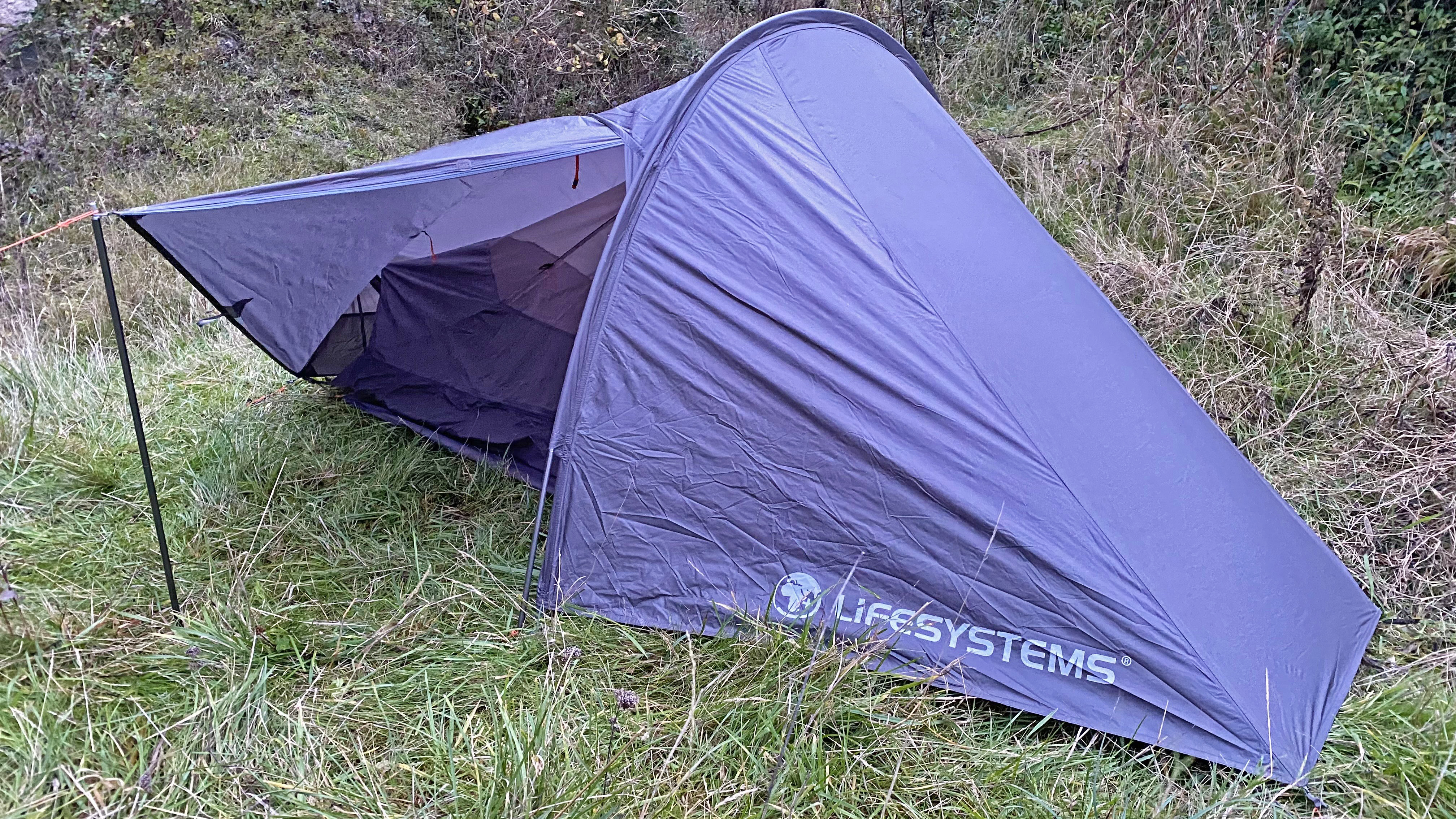
The inner is almost entirely made from mesh, which is excellent for keeping the carry weight down and insects out, while allowing plenty of airflow in. It does, of course, mean that the insulation levels are considerably lower than those of tents with less cold-porous fabric inners.
As I was testing the tent in the winter, I had to use a camping mat with a high R rating and a cold-weather sleeping bag (rather than the sort of lightweight sleeping bag you’d ideally pair this tent with), and I could feel the chill on my face, but with the right supplementary gear, it was comfortable enough.
The main thing was the tent kept its footings, and the (at times torrential) rain did not get through. The groundsheet did its job too, in some very conditions, although I was glad I had the footprint.
I did encounter some minor frustrations – there are barely enough stakes to use all the loops and the guy ropes, and the placement of some of the peg eyelets was questionable (including one for the inner that’s right by the door, making me fret about stepping on it every time I got in and out).
There are minimal internal features, and the stash pocket on the inside (the one flourish) is very flimsy. But that is a minor grumble, and overall, I was a dry, warm and happy camper while using the Solo Peak for quick-paced adventures.
Verdict
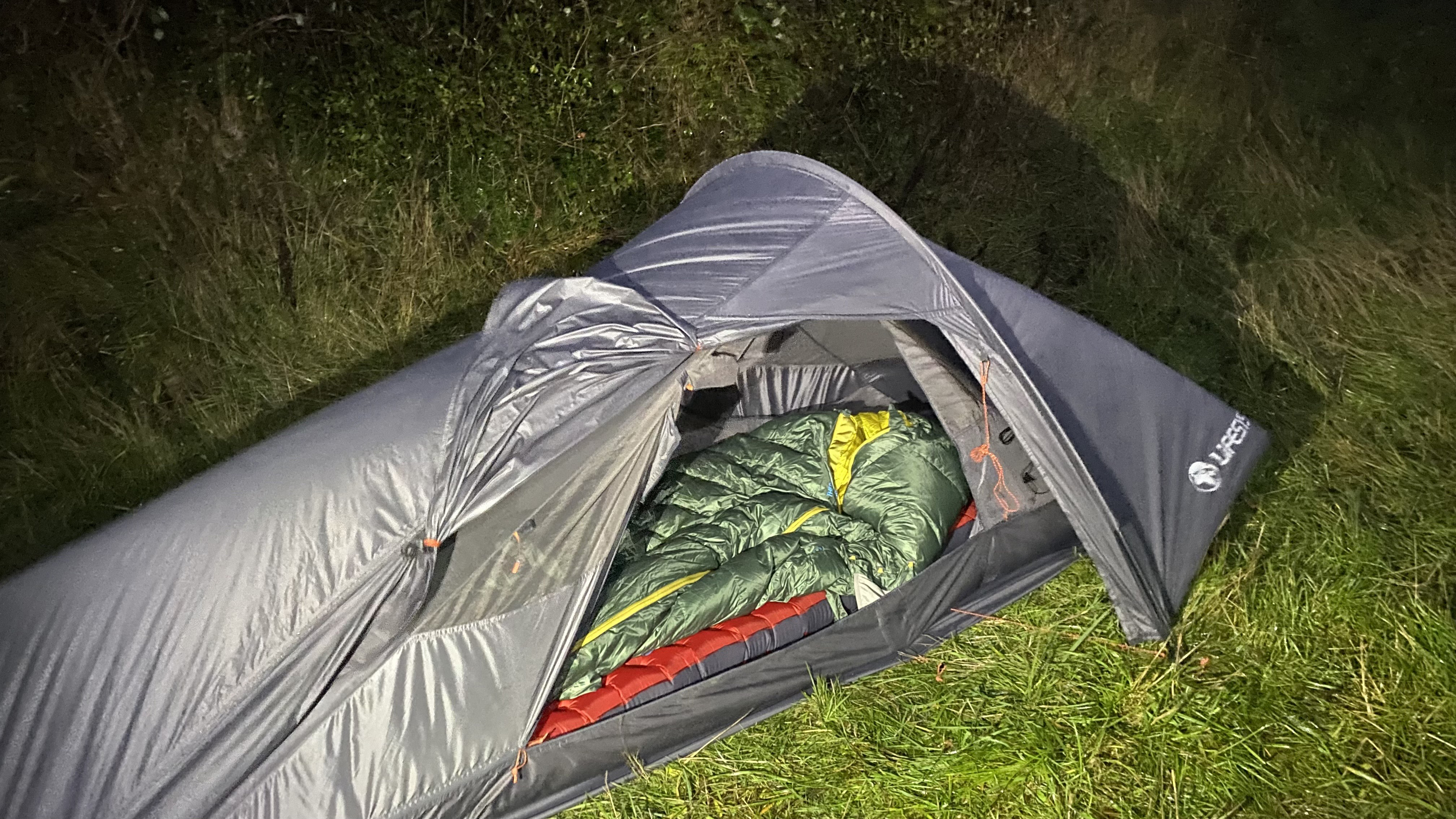
Despite trail testing the Lifesystems Solo Peak tent completely out of season, I’ve been really impressed with how this incredibly lightweight shelter stood up to the challenging conditions. It proved to be reliably rainproof, and the designers have successfully achieved a balance between keeping bulk down while providing enough space for backpacking campers to be comfortable. It’s also pretty reasonably priced, although the extras (the footprint and the 'porch' are a bit pricey in my opinion.
Some alternatives to consider
For the serious gram-shaving ultralight enthusiasts out there (and those doing multiday races) who think 1kg is too much to cart around, the Vango F10 Neon UL1 is worth exploring; it tips the scales at just 509g and boasts a hydrostatic head of 2,000mm, but the price tag is considerably heavier and I'm still not sure about the toothpick-style stakes.
It's not quite as light as the Solo Peak, but the Alpkit Soloist is a good budget one-person shelter, which kept me dry in the wilds of Scotland during a soggy October odyssey along the West Highland Way.
If you’re exploring with a trail buddy or just want a bit more room for yourself, the Nemo Dagger Osmo is an excellent 2-person lightweight tent. Or, if you do most of your lightweight adventuring on two wheels rather than two feet, definitely check out the excellent Hubba Hubba Bikepack range of shelters from MSR.