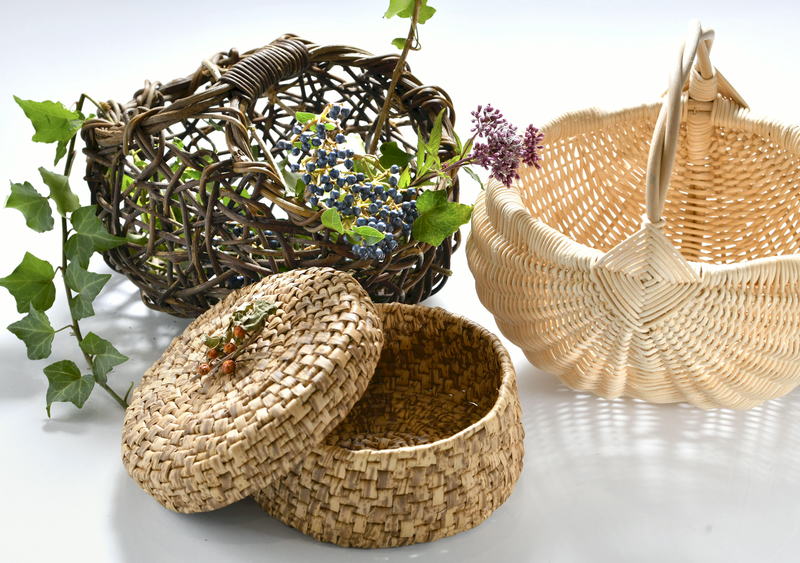
Let's imagine making an attractive basket for yourself, using natural plants. Some of these baskets -- which have a rustic texture and a beautiful, graceful appearance -- are comparatively easy to put together. Why not give this fun do-it-yourself activity a try?
Eiko Tanikawa is an expert on such baskets, a tradition that has been passed down in rural areas around Japan. She's familiar with their history and culture, including how people have used them.
"Japan is blessed in its nature," she said. "We've used plants and vegetation since olden times to make a variety of baskets that bring out their unique characteristics."
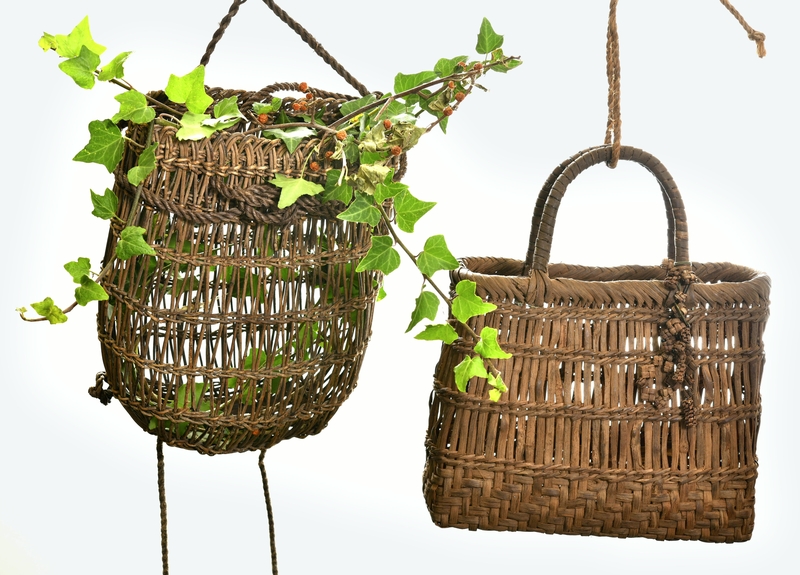
There are many raw materials that can be used, such as rattan, akebia vines, strips of bamboo and white birch. This article will focus on weaving akebia vine, which has elasticity and strength, and is available in stores. To make it easier to handle, soften it by steeping it in a large amount of hot water. Ikebana scissors are just right for cutting the vine.
Start by weaving the middle section of the bottom. Stretch the vine and line up four pieces vertically. Place three pieces on top of them to form a cross.
"The cross of these vines becomes a sort of framework," Tanikawa said.
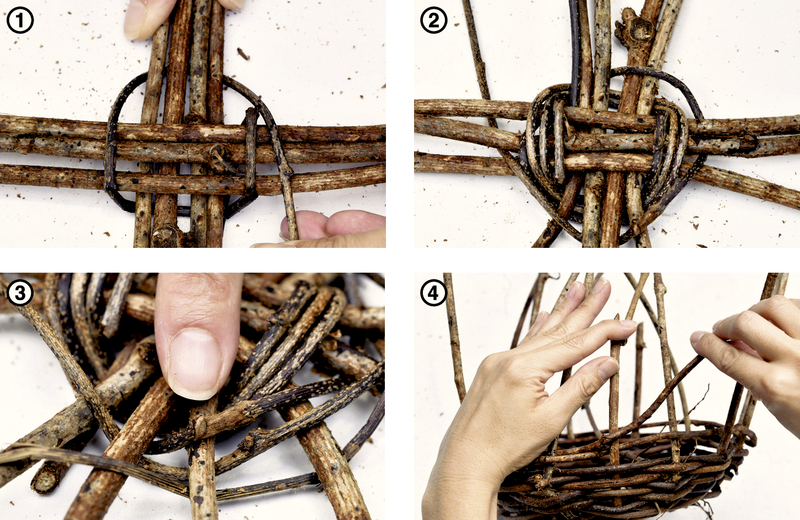
Now take another piece of vine and wrap it a few times around the cross (photo 1). She calls this vine a "knitting vine," and the vines that form a cross "framework vines."
Next, spread the framework vines so that they radiate outward. Then weave, alternately passing the knitting vine over and under two framework vines. (photo 2). After weaving the knitting vine all around once, cut one of the framework vines short. Widen the space between the remaining radiated pieces and keep weaving for a while in the same way: alternately passing the knitting vine over and under two framework pieces.
As the gap between each radiated vine grows wider, start passing the knitting vine over and under one framework piece instead of two (photo 3). Keep weaving until the basket's bottom becomes the size you want.
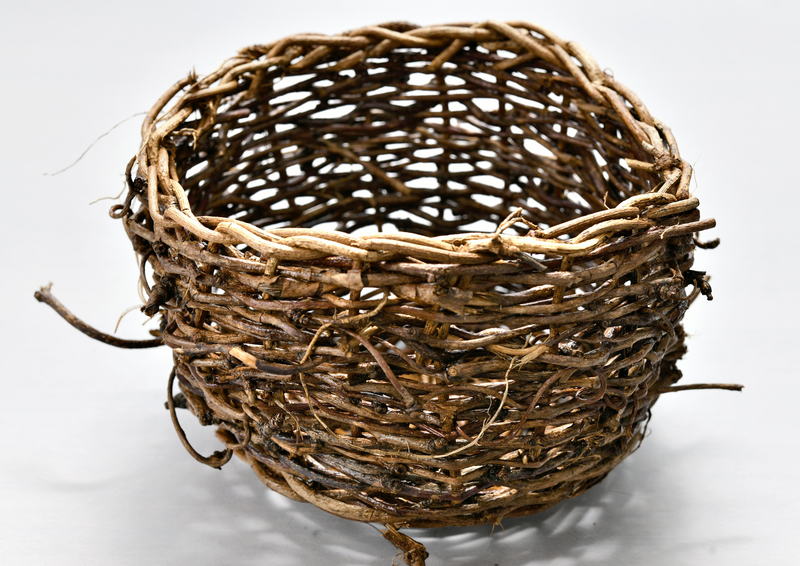
After finishing the bottom part, weave the sides. Bring the bottom closer to you, stand up the framework vines and start weaving, passing the knitting vine over and under each framework vine. (photo 4). Keep weaving until it reaches the height you want.
"When the knitting vine is about to run out, add a new vine by overlapping it with the one you're weaving. If a framework vines breaks, insert a new vine, and that should be OK," Tanikawa said.
To finish, tidy the edges of the framework vines. Pass them under the next vine and then fold the end outward, before tucking it in two vines away.
Once you've got the knack of the weaving, you can make more baskets or bags in different sizes and heights.
They can be used as accessories or to hold flowers. Once you master this weaving method, you can repair them easily.
"Baskets are created through the coexistence of people and nature. It'll be fun to have them in your life," Tanikawa said.
Weaving tips for beginners
Various plants can be used to make a basket. Rattan is easy to handle even for beginners, and akebia is resilient, with the vine taking various shapes. Baskets made from wild grapevine develop a luster over time.
These vines are available at specialty shops, leading grocery stores and handicraft shops such as Tokyu Hands and Yuzawaya.
Rattan is about 1,600 yen (14 dollars) for 300 grams, and imported akebia is about 2,200 yen for 300 grams. The price of wild grapevine varies depending on the season.
Read more from The Japan News at https://japannews.yomiuri.co.jp/