Get all your news in one place.
100’s of premium titles.
One app.
Start reading
The Guardian - UK
The Guardian - UK
Science

Life through a giant lens

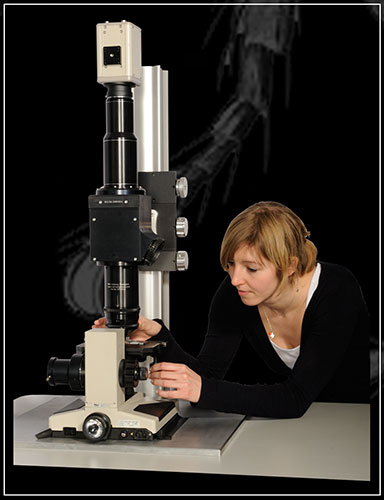
Mesolens: a microscope on show at the Royal Society’s Summer Science Exhibition
The giant lens was developed to meet the growing need to examine larger and larger tissue samples, in particular early stage genetically modified mouse embryos. These will play a vital role in the identification of new treatments for diseases such as cancer
Photograph: The Royal Society
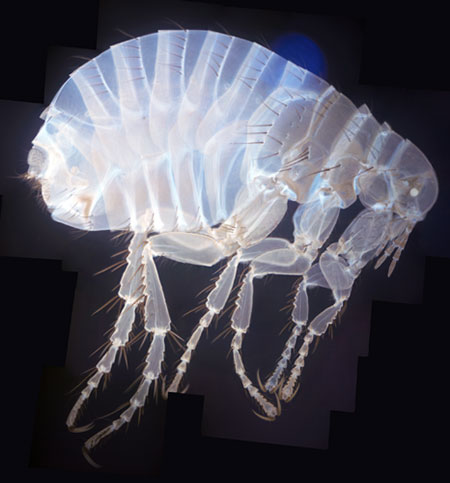
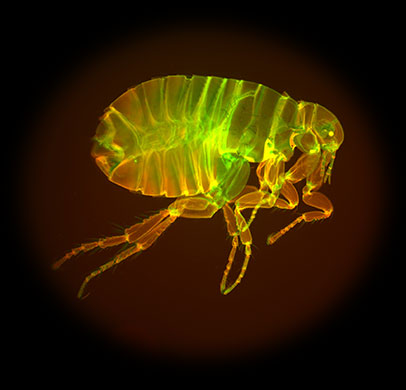
Mesolens: human flea, Pulex irritans
A human flea (Pulex irritans) as seen through the new microscope, which was developed by a team of Medical Research Council scientists led by Dr William Amos
Photograph: The Royal Society
Mesolens:  Human flea
The low magnification (x4) and high 'cone angle' of the lens give an unusually wide angle view of the specimen. Viewing such a large area would be a laborious process with conventional microscopes, but with the Mesolens it can be achieved instantaneously
Photograph: The Royal Society

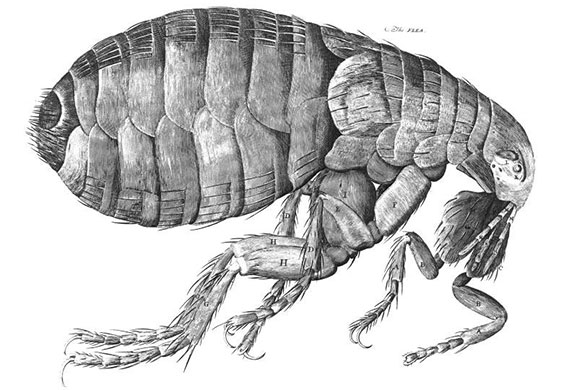
Mesolens: Robert Hooke’s 1660 engraving of a human flea
Robert Hooke’s 1660 engraving of a human flea. Visitors to the exhibition can pan and zoom an image of a flea thought to be one of the most detailed biological images ever taken. High definition mice and human brain cells are also on display
Photograph: The Royal Society
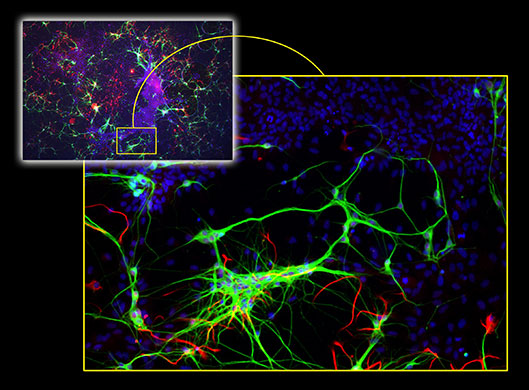
Mesolens: thousands of cells from the brain of a rat
A culture dish containing many thousands of cells from the brain of a rat (top left), labelled with fluorescent dyes. The image covers a very large area – 6mm in diameter. The inset demonstrates the extraordinary detail contained in a small portion of the main image, including nerve cells (green), glial cells (red), and the nuclei (blue) of star-shaped cells known as astrocytes
Photograph: The Royal Society

Mesolens: A confocal microscope image of an optical section of a fish embryo
Optical section through a fish embryo taken with the Mesolens
Photograph: The Royal Society
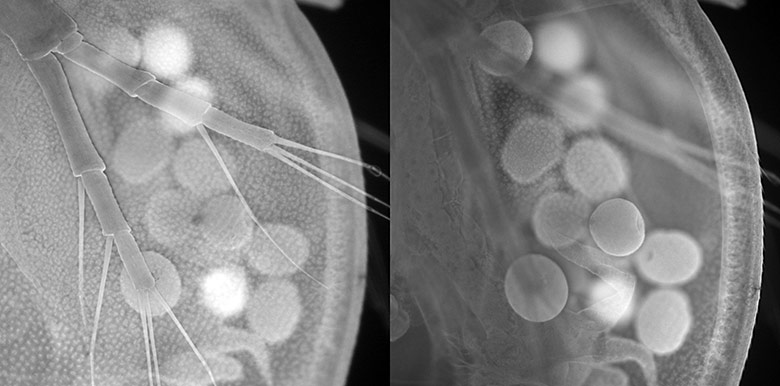
Mesolens: Comparative images of a water flea
Images of the water flea Daphnia, showing the effect of increasing exposure length (left)
Photograph: The Royal Society
Mesolens: The living specimen of the water flea Daphnia
A living water flea, captured in its entirety by the Mesolens. Dr Amos said: 'Our new microscope opens up many new possibilities for viewing large volumes of living tissue without sacrificing clarity or losing the ability to perceive depth, which has been a major problem with existing microscopes'
Photograph: The Royal Society
Sign up to read this article
Read news from 100’s of titles, curated specifically for you.
Already a member? Sign in here
Related Stories
Top stories on inkl right now
One subscription that gives you access to news from hundreds of sites
Already a member? Sign in here
Our Picks
Fourteen days free
Download the app
One app. One membership.
100+ trusted global sources.