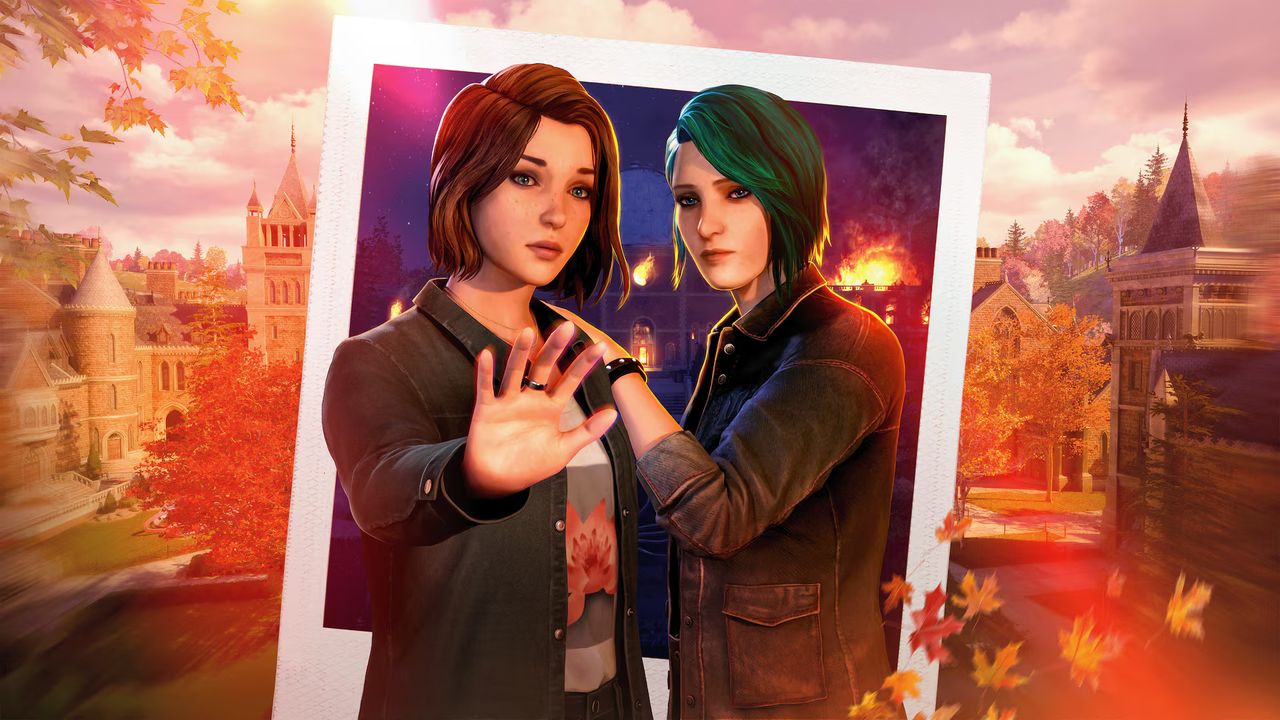
Life is Strange: Reunion pitches itself as the "finale" of Max and Chloe's saga, which feels like an odd concept considering the two only starred in one single game, the first Life is Strange back in 2015. I can almost hear the game creaking and bending to fit that term, assuring me that, no, really, all the events of Life is Strange, its prequel, and legacy sequel Double Exposure have all been leading to this, we swear. But, in practice, Reunion desperately struggles to hold it all together, feeling more like a hasty epilogue coda than a thrilling finale in its own right.
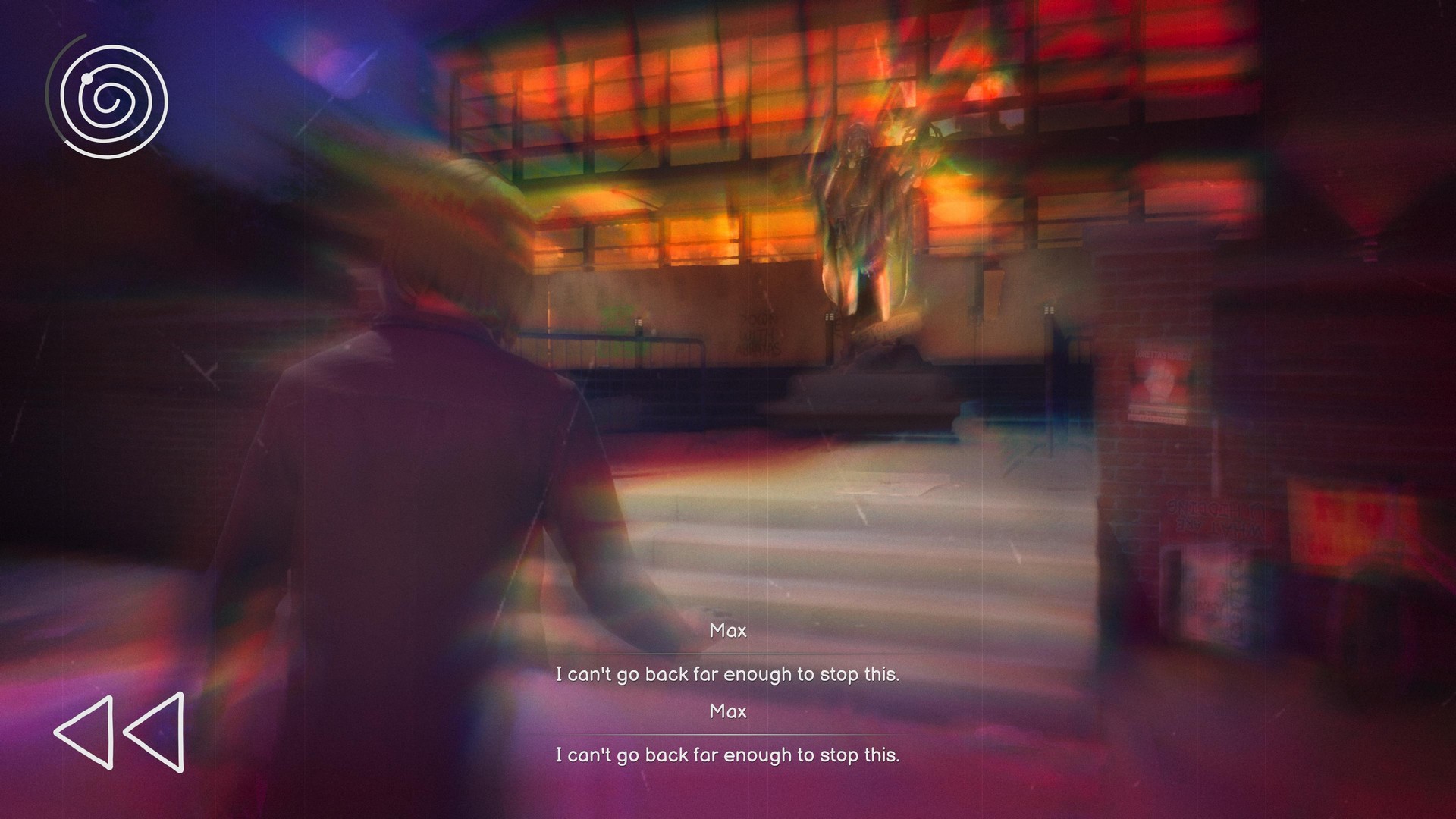
After a genre mandatory dream sequence, Life is Strange: Reunion at least spares no time getting stuck into its central mystery. Picking up nine months after Life is Strange: Double Exposure, photography student turned photography instructor Max Caufield returns from a gallery showcase to Caledon University (where the last game was also set). She's greeted by a horrific fire with arson tools nearby making it clear it's deliberate, witnessing trapped students in a chained-up building suffocate to death and her friends tumble into flames before being caught in an explosion herself. Only just managing to use her time superpowers to time travel back into a selfie she took before her trip, she's got two days to unravel why the fire started and put a stop to it. All this while the consequences of the first game's time storm seem to be catching up to both her and Chloe.
Class of '15
Release date: March 26, 2026
Platform(s): PC, PS5, Xbox Series X/S
Developer: Deck Nine
Publisher: Square Enix
Yep, there's essentially two ticking clocks going on at once – it's a shame 'Double Exposure' was already taken as a name. Still, while the arson attack is a compelling reason for Max to time travel her way through two days of sleuthing, the looming consequences from the first game dilute the mystery hook. By the end, the fiery conspiracy feels like an afterthought to nervous hand-wringing about the consequences of using Max's time travel powers.
Life is Strange: Reunion occupies an odd space where it both feels like an immediate sequel to 2024's Life is Strange: Double Exposure, and the original game at the same time, all while chopping, changing, and retconning a bunch of set-up. It's great to see mouthy punk Chloe Price return, and as a playable character no less. But, she's not quite the Chloe we knew from previous games.
In the first Life is Strange, Max's visions of an oncoming time storm come to pass, and she has the choice to either undo saving Chloe's life at the beginning of the game in order to save her hometown Arcadia Bay, or for the two to escape and leave it all behind. Like the timeline merging at the end of Double Exposure (which had a timeline-hopping central mechanic), Chloe has become an amalgam where both Life is Strange endings came to pass. It's the only way she can return while respecting both of the original's endings, but failing to grapple with this meaningfully feels toothless, and comes closer to undermining the original rather than celebrating it.
Likewise, the ending scene of Double Exposure where Max revealed to a core team of allies that she has powers in order to stand up to shapeshifting frenemy Safi's quest to assemble more power users? Well, everyone just forgot about that off-screen. Don't worry about it. Moments when Max battled through another time storm at the end of Double Exposure are also revealed, early on, to have just happened completely differently to how we saw them in order to explain the set-up to Reunion. A character central to Double Exposure's major sequel hook is simply never on-screen.
Considering I thought Double Exposure was a really promising adventure that completely dropped the ball in its last couple of episodes, some of this is necessary to get back on track. But, it feels exhausting to wade through what feels like a bunch of errata corrections. Life is Strange: Reunion only asks you for five decisions you've made across the series as well – two from the first game, and three from Double Exposure (there's no save transfer to read them automatically) – meaning a few threads from the last game feel oddly flattened here.
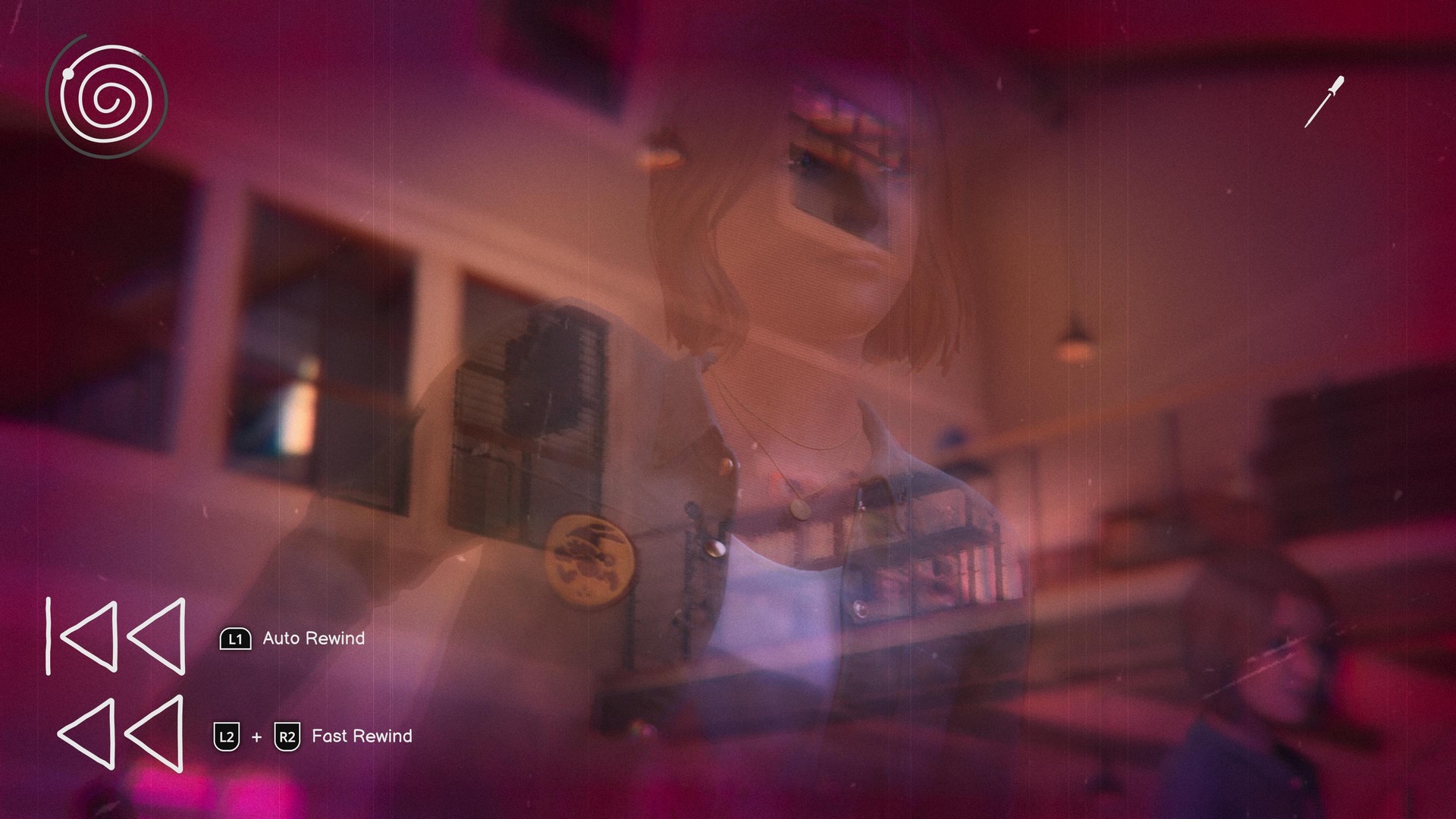
Which isn't to say I've not been enjoying my time with Life is Strange: Reunion at all. I've long been one of the series' fans that's craved the return of the original game's rewind powers, and Reunion finally does so – immediately allowing Max Caufield to once again hold down L2 to unspool an in-universe five minutes of time.
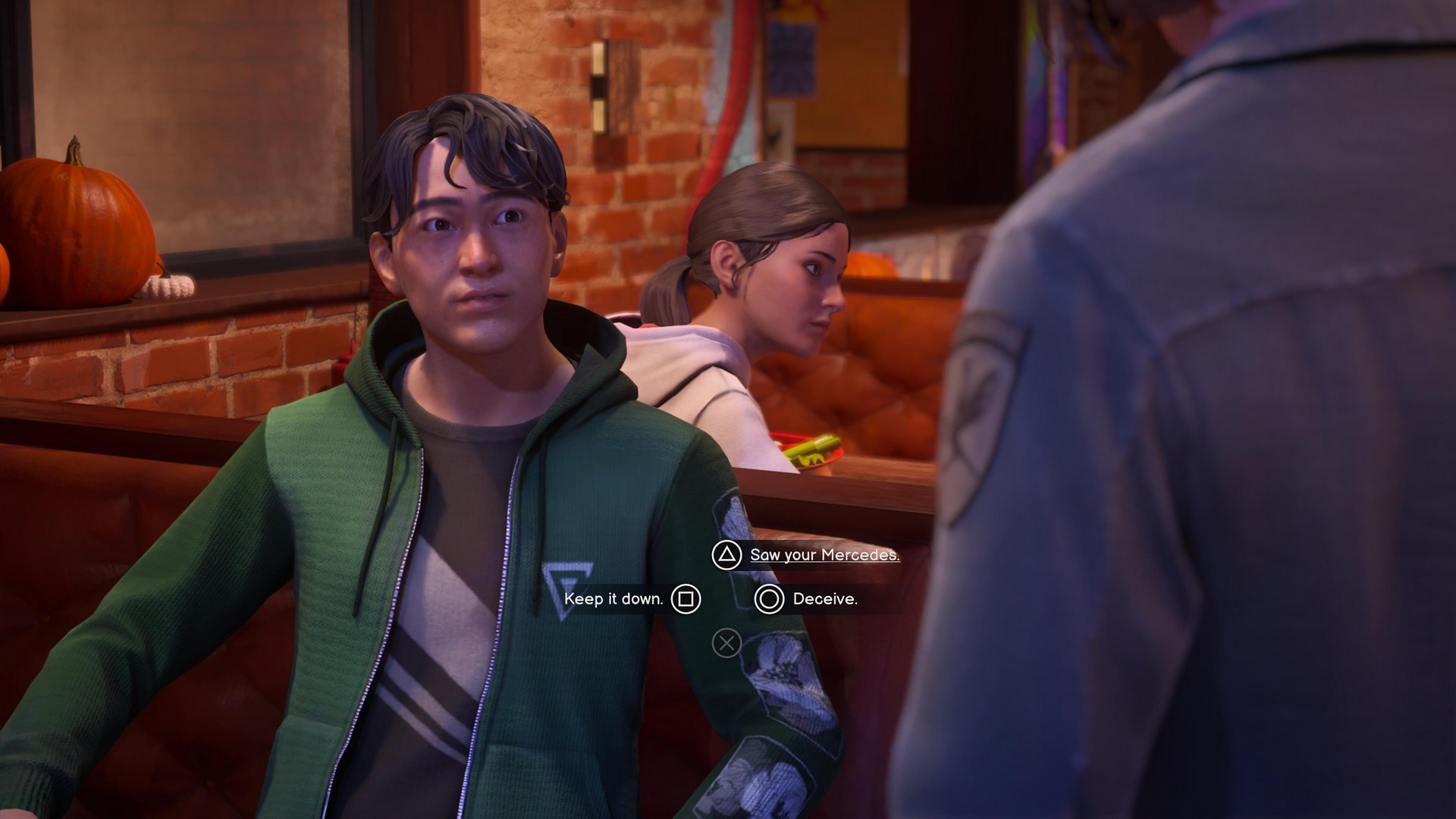
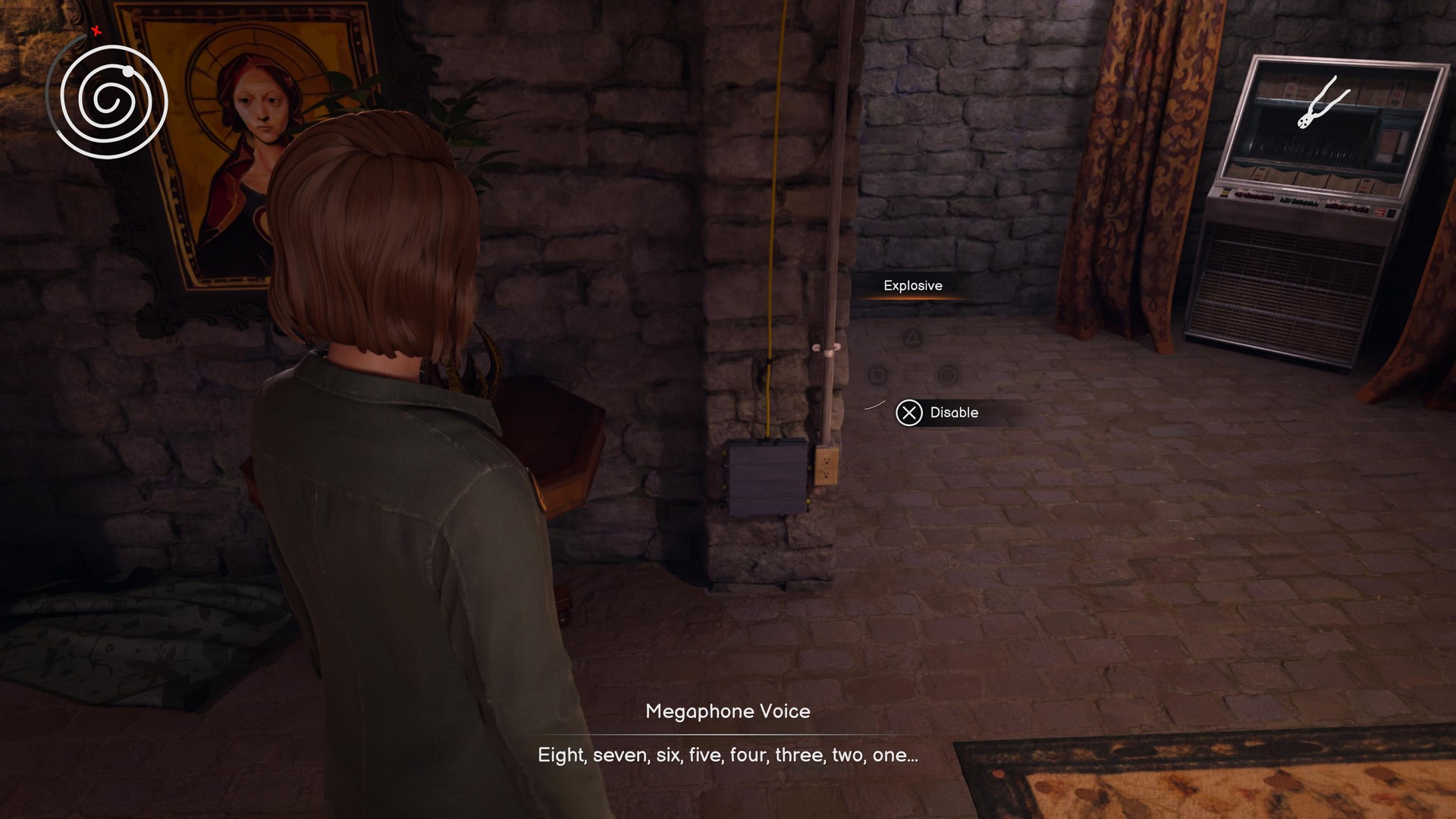
Have to solve a puzzle under pressure? Rather than merely fail and reload, Max herself can reset the table, keeping certain tools in hand – an early Reunion puzzle has her cutting demolition charges in a specific order to avoid, well, exploding. Even better, the rewind allows you to take back conversations with other characters while retaining knowledge you get from them. Reveal information you know in order to get another character to talk? You can delete ever having that chat but still keep the secrets they spilled. Regret a big decision? You're free to run it back both ways to assure yourself of your choice or, more often, agonize over exactly how to play it.
Rewind remains a genius mechanic for a choice-based narrative game.
Rewind remains a genius mechanic for a choice-based narrative game, inverting the time pressure others in the genre play with to instead coat decisions in analysis paralysis juice. Yet, while some rewind moments shine, they're few and far between, never truly making me sweat over how to treat Max's friends like I did in the first game. Juggling two main characters, and with a relatively sparse plot, characters more often feel like they're just spitting out fire-related facts than are people in their own right.
I already felt like nerdy scientist Moses and fledgling comedian and bartender Amanda were underdeveloped but really promising characters in Double Exposure, and they get even less development here. Poor Moses is basically just an exposition machine this time around. Meanwhile, Safi feels like a caricature, trapped in the bizarre characterization left-turn she was forced into in Double Exposure's final episode, she's unable to move on for the majority of Reunion – all while adding almost nothing to the overall plot.
The Price is right
Mechanically, Max's powers are limited to using the rewind, with no timeline hopping in sight. It might be wise to focus on one story thread in Reunion, but it's a bit of a shame to see Double Exposure's most inventive element sunset so far.
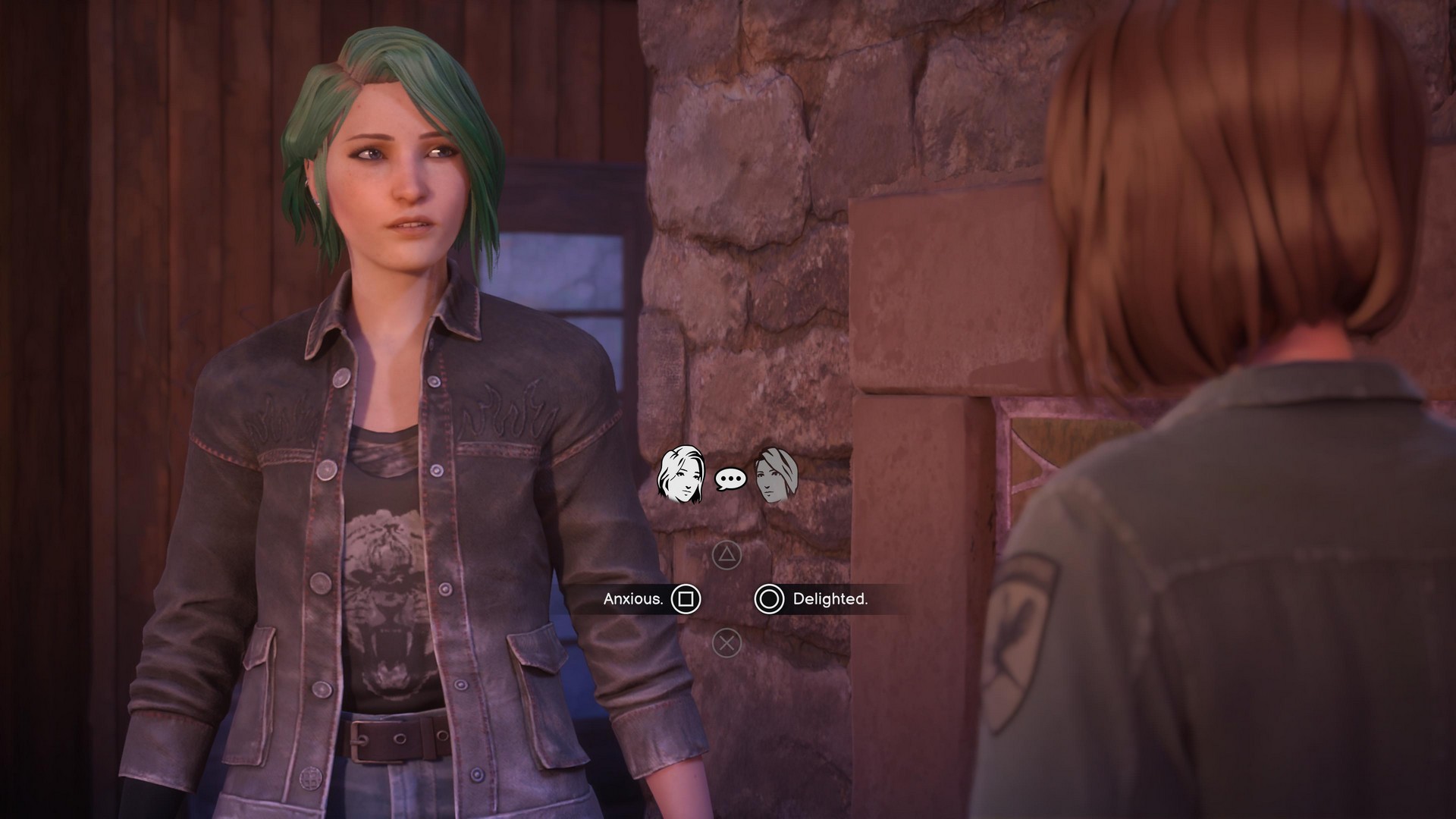
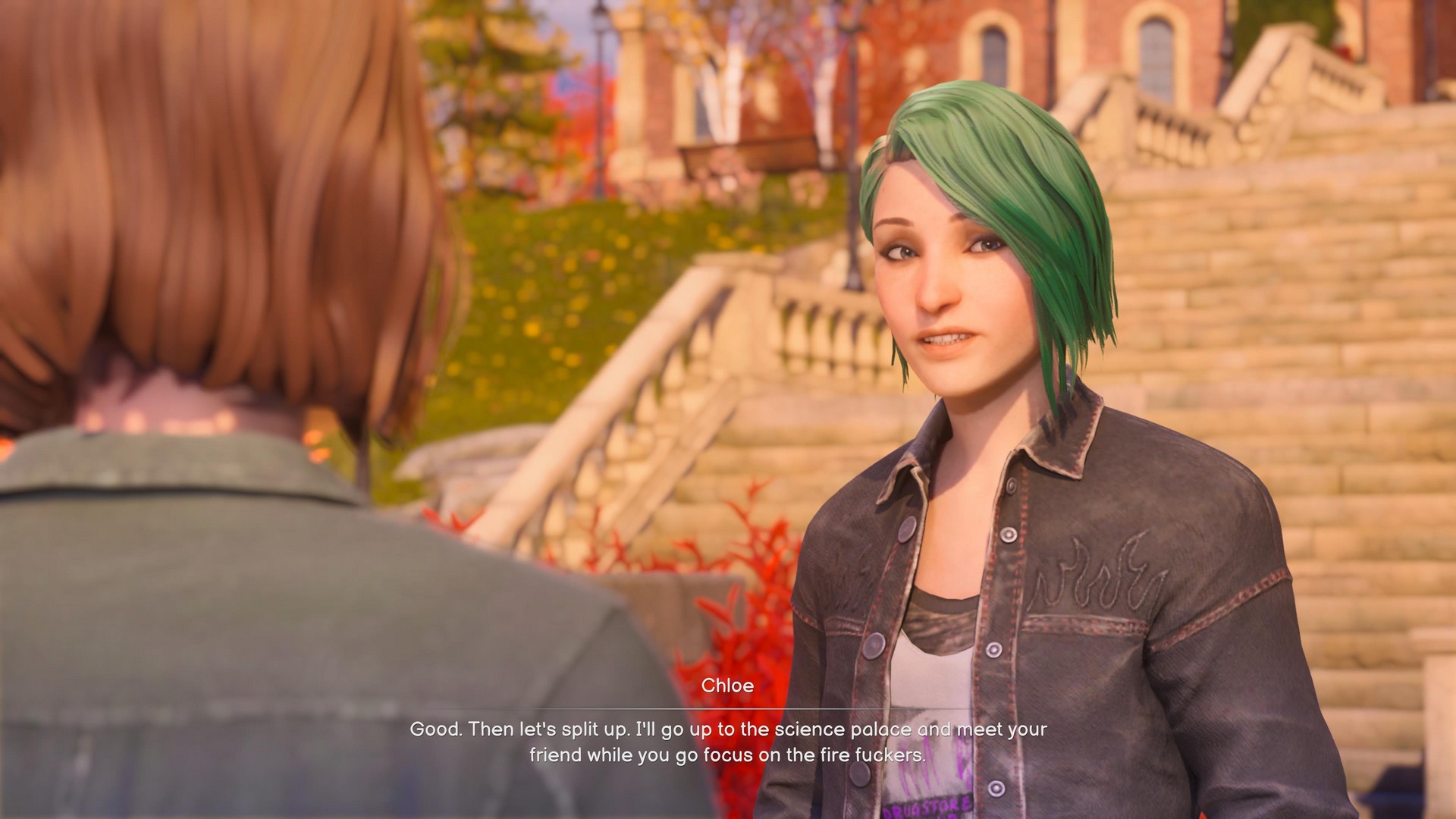
Life is Strange: Reunion is able to have its rewind cake and eat it, too, thanks to also playing as the non-superpowered Chloe. This is technically the first game in the series to have two playable characters (Life is Strange creator Don't Nod did use the idea in the very similar Tell Me Why, after they left the series behind). Chloe's lack of powers is almost liberating. Her prickly personality firmly established, it's refreshing to have her brusque dialogue options compared to Max's people-pleaser tendencies. Telling annoying guys at the bar to 'eff off just hits.
Chloe's backtalk 'ability' also returns from Life is Strange: Before the Storm, but in name only. Once a mini-game revolving around matching insults to outwit and dunk on opponents in a conversation, this has been watered down to just become a fact-checking trivia challenge. Chloe, do you remember the motto of the forum that's organizing a protest? Chloe, can you tell me what the mascot of Caledon University is? Chloe, can you see the spray paint cans in the bag literally right next to me? It's disappointing to see what was once a simple-but-charming way of expressing Chloe's character become something so basic, especially when she's still suitably mouthy elsewhere.
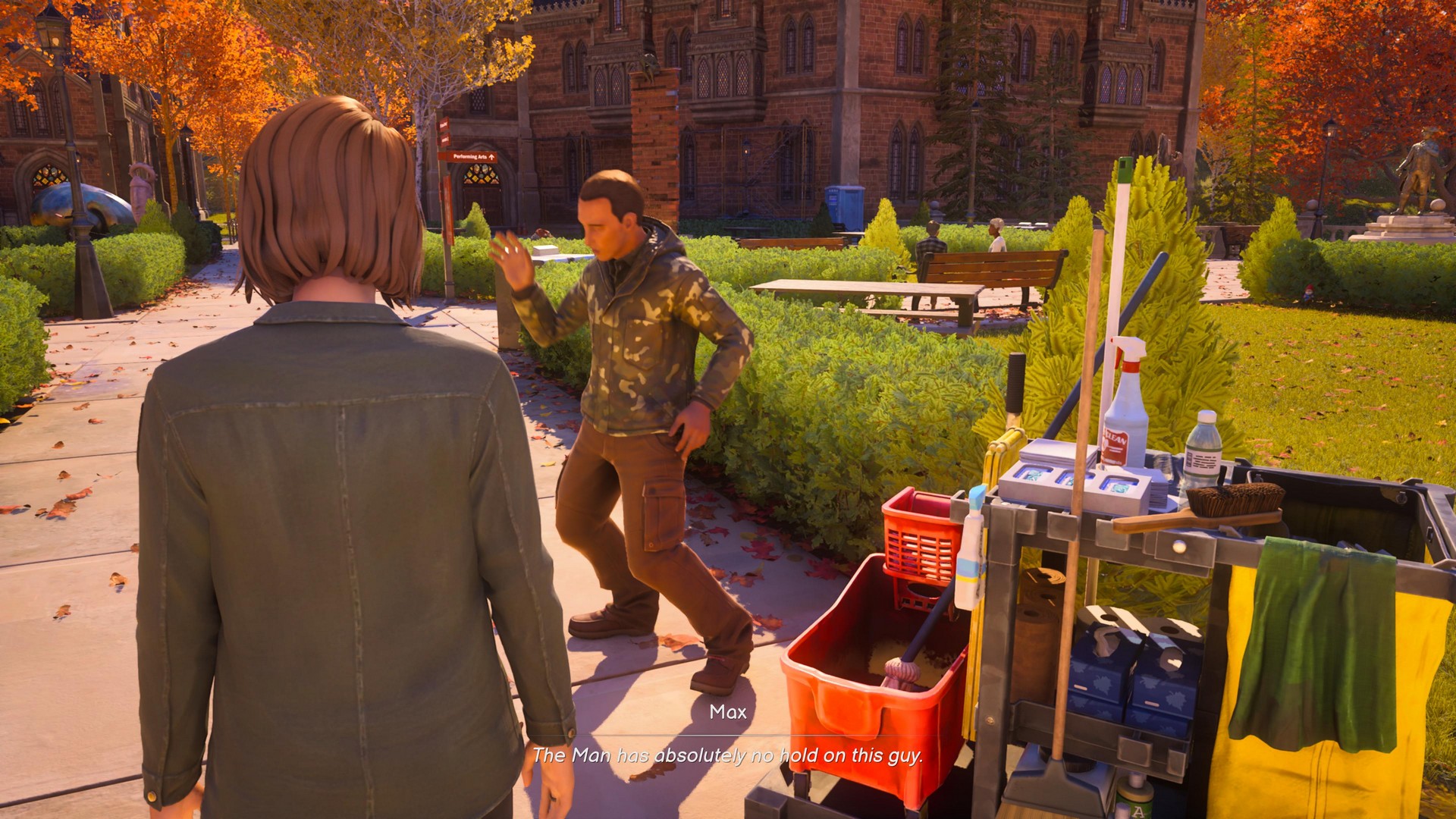
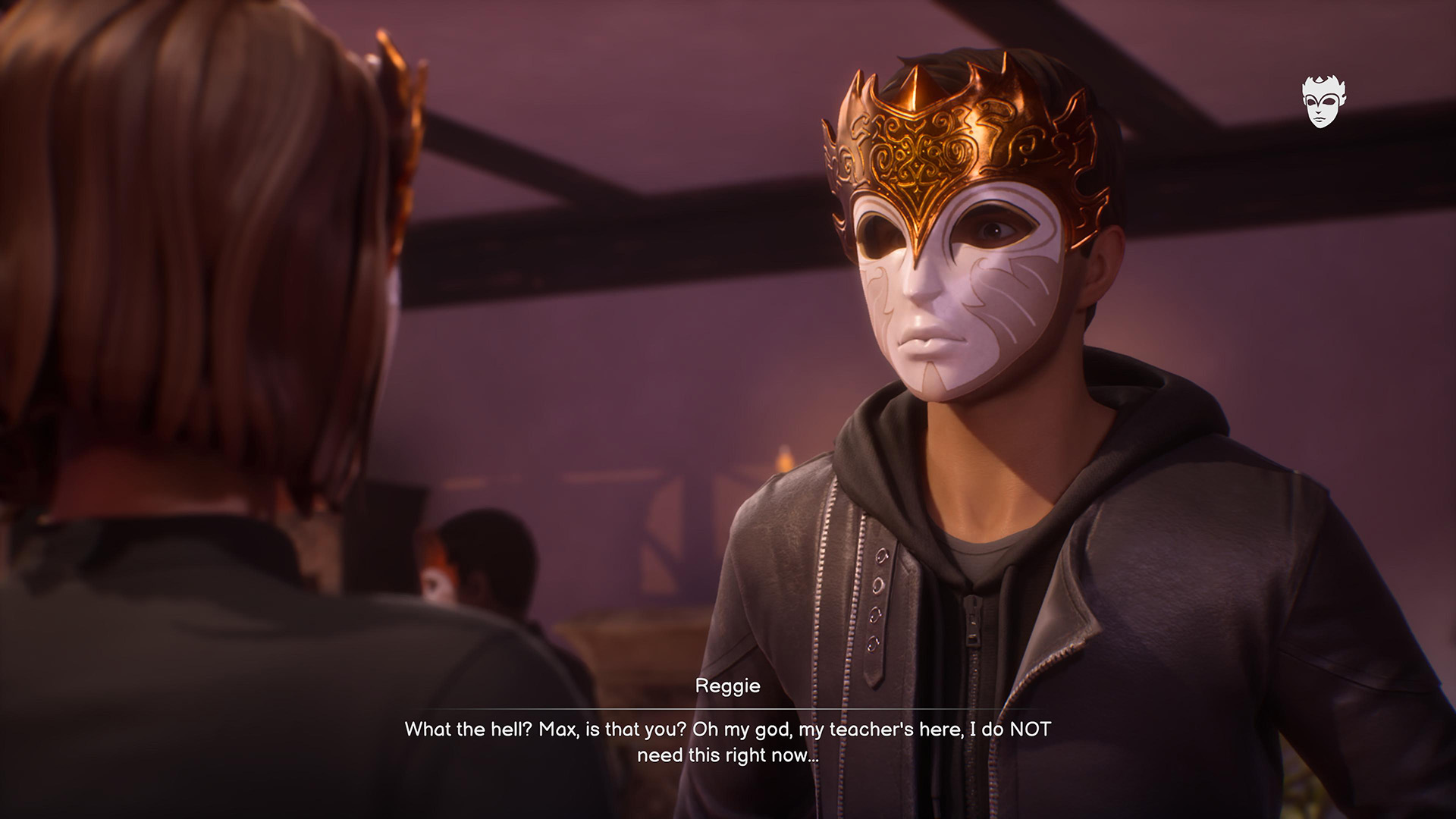
Environments do at least feel denser with interactables than in Double Exposure, but there are only a handful of new areas – many simply return from that game. A spooky house party scene is a standout as it finally offers a touch of the personal snooping that was mostly absent in Double Exposure, but amounts to a garden and a couple of rooms. I also have to mention some consistent lighting issues that have required me to restart the game to fix.
Max is faculty at Caledon University, but despite a brief scene where she instructs her students it can still be easy to forget that's the case given how messily she interacts with them. Still, while Reunion's broad narrative is disappointingly disjoined, dialogue exchanges can still be a lot of fun, riding the iconic Life is Strange line between cringe, humor, and being emotionally raw. Butting heads with the university's new comically anti-liberal-arts dean is frequently chuckle worthy.
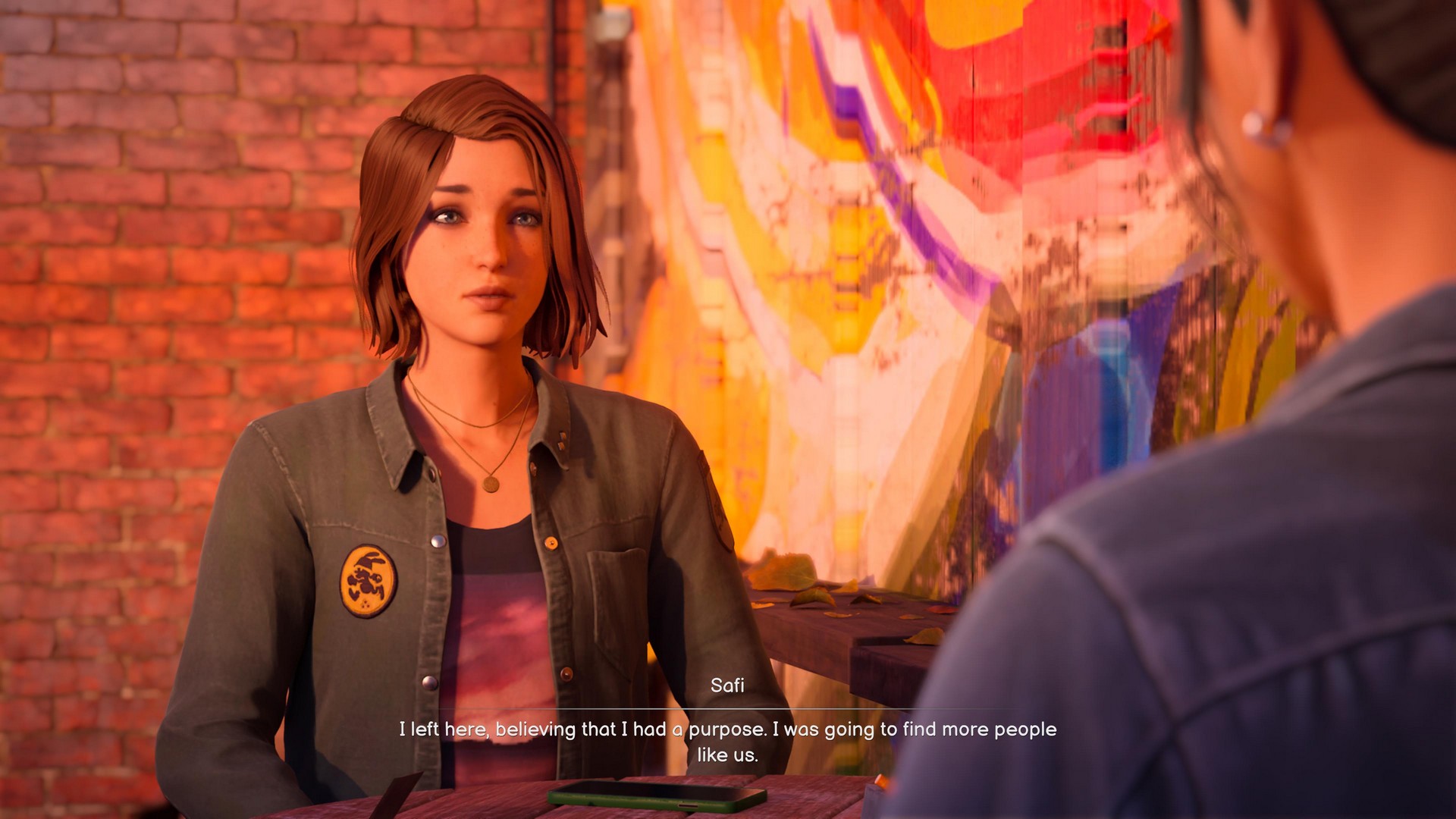
Outside of a settings menu-based toggle for classic costumes for the Deluxe Edition, there's not an option to change clothing styles in Reunion. A fun but minor feature in both True Colors and Double Exposure, it's sad to see it go.
Life is Strange: Reunion is also the first full game in the series to ditch the episodic structure. The first game released periodically, but even later all-at-once approaches retained that storytelling approach. Reunion is an unbroken adventure, split only by the narrative handing off between Max and Chloe.
That makes Reunion feel like one of Life is Strange's shorter narratives, but it still feels weighed down with scenes that struggle to go anywhere, and odd pacing that suggests tough budget restraints. Characters occasionally act confused about information they've literally just been told, and multiple moments have people interact awkwardly just off-screen so they don't have to be animated. At one point, Max smashes a window so imperilled students can escape, only for them to remain unseen and to say that, worry not, they will escape eventually, presumably once you've jogged around the corner.
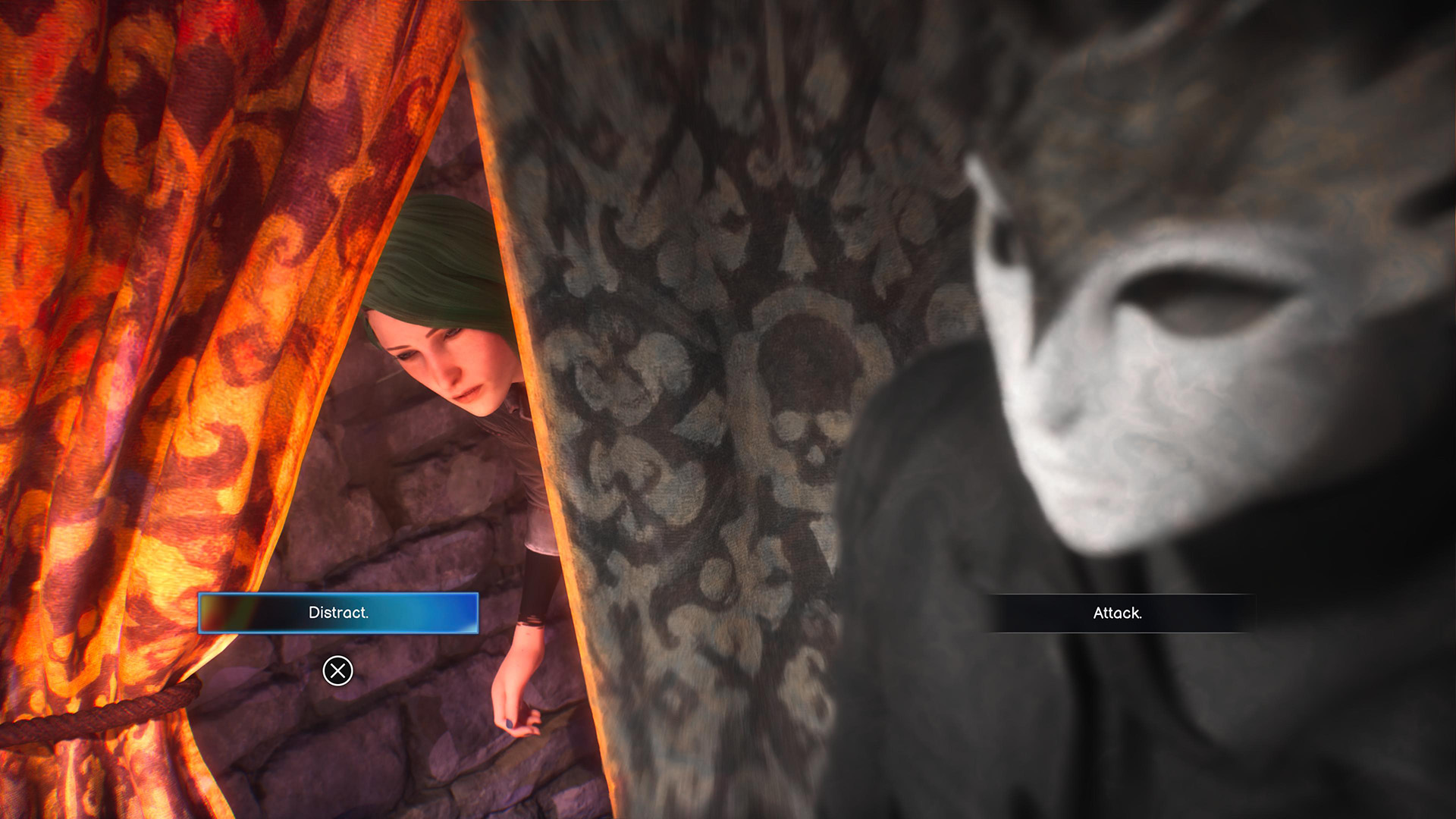
One particularly head-scratching moment is when one of the main threads of the mystery is simply laid out clearly while Max and Chloe look at a series of still photographs while time travel-powered audio explains what happened plainly. Another scene where you have to go over evidence related to the impending fire elevates a character I spoke to briefly one time at the start of the game to suddenly have loads of additional detail.
Humorously, it seems I got one of the best endings possible, but this wasn't reflected in the tone or dialogue of my final scenes, meaning ending choices were given a huge moral weight that they simply did not have in the text, and that some bits of set-dressing were mislabelled. I don't need every game to be glossy and high-budget, but these are not elegant solutions to Reunion's storytelling, and the patchwork approach rips me out of its narrative more often than not. Instead, it just felt like scenes were missing.
Max is so laser-focused on the fire she goes around enquiring about potential fire scenarios with the energy of Shenmue's Ryo Hazuki asking about sailors. There are so many possibilities that the way Max investigates them feels almost comical. Rather than the inevitably of events in time feeling scary like in Final Destination, Reunion's fire threat feels more like a Looney Tunes cartoon where Max just can't catch a break. It doesn't help that the low budget approach means that the consequences feel so non-immediate, and also how the aforementioned pacing means that as a player I felt little interaction with figuring out the mystery at all. At least in Shenmue, I felt like I really did track down those sailors.
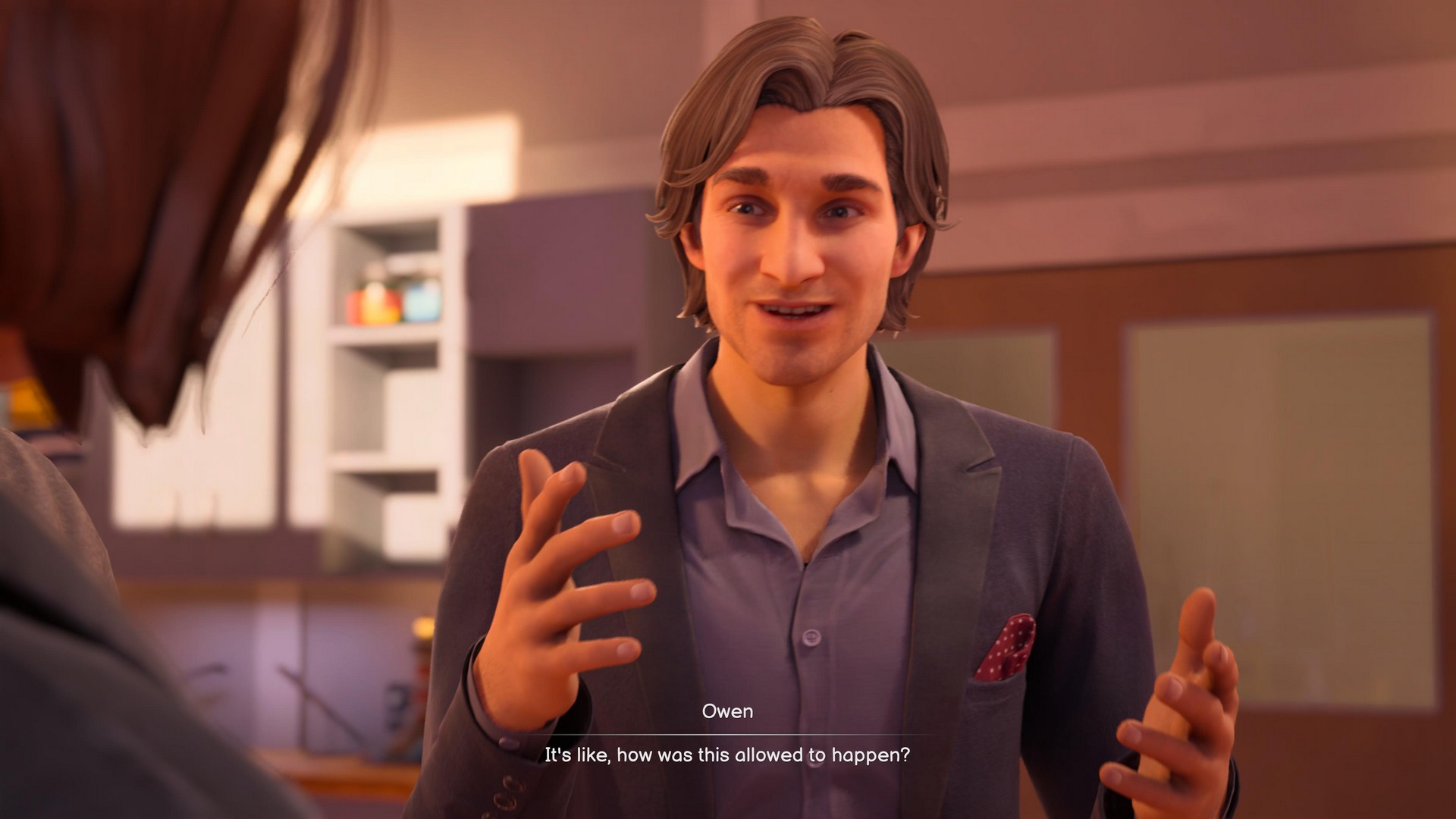
Remember when Life is Strange used to be about believable character drama supplemented by strange superpowers in a magical realist way? What if, instead, it was all about superpowers and merely supplemented by a touch of character drama? Life is Strange: Reunion's promising premise had me excited for the first couple of hours, but it quickly gives way to exhaustion as it becomes increasingly bogged down in explaining how Max's time powers work, and box-ticking off every possible fire scenario that could happen.
Life is Strange: Reunion feels like a series eating its own tail, character drama falling by the wayside. As a series fan, I'm susceptible to bringing back both a fan favorite mechanic in rewind, and fan favorite character in Chloe, which carries me through Reunion's opening hours. But this fails to leverage them to explore the sort of character dynamics I loved in previous Life is Strange games. Forget rewind, where's the fast-forward? It's about time Life is Strange could look into the future again, and I'm maybe beginning to realize why Life is Strange 2 and Life is Strange: True Colors were wise to leave Arcadia Bay in the rear-view mirror. This is one class yearbook I'm glad to turn the final page on.
Life is Strange: Reunion was reviewed on PS5, with a code provided by the publisher.
Check out our best gaming stories recommendations for more to get immersed in!