Life in ruins: ancient sites shelter Syria's displaced
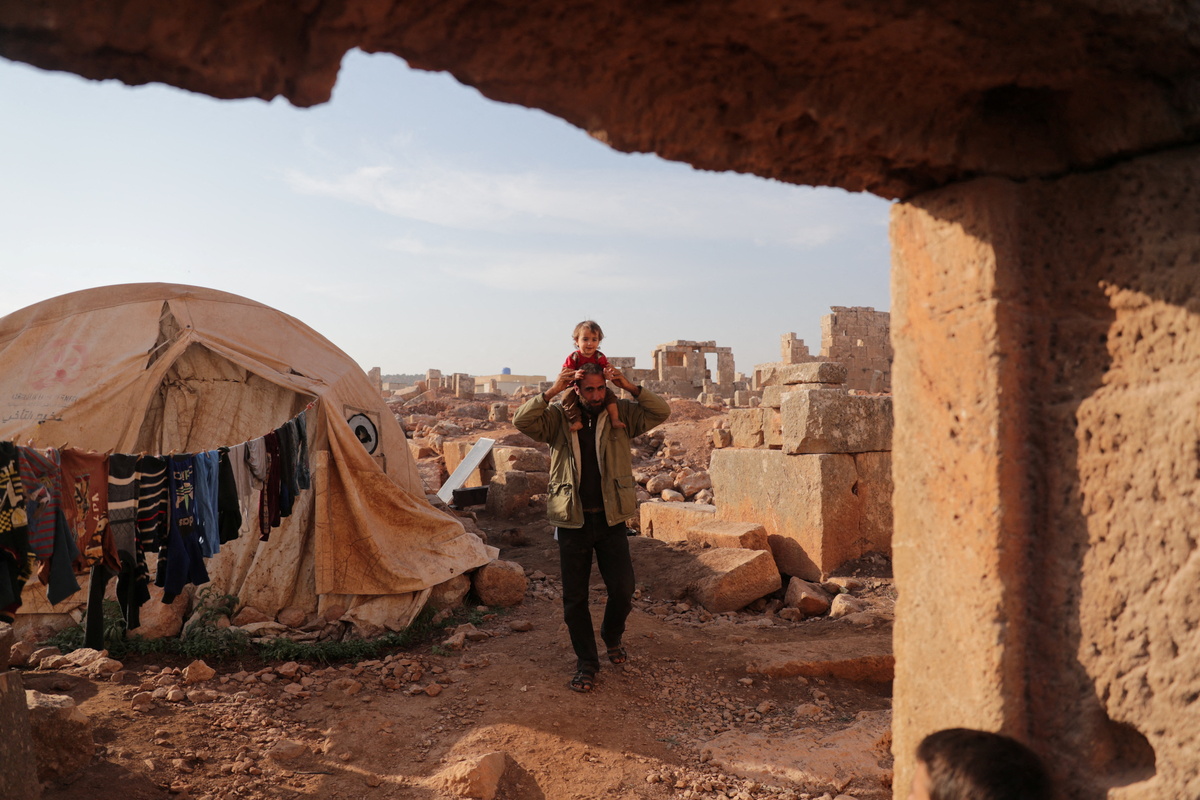
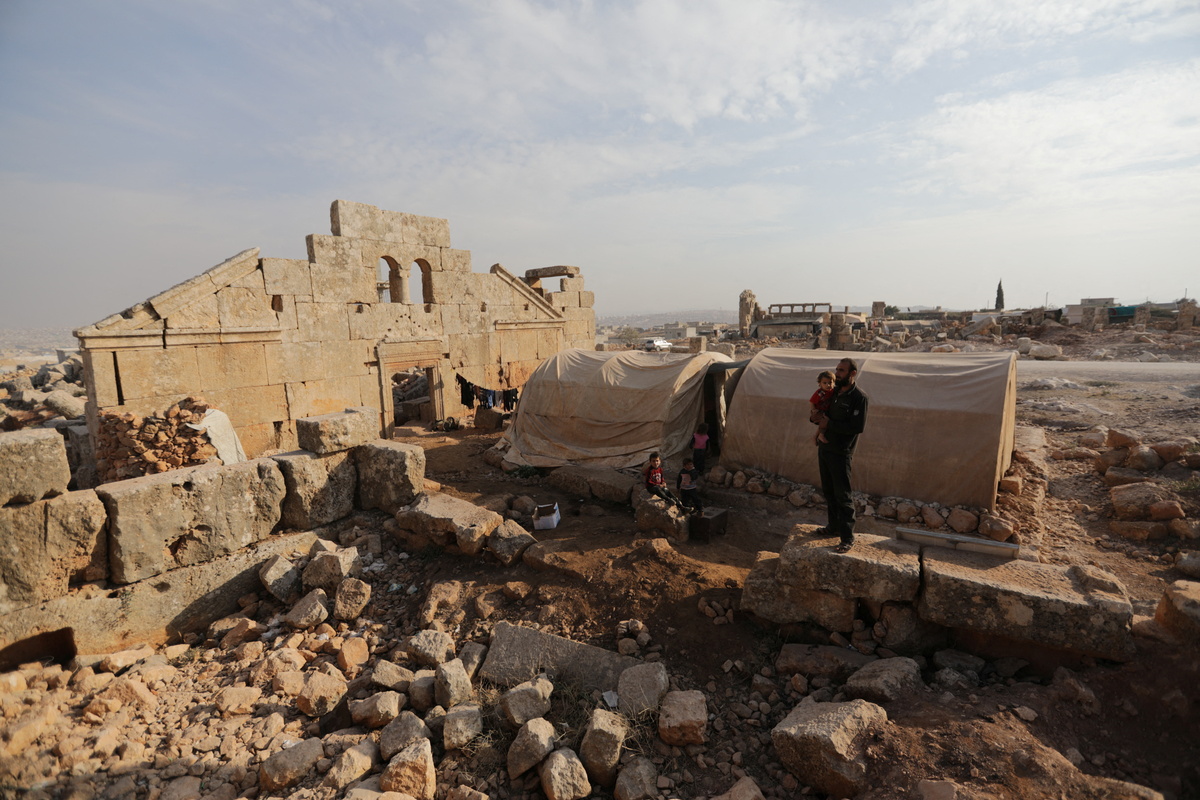
Mohamad Othman, 30, carries his child on his head at the archaeological site of Sarjableh, in the northern countryside of Idlib, Syria November 17, 2021. REUTERS/Khalil Ashawi/Files
Mohamad Othman remembers going on school trips to ancient archaeological sites in Syria, never imagining one of them would become his home.
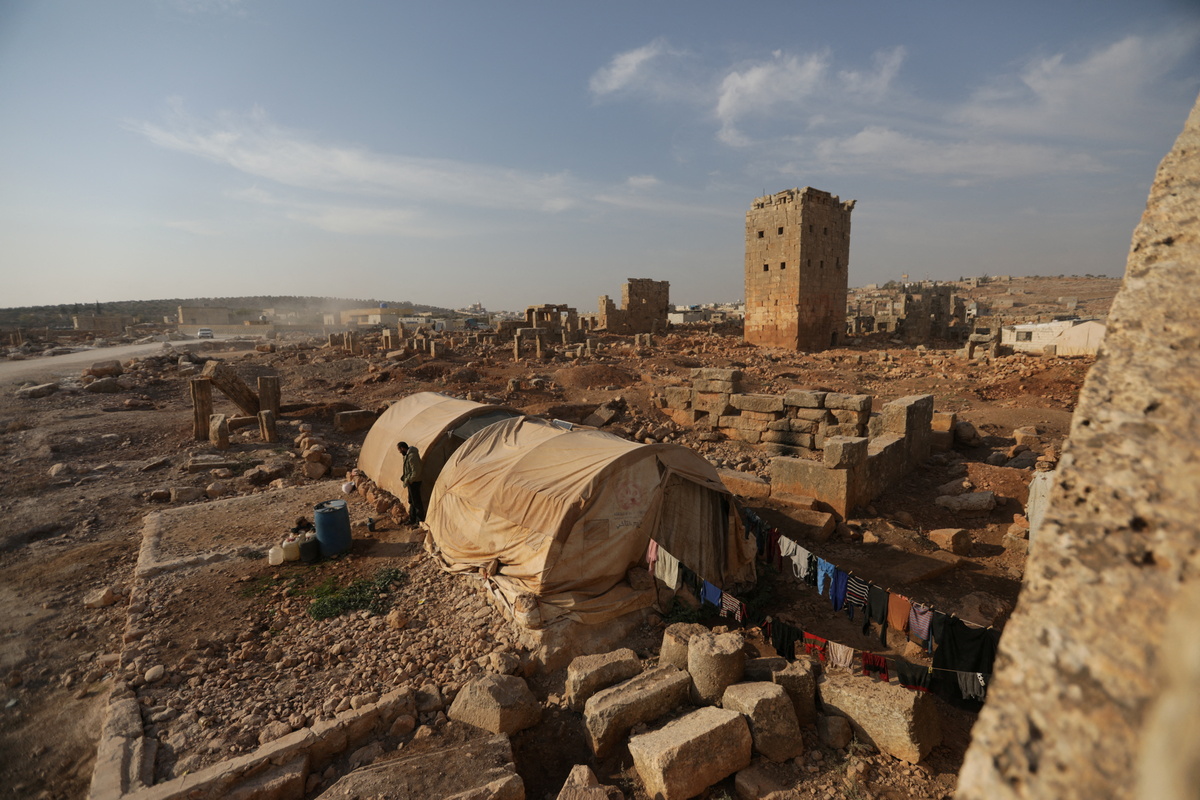
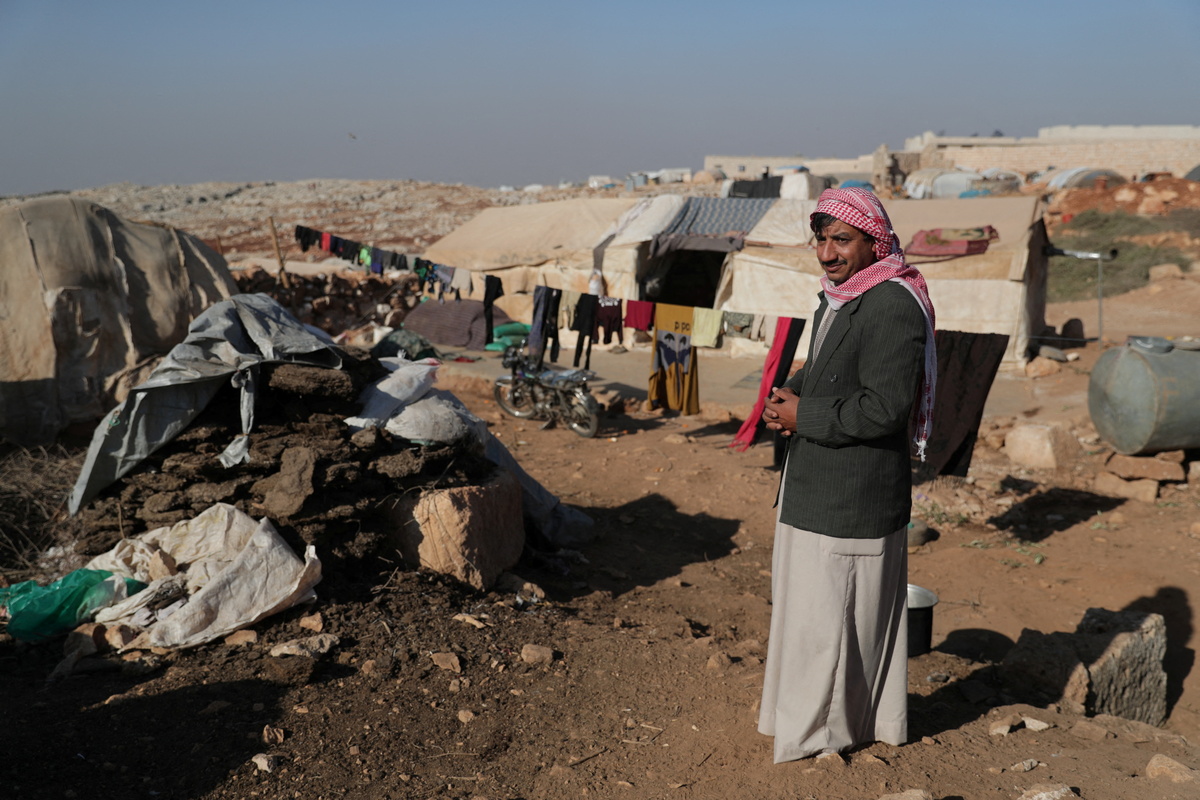
Othman and his family have been living in a tent amidst ancient ruins at Sarjableh near the Turkish border since fleeing for their lives some 2-1/2 years ago during a government offensive in northwestern Syria.
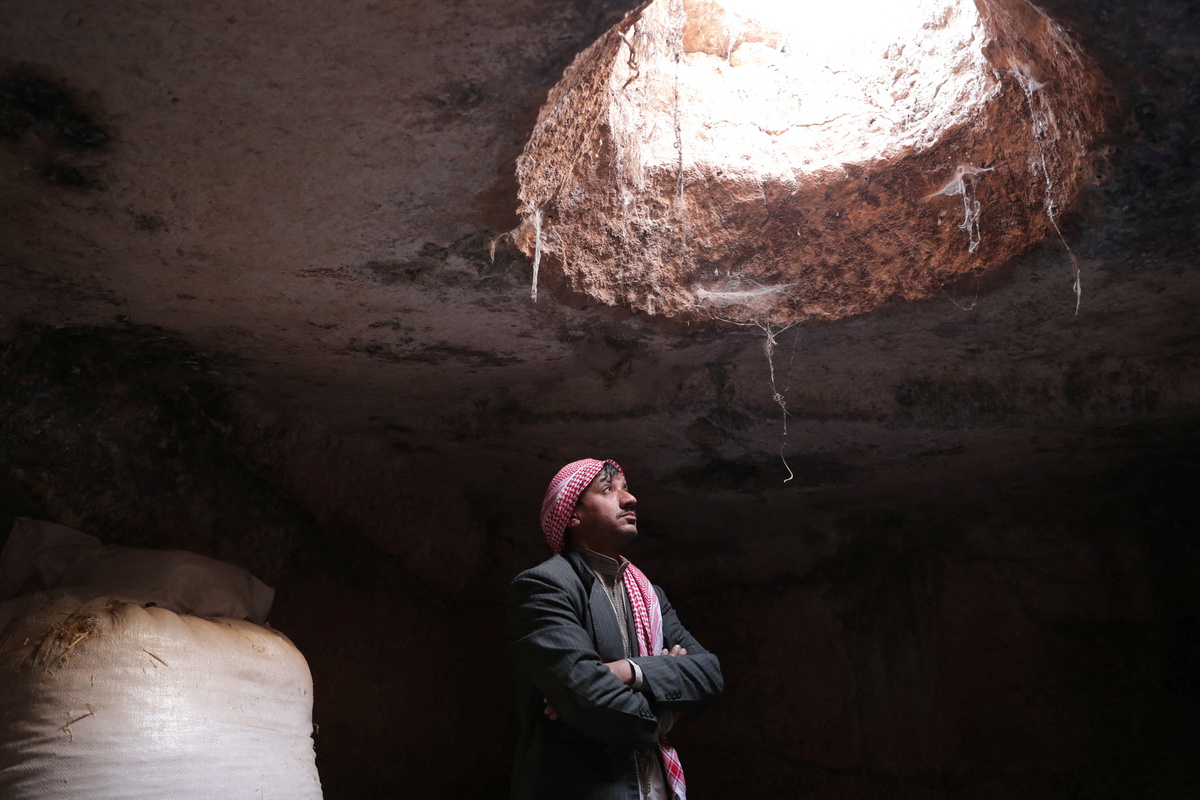
Mahmoud Abu Khalifa, 35, stands inside an ancient cave he uses to store his belongings and raise his sheep, at the UNESCO World Heritage Site of Babisqa, Syria December 6, 2021. "Before being displaced, we had agricultural land and farmed crops and lived from them and everything was great and we had these animals," he said. Today "the children live in the ruins and mud," REUTERS/Khalil Ashawi
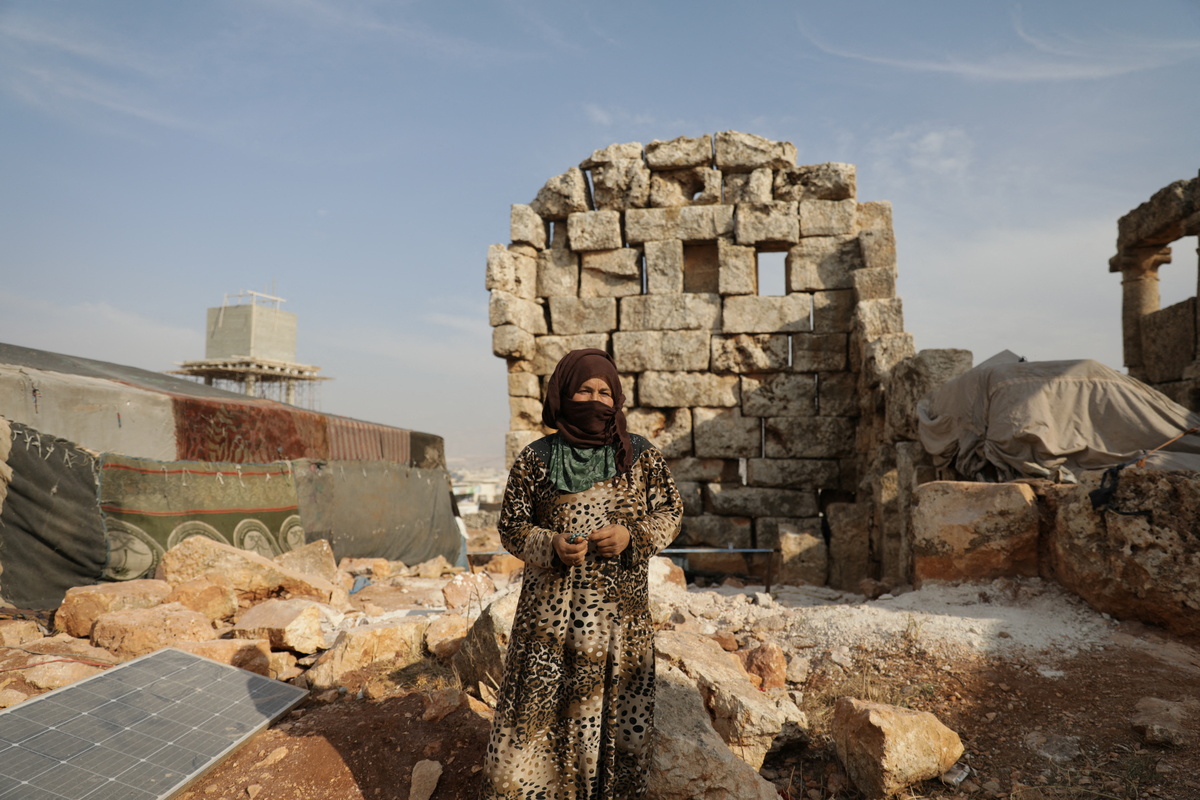
Rocks gathered from the site anchor down their tent, one of several dozen that are sheltering families who have fled their homes during the decade-long Syrian war.
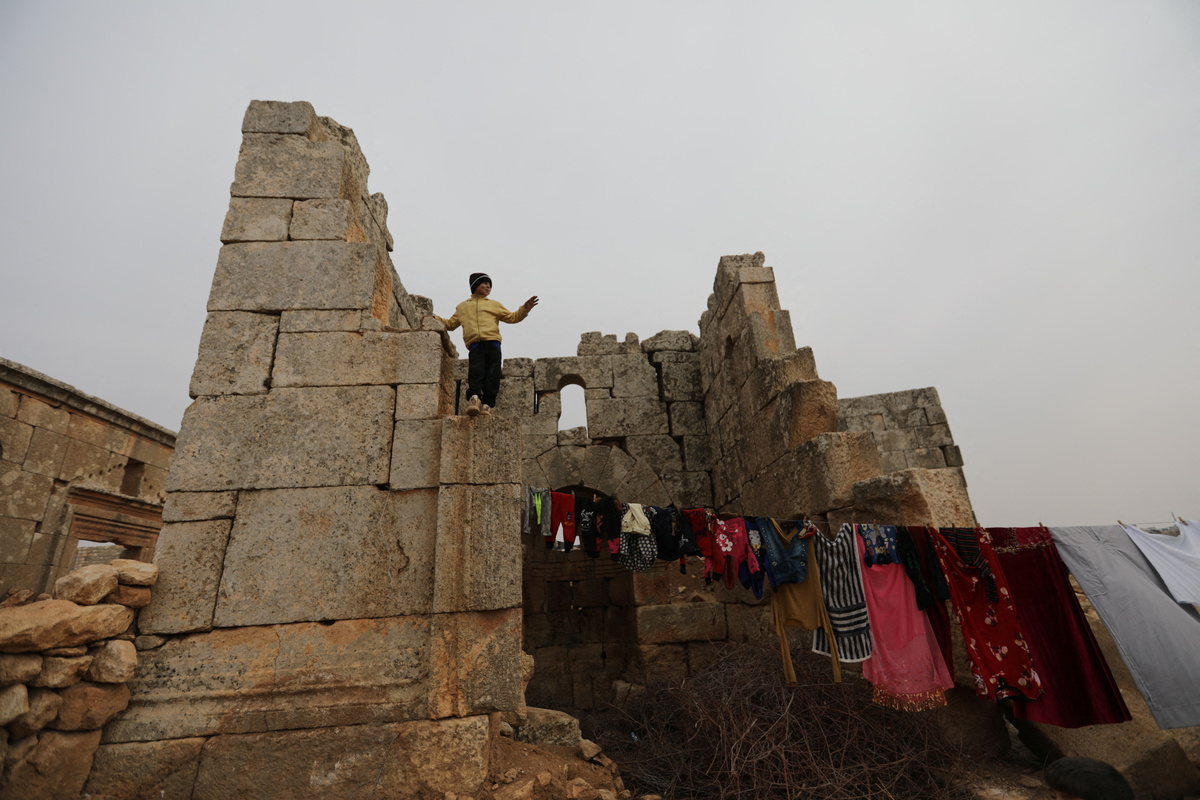
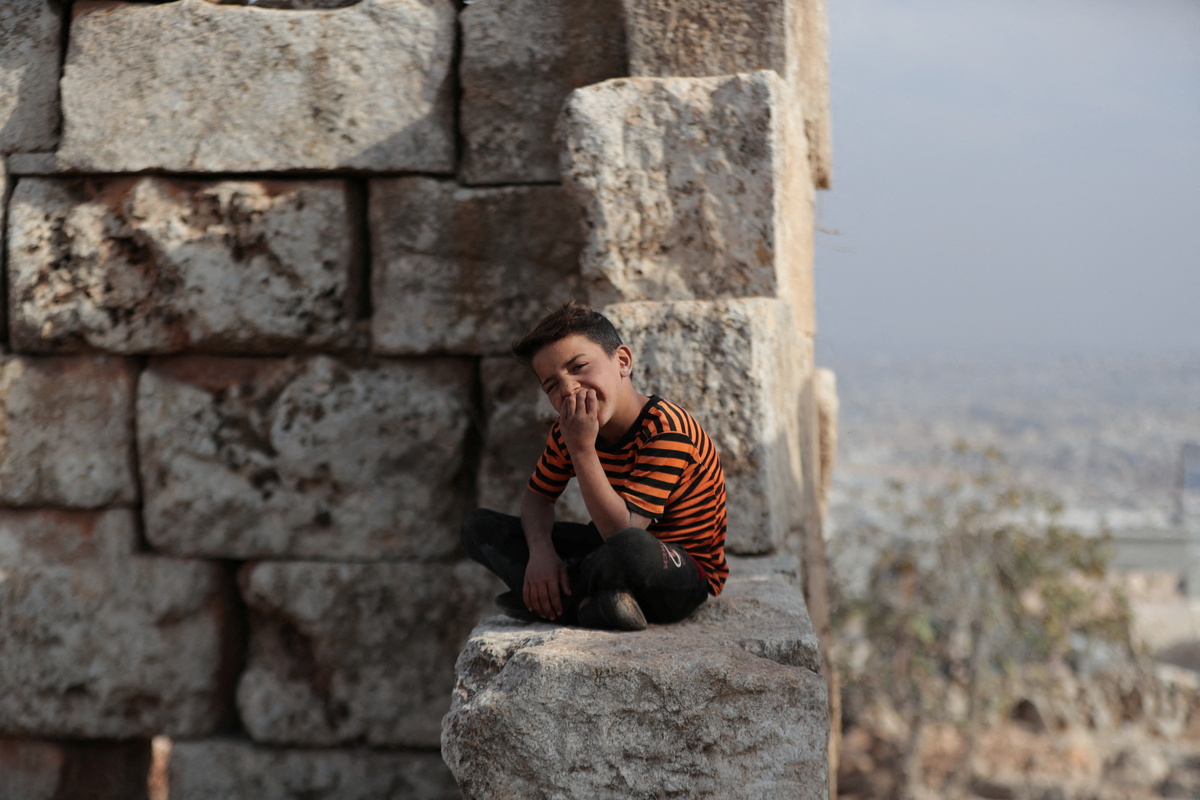
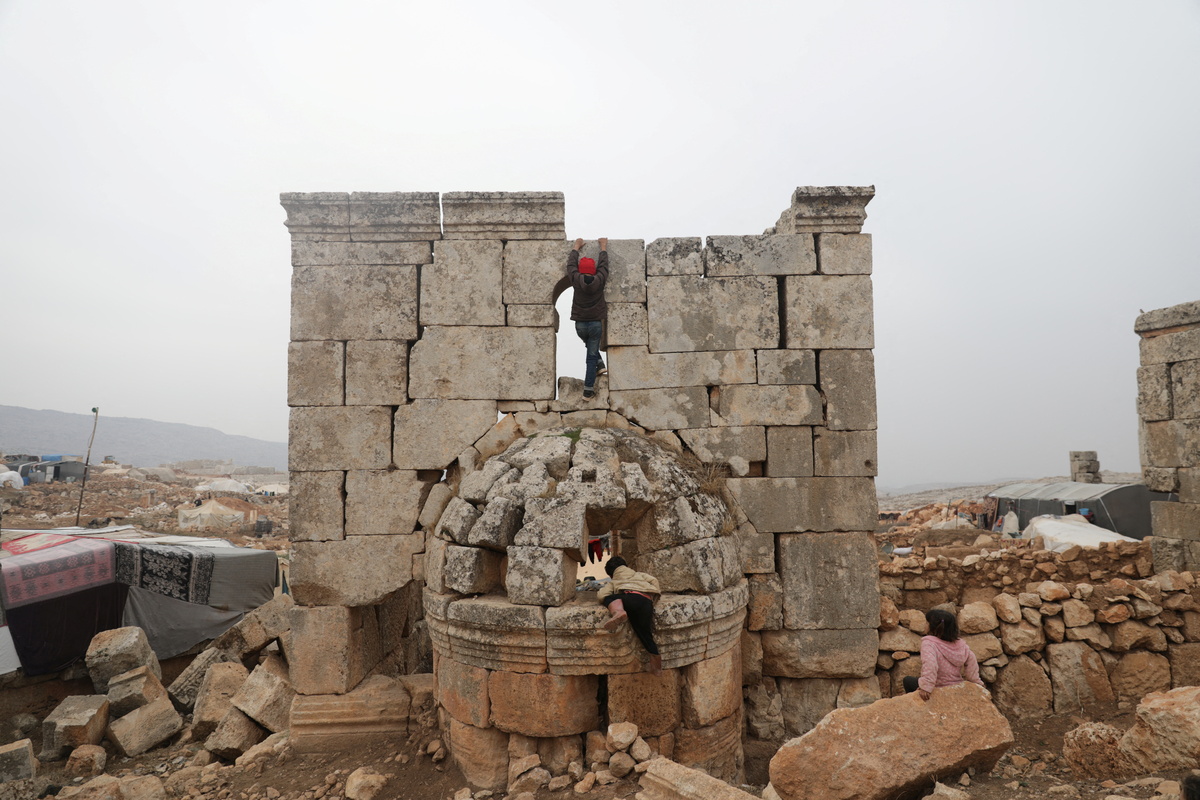
Louay Abu Al-Majd, 11, stands atop ruins at the UNESCO World Heritage Site of Babisqa, in the northern countryside of Idlib, Syria November 29, 2021. Among the 80 or so families living at the site, it is known as 'Ruins camp'. REUTERS/Khalil Ashawi
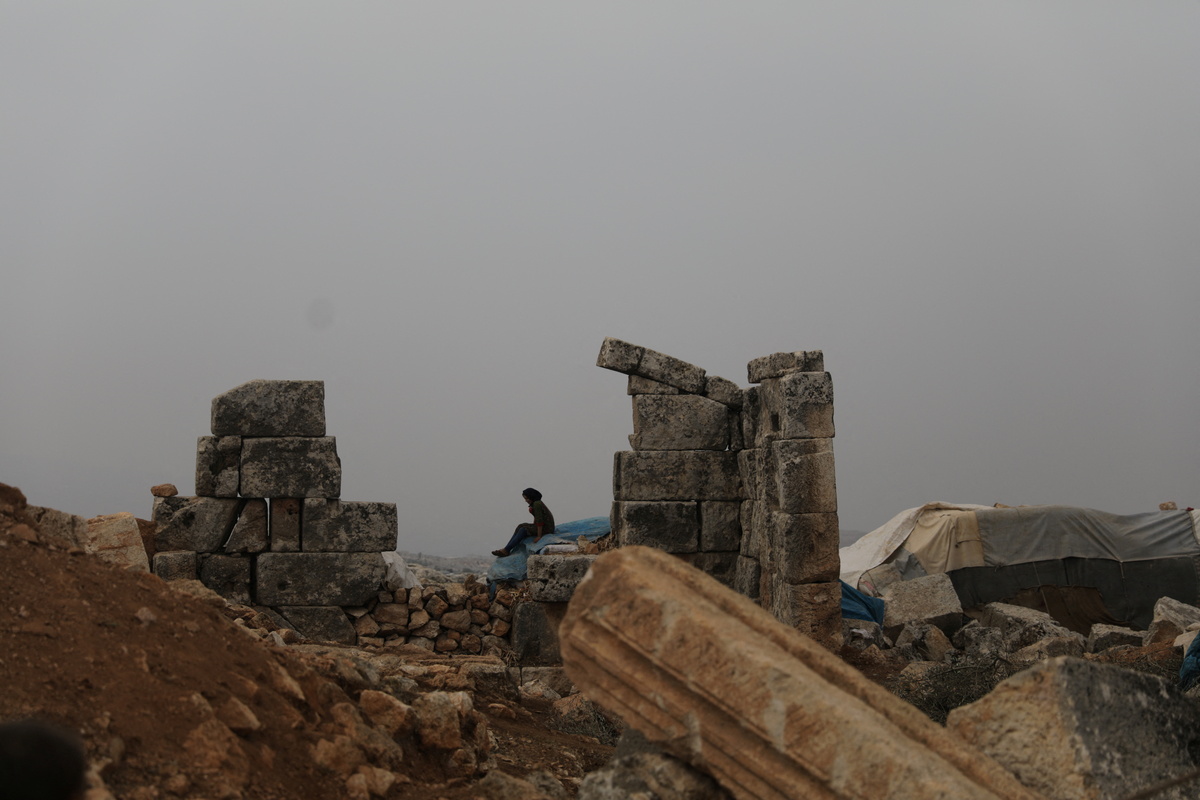
Their clothes hang to dry on two lines strung between the tent and an ancient stone portico. Their children clamber over the rocks and balance on walls in this unusual if dangerous playground.
"In the summer, we face scorpions, snakes and dust, and all the pressures of life, and in winter the cold. The situation is desperate. There are no health services," Othman, 30, said.
He said shelling forced them to flee their village near Maarat al-Numan, an area close to the frontline between government and rebel forces that has been pummelled in various bouts of conflict during Syria's decade-long conflict.
Mohammed Shiban, 7, sits on top of an ancient stone in front of the room his father Ahmad Shiban, 35, built at the UNESCO World Heritage Site of Babisqa, in the northern countryside of Idlib, Syria December 6, 2021. REUTERS/Khalil Ashawi
A father of four, he struggles to make an income, depending on seasonal work such as olive picking and any other jobs he can pick up. When there is no work, he is forced to go into debt to provide the basics. His children do not go to school.
"When the last bombardment and attack began, we left to come to here," Othman said. "We did not find a place to take shelter, so we lived here among the ruins."
The site, an early Christian settlement with ruins dating to the 5th century, has been popular with the displaced because they do not have to pay to stay there, unlike other areas where landowners charge rent.
Aida al-Hassan, 44, poses for a photo amongst ruins at the archaeological site of Sarjableh, in the northern countryside of Idlib, Syria November 17, 2021. Al-Hassan was displaced from the Al-Ghab Plain in the Hama countryside ten years ago and now lives with her family of 12 in the archaeological site "I moved more than once until I settled in the ruins, here there is no rent, but insects and snakes are many" she said. REUTERS/Khalil Ashawi
"Everyone here used to have land that we would farm and we had livelihoods in our villages and did not need anyone. But our fate was to be displaced," Othman said.
"We did not leave our land by our own free will to come to an area that has been uninhabited for thousands of years."
There are some 2.8 million displaced people in northwestern Syria, with 1.7 million of them in sites for the internally displaced, the United Nations says.
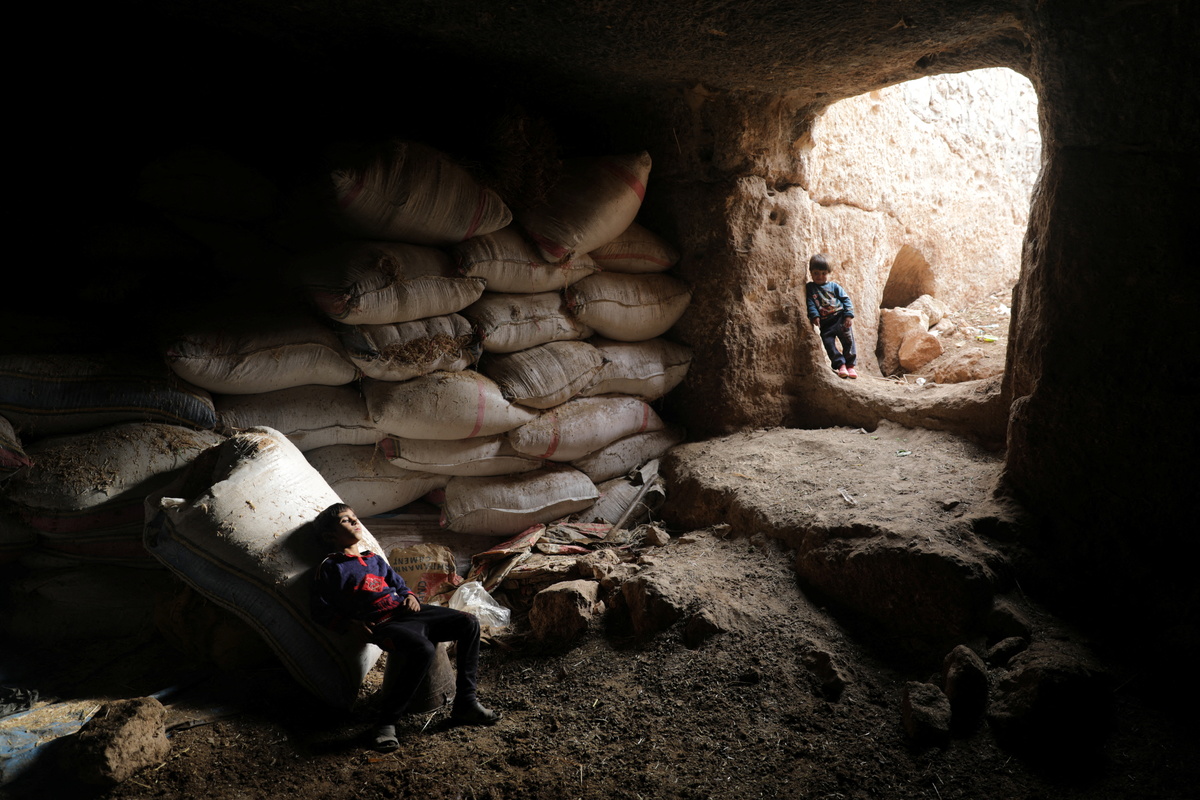
Mohamad Shiban, 7, sits against a sack of barley while Fatima Mahmoud Abu Khalifa, 4, stands in the doorway, inside a cave at the UNESCO World Heritage Site in Babisqa, in the northern countryside of Idlib, Syria November 29, 2021. Among the 80 or so families living at the site, it is known as 'Ruins camp'. REUTERS/Khalil Ashawi
Not far from Sarjableh, in another corner of the northwestern province of Idlib, the ancient site of Babisqa is also providing shelter for those bombed out of their homes.
In an earlier phase of the war, rebels used the site as a base, operating from ancients caves hewn from the rock where wiring installed by the opposition fighters can still be seen.
Among the 80 or so families living at the site, it is known as 'Kharrab camp', or 'Ruins camp'.
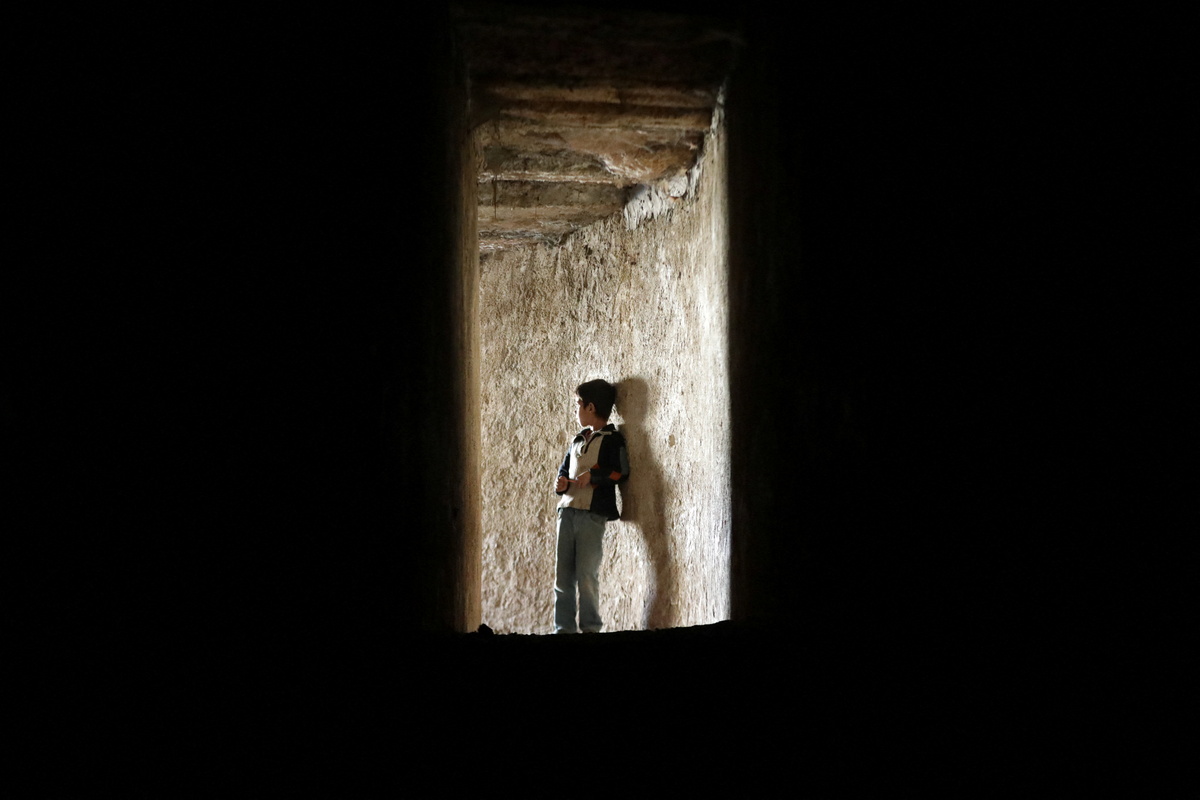
Mohammed Shiban, 7, stands at the entrance to a cave at the UNESCO World Heritage Site of Babisqa in the northern countryside of Idlib, Syria December 6, 2021. REUTERS/Khalil Ashawi
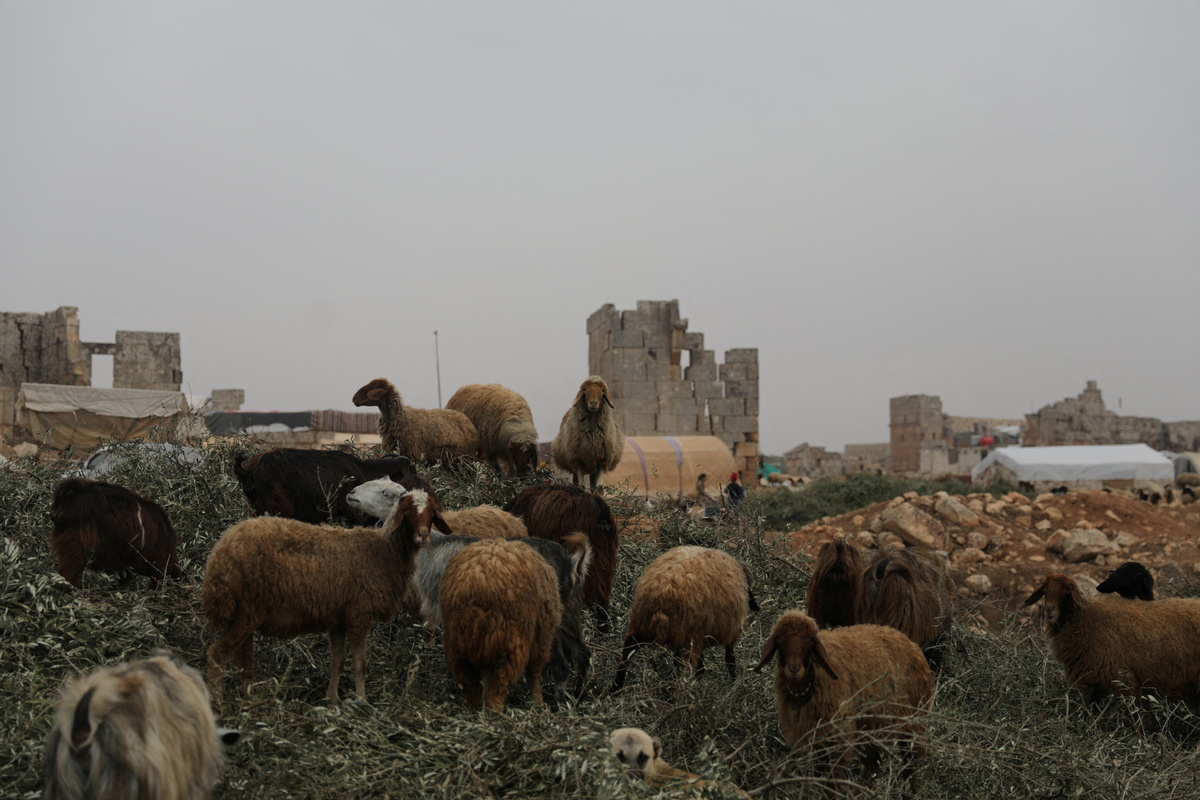
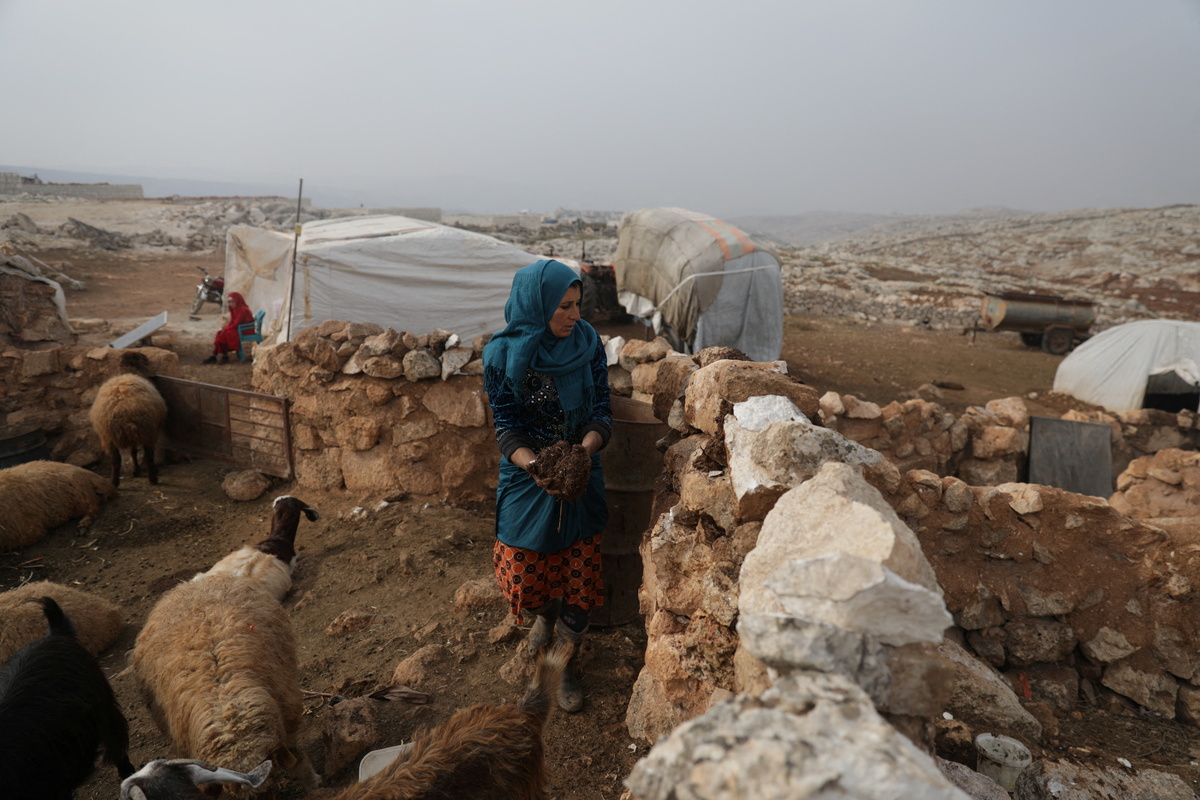
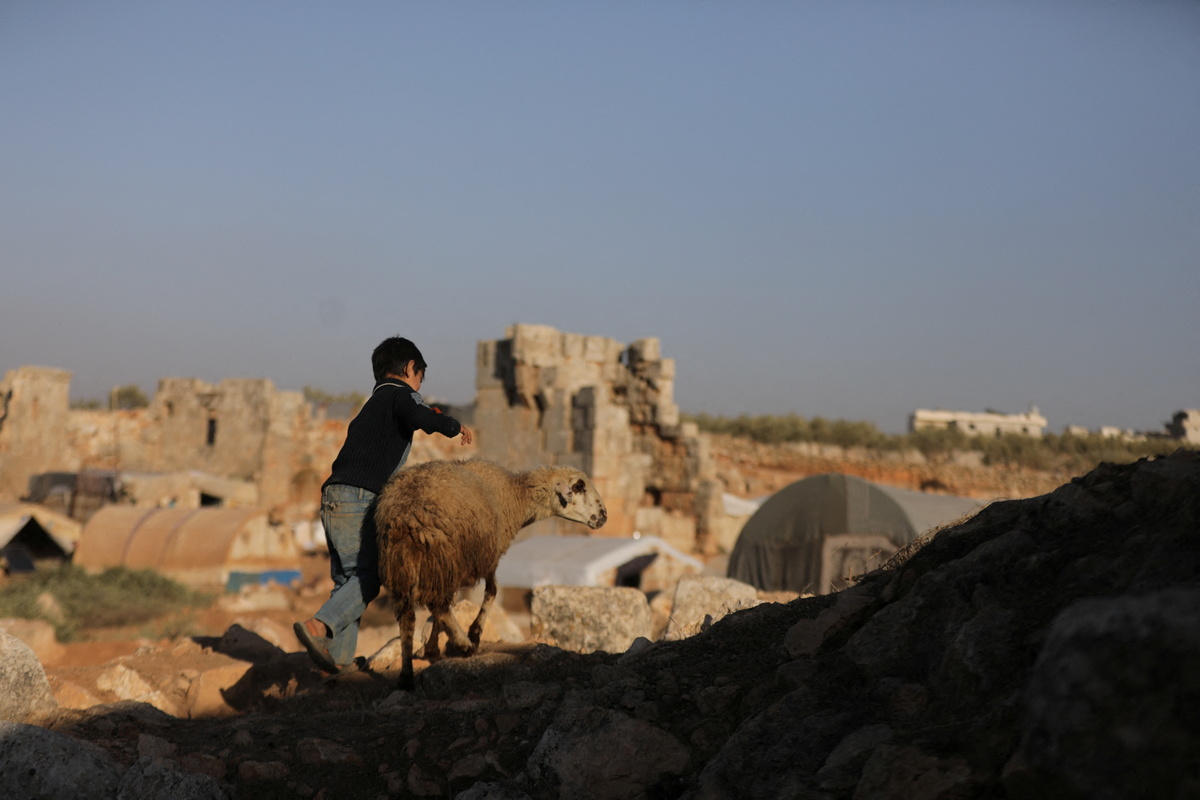
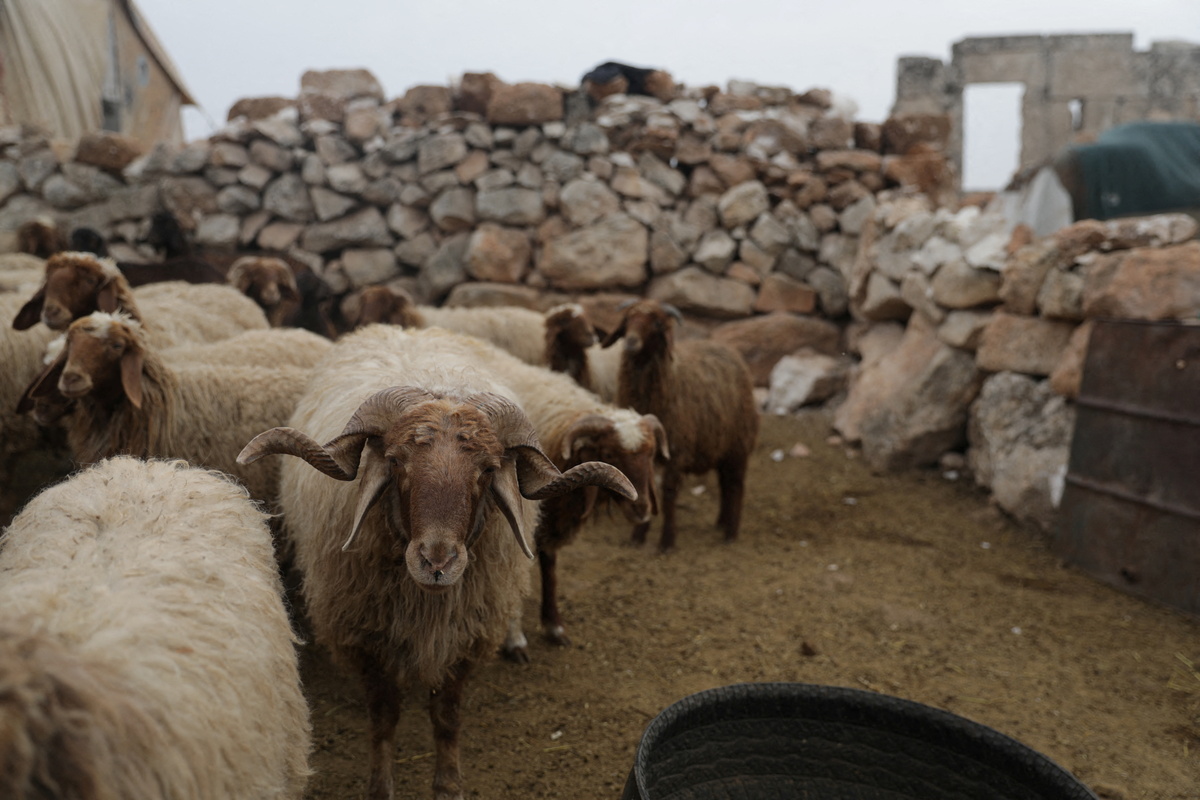
Livestock farmers, they took their sheep and goats with them when they fled into rebel-held areas from territory now under Syrian government control. Today, sheep and goats feed amid the ancient stones, with poultry pecking on the ground.
Some people have used stones from the ruins to build their shelters, some of which are equipped with small solar panels propped up outside. An antennae strapped to the side of one of the homes provides internet.
Mahmoud Abu Khalifa, a 35-year-old father of seven, stores family possessions and animal feed in an ancient cave hewn out of the rock. He keeps his sheep in a pen amidst the stones.
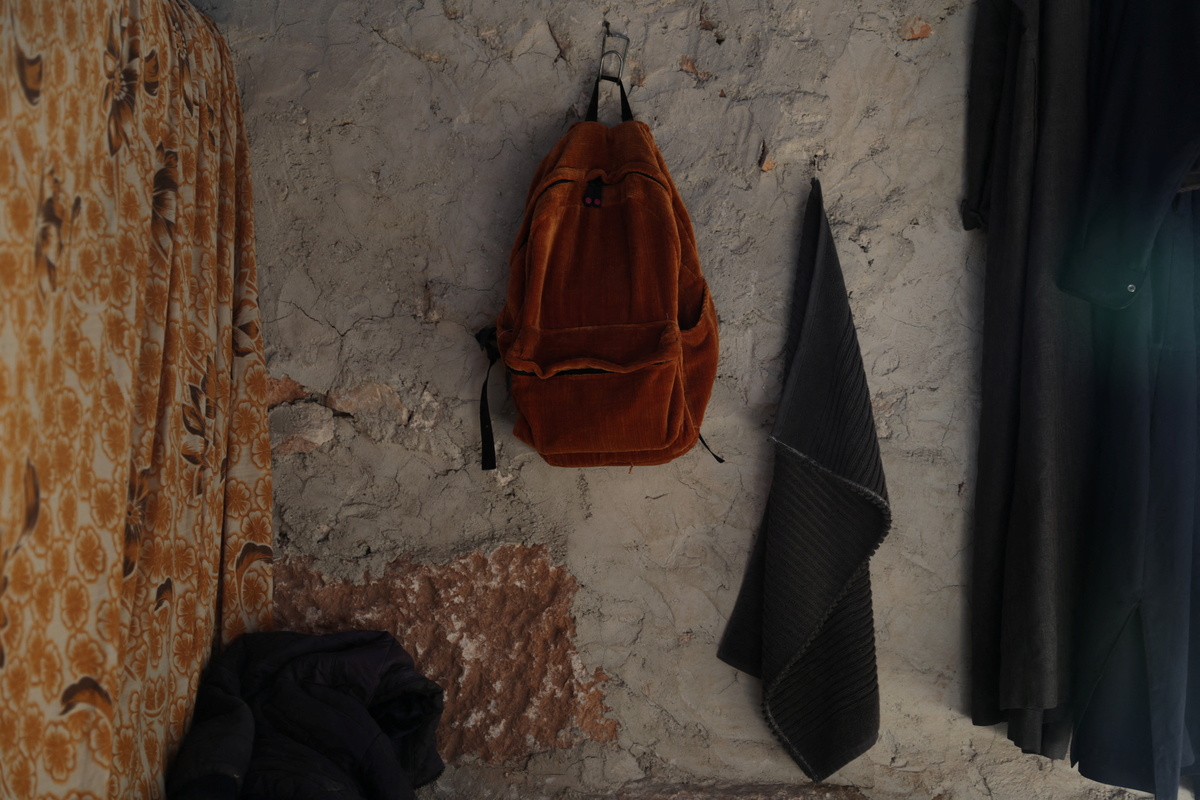
A backpack and a towel hang on a wall built from stones from the ancient ruins of Babisqa, UNESCO World Heritage Site, in the northern countryside of Idlib, Syria December 6, 2021. REUTERS/Khalil Ashawi
"Before being displaced, we had agricultural land and farmed crops and lived from them and everything was great and we had these animals," he said.
Today "the children live in the ruins and mud," he said. "The situation is very desperate," he said.
"Our one demand is to return to our villages."
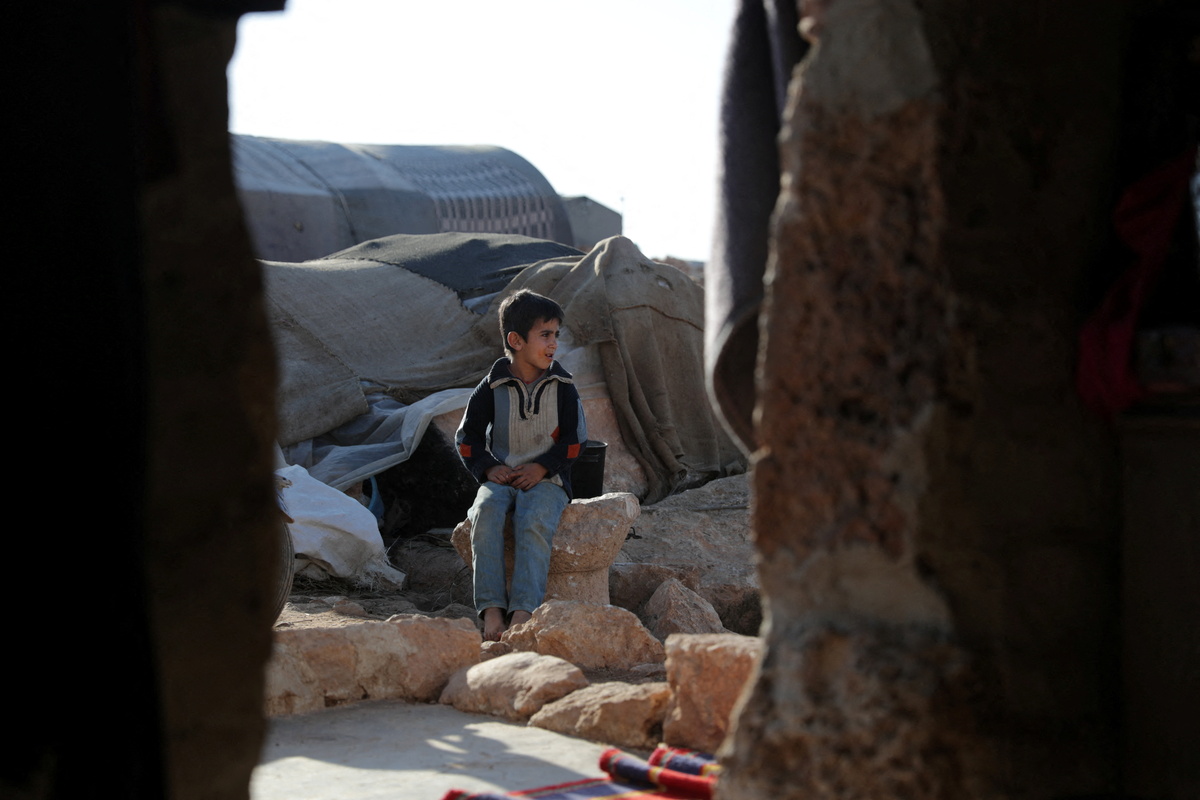
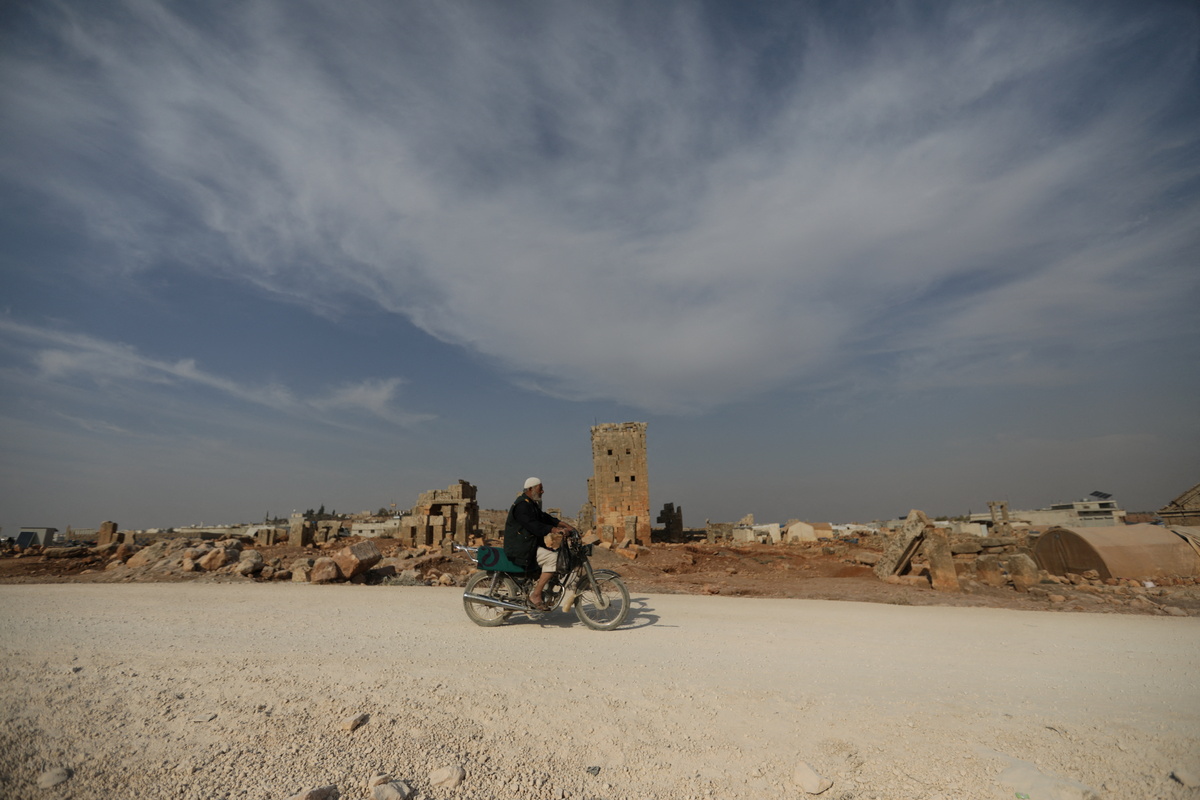
Baraa, 8, sits on an archaeological ruins in Sarjableh, in the northern countryside of Idlib, Syria November 17, 2021. Sarjableh has become a home to more than fifty families displaced from the southern countryside of Idlib during the war. REUTERS/Khalil Ashawi
(Writing by Tom Perry)
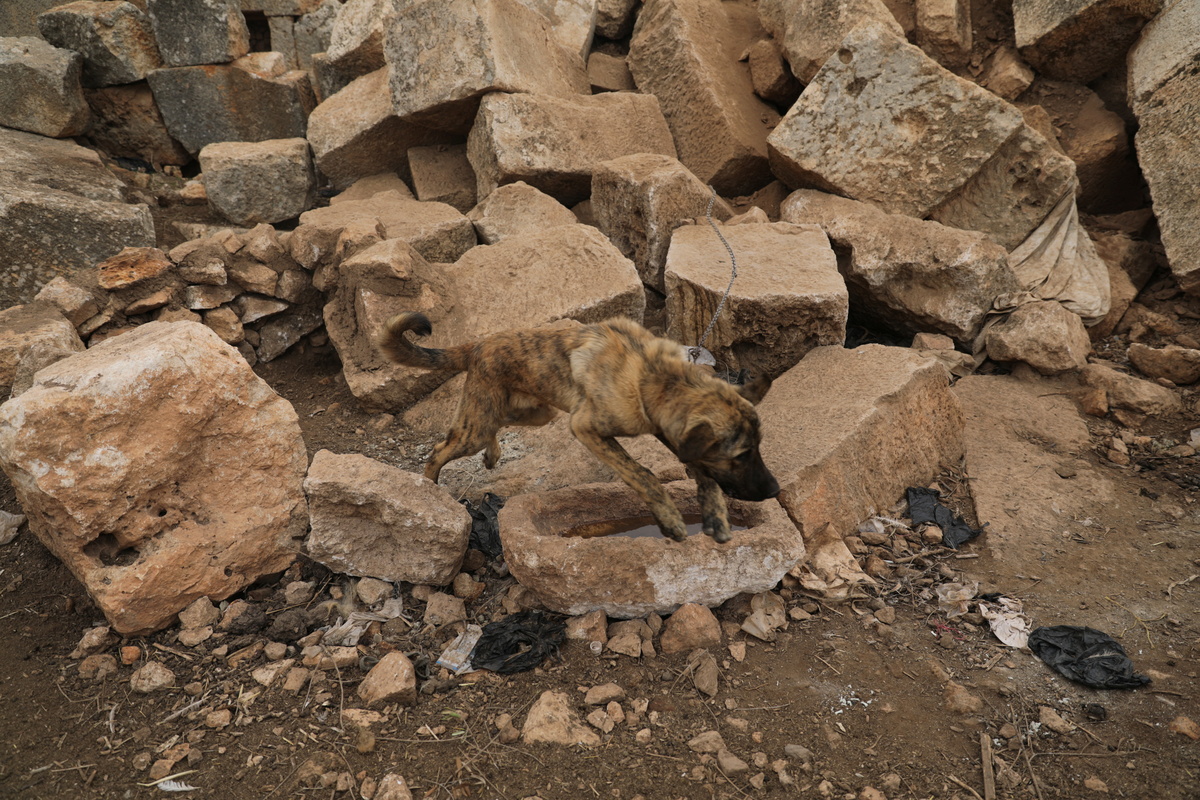
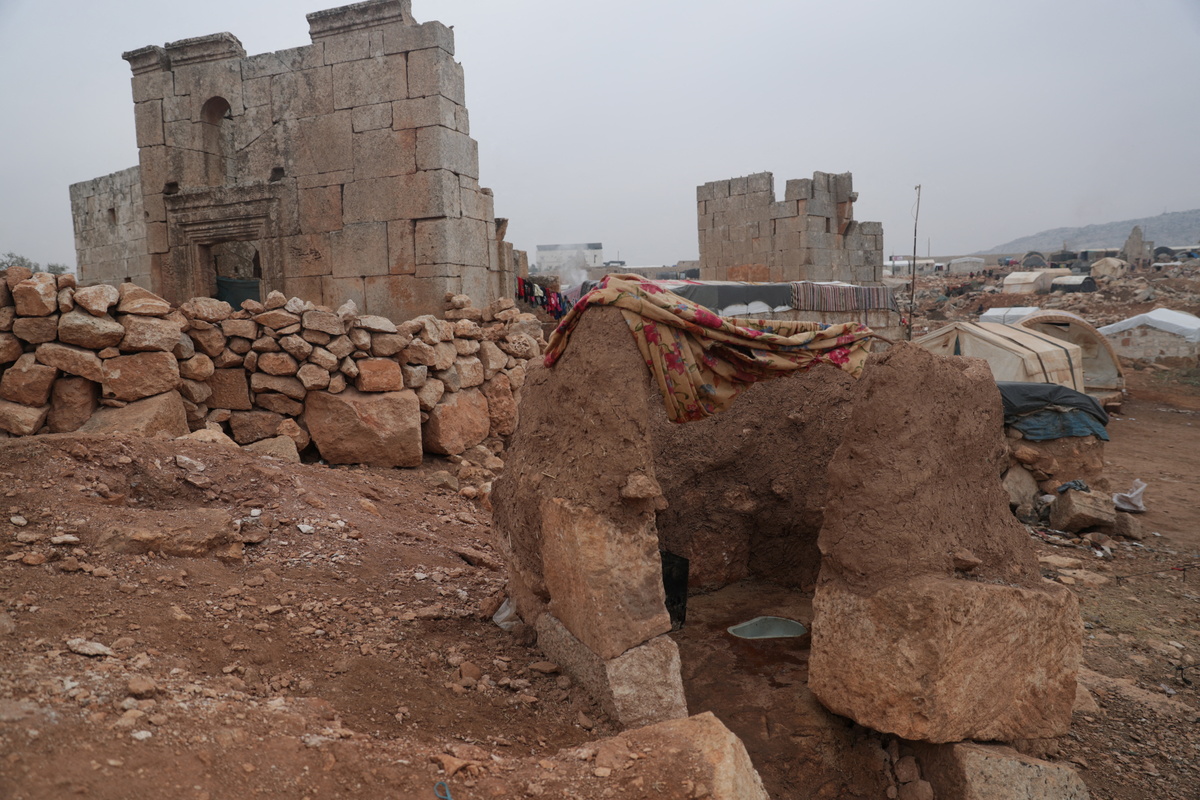
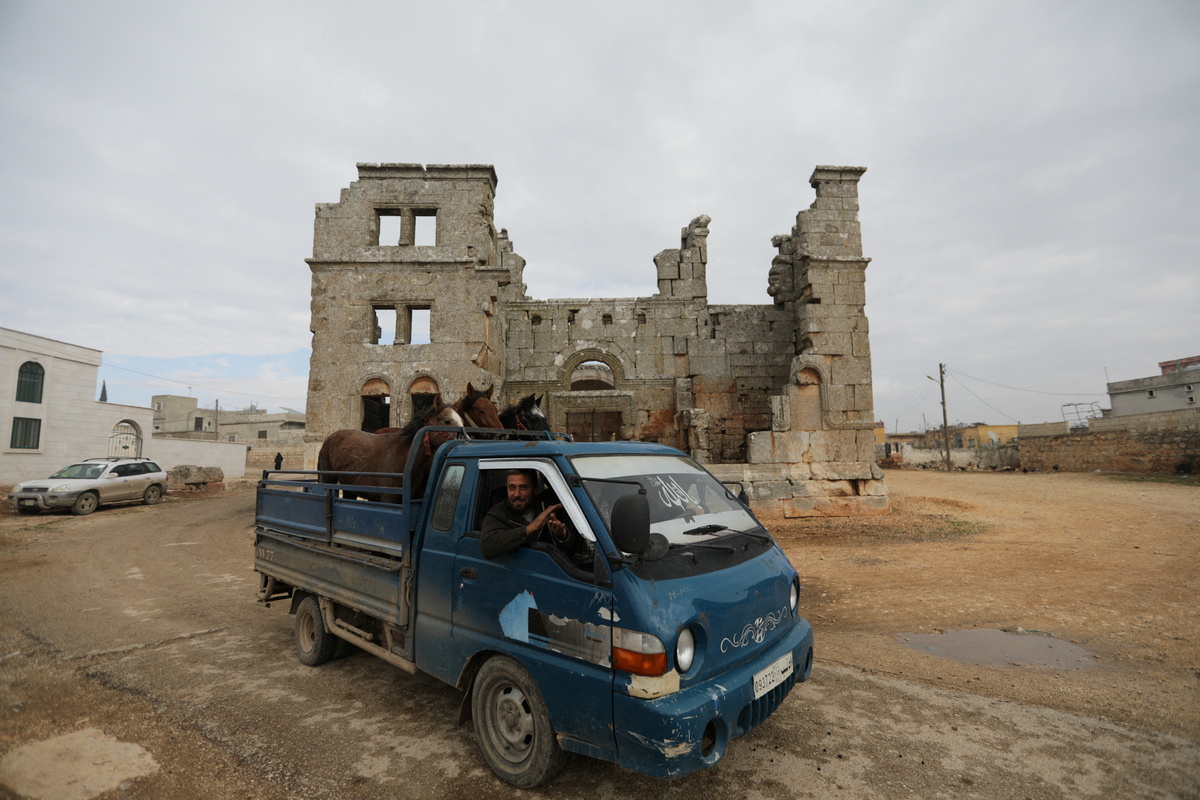
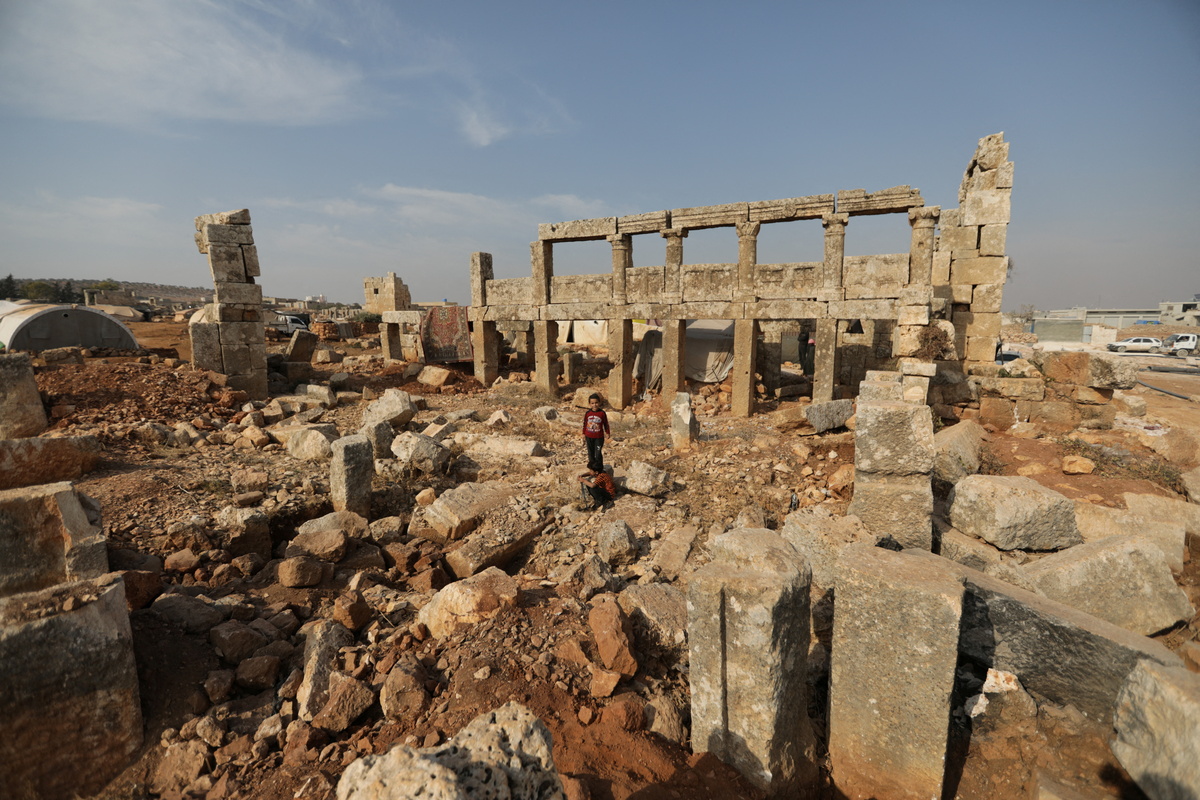
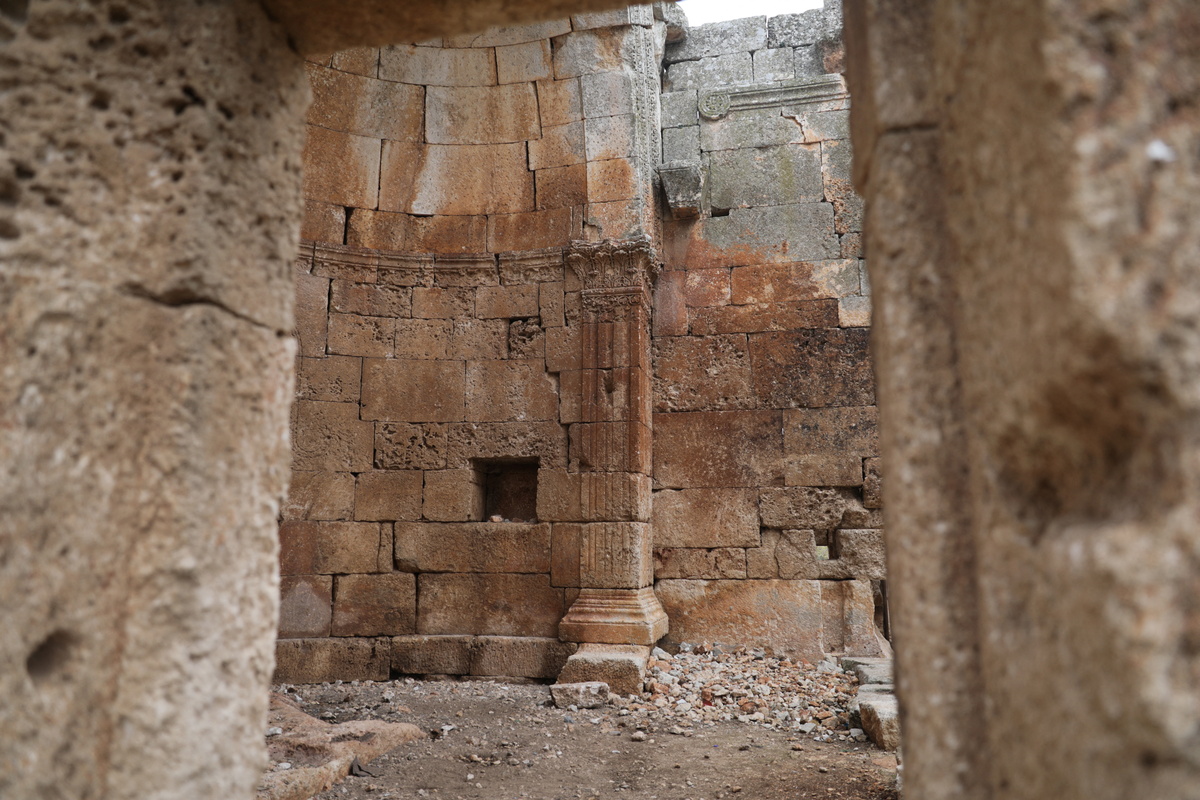
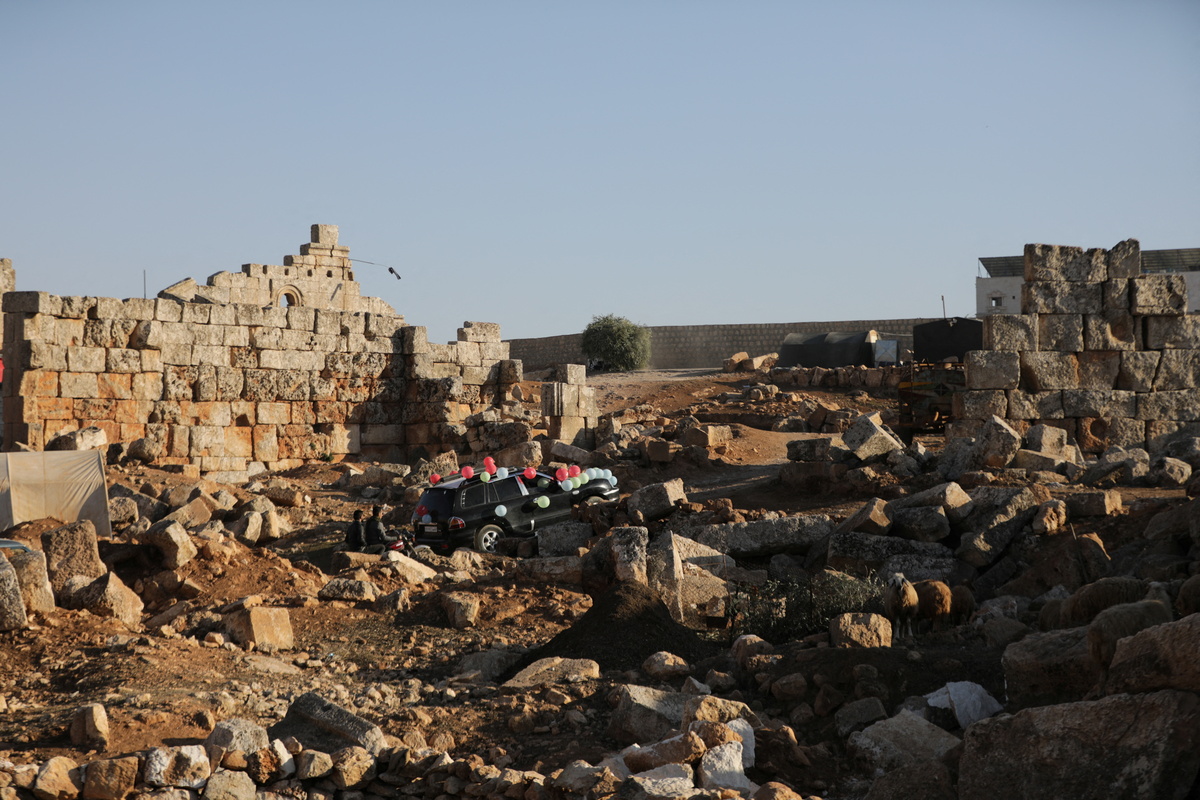
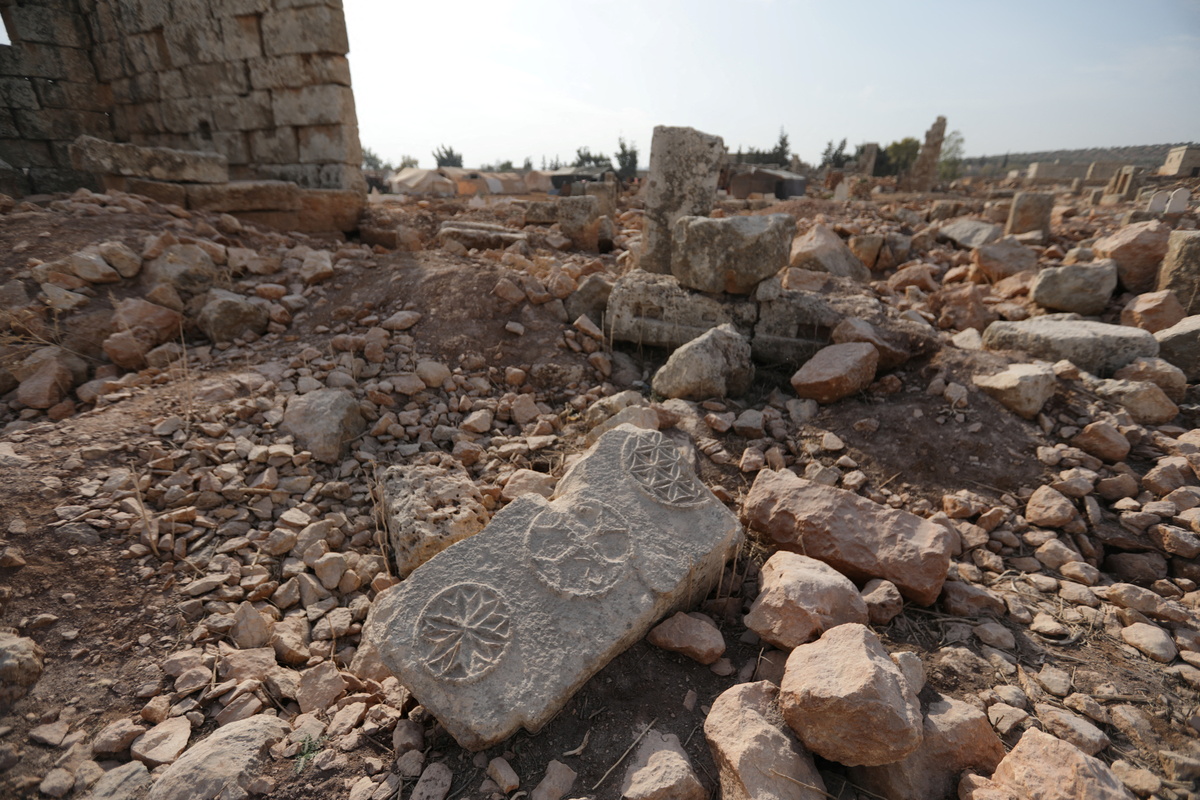
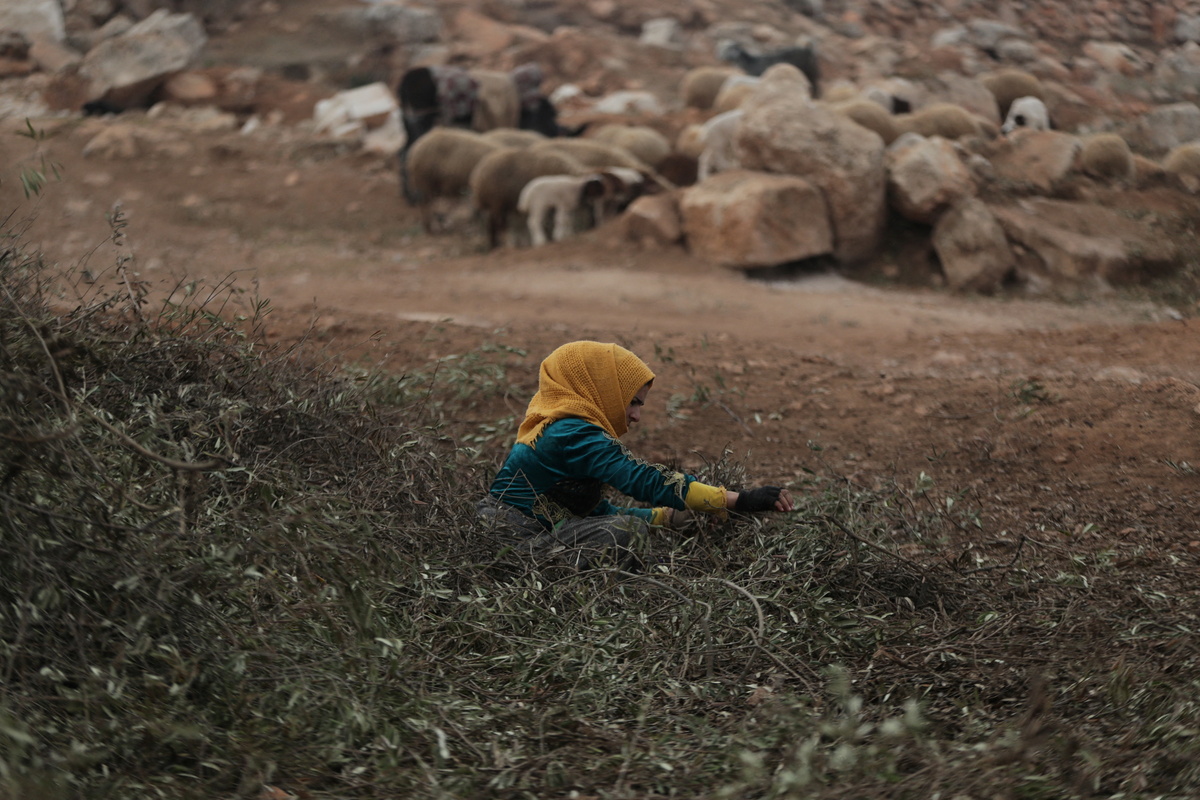
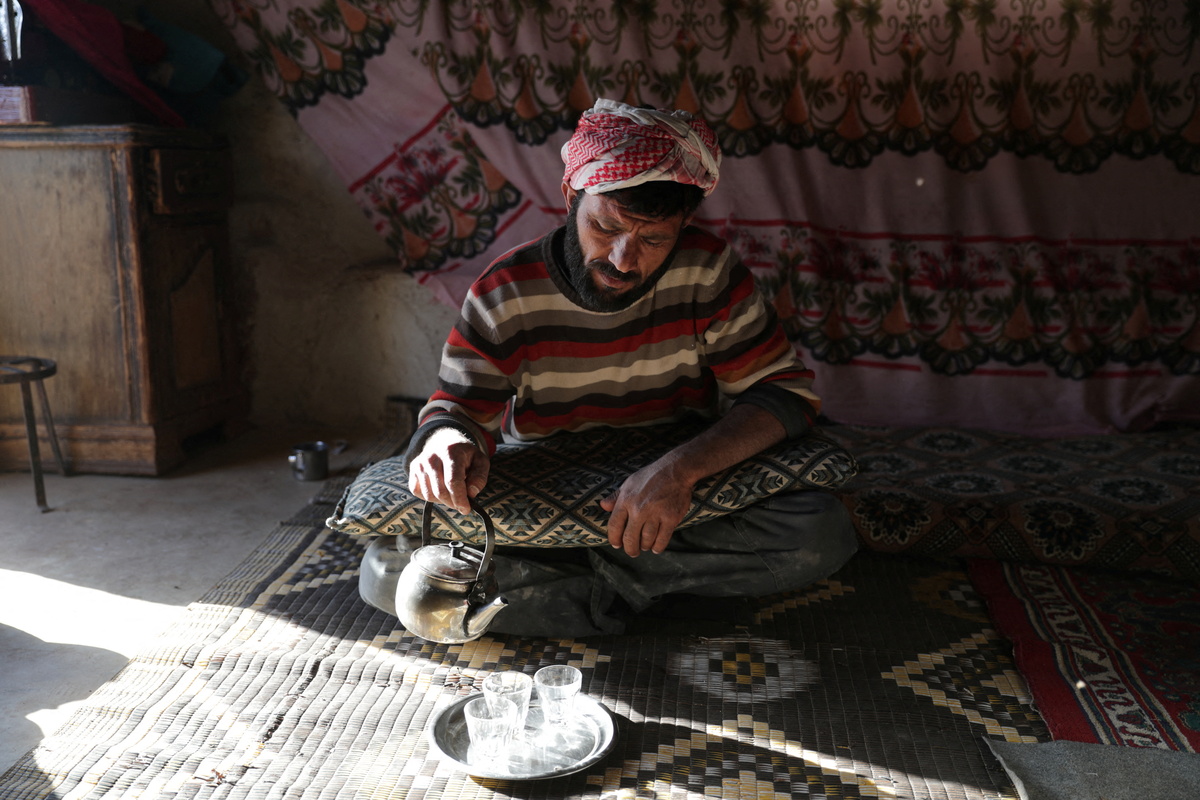
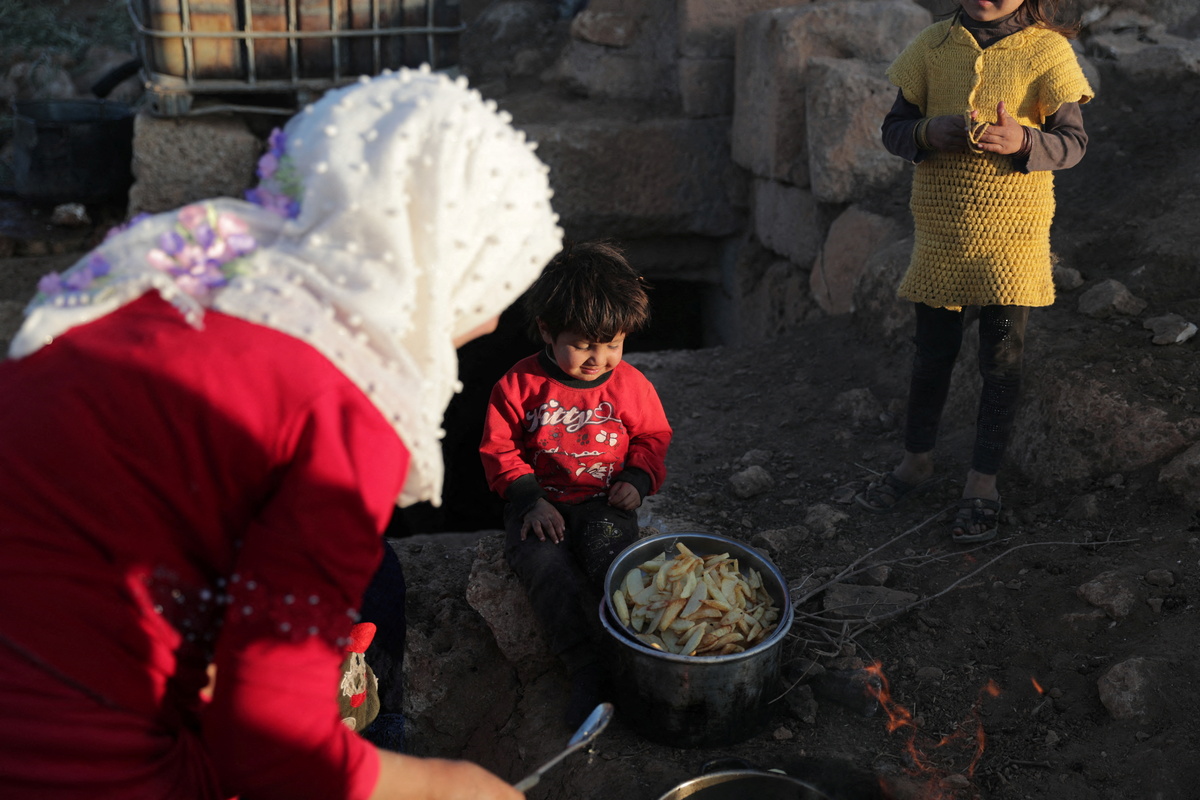
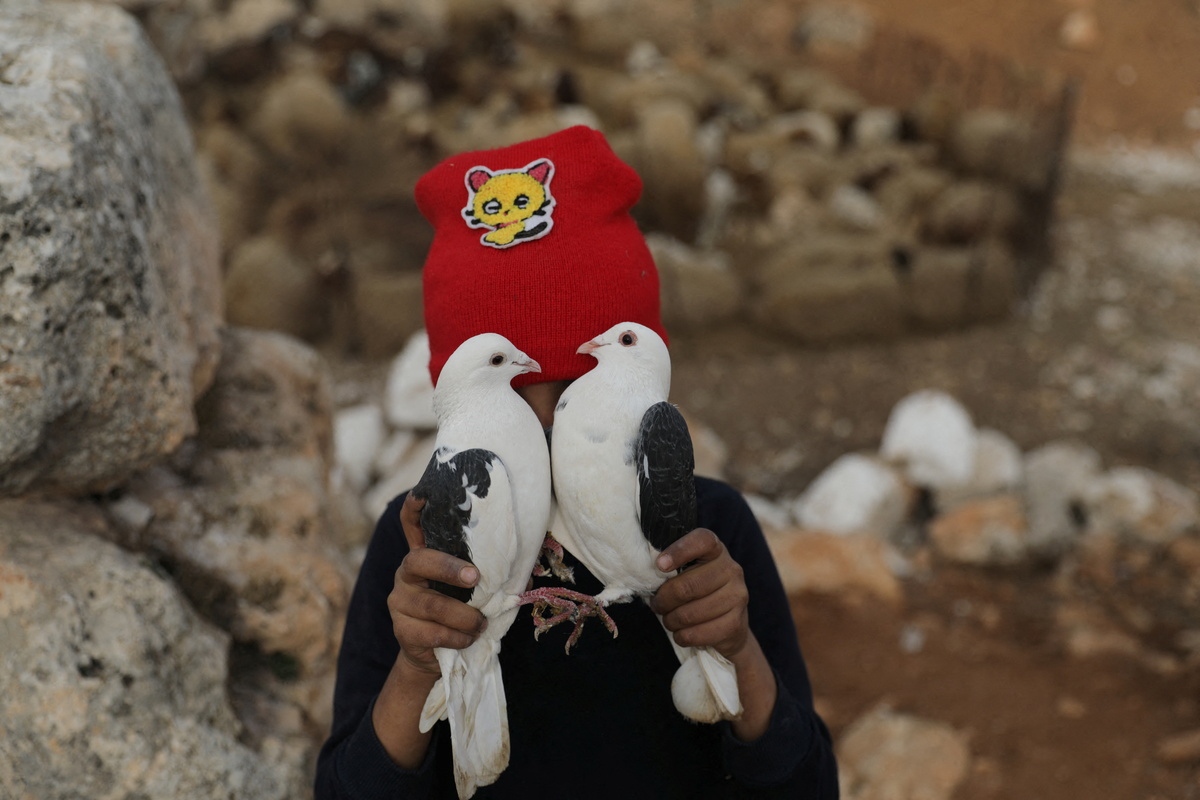
A flock of sheep graze on grass at the UNESCO World Heritage Site of Babisqa in the northern countryside of Idlib, Syria November 29, 2021. Among the 80 or so families living at the site, it is known as 'Ruins camp'. Today, sheep and goats feed amid the ancient stones, with poultry pecking on the ground. REUTERS/Khalil Ashawi A man rides a motorcycle through the archaeological site of Sarjableh, in the northern countryside of Idlib, Syria November 17, 2021. Sarjableh has become a home to more than fifty families displaced from the southern countryside of Idlib during the war. REUTERS/Khalil Ashawi A dog jumps over an ancient container used as its water bowl at the UNESCO World Heritage Site of Babisqa in the northern countryside of Idlib, Syria November 29, 2021. REUTERS/Khalil Ashawi A toilet built of ancient mud and stones is seen at the UNESCO World Heritage Site of Babisqa, in the northern countryside of Idlib, Syria November 29, 2021. Among the 80 or so families living at the site, it is known as 'Ruins camp'. REUTERS/Khalil Ashawi A man driving a truck carrying horses passes in front of the ancient Qalb Lozeh Church, Idlib, Syria. November 26, 2021. The church dates back to mid-fifth century and early sixth century AD. REUTERS/Khalil Ashawi A child stands in the middle of ruins of an ancient building in the archaeological site of Sarjableh, in the northern countryside of Idlib, Syria November 17, 2021. Sarjableh has become a home to more than fifty families displaced from the southern countryside of Idlib during the war. REUTERS/Khalil Ashawi Part of the interior of the ancient Church of Qalb Lozeh is seen in Idlib, Syria. November 26, 2021. The church dates back to mid-fifth century and early sixth century AD. REUTERS/Khalil Ashawi A woman builds a wall for a sheep barn using ancient stone from the ruins at the UNESCO World Heritage Site of Babisqa, in the northern countryside of Idlib, Syria November 29, 2021. Among the 80 or so families living at the site, it is known as 'Ruins camp'. Today, sheep and goats feed amid the ancient stones, with poultry pecking on the ground. REUTERS/Khalil Ashawi A car decorated for a wedding drives through ruins at the UNESCO World Heritage Site of Babisqa, in the northern countryside of Idlib, Syria December 6, 2021. Among the 80 or so families living at the site, it is known as 'Ruins camp'. REUTERS/Khalil Ashawi A girl sits atop ruins of an ancient building at the UNESCO World Heritage Site of Babisqa, in the northern countryside of Idlib, Syria November 29, 2021. Among the 80 or so families living at the site, it is known as 'Ruins camp'. REUTERS/Khalil Ashawi Ancient stones bearing a cross and other emblems are seen at the archaeological site of Sarjableh, in the northern countryside of Idlib, Syria November 17, 2021. Sarjableh has become a home to more than fifty families displaced from the southern countryside of Idlib during the war. REUTERS/Khalil Ashawi Children climb among the ancient ruins of the UNESCO World Heritage Site of Babisqa, in the northern countryside of Idlib, Syria November 29, 2021. Among the 80 or so families living at the site, it is known as 'Ruins camp'. REUTERS/Khalil Ashawi A woman collects olive twigs for firewood at the UNESCO World Heritage Site of Babisqa, in the northern countryside of Idlib, Syria November 29, 2021. REUTERS/Khalil Ashawi Mohamad Othman, 30, stands next to his tent in the heart of the archaeological site of Sarjableh, in the northern countryside of Idlib, Syria November 17, 2021. Sarjableh has become a home to more than fifty families displaced from the southern countryside of Idlib during the war. "Everyone here used to have land that we would farm and we had livelihoods in our villages and did not need anyone. But our fate was to be displaced," Othman said. "We did not leave our land by our own free will to come to an area that has been uninhabited for thousands of years." REUTERS/Khalil Ashawi Ahmad Shiban, 33, pours tea inside the room he built using stone from the ancient ruins of the UNESCO World Heritage Site of Babisqa in the northern countryside of Idlib, Syria December 6, 2021. "I started building a room for my family after I realized that I would not return to my village any time soon " said Shiban "I used the stones scattered in the area to build a room, and I will build a kitchen and a bathroom" REUTERS/Khalil Ashawi Mahmoud Abu Khalifa, 35, stands in front of his tent at the UNESCO World Heritage Site of Babisqa in the northern countryside of Idlib, Syria December 6, 2021. "Before being displaced, we had agricultural land and farmed crops and lived from them and everything was great and we had these animals," he said. Today "the children live in the ruins and mud," REUTERS/Khalil Ashawi Zahra Abu Khalifa, 28, cooks potatoes with her children at the UNESCO World Heritage Site of Babisqa in the northern countryside of Idlib, Syria December 6, 2021. Among the 80 or so families living at the site, it is known as 'Ruins camp'. REUTERS/Khalil Ashawi Mohammed Shiban, 7, plays alongside a sheep at the UNESCO World Heritage Site of Babisqa in the northern countryside of Idlib, Syria December 6, 2021. REUTERS/Khalil Ashawi Khalid Abu Khalifa, 9, holds a pair of pigeons while playing amidst the ancient ruins at the UNESCO World Heritage Site of Babisqa in the northern countryside of Idlib, Syria November 29, 2021. REUTERS/Khalil Ashawi A flock of sheep stand in a pen at the UNESCO World Heritage Site of Babisqa, in the northern countryside of Idlib, Syria November 29, 2021. Among the 80 or so families living at the site, it is known as 'Ruins camp'. Today, sheep and goats feed amid the ancient stones, with poultry pecking on the ground. REUTERS/Khalil Ashawi Mohamad Othman, 30, stands with his children beside their tent in the archaeological site of Sarjableh, in the northern countryside of Idlib, Syria November 17, 2021. Sarjableh has become a home to more than fifty families displaced from the southern countryside of Idlib during the war. "Everyone here used to have land that we would farm and we had livelihoods in our villages and did not need anyone. But our fate was to be displaced," Othman said. "We did not leave our land by our own free will to come to an area that has been uninhabited for thousands of years." REUTERS/Khalil Ashawi
Sign up to read this article
Read news from 100’s of titles, curated specifically for you.