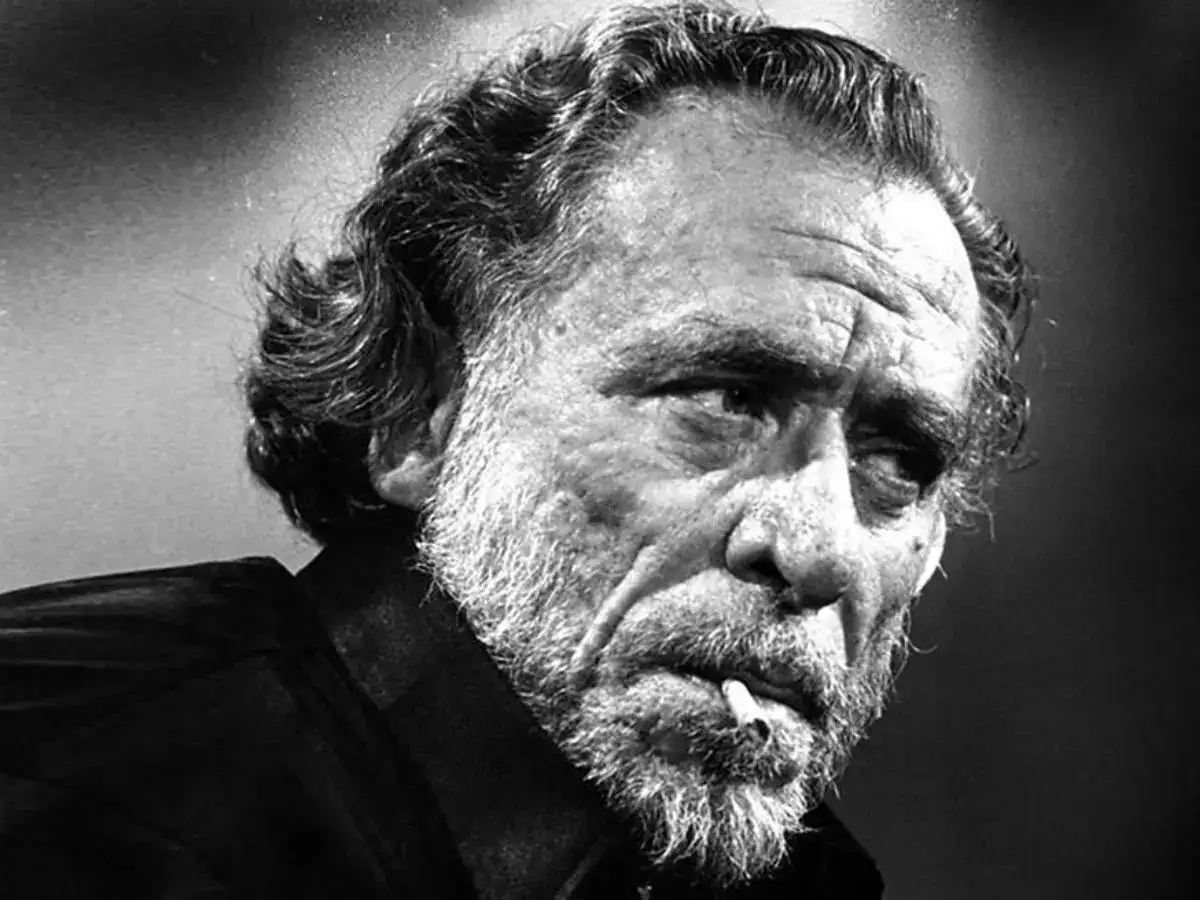
Life advice of the day : Life advice often comes from unexpected voices, and few writers challenged ordinary thinking quite like Charles Bukowski. Known for his raw poetry and brutally honest storytelling, the German-American writer explored loneliness, failure, desire, rebellion and the strange beauty hidden in everyday struggles.
Life advice of the day by Charles Bukowski
One of his most memorable observations says, “ Some people never go crazy. What truly horrible lives they must lead.”
The quote is not a celebration of losing control. Instead, it is a challenge to those who become trapped by routine, fear and the need to always appear sensible. Bukowski suggests that a life without curiosity, passion or risks can become far more empty than one filled with mistakes and adventures.
For him, “going crazy” represented stepping outside the expected path — trying something new, chasing an unusual dream and refusing to live only by society’s rules.
What does Charles Bukowski’s quote teach us about living fully?
The deeper meaning behind the quote is about courage and experience. Many people spend years avoiding anything uncertain because they fear failure, embarrassment or judgment. They choose comfort over discovery, safety over excitement.
Bukowski believed that a little unpredictability is necessary for a meaningful life. Taking small risks, exploring new interests and allowing yourself to experience different emotions can bring energy back into everyday existence.
The writer’s words remind us that a perfectly controlled life may look successful from the outside but still feel empty from within. Sometimes the moments that shape us most come from choices that are unexpected.
Trying a new career path, traveling somewhere unfamiliar, creating something, meeting different people or simply breaking an old habit can bring a sense of renewal.
Who was Charles Bukowski and why did his writing stand out?
Born in Germany in 1920, Charles Bukowski moved to the United States as a child and grew up in Los Angeles. His difficult early years had a major influence on his writing. He often wrote about outsiders, struggling workers, loneliness, addiction, relationships and people living on society’s margins, as per Britannica.
Bukowski’s style was different from traditional literary voices. He avoided polished language and instead used direct, conversational writing that often shocked readers. His poems and stories were filled with honesty, anger, humor and uncomfortable truths.
Many critics debated his work because of its themes of drinking, violence and sexuality. While some considered his writing offensive, others saw it as a sharp criticism of human weakness and social expectations.
His appeal came from his refusal to pretend. Bukowski wrote about imperfect people because he believed real life was rarely perfect, as per Britannica.
How did Charles Bukowski turn struggle into art?
Bukowski did not become a professional writer overnight. For years, he worked ordinary jobs, faced rejection and struggled to find recognition. After abandoning writing for a period, he eventually returned to it and developed the voice that made him famous.
His first poetry collection, Flower, Fist and Bestial Wail, introduced themes that would appear throughout his career — isolation, frustration and the search for meaning.
He later became known for works such as Post Office and Ham on Rye, which drew heavily from his personal experiences, as per Britannica.
Through his writing, Bukowski transformed ordinary struggles into stories that connected with people who felt ignored or misunderstood.
Why does this quote still connect with people today?
In modern life, many people feel pressured to follow a predictable path. There is often a focus on productivity, achievement and appearing successful. Bukowski’s words question whether a life spent only meeting expectations is truly fulfilling.
His message encourages people to add adventure to their lives. That does not necessarily mean making reckless choices. It can simply mean allowing yourself to be curious, creative and open to change.
A person does not need to completely reinvent their life overnight. Small acts of bravery can make a difference — learning something new, expressing yourself honestly or taking a chance you have been avoiding.
What is the real meaning behind “Some people never go crazy”?
Bukowski’s idea is not about chaos for the sake of chaos. It is about refusing to become emotionally numb. The “crazy” he describes is the part of life where people laugh loudly, dream boldly, create freely and take chances despite uncertainty. It is the willingness to experience life instead of only observing it.
Throughout his career, Bukowski remained a symbol of the outsider, someone who found beauty in flawed people and uncomfortable realities. His writing continues to attract readers because it speaks to a universal desire: the need to feel alive.
The quote remains powerful because it asks a simple question: Are we truly living, or are we only existing safely? Sometimes, the smallest adventure can be the reminder that life is meant to be experienced, not merely endured.