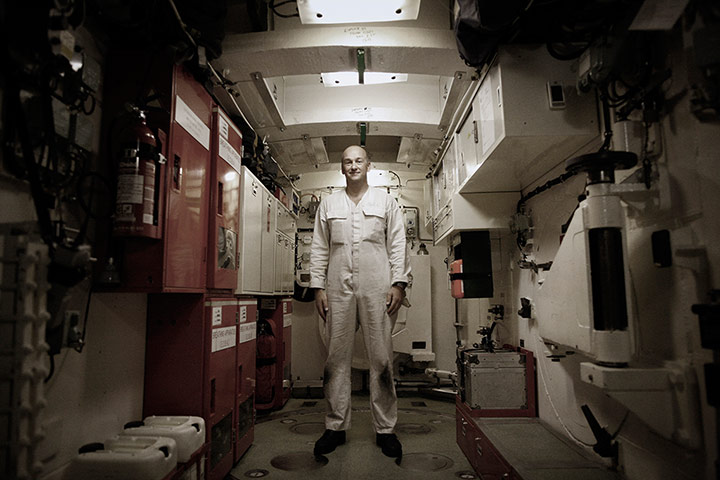
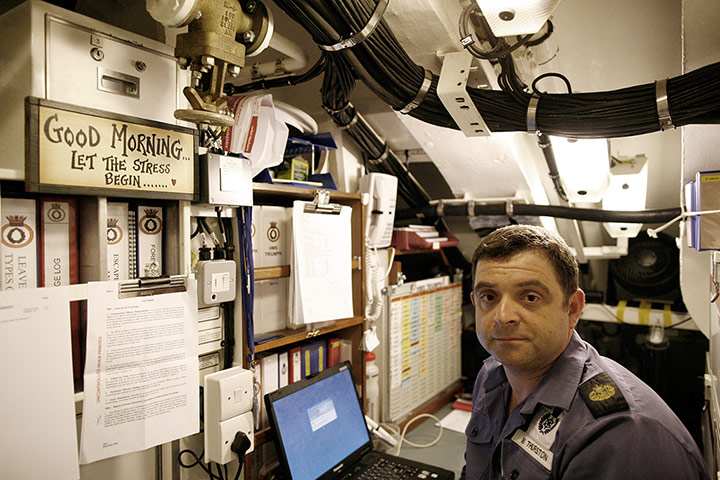
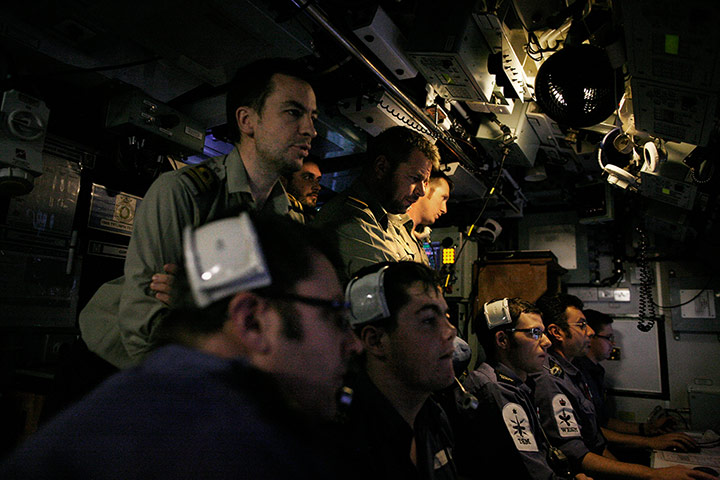
Marine Engineer Officer Lt Cdr Andy Sharp stands above the submarine's nuclear reactor, which the engineers call “the big kettle”. It enables fast-attack submarines such as HMS Triumph to go on long operations, with no need to come into port for refuelling. Photograph: Gary Calton for the Guardian"Let the stress begin", reads the sign above the desk of Coxswain Mark Thurston.Photograph: Gary Calton for the GuardianA tense moment of concentration in the control room of HMS Triumph.Photograph: Gary Calton for the Guardian
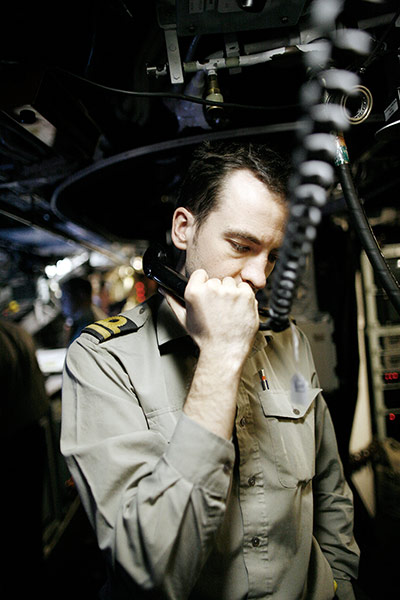
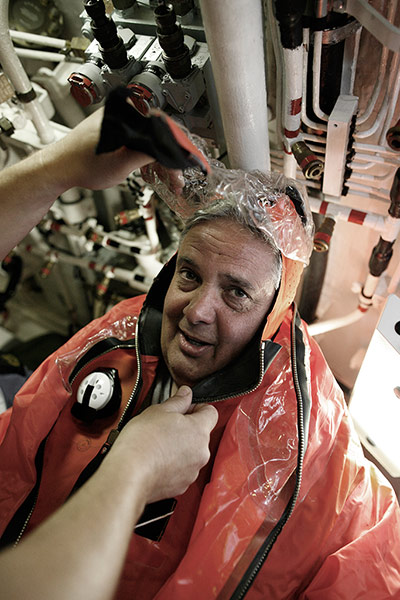
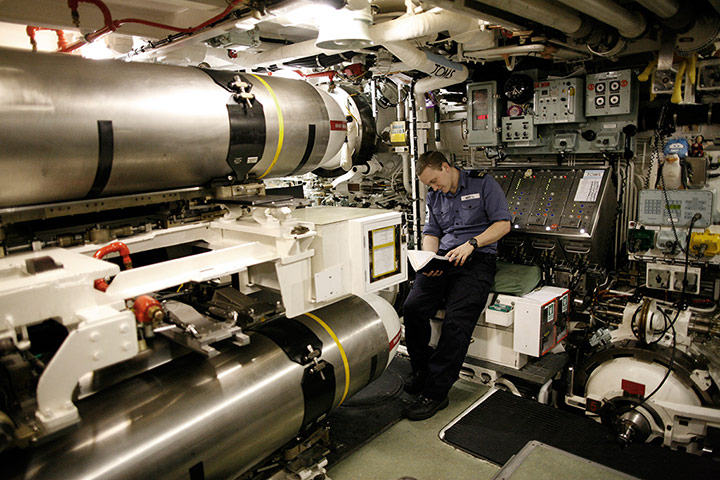
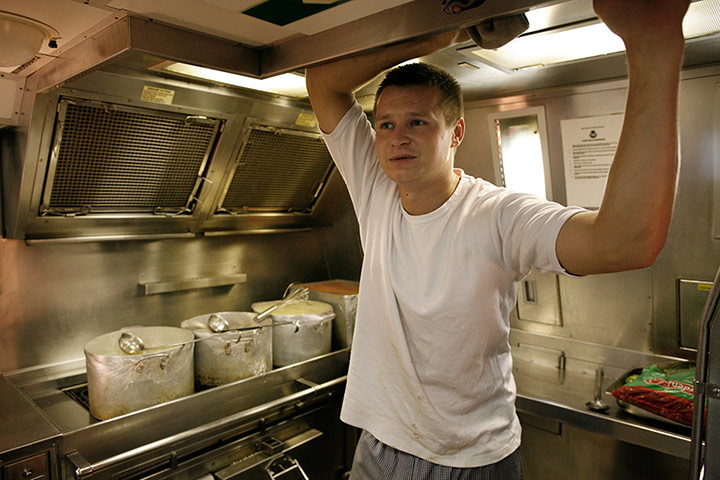
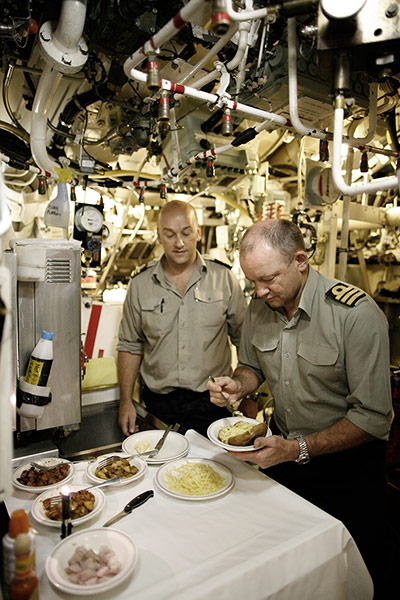
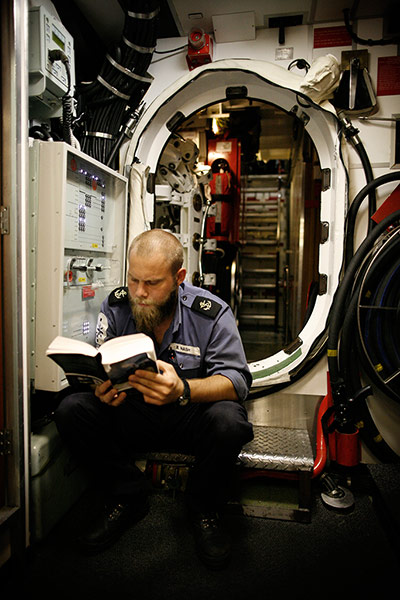
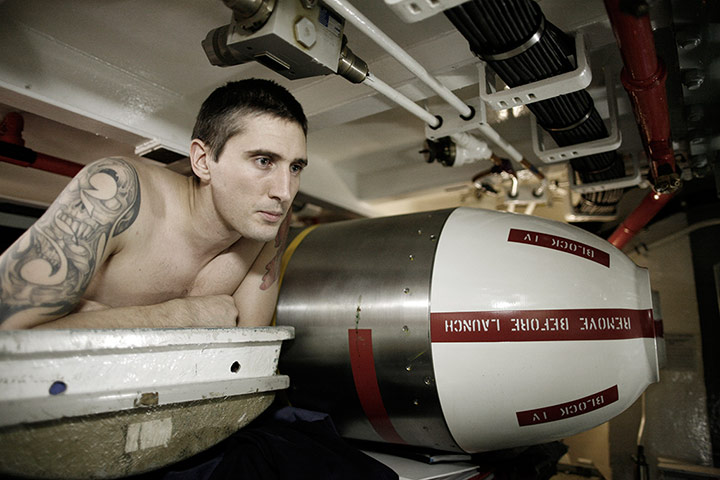
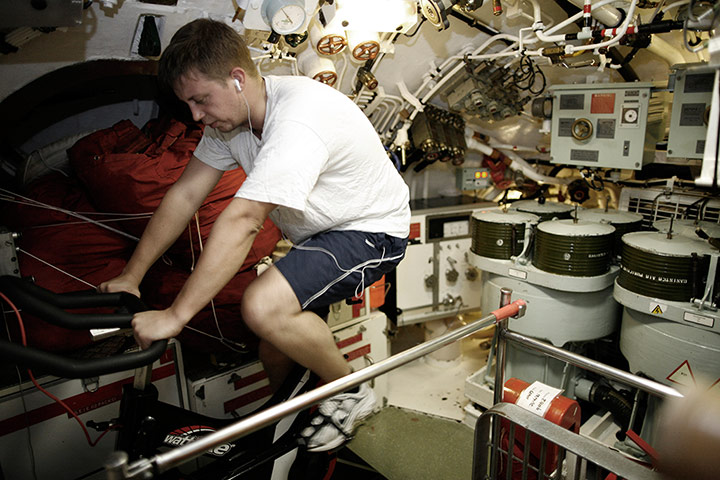
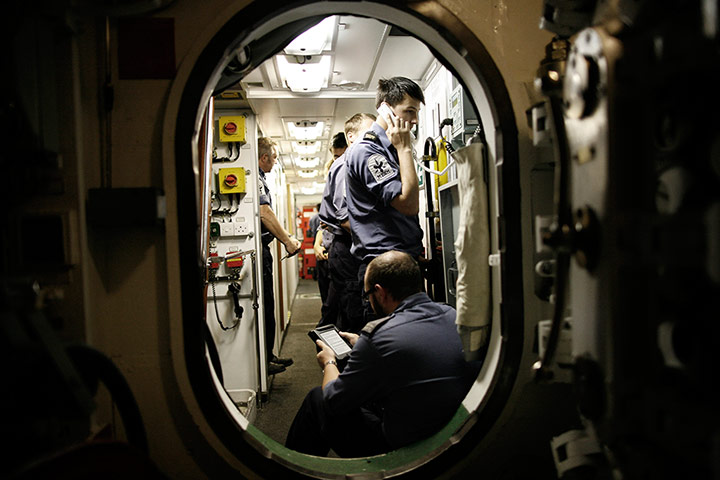
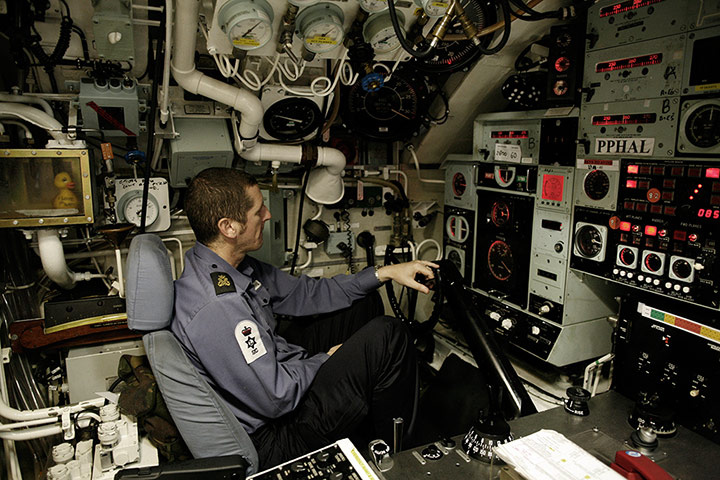
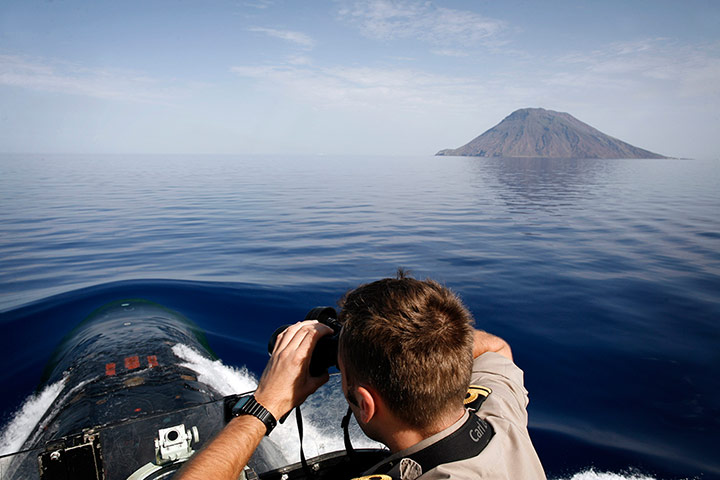
Lt Stuart Keillor, a watch officer - the most senior rank after captain and executive officer. “There’s a lot of willpower in putting yourself into this environment for a long period. There’s a lot of loyalty; and for that reason I’m very comfortable with my shipmates. There’s a high expectation of the trainees that come on here. They’ve got a lot to prove, but once they’re in the club, you can be confident they’ve reached a certain standard.”Photograph: Gary Calton for the GuardianGuardian writer Stephen Moss – who spent six days on board – tries on a high-pressure escape diving suit. In the event of an emergency, crew don one to evacuate via an escape hatch. Photograph: Gary Calton for the GuardianThe weapons room is one of the only quiet areas of the boat, which makes it the perfect retreat for crew studying for their "dolphins" badge – the sign of a qualified submariner.Photograph: Gary Calton for the GuardianChief cook Wayne Claridge works with two other chefs in a tiny galley. The food budget is £3 per head per day ("less than police dogs get in the UK," joked one submariner). Saturday is steak night with ice cream for dessert. Wednesday is curry. Thursday is baked potatoes with leftover curry sauce. Photograph: Gary Calton for the GuardianThe back'aft crew bake potatoes on the engine throttle every night at about 2am. They have laid on a tablecloth because the skipper, Capt Robert Dunn, has dropped in for a bite.Photograph: Gary Calton for the GuardianMany of the crew are constantly reading for exams, but there is free time for lighter reading. Able Seaman Nash takes a break with The Count of Monte Cristo.Photograph: Gary Calton for the GuardianTCPO "Tug" Wilson sleeps in the weapons room, also known as "the bomb shop", next to a cruise missile. It makes a popular sleeping quarters because the temperature here is lower than in other parts of the boat, and the men hug the missiles to keep cool.Photograph: Gary Calton for the GuardianExercise equipment for "phys" breaks is squeezed in wherever there is space. There are free weights, a rowing machine and - here in the escape room - an exercise bike.Photograph: Gary Calton for the GuardianSpace is cramped on the boat and there's little privacy - so crew relax with their Kindles wherever they can.Photograph: Gary Calton for the GuardianEveryone wants to "get a drive" at some point. Planesmen take it in turns to work six-hour shifts.Photograph: Gary Calton for the GuardianLt Oliver Morrow is navigator on HMS Triumph - one of the toughest and most senior jobs on the boat, involving shifts of 16-18 hours. Here the boat cruises past Stromboli in the Mediterranean.Photograph: Gary Calton for the Guardian
Sign up to read this article
Read news from 100’s of titles, curated specifically for you.







.png?w=600)