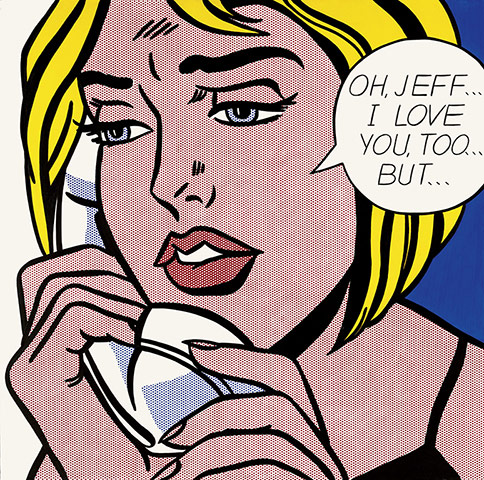
Roy Lichtenstein’s paintings pack a wallop like no others. Be it his fighter plane exploding with a “Whaam!” , or the comic-book dames, haloed by speech bubbles, their backdrops neatly spotted with Ben-Day dots, his work is immediately recognisable. Alongside Warhol’s screen prints, these are the most famous pop art images on the planet. Unlike Warhol, however, Lichtenstein took a traditional approach, something the first big retrospective of his work since his death in 1997 seems to emphasise. Beginning with his breakthrough painting of Mickey Mouse fishing, it’s clear this work is very hand-made; and his landscapes, mirror paintings and homages to art’s greats show there’s more to Lichtenstein than first impressions may suggest.
Tate Modern, SE1, Thu 21 Feb to 27 May
SS Photograph: Alex Hayden
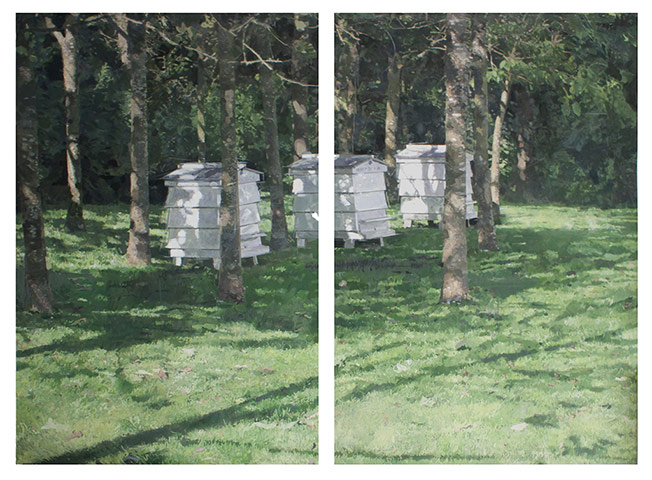
With its tough name and remote setting, Little Sparta, Ian Hamilton Finlay’s art-filled garden outside Edinburgh, was the perfect retreat-cum-fortress for the agoraphobic poet-artist. There he set his work inspired by wars and social upheavals that span millennia, while he played out his own personal revolt, against the gatekeeper funding bodies of the art establishment. This show brings his sculptures, carved with fragments of poetry and philosophy, indoors. Eileen Hogan’s accompanying paintings of Little Sparta (work pictured) are a dreamily impressionistic reminder of Hamilton Finlay’s sanctuary, with the artist himself occasionally depicted amid dappled green leaves.
New Art Centre, East Winterslow, to 31 Mar
SS Photograph: PR
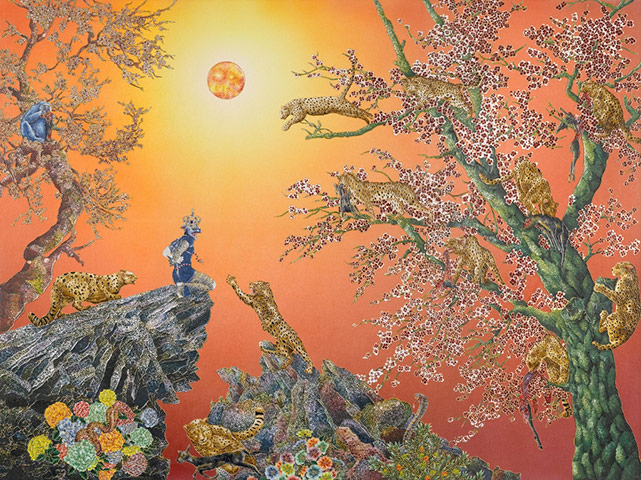
Despite Manchester’s winter chill, Raqib Shaw promises to adorn this gallery’s exterior with an intricate network of willow and driftwood planted with spring bulbs. On entering the interior, you’re struck by the enchanting fairytale spirit of his brightly patterned paintings. Yet despite the glitter and glitz, Shaw’s compositions come across like a series of bad trips. The Indian-born, London-based artist has built up his highly personal mythology of delight and dread from historical influences as diverse as Persian miniatures, Kashmiri textiles and the metamorphic visions of Renaissance master Hieronymus Bosch. Here, however, his monstrosities retain a seductive, otherworldly radiance.
Manchester Art Gallery, Fri 15 Feb to 26 May
RC Photograph: Manchester Art Gallery
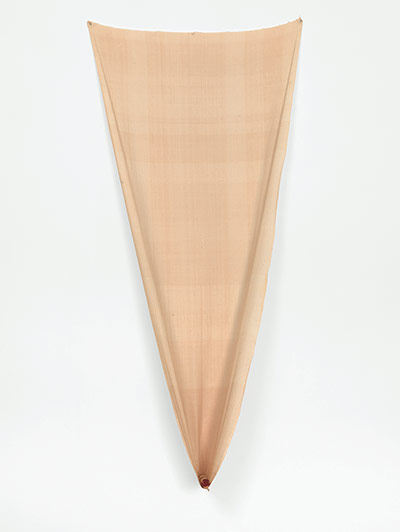
Robert Rauschenberg’s works are benchmark moments in mid-20th century American art. The Barbican is hosting some at the moment, alongside those of Duchamp; and another major influence on Rauschenberg, Kurt Schwitters’s collages, are at Tate Britain. This exhibition looks at a lesser-known chapter from his tirelessly experimental career. His “Jammers” – sections of fabric in hot turmeric or lapis lazuli colours, strung from poles like ship’s sails or washing flapping in the breeze – were created after a month spent in Ahmedabad, one of India’s textile centres, in the mid-70s. True to his mission to wed art to life, he manages to make them both gorgeous and everyday.
Gagosian Gallery, WC1, Sat 16 Feb to 28 Mar
SS Photograph: PR
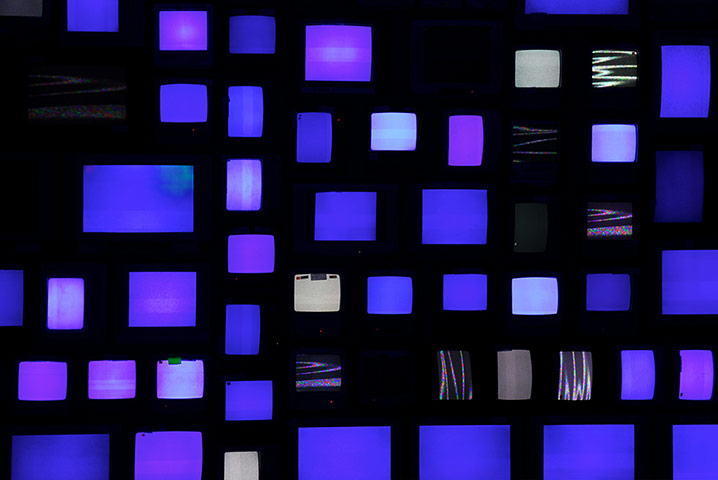
Susan Hiller’s work has packed in more spooky material than the average episode of Scooby-Doo: fairy rings, holy water, UFO sightings and ghosts in the TV have all featured. Not one to simply round up wacky phenomena, Hiller – who studied anthropology – fuses analysis, wit and poetry in her studies of the 20th century’s more leftfield folk beliefs. Channels, her latest installation, is a wall of screens, emanating a disembodied audio archive of near-death experiences and stories from beyond the grave. Also at Matt’s, Mike Nelson takes a break from his famed transformations of art spaces into haunted interiors that hint at nefarious doings. Instead, his new sculptures tap into objects with a magic resonance, like fetish dolls or votive offerings.
Matt’s Gallery, E3, to 14 Apr
SS Photograph: PR
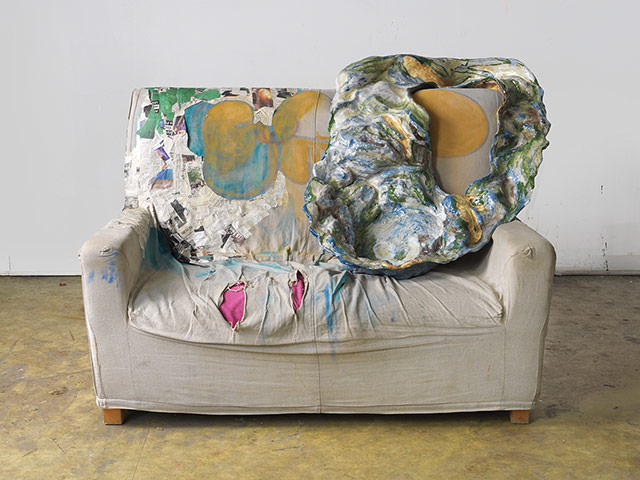
Jessica Jackson Hutchins takes the furniture of our human habitat and imbues it with the traceries of human wear and tear. Large hand-moulded ceramic vessels often sit upright like unwieldy human presences, their surfaces smeared with earthy glazes, their bases bloated. Alice Channer’s sculptures might be more formally conceived yet they are no less suggestive of metamorphic transformation, while the artist who calls herself Linder presents what she calls a “creative Esperanto” of fragmented scraps. Linder will be pushing her collages towards a multimedia performance on the show’s final weekend.
The Hepworth, Sat 16 Feb to 12 May
RC Photograph: PR
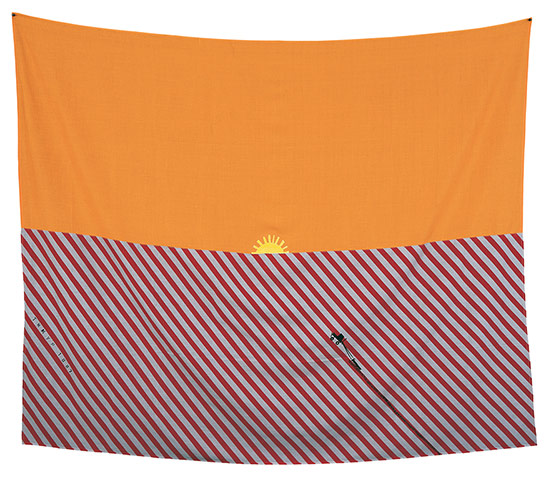
Emerging from the Russian cultural underground as the creative censorship of the Soviet Union began to break up during the perestroika years, Timur Novikov founded a self-consciously aesthetic movement which called itself “new Russian classicism”. Novikov was the star of the show with his unique brand of disarmingly innocent-looking pictorial subversions. Some of the most peculiarly touching images here are the most compositionally simple. The large-scale fabrics might carry the emblematic authority of a campaigning flag or banner yet their message is entirely a peaceful and poetic one.
Ikon Gallery, to 21 Apr
RC Photograph: PR
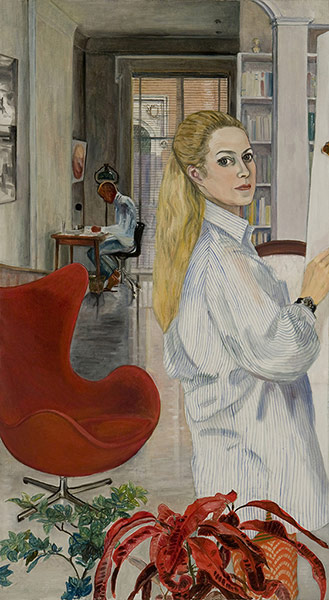
Sylvia Sleigh, who died in 2010, was a maverick painter who continued to work in a painstaking realist manner throughout the trends of abstract expressionist, pop and conceptual art. Born in Wales, she found her cultural home in 1960s New York, where she made the bohemian portraits that form the backbone of this first UK retrospective. It’s not just sticking with figurative portraiture that sets Sleigh apart from her contemporaries; it’s the retro techniques that remind one of the proportional awkwardness more often seen in amateur art classes. Yet Sleigh was very much the feminist sophisticate, purposefully adapting compositions from such established masterpieces as the female nude of Velázquez’s Rokeby Venus and Ingre’s The Turkish Bath to her own portrayals of male come-on poses.
Tate Liverpool, to 3 May
RC Photograph: PR