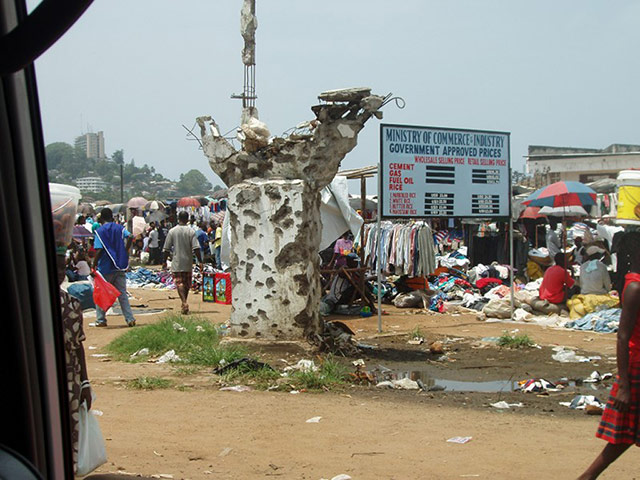
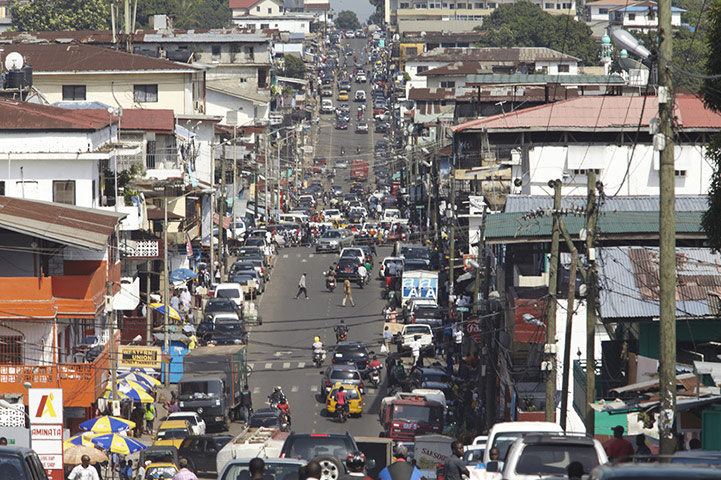
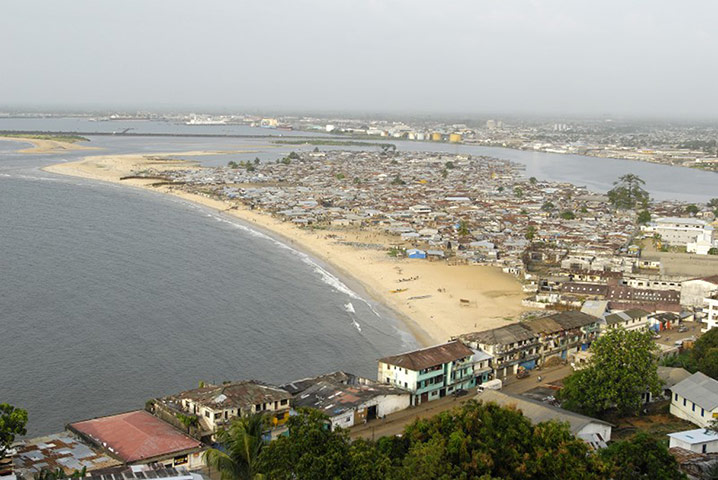
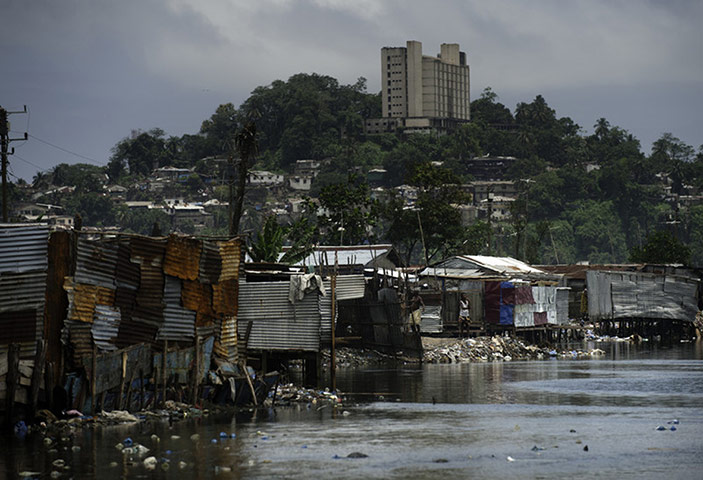
A decade on from the dawn of peace, the legacy of Liberia's civil war remains visible in its capital, Monrovia. Temporary centres around the city house up to 45,000 conflict-displaced people. Liberia is among the world's least developed countriesPhotograph: Edward Fox/OxfamA bustling street in downtown Monrovia. The scene underlines the country's growing prosperity since the end of the civil war, which claimed more than a quarter of a million lives and left an estimated 86% of the population living below the poverty linePhotograph: Andy Hall/OxfamAn aerial view of West Point, an urban slum in central Monrovia with a population of approximately 65,000. Its community live in cramped conditions and have to contend with inadequate infrastructurePhotograph: Aubrey Wade/Oxfam GB
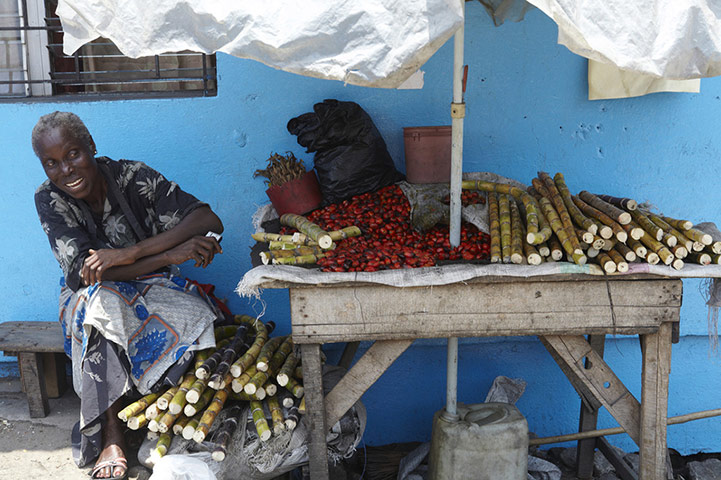
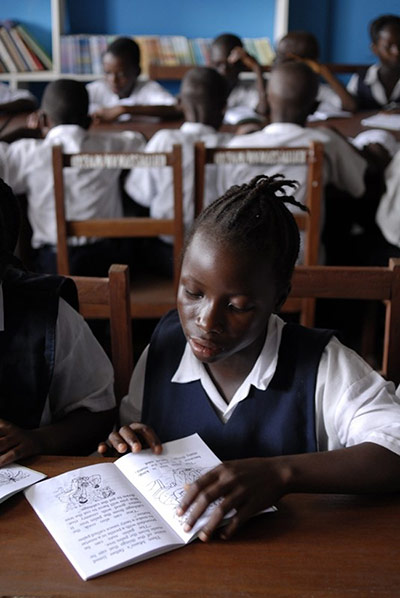
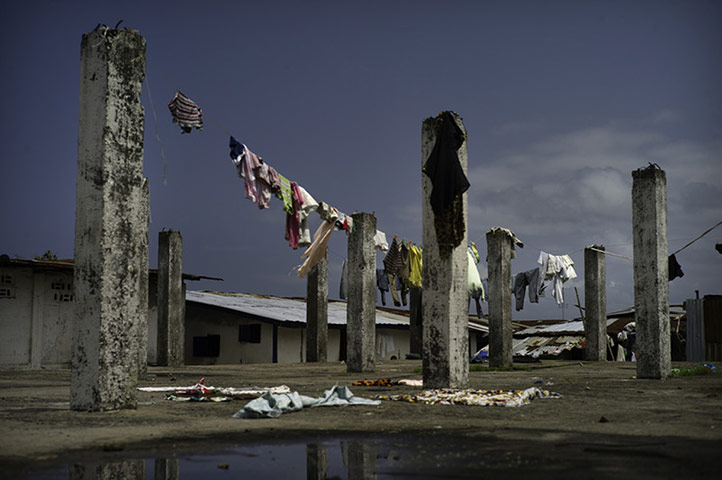
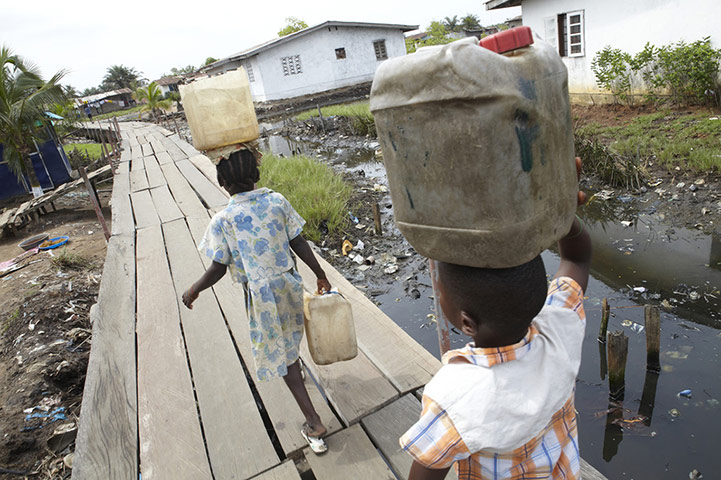
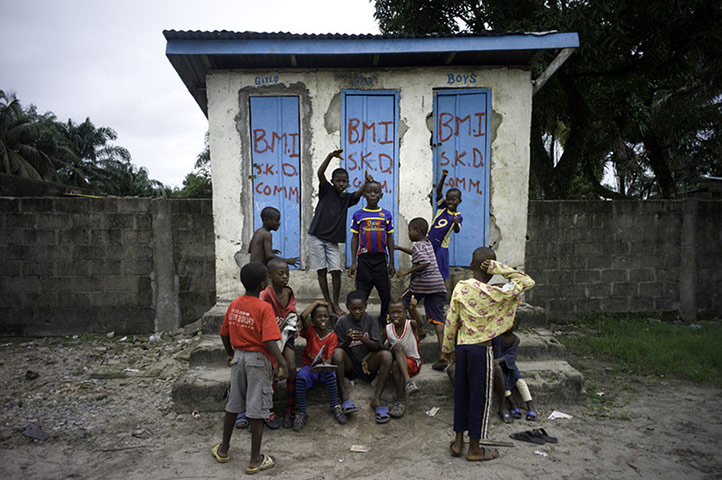
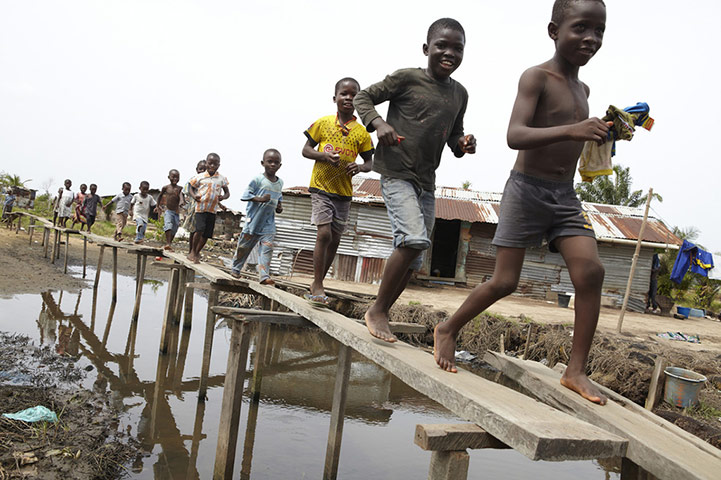
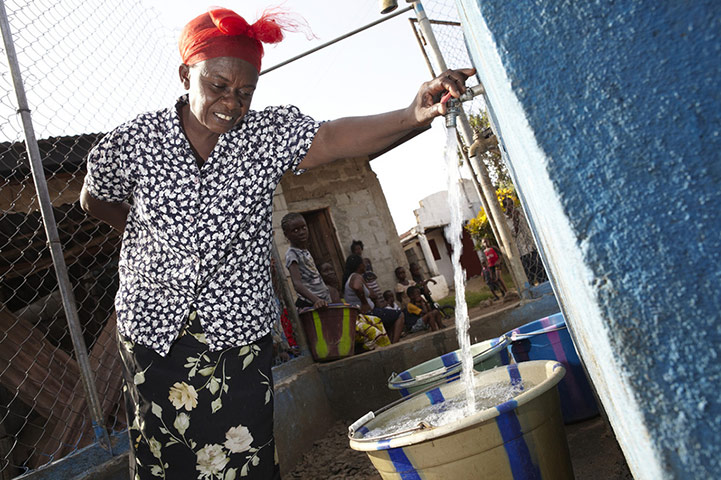
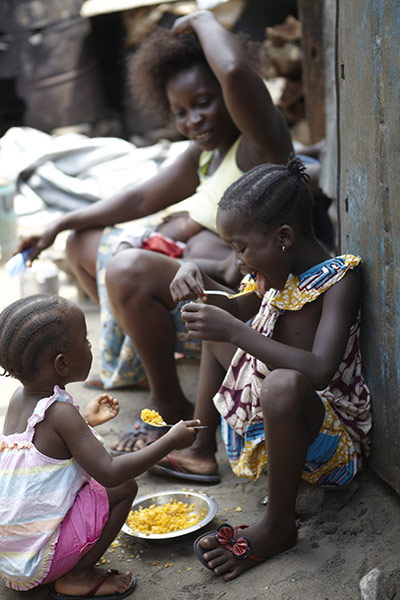
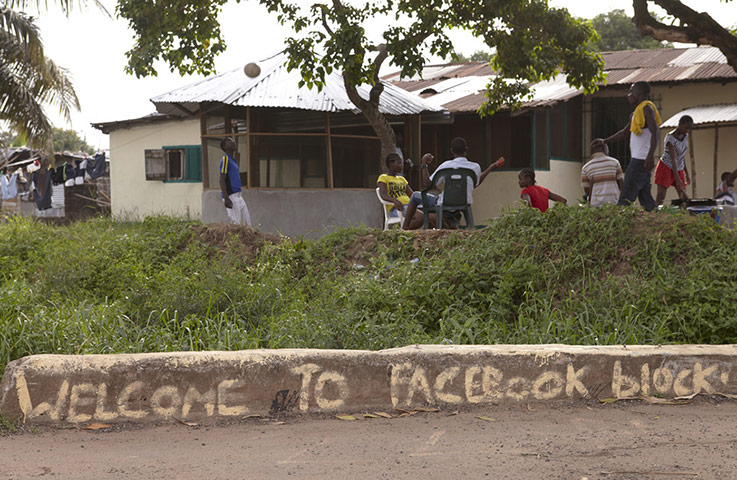
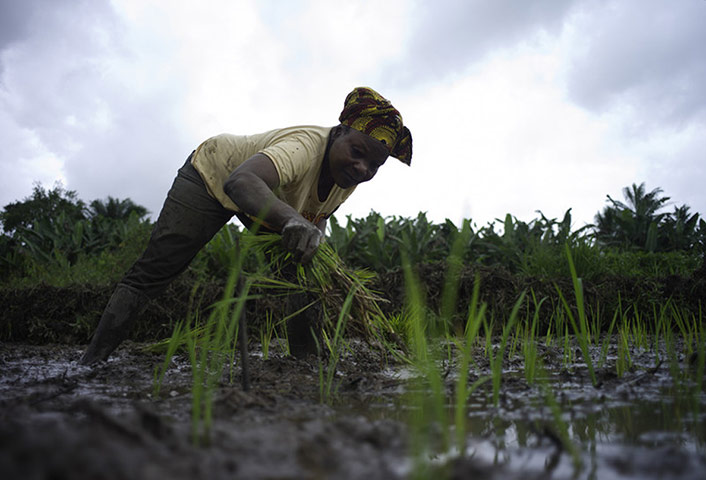
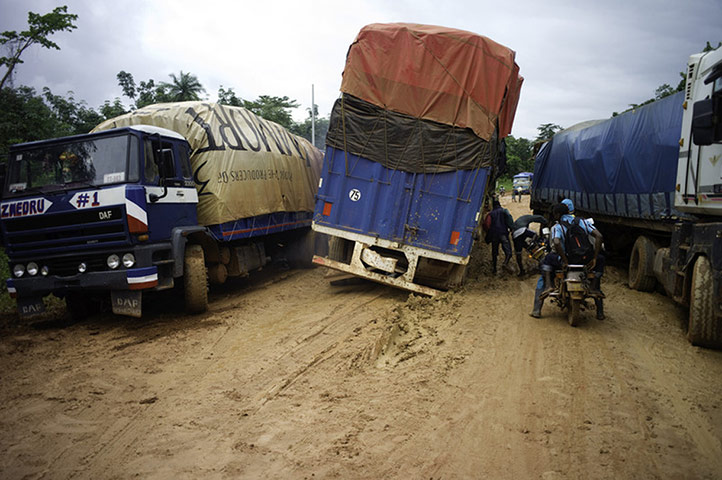
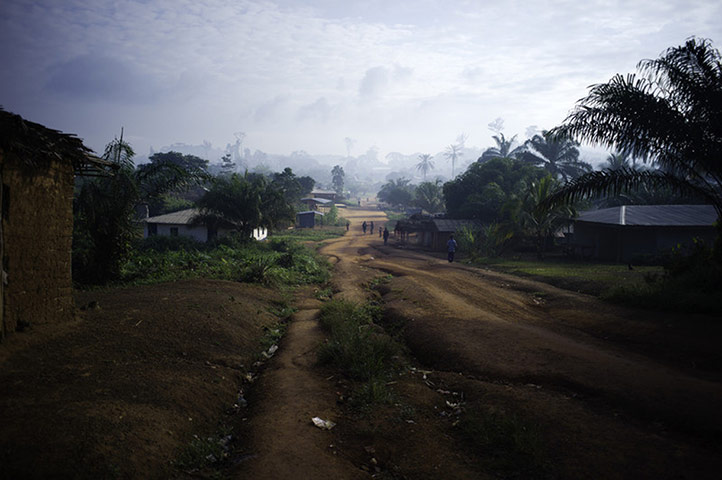
Monrovia University overlooks the West Point beach slums. It is common for up to nine people to live in one room in a house shared by multiple families. In a township populated by many former combatants, competition for space and resources is intensePhotograph: Kieran Doherty/OxfamSugar cane for sale at a family food stall. West Point offers few employment opportunities Photograph: Andy Hall/OxfamKula Kanneh, 13, attends a reading class at NV Massaquoi, the only public school in West Point. The library, tables, chairs and school uniforms were made by local carpenters and seamstresses as part of Oxfam's Livelihoods programmePhotograph: Aubrey Wade/Oxfam GBClothes hung out to dry in Doe community, MonroviaPhotograph: Kieran Doherty/OxfamOxfam has built a walkway for the residents of Doe communityPhotograph: Andy Hall/OxfamChildren stand in front of communal latrines at Doe community's sports academyPhotograph: Kieran Doherty/OxfamChildren make their way across the Doe community's waterlogged slum area. This is the route to the area's toilets, which are built on stiltsPhotograph: Andy Hall/ Oxfam/OxfamMerelille Andrisson, 49, pumps water. The Weasay community's women's organisation was instrumental in implementing a clean water supply for the area, which was built on a rubbish dump. Conditions have improved since the pumps were built in 2011Photograph: Andy Hall/OxfamChildren eatingPhotograph: Andy Hall/Oxfam'Facebook block' in MonroviaPhotograph: Andy Hall/OxfamSusana Edwards, 50, sows rice in her field in the Pouh Town area of Grand Gedeh county, Liberia. Susana's upland farm was in a remote area. Her children stayed in town to continue their schooling. 'I used to leave them with my mother, or the elder ones,' she recalls. It was a hard time to make [an] upland farm; the place is open, animals are too much here.' Susanna now has a farm nearer her home. 'Before [I had to] walk six miles, and at the end of the day the animals would eat all of the rice. But now is better, I have the farm right near my house … I'm happy' Photograph: Kieran Doherty/OxfamTrucks stuck in the clay along the main road in Grand Gedeh countyPhotograph: Kieran Doherty/OxfamPeople walk through Fish Town in early morning light in River Gee countyPhotograph: Kieran Doherty/Oxfam
Sign up to read this article
Read news from 100’s of titles, curated specifically for you.