The BBC is such a cornerstone of British culture that the TV licence should not just be protected but the annual charge should be increased, an audience at the Liberal Democrat Conference was told.
Lady Bonham-Carter, co-chair of the Lib Dem parliamentary party, told a fringe meeting at her party’s Glasgow conference that there was a time earlier this year when she feared the worst – and not just for the BBC.
“There was a moment in August when I thought: we are going to lose Scotland, we are going to get out of Europe and lose the BBC,” she said.
Lady Bonham-Carter said she had believed that the political pressure from the right to scrap the licence fee would become unstoppable. Now, however, she said the BBC could survive and the licence fee could remain if all those who wanted to see it retained fought for its continuation.
“The BBC is absolutely fundamental to what is great about this country. I find that, when I go to Mexico and America, they cannot believe that we would dream of getting rid of it,” she said. “I cannot believe that we could ever dream of getting rid of the BBC and threaten the way in which the BBC is funded.”
The way the BBC is funded became the core issue under debate at the conference fringe session on the future of the BBC. Guardian columnist Polly Toynbee praised the Liberal Democrats for the party’s restraining influence on Conservative plans to break up the BBC. Toynbee, who chaired the Guardian fringe meeting, said: “I think probably one of the most important things the Liberal Democrats have done so far by being in government is prevent the Tories selling off the BBC.”
James Heath, director of policy and charter at the BBC, pointed out that the licence fee was the equivalent of just 40p a day per household – less than the cost of a tabloid newspaper. He insisted this was money well spent as 97% of the UK population used BBC services in some form, and the licence fee was crucial to the BBC’s future success.
Mr Heath said the process of re-negotiating the licence fee – and the BBC’s future – would start immediately after the 2015 general election, when decision-makers in government had a choice to make. “As we start the process after the election, it will present itself as a choice about what sort of BBC you want for the future: do you want a world-class BBC doing world-class things in the UK, or a BBC entering a spiral of decline?” he asked.
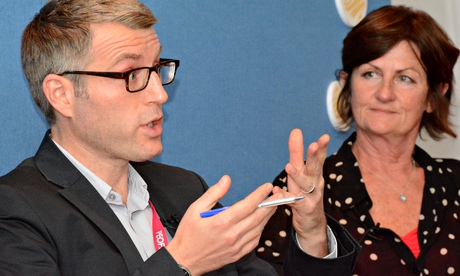
John McVay, chief executive of the independent broadcasters group PACT, said although he was occasionally critical of figures within the BBC, he too was resolutely supportive of the licence fee. In fact, he wanted to see the licence fee increase. “I think it should be more than 40p per day,” he said.
But McVay had a warning for the current administrators and managers within the BBC: “The generation that is coming onstream and will be paying the licence fee in the next 10 years are radically different, they are digital people and the only way you can get them to care about the BBC is to give them great stuff because they don’t care about institutions.
This was a point picked up by the audience, who wanted know what the BBC was doing to sell itself globally, how it was going to change its funding mechanism to take account of the new ways people watch and listen to its output, and how it would handle international competitors.
Adam Minns, executive director of the Commercial Broadcasters Association, said he believed the BBC was changing. “I think the BBC is on a journey from paternalistic auntie knows best to a more open, genuinely transparent and consultative body that is diverse, that commissions transparently and it is half way there,” he added.
Siobhan Kenny, chief executive of RadioCentre, said she was also supportive of the BBC and the role it played in British life. But Kenny called for areas of improvement, particularly in the way some of the most popular BBC radio stations infringed on the territory of commercial stations. “Radios 1 and 2 should be sticking more to the terms of their remit,” she said. “They play popular music but they also have a duty placed on them by the BBC Trust as a public service broadcaster.” Kenny pointed out that Radio 1 is designed to appeal to a target audience between the ages of 15 and 29, yet the average age of a Radio 1 listener is actually 32.
This conference fringe debate was designed and produced by the Guardian to a brief agreed by partners PACT, COBA and RadioCentre. All content is editorially independent.
Read more from the Guardian Big Ideas at the 2014 party conferences.