Guardian Unlimited's roundup of the Lib Dem conference fringe, including a green spat, the thoughts of two men likely to vie for the future leadership, a forceful appeal for a stronger Scottish parliament and the political art of making a stink fragrant.
Hostile environment
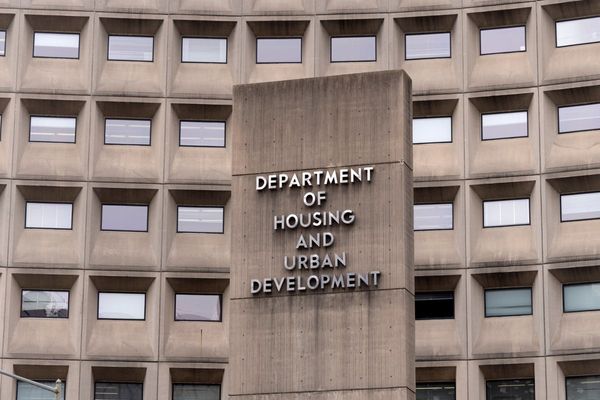
"I'm disappointed that the Liberal Democrats have gone overboard with all this greenery - they should be concentrating on social housing."
This - not something you'd expect to hear at a Lib Dem conference - was what Claire Fox, of the Institute of Ideas thinktank, told a fringe meeting in Brighton today, writes Paul Owen.
"Housing has been thrown into disarray by the obsession with environmental policy," she added. "It's confused the social housing issue.
"The quality of housing is [now] discussed in terms of environmentalism. This is an absolute abdication of responsibility for social housing."
Brendan Carlin, of the Daily Telegraph, chairing the meeting, told her: "You know you're at the Liberal Democrats ...", prompting the "all this greenery" reply.
But Richard Kemp, the leader of the Lib Dem group on the Local Government Association, which represents English and Welsh councils, was more forthright, calling her remarks "a load of patronising bollocks".
"If you're poor, you already pay a greater proportion of your income for your heating, so a house that uses more heating costs proportionately more," he said.
The conversation - billed as "local government question time" - then moved on to a discussion about the role of young people in politics, with Carlin bemoaning an "obsession with youth".
This prompted the Lib Dem MP Julia Goldsworthy to say: "You mean the kind of obsession where you might criticise a leader because of his age, because he's not young enough?"
"I think we should move swiftly on," said Carlin.
Unofficial hustings
The two so-called young turks likely to vie for the succession whenever Menzies Campbell stands down as party leader appeared at a packed fringe meeting on Monday night, writes Patrick Wintour.
Both men were assiduously respectful to one another, even when one questioner described them as the candidates rather than the speakers.
Both spoke out against a formal coalition with the largest party after the next election.
Nick Clegg mounted a strong attack on Gordon Brown, saying the prime minister was "trying to project the image of pluralism without doing anything to relinquish his sweaty mittens on power".
"Coalition politics is, by definition, based on a culture of compromise, give and take, of two or more parties trying to find common ground," he added.
"None of that prevails with Gordon Brown. Coalition politics does not make sense unless it takes place in a culture of pluralism. Since that does not exist, coalitions cannot happen".
He warned that Labour may try to pick off leading Liberal Democrats one by one, and "we would be very shortly demolished as a political force, and liberalism, in all its wealth, would be significantly damaged in British public life for good".
Chris Huhne, the environment spokesman, insisted the party should not be despondent about its poll standing, saying it was a consequence of the usual lack of mid-term publicity. "The party, and the leader, will not get a true chance to present itself until the election, when the media is obliged to cover the party," he said
Mr Huhne defended the idea of a referendum on Europe, saying it would be a good idea to test the level of support for total withdrawal.
Nick Clegg, the home affairs spokesman, said those calling for a referendum on the treaty were calling for an in or out choice. "I think it is quite right to be much more candid and up front," he added.
Hooray for Hollyrood
Charles Kennedy put in an appearance at a reception for Scottish Liberal Democrats in Brighton last night, although he couldn't stay for the whole of Nicol Stephen's speech, writes Deborah Summers.
During a somewhat epic performance, the Scottish Lib Dem chief called for greater tax raising powers for Holyrood and promised to "play a leading role" in the campaign for more powers for the Scottish parliament.
"It is wrong for any parliament simply to be handed a cheque for £30bn a year and to be asked to decide how to spend it," he said.
"There is growing agreement amongst senior figures in all the main parties that the Scottish parliament should have greater tax raising powers.
"This should include detailed work on corporation tax, income tax and oil and gas revenues. A sensible solution would involve assigning some of the oil revenues to Scotland with the balance being assigned to Westminster.
"We want a stronger Scottish parliament - a parliament with revenue raising responsibilities, with the greater powers needed to build the Scottish economy and boost Scottish jobs. We can't go on with a parliament that just spends money given to it by another government ..."
You get the gist.
Fringe benefit: is road-pricing worth it?
The subtitle of the fringe meeting on road-pricing was "can 1.8m people be wrong?" - referring to the Downing Street-hosted online petition that collected that number of signatures protesting against the very idea of a "pay as you go" scheme of charging vehicles for using the roads, writes Matt Seaton.
On the Lib Dem side - that is, "charged" (since it is party policy) with the task of arguing that, in effect, 1.8m people really are wrong - were Lorely Burt MP, shadow minister for business, enterprise and regulatory reform (bit of a mouthful of a portfolio, that) and Bill (Lord) Bradshaw, transport spokesman in the House of Lords.
The independents were Edmund King, exec director of the RAC Foundation (the thinking person's car lobbyist, therefore), and the Guardian's own "Two Wheels" cycling columnist and your present reporter, Matt Seaton.
I'm a stranger to fringe meetings - the last I attended being at a Labour party conference about 20 years ago, of which I recall nothing except that it was my first sight, close up, of Gordon Brown. He impressed, in a solid, Laboury sort of way.
Road-pricing, though, is possibly not the biggest draw. At least, I didn't spot any obviously rising stars of the Lib Dem firmament, about whom I might say, in another 20 years, that I had spotted them and their talent even then.
Altogether, the idea of making the miserable motorist pay even more for being stuck in traffic is a hard sell, but the Lib Dems were undaunted. Bill Bradshaw was bullish: it's just something that has to be done, and he'd start by charging lorries. You got the impression that, behind the wheel himself, he'd have little compunction about riding roughshod over a few pesky online petitioners. Lorely Burt backed him up by dismissing the objectors as "whipped up by the Daily Mail".
Not good enough, was Edmund King's response. The reason everyone, including the government, is on the back foot over road-pricing is that politicians have failed to listen carefully enough to people's concerns and anxieties about what simply sounds like another excuse to dip into their pockets. "It stinks of taxation," he said strongly.
This was my cue to throw in that if you're proposing to take money off people, then they have a need, indeed a right, to know what you're planning to do with it.
And in this case, if road-pricing is worth doing, then surely the money needs to be spent on giving people an incentive to use their cars less by improving public transport, investing in cycling, etc? All said without using the word "hypothecation" - you'd have been proud of me.
What I hadn't quite figured on was that our session seemed to have been convened by the Freight Transport Association, so - with Bill Bradshaw in the driving seat - the haulage industry was top of the agenda.
A gentleman from the floor, identifying himself as John Wright of the Federation of the Small Businesses, put in that it would be very easy to set up a simple system of collecting tolls to use the motorway network from foreign trucks on our borders. It's a serious problem, apparently: these foreign lorry drivers, they come over here and steal our road space ...
After a while, the room seemed to settle into a rather illiberal consensus that we'd tax these foreign johnnies first and everyone would agree with that, and then we'd start charging our own lorries and no one would much mind that either.
And then we'd see whether we'd need to charge a levy on private cars - but that would be a long way off.
This must be the art of politics: making a stink fragrant.