
Afternoon summary
- Britain’s laws governing the intelligence agencies and mass surveillance require a total overhaul to make them more transparent, comprehensible and up to date, the intelligence and security committee of parliament (ISC) has said in a landmark report prompted by the revelations of Edward Snowden, the former US National Security Agency (NSA) contractor. There is a summary of the findings in the report here.
-
MPs have backed a call for defence spending to be set at a minimum of 2% of GDP, the Nato target, although only 40 members of the Commons took part in the vote. Some 37 MPs voted in favour of the backbench motion tabled by the Conservative MP John Baron, and only 3 MPs voted against. In the debate Sir Malcolm Rifkind, the Conservative former foreign secretary and former defence secretary, said further defence cuts would result in “profound and irreversible change” to the UK’s defence capability and ability to conduct a global foreign policy with “authority and credibility”.
Of course the figure of 2% is a nominal figure. It’s a totem. It’s the actual real resources that are important. But I do find it difficult, if not impossible, to reconcile a cavalier approach towards the 2% objective, which we’ve held for very many years, while at the same time saying overseas development is somehow untouchable and has got statutory protection of a kind I find quite extraordinary ...
If you are seen as having once had that military capability but having as an option, as a deliberate act of government policy, chose to reduce that capability, so that it still remains significant but not in any profound sense impressive, then you have seriously reduced your diplomatic clout and you have made the ultimate problems that much greater.
It’s always dangerous to make comparisons with the 1930s, but we know perfectly well that those in Berlin who were planning aggression believed that the western democracies were incapable of providing the resources required for strong defence and that influenced their foreign policy.
And Rory Stewart, the Conservative chair of the Commons defence committee, said defence spending needed to be kept at at least 2% of GDP because previous defence assumptions no longer applied.
The world has changed fundamentally. Those assumptions we worked on were essentially developed on two bases.
Firstly, that the Cold War had ended; secondly, that essentially what we will be doing in the future was the kind of things that were happening in 2010, primarily Afghanistan. That basically meant we were planning to go in for a very long time with very large number of troops into a single country, or at most, in the US, planning two countries at a time.
But the world has changed completely. Firstly we have a return to a threat from a conventional state with an advanced military capacity, which is Russia. That reshapes the entire assumption from 1998 to 2010. Secondly, we now have concurrent threats.
Winding up for the government, Philip Dunne, a Conservative defence minister said the government would hit the 2% target this financial year and next year and that, after that, this would be a matter for the spending review. Baron said he was putting the matter to a vote because neither the Conservatives nor Labour were making a clear commitment to keep defence spending at the 2% level.
- The use of cocaine in the UK has more than trebled in two decades and is no longer the “the preserve of wealthy bankers and celebrities”, a report has found. As the Press Association has reported, the Advisory Council on the Misuse of Drugs said the drug has spread throughout all areas of society since the mid-1990s following the emergence of a market in cheap, low-purity powdered cocaine that operates alongside a more expensive and far higher purity version of the drug. The access to cheap cocaine - often mixed with harmful cutting agents - is “highly likely” to have driven the rise in the number of users from “hard pressed” or low income backgrounds, as well as the “comfortably off”, living outside cities where drug use was traditionally uncommon. But more surprising to authors was the “phenomenon” of older people up to the age of 54 using cocaine - a trend not seen in other drug types.
- Mark Carney, the governor of the Bank of England, has warned of the need to be “vigilant” against the risk that low inflation slips in to the kind of spiral of falling prices behind the Great Depression in the 1930s. As the Press Association reports, Carney said if factors weighing on it such as the strong pound, and weakness in overseas’ economies strengthen, the path of interest rates may need to change - apparently hinting that they could rise more slowly than expected or even be cut.
That’s all from me for today.
I’m not blogging tomorrow - we’ll be running a readers’ edition - but I will be blogging from the Lib Dem conference in Liverpool over the weekend, as well as including Ed Miliband’s speech in Birmingham on Saturday and George Osborne and Ed Balls’ pre-budget appearance on the Andrew Marr show on Sunday.
Updated
Yet another announcement from Theresa May. She has said confirmed that there will be a judge-led statutory inquiry into undercover policing and the work of the special demonstration squad and she has said that Lord Justice Pitchford, a criminal judge on the court of appeal, will head it. The full announcement is here (pdf).
My colleague Alan Travis has written a good analysis of the ISC report. Here’s a flavour of what he’s saying.
Eighteen months after politicians and spy chiefs condemned Snowden as a traitor and questioned the patriotism of the editor of the Guardian for publishing his disclosures, the intelligence agencies have finally acknowledged the need to “step out of the shadows” and spell out the nature of their intrusive capabilities.
UK surveillance laws need total overhaul, says landmark report Read more
It would be too much to expect any kind of apology from the intelligence and security committee, which under the chairmanship of the tainted Sir Malcolm Rifkind was quick to discredit the Snowden disclosures, for failing to tell the public about what GCHQ has actually been up to all these years.
But it is worth marking the ISC report as perhaps a high-water mark of the impact on the Snowden disclosures on Britain’s intelligence and security services.
As my colleague Henry McDonald reports, Amnesty International are angry about Theresa May’s decision to exclude Northern Ireland from the child abuse inquiry. (See 1.54pm.)
Amnesty International has accused May of missing an opportunity for truth over the Kincora boys home scandal. The human rights organisation criticised her for failing to mention the Kincora controversy in her ministerial statement naming the new panel members for a statutory inquiry into establishment child sex abuse rings.
There have been repeated allegations that various branches of the security services blackmailed a paedophile ring operation at the East Belfast home during the Northern Ireland Troubles. The men who rang the home and abused boys there were alleged to have been working as state agents spying on fellow hard line Ulster loyalists. One of the victims from the home, Richard Kerr, has stated that he believes that Kincora was part of a wider paedophile ring across the UK which may have included locations such as Elm Guest House in London.
Amnesty’s Northern Ireland Programme Director Patrick Corrigan said: “Today’s statement by the home secretary about the child abuse inquiry is a huge missed opportunity to demonstrate the government’s commitment to uncover the dark truth about Kincora. By excluding Kincora from the only inquiry which has the power to establish the truth about the role the intelligence services may have played in the paedophile ring, the Home Secretary risks looking like she is now playing her part in a decades-long cover-up.”
May excludes Northern Ireland, and Kincora children's home, from child abuse inquiry
The Home Office has published the final terms of reference of the child abuse inquiry.
They do not set an end date for the inquiry, but they commit it to publishing an “interim report” by 2018.
Theresa May, the home secretary, has abandoned the 1970 cut-off date in the original inquiry. It can now go back as far as it likes.
May has resisted calls to extend its remit beyond England and Wales. That means it will not explicitly cover the Kincora children’s home scandal in Northern Ireland. But May says she wants “no institution or individual ... to fall through the gaps because of geographical boundaries”.
I know that survivors were also keen that the Inquiry extended beyond England and Wales. However, as child protection is a devolved matter, it is right that other jurisdictions in the United Kingdom look at the issues within their own geographical remit so that they can take the action which is right to address the specific issues uncovered. I have said before, I am clear that no institution or individual should be able to fall through the gaps because of geographical boundaries.
The Terms of Reference make clear that the Inquiry will liaise with its counterparts elsewhere in the United Kingdom. To that end my officials have had initial discussions with the Scottish Government, who are in the process of setting up their own inquiry, the Hart Inquiry in Northern Ireland and the Independent Jersey Care Inquiry and have agreed with them and with the Child Sexual Abuse Inquiry that joint protocols will be set up with each inquiry to ensure that information can be shared and lines of investigation can be followed across geographical boundaries.
Campaigners denounce animal testing ban as 'weak and toothless'
It is not just Theresa May who is making all the home affairs announcements today. Lynne Featherstone, the Lib Dem Home Office minister has announced plans to end the testing of household products on animals (pdf).
This is the culmination of a process that started in 2011, when Featherstone first announced the move. Today she said:
I can today announce the Government’s intention to ban the testing of household products in animals with a qualified ban on the testing of ingredients which are primarily intended for use in household products. Where testing of ingredients is required for regulatory purposes, we will permit this but require retrospective notification. Where such testing is not required for regulatory purposes, we will require a prospective authorisation, specific to the particular proposal. We will apply a robust harm-benefit analysis to any such applications which we expect to be few ...
I intend to fully implement this ban from 1 October 2015. This will give those most affected time to adjust to the new notification system and authorisation process.
But campaigners have dismissed this as worthless. Animal Aid says this is “weak and toothless”.
The ‘ban’, which is set to come into force in October, will make it illegal to test finished household products on animals, but exceptions could be made for the testing of ingredients. In practice, it is the ingredients and not the finished products that are usually tested on animals. The government’s announcement also contains details of products to which the restrictions don’t apply, including those intended for use in an institutional setting, such as schools and hospitals.
And this is from Dan Lyons from the Centre for Animals and Social Justice.
Govt announces auto-approval of regulatory animal testing of household chemicals, evading legal harm-benefit test http://t.co/CqlxQU0Fb5
— Dr Dan Lyons (@DoctorDanLyons) March 12, 2015
@FRAME_campaigns It's a sham 'ban'. Most animal testing is of ingredients for 'regulatory purposes' which evade harm-benefit requirement
— Dr Dan Lyons (@DoctorDanLyons) March 12, 2015
Only one terrorism prevention and investigation measure (Tpim) was in force at the end of February, the Home Office has announced (pdf). It does not apply to a British citizen.
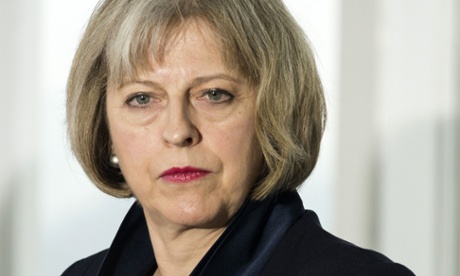
May says police disciplinary hearings will be held in public
More changes to the police are being announced. In a statement headed “Police integrity” (pdf), Theresa May, the home secretary, says she is changing police regulations today to ensure that police disciplinary hearings are held in public. Disciplinary panels will also have the power to reduce pay-offs to officers.
Police disciplinary hearings will be held in public to ensure that the robust response the police take to misconduct is visible and open. Hearings will be led by legally qualified chairs.
The legislation will create a new power for police disciplinary hearing panels to remove or adjust the compensation payments due to chief officers on termination of their appointment where a disciplinary finding is made against them. Also, police whistleblowers will have protection from disciplinary action for taking the necessary steps to report a concern.
Updated
And Jeremy Hunt, the health secretary, has announced that GPs and dentists will get a 1% increase in 2015-16 in a written ministerial statement (pdf).
Armed forces to get 1% pay increase
Michael Fallon, the defence secretary, has announced in a written ministerial statement (pdf) that he is accepting a recommendation from the armed forces review body for armed forces salaries to go up by 1% in 2015-16.
Theresa May to stop new police recruits automatically being enrolled in Police Federation
Theresa May, the home secretary, has announced in a written ministerial statement (pdf) that she is implementing plans (first announced in her bombshell speech to the Police Federation last year) which will ensure new officers do not automatically become members.
These changes will mean that, with effect from 2 April, new officers will need actively to choose to join the Police Federation and choose whether they wish to pay subscription fees. Membership will no longer be automatic and the Police Federation will need to demonstrate its integrity and value in representing its members.
But there is also a minor retreat in the announcement. May said she wanted to extend the Freedom of Information act to cover the Police Federation. She still wants to do that, but it requires a change to primary legislation and she is now admitting that this won’t happen this parliament. Instead, she is publishing draft legislation which could be implemented after the election.
Teachers could get a pay rise of up to 2%
Cameron to tighten oversight of GCHQ's use of bulk personal datasets
David Cameron has responded in a written ministerial statement (pdf) to the ISC report. In it, he says he is going to put oversight of GCHQ’s use of bulk personal datasets on a statutory footing.
We will consider the ISC’s findings and recommendations carefully. As a number of these are currently the subject of related reviews, including by the independent reviewer of terrorism legislation. The government’s intention is to review all the recommendations and suggestions in a full and considered manner before making a substantive response. There is, however, one particular recommendation in the ISC’s Report that I wish to address now. The intelligence services commissioner, the Rt Hon Sir Mark Waller, currently provides non-statutory oversight of the security and intelligence agencies’ use of bulk personal datasets. Sir Mark has previously recommended that this be put on a statutory footing. The ISC also recommends this in their report. I can therefore announce today that I am issuing a Direction to Sir Mark under section 59A of the Regulation of Investigatory Powers Act 2000 (RIPA) to put this into effect. I have deposited a copy of this Direction in the Libraries of both Houses.
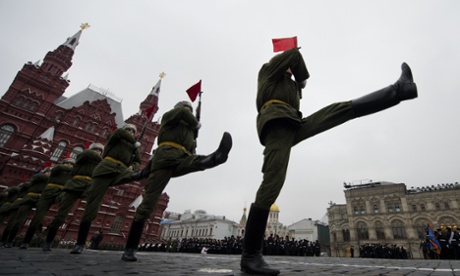
David Cameron is going to snub an invitation from President Putin to attend a second world war commemoration in Moscow, Downing Street has said. This is from the Press Association.
The Victory Day parade is being staged on May 9 in Red Square to mark the anniversary of the end of the war, during which millions of Russians were killed.
But the prime minister will not attend following the collapse of the relations between the Russian Federation and the West over the crisis in Ukraine.
A No 10 spokeswoman said: “We will be considering our representation in light of our on-going discussions with Russia, our concerns about their activities.
“I don’t think we have plans for the prime minister to attend but I’m sure we will set out who will represent the government in due course.
“I think we would consider our representation in light of our broader on-going relationship with Russia and I think if you look recently there have not been ministerial visits. I think we will take that into account as we consider who attends.”
Berlin announced yesterday that German chancellor Angela Merkel will not attend the ceremony .
Here’s the report out today from Sir Anthony May, the interception of communications commissioner (pdf). And here’s his news release (pdf).
Here are the figures in the report on the number of times the police and others got permission to access communications data.
In 2014: 517,236 authorisations and notices for communications data were issued or granted; 88.9% by police forces and law enforcement agencies, 9.8% by the intelligence agencies and the remaining 1.3% by local authorities and other public authorities.
And this is what May says about whether these powers are overused.
To conclude, overall my office’s inquiries did not find significant institutional overuse of communications data powers by police forces and law enforcement agencies. However, my office did find that a proportion of the applications did not adequately deal with the question of necessity or proportionality and we found some examples where the powers had been used improperly or where they had been used unnecessarily. Overall the operational reviews showed that the communications data that was acquired was necessary and proportionate to the matter under investigation.
Liberty and Index on Censorship criticise ISC report
Two human rights groups have strongly criticised the intelligence and security committee report.
This is from Liberty’s director Shami Chakrabarti.
The ISC has repeatedly shown itself as a simple mouthpiece for the spooks – so clueless and ineffective that it’s only thanks to Edward Snowden that it had the slightest clue of the agencies’ antics.
The committee calls this report a landmark for ‘openness and transparency’ – but how do we trust agencies who have acted unlawfully, hacked the world’s largest sim card manufacturer and developed technologies capable of collecting our login details and passwords, manipulating our mobile devices and hacking our computers and webcams?
No doubt it would be simpler if we went along with the spies’ motto of ‘no scrutiny for us, no privacy for you’ – but what an appalling deal for the British public.
And this is from Jodie Ginsberg, chief executive at Index on Censorship.
Index welcomes the recognition by the UK’s intelligence and security committee that Britain’s surveillance laws require a complete overhaul.
However, we are dismayed that the committee has accepted the premise that bulk collection of data does not constitute mass surveillance. It does. Bulk and indiscriminate collection of data poses a serious and severe threat to our civil liberties, including our rights to free expression and to privacy.
42 written ministerial statements out today - Full list
Normally, when parliament is sitting, there are around five to 10 written ministerial announcements. Today there 42, which for all I know may be a record. It looks very much like the strategy know to West Wing aficianados as “taking out the trash” (releasing a lot of bad news stories on the same day, so they do not receive much media attention.
Here’s the full list of what we’re getting. I’ve taken it from the Press Association.
I will be featuring some of the key ones here, but if you want to read the statements, you can find them here, as they come out.
1 - Secretary of State for Business, Innovation and Skills: Land Registry Chief Executive
2 - Minister for the Cabinet Office: Conflict Stability and Security Fund Settlement, Financial Year 2015-16
3 - Chancellor of the Exchequer: Infrastructure
4 - Chancellor of the Exchequer: Terrorist Asset-Freezing etc. Act 2010 (Independent Reviewer Annual Report)
5 - Secretary of State for Culture, Media and Sport: VisitBritain and VisitEngland (Triennial Review)
6 - Secretary of State for Defence: Al Sweady Inquiry Recommendations
7 - Secretary of State for Defence: Armed Forces Pay Review Body - 2015 Report
8 - Secretary of State for Education: School Teachers’ Review Body - 25th Report - 2015
9 - Secretary of State for Energy and Climate Change: EU Energy Council, Brussels, 5 March
10 - Secretary of State for Environment, Food and Rural Affairs: Agenda for March’s Agriculture and Fisheries Council
11 - Secretary of State for Foreign and Commonwealth Affairs: Annual Human Rights and Democracy Report 2014
12 - Secretary of State for Foreign and Commonwealth Affairs: EU-Philippines and EU-Vietnam Partnership and Cooperation Agreements
13 - Secretary of State for Foreign and Commonwealth Affairs: Gifting of equipment to the 3rd Land Border Regiment of the Lebanese Armed Forces
14 - Secretary of State for Foreign and Commonwealth Affairs: Ministerial Correction
15 - Secretary of State for Foreign and Commonwealth Affairs: Progress since the Global Summit to End Sexual Violence in Conflict
16 - Secretary of State for Foreign and Commonwealth Affairs: Triennial Review of the Westminster Foundation for Democracy
17 - Secretary of State for Health: Non-Departmental Public Bodies (Triennial reviews)
18 - Secretary of State for Health: Review Body on Doctors’ and Dentists’ Remuneration
19 - Secretary of State for the Home Department: European Commission’s proposal for a regulation establishing a European Union agency for law enforcement training (CEPOL)
20 - Secretary of State for the Home Department: Immigration and Nationality Fees
21 - Secretary of State for the Home Department: Increase to firearms licensing fees
22 - Secretary of State for the Home Department: Inspection of the National Crime Agency
23 - Secretary of State for the Home Department: Police Federation reform
24 - Secretary of State for the Home Department: Police integrity
25 - Secretary of State for the Home Department: Police reform
26 - Secretary of State for the Home Department:.Report by David Anderson QC, Independent Reviewer of Terrorism
27 - Secretary of State for the Home Department: Riot Damages Compensation - Response to consultation and draft Bill
28 - Secretary of State for the Home Department: Statutory Inquiry into Child Sexual Abuse
29 - Secretary of State for the Home Department: Terrorism Prevention and Investigation Measures (1 December 2014 to 28 February 2015)
30 - Secretary of State for the Home Department: Testing of Household Products in Animals
31 - Secretary of State for the Home Department: Undercover policing
32 - Secretary of State for Justice: Publication of the 2015 England and Wales Prison Service Pay Review Body 14th Report
33 - Prime Minister: Machinery of Government Change: Off-Street Parking
34 - Prime Minister: Machinery of Government Change: Police and Crime Commissioner Elections
35 - Prime Minister: Reports relating to the Security, Intelligence and Law Enforcement Agencies, and statutory direction to the Intelligence Services Commissioner
36 - Prime Minister: Senior Salaries Review Body
37 - Secretary of State for Transport: Big Bike Revival
38 - Secretary of State for Transport: EU Transport Council
39 - Secretary of State for Transport: Implementation of the Strategic Highways Company
40 - Secretary of State for Work and Pensions: Access to Work
41 - Secretary of State for Work and Pensions: Remploy Employment Services
42 Secretary of State for Work and Pensions: Triennial Review - Industrial Injuries Advisory Council
Labour welcomes ISC report
Here’s Yvette Cooper, the shadow home secretary, on the ISC report. She welcomes it, and says it offers a way forward.
I welcome this report from the intelligence and security committee. As I said in my evidence before the committee, as a result of fast moving technology, the law and our oversight framework are now out of date. I am glad the committee has recognised this and called for a fresh approach.
Our intelligence agencies and the police do incredible work to keep our country safe from threats to our democracy and our freedom. At a time of increasing terror threats, and new problems such as online child abuse, they need to be able to keep up with new technology.
But the oversight and legal safeguards need to keep up too. It is in the interests of the agencies that there should be a clearer framework of safeguards to sustain continued confidence in the important work they do.
Too often the Tories and the Liberal Democrats within the government have tried to set up a caricatured argument between security on the one hand and liberty on the other. Yet most people know its vital to protect both in our democracy, and we need a thoughtful debate about how to get the detail right. That’s what this report does.
This important ISC Report now needs to be considered, alongside the independent review into Ripa [Regulation of Investigatory Powers Act] to be published by David Anderson shortly, so we can update the legal framework to cope with fast changing technology.
Sticking plaster legislation - as the government put forward last summer - just isn’t good enough. We need a serious and sustainable framework that will command consent for years to come.
Turning back to Nigel Farage’s call for the repeal of anti-discrimination laws, BarbaraCastille in the comments has this to say, which is worth flagging up.
Q: The Snowdon revelations were a huge story. Were the stories wrong?
Blears says the revelations were about what was happening in the US. But, as a result of those stories, people in this country thought they were under blanket surveillance, and that this was indiscriminate. But what they do does not amount to blanket surveillance. And it is not indiscriminate.
She says some of the questioning of the agencies by the ISC has been “really robust”.
The committee wants to reassure the public that what they thought was going on was not going on.
Lord Butler says the problem was that people thought bulk interception was the same as bulk surveillance. They are not the same, he says.
George Howarth says the ISC is not saying “everything in the garden is rosy”. But what is going on is not understood.
Julian Lewis says even the privacy campaigners accept that surveillance of individuals is acceptable, with safeguards. But the agencies were not just “fishing” at their leisure.
And there was an allegation that the British agencies were using the Americans to get round UK law. But the ISC found that was not the case. There was no circumvention of targeted surveillance laws. And there was no bulk surveillance, he says.
And that’s it. The press conference is over.
Updated
Q: You say GCHQ uses data sets that have not necessarily been collected by GCHQ itself. Does that mean data sets from other intelligence agencies?
Blears says the committee says GCHQ should have to show why it needs these data sets. She does not address the point about whether they might belong to a foreign agency.
Q: Would the new law you are proposing replace Ripa (the Regulation of Investigatory Powers Act)?
Only with regard to the intelligence services, and how they are covered by Ripa, Blears says.
Q: Could the intelligence agencies pass information about a benefit cheat to the benefits office?
Sir Malcolm Rifkind says that is very unlikely. Anything they have to do has to be approved by a warrant.
George Howarth says page 55 of the report says what data sets could be used for.
Q: Are we over-reliant on data?
Blears says the intelligence services need a whole range of capabilities.
Sir Menzies Campbell says human intelligence often comes from people who put their lives at risk.
Blears says she has “no doubt” that the communications data bill will “resurrect itself”.
Sir Menzies Campbell, another committee member, says we just think of this issue in terms of terrorism. But internet surveillance is used to tackle organised crime too.
Q: Has the committee found evidence of parts of the internet going dark to intelligence agencies?
George Howarth says three developments have made this more urgent.
First, internet providers have become more concerned about their reputation with customers, if seen to be cooperating with the intelligence agencies.
Second, internet encryption has become more ubiquitous.
Third, people involved in terrorist plots have become much more agile about adapting to change on the internet.
Q: How many people in the agencies are abusing these powers.
Lord Butler says he can probably say the number is in the “very small single figures”.
Q: You seem to say lack of legal clarity is the problem, not the conduct of the agencies. Is that a fair summary?
Blears says the committee found the way the agencies use their powers is legal and authorised.
But there is a lack of transparency.
The committee concluded that there was no bulk surveillance, and that it was not indiscriminate. Those were the two main claims made by critics. The ISC has found they are not true.
Q: So the agencies behaviour is impeccable?
Lord Butler says the agencies take this seriously. There have been a tiny number of cases of misuse. But they are rare.
Sir Malcolm Rifkind says this was not a general inquiry into the conduct of the agencies. The ISC does this all the time, in other reports. This was a specific report into whether they were involved in mass surveillance. The ISC found that was not true, Rifkind says.
Labour’s Fiona McTaggart, another committee member, says the committee would have liked to have been able to publish an example of a warrant. It could not do so. But, if you read these warrants, they are very specific about why surveillance is justified.
Julian Lewis, a Conservative committee, says the agencies are not involved in a general shift through people’s communications. Filters act as a magnet, only drawing in material that is thought to be suspicious. That ought to be reassuring.
Blears says people should read pages 35 and 36 of the report.
She says some critics were opposed to this sort of capability, even if they could disrupt plots. That is not the committee’s view, she says. That approach would be “unacceptable”.
Lewis says privacy campaigners claim you cannot generate valuable leads from this kind of monitoring. That is because they know that, if people think these techniques do generate actionable intelligence, people would be in favour of them. The committee found that these techniques do provide good leads.
Q: All the figures about how much information is looked at are redacted. Why was that?
Blears says the ISC has to balance the need for transparency with national security considerations. If you explain the capacity of GCHQ, you could be helping those seeking to do us harm.
Q: Do you think the Snowdon revelations caused unnecessary damage?
The committee as a whole would take the view that stealing classified information and revealing it across the world is not helpful to national security. But this report is not about Edward Snowdon.
The report has gone further than before in being open about what has happened, she says.
Mark Field says, with encryption, the abilities of any intelligence service will be diminished. Human intelligence then becomes more important, he says. Old-fashined tradecraft will become more important.
Blears agrees. In most plots the committee has looked at, human intelligence has been key.
Q: Can you say more about the data sets GCHQ use?
Blears says the ISC has seen them. They are proportionate and necessary.
Q: Are most members of the public on them?
It is people in a certain category, says Lord Butler.
Blears says the “necessary and proportionate” criteria are important.
Sir Malcolm Rifkind says the data sets are not necessarily things compiled by the agencies themselves. They may have obtained them elsewhere.
Q: Apart from saying they are like a telephone directory, is there anything more you can say about them?
No, says Blears.
Q: The report says intelligence officials were dismissed for accessing personal information without authorisation. Can you give any more details?
Blears says she cannot give that detail information. But these incidents are very rare. The ISC is proposing that this should be made a criminal offence.
Lord Butler, a committee member, says this is “extremely rare”.
ISC Q&A
Hazel Blears’ opening statement is over. She is now taking questions.
Q: Does your proposed bill have all party support? Has it been drafted, or will work have to be done in the next parliament? And will the agencies welcome it?
Blears says this is a recommendation from the committee.
The current “triple layer” of legislation is confusing, opaque and “almost impenetrable”.
Bringing greater clarity in this area will improve public trust, she says.
There is no draft bill, she says. But the committee would urge all parties to look at it.
Mark Field, a Conservative member of the committee, says what the ISC is proposing is a consolidation of existing powers.
George Howarth, a Labour member of the committee, says people paying close attenting to this will also be looking at the recommendations from David Anderson.
Sky’s Tom Cheshire is focusing on this line.
Breaking: UK spies were dismissed for inappropriately accessing people' personal information held in bulk datasets #ISCreport
— Tom Cheshire (@tomcheshiresky) March 12, 2015
ISC report on privacy and security - Link to the full report
Here is the full ISC report (pdf). It runs to 149 pages.
And here is the ISC’s press statement about its findings (pdf).
ISC says GCHQ is not involved in 'bulk surveillance'
The ISC says GCHQ’s bulk interception does not amount to bulk surveillance. Here is the passage from Hazel Blears’ statement explaining this.
GCHQ require access to internet traffic through bulk interception primarily in order to uncover threats - whether that might be cyber criminals, nuclear weapons proliferators or ISIL terrorists.
They need to find patterns and associations, in order to generate initial leads. This is an essential first step before the agencies can then investigate those leads through targeted interception.
GCHQ’s bulk interception systems involve three stages of targeting, filtering and selection:
- First, choosing which communications links, or bearers, to access: GCHQ’s systems operate on a very small percentage of the bearers that make up the internet.
- Then, selecting which communications to collect from those links that are being accessed: GCHQ apply levels of filtering and selection such that only a fraction of the material on those bearers is collected.
- Finally, deciding which of the communications collected should be read: further targeted searches ensure that only those items believed to be of the highest intelligence value are ever presented for analysts to examine. Only a very tiny percentage of those collected are ever seen by human eyes.
Given the extent of targeting and filtering involved, it is evident that while GCHQ’s bulk interception capability may involve large numbers of emails, it does not equate to blanket surveillance, nor does it equate to indiscriminate surveillance. GCHQ is not collecting or reading everyone’s emails: they do not have the legal authority, the resources, or the technical capability to do so.
In terms of how bulk interception affects people in the UK, we have established that bulk interception cannot be used to search for and examine the communications of an individual in the UK unless GCHQ first obtain a specific authorisation naming that individual, signed by a secretary of state.
These findings are reassuring. Nevertheless, they do not obviate the need for a thorough overhaul of the current, overly complicated, legislation.
ISC report - key findings
Here is an extract from Hazel Blears’ statement setting out the committee’s key findings.
Our overall findings can be summarised as follows:
The UK’s intelligence and security agencies do not seek to circumvent the law.
However, the legal framework is unnecessarily complicated and – crucially – lacks transparency.
Our key recommendation therefore is that all the current legislation governing the intrusive capabilities of the security and intelligence agencies be replaced by a new, single Act of Parliament.
We have set out the principles which must underpin this new legal framework. These are based on explicit avowed capabilities, together with the authorisation procedures, privacy constraints, transparency requirements, targeting criteria, sharing arrangements, oversight, and other safeguards that apply to the use of those capabilities.
Sir Malcolm Rifkind, the Conservative former foreign secretary, was chair of this committee until he resigned recently following cash for access allegations.
Hazel Blears, the Labour former communities secretary, is chairing the press conference today. But Rifkind is here too, along with other members of the committee.
They are all sitting around a horseshoe-shaped table in a Commons committee room. Journalists are sitting in the seats where the public normally sit during committee hearings.
Intelligence and security committee publishes its report on privacy and security
The embargo has been lifted.
Here’s Patrick Wintour’s story.
And here’s how it starts.
Britain’s laws governing the intelligence agencies and mass surveillance require a total overhaul to make them more transparent, comprehensible and up to date, the intelligence and security committee of parliament (ISC) has said in a landmark report prompted by the revelations of Edward Snowden, the former US National Security Agency contractor.
The 18-month inquiry finds that the existing laws are not being broken by the agencies and insists the bulk collection of data by the government does not amount to mass surveillance or a threat to individual privacy.
But it also says that the legal framework is unnecessarily complicated and – crucially – lacks transparency.
In what it describes as its key recommendation it calls for all the current legislation governing the intrusive capabilities of the security and intelligence agencies be replaced by a new, single act of parliament.
This new legal framework should for the first time explicitly set out surveillance capabilities, detailing the authorisation procedures, privacy constraints, transparency requirements, targeting criteria, sharing arrangements, oversight, and other safeguards.
The report will form a central pillar of the discussions in the next parliament on how to redraft UK surveillance laws, including a report from the Royal United Services Institute (Rusi) commissioned by Nick Clegg and work being undertaken by the commissioner on intelligence law.
The press conference is taking place in a House of Commons committee room.
Reporters have been reading the report since 9.15am, but it is embargoed until the press conference starts.
The intelligence and security committee will publish its report on privacy and security shortly.
I’m just off now to the press conference, and will be covering it on the blog.
The report coincides with a torrent of home affairs-related announcements coming out today, including three statements on policing reform, a report on drugs, David Anderson’s report on terrorism prevention and investigation measures (Tpims), and announcements on undercover policing, riot damages, visa fees and gun licensing.
Nick Clegg's Call Clegg phone-in - Summary
Here are the key points from Nick Clegg’s phone-in.
- Clegg said the Lib Dems had not received the cheque at the centre of the Daily Telegraph’s fundraising allegations and that the party had actually got the Electoral Commission to audit the way it checked donations.
-
He strongly defended Danny Alexander, the Lib Dem chief secretary to the Treasury, saying the Daily Telegraph had falsely implied he had done something wrong.
The idea that Danny, or any parliamentarian, has done anything wrong is categorically untrue ... What I’m reacting to very strongly is this idea that Danny Alexander has done anything wrong, which is what the Daily Telegraph is somehow seeking to imply. It is completely and utterly false.
- He said the idea of an EU army was a dangerous fantasy because it was not going to happen.
- He criticised Nigel Farage for conflating the issues of extremism and discrimination.
-
He said it was up to the BBC to decide what happened to Jeremy Clarkon. He said that he liked Top Gear himself, but he sounded less committed to Clarkson being reinstated than David Cameron was when he spoke about the issue yesterday.
Q: In your debate with Nigel Farage last year you said the idea of a European army was a fantasy. But Jean-Claude Juncker is now proposing it.
Clegg says Farage and Juncker are both fantastists. A European army is not going to happen, he says.
And that’s it.
I’ll post a summary shortly.
Q: What do you feel about Ed Miliband featuring his wife and children in an interview?
Clegg says viewers may see his kitchen, or his wife Miriam, but they will never see his children.
He feels they are entitled to their privacy. They live in their family home.
He will talk with pride about his children. But he does not want them to go to school and have people talk about seeing them on TV.
Other politicians have different views, he says.
Q: Doesn’t this need to be cleared up?
Clegg says he has been trying to clear up politics.
He says he got “David” Miliband - he corrects himself - and David Cameron to work together on funding reform. But nothing happened.
Q: What is the Lib Dems’ position with regard donations?
(Perhaps Nick Ferrari has been reading Twitter.)
Ferrari plays a clip from the Telegraph’s undercover reporting, featuring Danny Alexander thanking a donor. Alexander said he would “not intrude on the details”.
Clegg says the clip just shows Alexander being polite.
As for the substance of the story, he says the Lib Dems have not done anything wrong. Last year the Lib Dems asked the Electoral Commission to audit how they check donations. Other parties have not done this.
Clegg says Ibrahim Taguri has stood down as a candidate.
Q: But cash gets you access to senior Lib Dems?
Clegg says it would be absurd if politicians could not thank supporters.
The Daily Telegraph is implying Danny Alexander has done something wrong. That is completely untrue.
Q: Where is this cheque?
Clegg says this cheque has not been received by the Lib Dems. He thinks it is somewhere in Brent.
Ian Dale, an LBC presenter, seems a bit disappointed with how his colleague is doing this morning.
Twenty minutes in to #CallClegg and still no mention of the elephant in the room #donationssting
— Iain Dale (@IainDale) March 12, 2015
Q: What do you think about Nigel Farage’s comments about discrimination laws and a possible Muslim fifth column?
Clegg says he strongly disagrees.
Nick Ferrari plays a clip of what Farage told the programme earlier. (See 9am.)
Clegg says Farage is mixing a lot of issues together.
Of course it is just a fact to say that there is a worrying phenomenon of violent extremism.
But it is irresponsible to conflate the extremism issue with the anti-discrimination issue.
Of course we have to tackle extremism.
But we should not scrap discrimination laws.
Q: But what if a baker wants to employ a British baker over a Polish baker?
Clegg says people can employ British bakers.
Q: What if a firm only wants to employ British people?
Clegg says it is illegal to employ people only on the basis of race.
Q: What would you say if you could speak at PMQs?
Clegg says he would say “stop this childish bickering” and let’s just have a debate.
It is a Westminster debate which excludes normal people, he says.
Q: What is your preferred format for debates?
Clegg says it would be good to have the four main parties (the Conservatives, Labour, Lib Dems and Ukip).
Q: It has been reported that you would scrap the bedroom tax if you were in coalition with Labour.
Clegg says the Lib Dems want to reform it.
If you scrap it altogether, rules for housing benefit for people in the private rental sector would be different from those for people in social housing.
Q: If you were in coalition with Labour, would you scrap the bedroom tax?
Clegg says he has insisted on a big increase in the discretionary payments available to councils to help them compensate people losing from the bedroom tax.
He says the Conservatives want to keep it. Labour want to abolish it altogether, even though people are getting housing benefit in the social sector for bedrooms they don’t need when they would not get that in the private rental sector.
The Lib Dems want to reform the system, he says. But they would not penalise people offering to move to a smaller home who could not do so because of a shortage of smaller property.
Q: Is it fair disability living allowance is taken into account as income for the bedroom tax?
Clegg says the Lib Dems would exempt adults with disabilities, just as children with disabilities are exempt.
Q: We are held to ransom by the BBC. Shouldn’t the people decide what happens to Jeremy Clarkson? Why should be be sacked if people want him to stay?
Clegg says it is up to Clarkson’s employers to decide what happens to him. Clegg says he does not know what happened.
It is alleged there was a punch-up because he was not offered a hot supper.
Q: If we pay a tax for the BBC and want him to stay, shouldn’t he stay?
Clegg says, again, he is an employee of the BBC. It is for them to decide.
Politicians should not decide which BBC star stays.
Q: Cameron says he hoped it could be sorted out. He clearly wants him to stay. Do you?
Clegg says Cameron also said it was up to the BBC to decide.
Q: Do you like Top Gear?
Clegg says he quite likes it. It makes him laugh. His kids like it, he says.
Nick Clegg's LBC phone-in
Nick Clegg is hosting his LBC phone-in now.
Q: On Tuesday the Met police commissioner said the schoolgirls who went to Syria could return home without being prosecuted. Do you agree with that?
Clegg says he thinks the Met commissioner was trying to encourage the girls to return home. If they have not been broken the law, they won’t be prosecuted, he says.
No 10 and Labour condemn Farage over his call for anti-discrimination laws to be repealed
This is what Sadiq Khan, the shadow justice secretary, said about Nigel Farage’s comments.
This is one of the most shocking things I have ever heard from a mainstream politician and demonstrates breathtaking ignorance.
We have made huge progress on tackling racial inequality and discrimination in this country, partly because of Labour’s strong anti-discrimination laws, but things are still far from perfect.
When my parents moved to London they frequently saw signs saying ‘no blacks, no dogs, no Irish’. What Ukip is suggesting would take us back to those days.
And this is what Number 10 said about them.
Nigel Farage is wrong and desperate for attention. The laws are there to protect prople from racial discrimination. It’s deeply concerning he doesn’t understand that.
Farage defends his comments on repealing anti-discrimination laws
Nigel Farage, the Ukip leader, has been on LBC this morning defending his comments about some Muslims constituting “a fifth column and kill us” and his call for anti-discrimination legislation to be abolished which Rowena Mason has written up.
This is what he said about anti-discrimination legislation.
Small businesses, there are only five million of them, and they are a massively important part of our economy. They feel very, very pressured by continued legislation and in many cases are actually fearful of taking on staff ...
What I said is this: that if a British employer in small business wants to employ a British person over somebody from Poland they should be able to do that without fear that they contravene discrimination laws. That’s all I have said.
And this is what he said about the alleged Muslim “fifth column”.
We’ve never before had a migrant group come to Britain who have tried to change our culture, and unfortunately there are a small number in the Muslim community who genuinely want to bring Sharia law to Britain. So, I think that’s a wholly uncontroversial comment ...
I’ll give a personal example of a taxi driver that I caught a taxi home from Hertfordshire with 18 months ago. Very bright, well educated, terribly nice fellow, I sat in the front with him. He told me, ‘your society in Britain is rotten and it needs changing, we are going to take over and introduce Sharia law’.
You have got to look at the British-born people, British-born passport holders, who have been going out to fight for Isis. This is not a white v black thing at all. I have made no comment at all on that.
Here are today’s YouGov GB polling figures.
Update: Lab lead at 1 - Latest YouGov / The Sun results 11th Mar - Con 34%, Lab 35%, LD 7%, UKIP 14%, GRN 5%; APP -17 http://t.co/eNCDn7mMoK
— YouGov (@YouGov) March 12, 2015
Ashdown says Lib Dems have done ‘absolutely nothing illegal or improper’
Donor meetings "common practice" says @paddyashdown as Lib Dem Ibrahim Taguri quits amid donation wrongdoing claims. pic.twitter.com/BStj5C8Nm4
— BBC Radio 4 Today (@BBCr4today) March 12, 2015
Lord Ashdown, the former Lib Dem leader and head of the party’s election campaign, was on the Today programme defending the party in the light of today’s Telegraph allegations. Here are the main points he had to make.
-
Ashdown said the party had “done absolutely nothing either illegal or improper”.
We have not received any cheques, we have not accepted any cheques, we have not banked any cheques, and before any of those things would have happened the most rigorous checks would have been carried out as required by law and as we’ve consistently done on every other occasion.
-
He said it was “normal” for party donors to be offered meetings with senior party party figures.
It is normal, it is commonplace and it is common practice among all the parties for donors to meet with senior officials – that’s what happened on this occasion, that’s all that happened on this occasion, and any suggestion that anything more than that happened on this occasion is wrong.
-
He said that there were “serious questions” for Ibrahim Taguri to answer.
Now for Mr Taguri. Look, I’ve reviewed this evidence as the chairman of the general election [campaign]. It’s partial evidence – we haven’t seen all the tapes, we haven’t seen the context – but it is quite clear that there are serious questions for Mr Taguri to answer.
-
He said the party wanted the Electoral Commission to investigate. It would not be right for the Lib Dems to investigate this themselves, he said. It would be quite improper for us, and you would rightly criticise us if we investigated this ourselves – it must be done by an independent third party. The organisation charged with doing that is the Electoral Commission. We will now present with them all the information we have to hand.
The Lib Dems would abide by any conclusion they reached, he said.
I’ve taken the quotes from PoliticsHome.
Ibrahim Taguri says he is confident of being exonerated and plans to stand as independent
And here’s the statement from Ibrahim Taguri.
I want to ensure that Liberal Democrats are returned to government in the next general election.
I believe that Britain will only have both a stronger economy and a fairer society with Liberal Democrats in government.
That is why while these investigations are taking place, I will step down as Liberal Democrat race equality champion and parliamentary candidate for Brent Central.
I am happy to co-operate with any investigation and I am confident that I will be exonerated of all the claims made against me. Not only do I deny the allegations made against me I am capable of demonstrating that I have gone above and beyond the legal requirements in the interests of transparency.
I will continue my campaign to become the next MP for Brent Central as an independent candidate with the intention of achieving the one thing I entered politics to do, to end child poverty in the UK by 2020.
I look forward to clearing my name and returning to the Liberal Democrats. I want to send a huge thank you to everyone who has supported me so far and I will continue to stand up for anyone in Brent Central who needs help.
Lib Dems denying accepting improper or illegal donations
Here’s the statement from the Lib Dems about the story. It is from a party spokesman.
The Liberal Democrats have not accepted any improper or illegal donations.
The party had not received the donation in question and if we had it would have been subject to a series of checks and procedures to ensure it met all legal requirements.
We firmly reject any suggestion that Danny Alexander or any other Liberal Democrat parliamentarian has acted in any way improperly.
Ibrahim Taguri has rightly stood down as the Liberal Democrat candidate for Brent Central and from any formal role within the party.
We have now referred this matter to the Electoral Commission to determine whether any wrongdoing has been committed.
Lib Dem candidate stands down after fundraising allegations
Here’s what the Press Association has filed about Ibrahim Taguri, the Lib Dem candidate who has stood down following fundraising allegations.
A prominent Liberal Democrat has quit as the party’s general election candidate pending a watchdog investigation of claims he sought to bypass party funding laws.
Ibrahim Taguri is reported to have suggested an undercover Daily Telegraph reporter posing as a wealthy Indian businessman could channel donations via family members and backdate cheques to avoid appearing on public registers.
The party’s former chief fundraiser - who had been selected to fight the Brent Central seat on May 7 - was also said to have promised big donations could “open doors” and introduced the fake donor to key party figures including Treasury chief secretary Danny Alexander.
Taguri, who has also stepped down as the Lib Dem race equality champion, denied any wrongdoing and said he was “confident that I will be exonerated of all the claims made against me”.
He intends to fight the election as an independent but said he hoped to return to the party fold after clearing his name.
A party spokesman said it had referred the matter to the Electoral Commission and denied accepting any improper or illegal donations.
The undercover reporter was able to secure meetings with senior figures including Mr Alexander after giving several thousand pounds and promising far more.
He was introduced to senior figures such as former leader and election campaign chief Lord Ashdown, taken to Nick Clegg’s office and attended a dinner for major party benefactors where he met Alexander, the newspaper said.
The fake donor is alleged to have been told by Taguri that he could channel a donation via a “cousin” after explaining that he wanted to remain “discreet” about his financial support.
He went on to hand over a cheque for more than the £7,500 threshold beyond which donations must be publicly registered with the Electoral Commission.
Commission guidance, issued in 2007 in the wake of a scandal of “proxy” donations to Labour, says giving money via a third party “must not be used as an attempt to evade the controls on permissibility and transparency”.
Taguri told the newspaper he had not cashed the cheque, would have declared it according to the rules and believed the “cousin” referred to by the fake businessman had been giving his own money.
“I have been as transparent as I possibly can,” he said.
He was also reported to have boasted that the party could be “very, very helpful once they know you are helpful” and suggested contacts that could be useful for dealing with particular issues raised by the supposed donor.
But he insisted he was only offering information to the reporter that was already available publicly and would have withdrawn himself from any possible conflict of interest if elected in May.
Updated
Nick Clegg’s Call Clegg LBC phone-in isn’t always essential listening, but today Clegg will be live on air of half an hour just a few hours after a Lib Dem candidate stood down after being accused of soliciting a “potentially illegal donation”. Ibrahim Taguri was the Lib Dems’ head of fundraising and, following an undercover investigation, the Daily Telegraph has accused him of accepting “a potentially illegal donation for the Liberal Democrats — and arranged a private meeting for the would-be donor with the Chief Secretary to the Treasury”. Taguri was the Lib Dem candidate in Brent Central, where the Lib Dem Sarah Teather is standing down, but overnight he said he would be standing down as the party’s candidate pending an investigation. He insists he has done nothing wrong. Bizarrely, he intends to stand in the seat as an independent.
Later we’ve got a major report from the intelligence and security committee on privacy and security, following an inquiry prompted by the Guardian’s Edward Snowden revelations.
9am: Nick Clegg’s LBC phone-in.
9.30am: John Cridland, the CBI director general, gives a speech on living standards to the Resolution Foundation.
10.15am: The intelligence and security committee holds a press conference as it publishes its report on privacy and security.
11.15am: Justine Greening, the international development secretary, gives a Commons statement on Ebola.
Around 12pm: MPs begin a backbench debate on defence spending.
Afternoon: Sir Anthony May, the interception of communications commissioner publishes his annual report.
12.30pm: Mark Carney, governor of the Bank of England, gives a speech in Sheffield.
As usual, I will be also covering all the breaking political news from Westminster, as well as bringing you the most interesting political comment and analysis from the web and from Twitter. I will post a summary at lunchtime and another in the afternoon.
If you want to follow me on Twitter, I’m on @AndrewSparrow.













Andrew: this is important.
What the fury over Farage's remarks on discrimination laws ignores is that they have already been de facto repealed.
This government did this by making it too expensive to bring a claim. Sex discrimination claims are down 90% on a year ago
http://gu.com/p/45zba/stw
We only have these laws as a matter of form now. Substantively, this government has got rid of them.