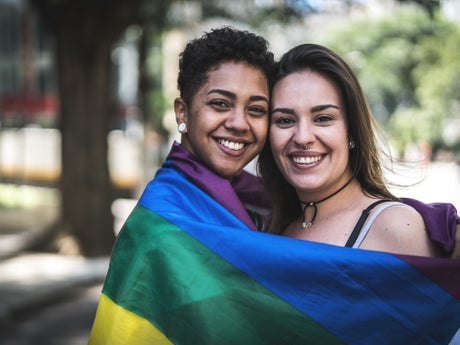
LGBT History Month is an annual celebration that provides education and insight into the issues that the LGBT+ community faces.
The primary aim of LGBT History Month is to teach young people about the history of the gay rights movement and to promote an inclusive modern society.
“LGBT History Month is a grassroot voluntary organisation,” Professor Emeritus Sue Sanders of the Harvey Milk Institute and founder of LGBT History Month tells The Independent.
“The team that brings you all the free resources to educate on prejudice and enable the rich diversity of LGBT+ people to be visible, safe and proud are all unpaid and work from home after a day’s work.”
Following much campaigning, in April 2019 the government announced new regulations for teaching relationships and sex education in England.
The regulations - which were rolled out in September 2020 - mean that secondary schools now teach pupils about sexual orientation and gender identity, and all primary schools teach about different families, which of course includes LGBT families.
However, despite this, a YouGov poll of more than 1,000 teachers working in UK primary or secondary schools found that LGBT bullying is the most prevalent type of bullying in schools, with the research showing it was more common than incidents relating to racism, sexism or religion.
Robbie de Santos, associate director of communications and campaigns at LGBT charity Stonewall, tells The Independent why this year’s event is more important than ever.
“LGBT+ rights have come a long way in the last few decades, but all too often, LGBT history is erased or overlooked,” says de Santos.
“The last year has brought such new and enormous challenges to LGBT+ communities, and it’s even more important for us to come together this month to highlight our history and celebrate the lesbian, gay, bi and trans people that have made incredible contributions across society. Stonewall will keep fighting until every lesbian, gay, bi and trans person is free to be themselves.”
Here’s everything you need to know about LGBT History Month.
When does it take place?
LGBT History Month takes place every year in the UK in February.
The month-long observance takes place in the US and in Canada in October.
The month is commemorated at different times of the year in other locations around the world.
In some countries, such as Greenland and Brazil, LGBT+ history is celebrated at the same time as their annual Pride parades during summer.
When did it start?
While LGBT History Month originated in the US in 1994, in the UK it began 11 years later following on from an initiative that was created by a couple of teachers.
In 2005, educators and activists Sue Sanders and Paul Patrick organised LGBT History Month as part of a Schools Out UK project, a programme that aims to educate young people about the issues members of the LGBT+ community face and to make schools feel inclusive for everyone, regardless of their gender identity or sexual orientation.
The event was held in February to coincide with the 2003 abolition of Section 28 of the 1988 Local Government Act.
Section 28, a piece of legislation introduced by Margaret Thatcher's Conservative government, stated that local authorities were not allowed to "intentionally promote homosexuality or publish material with the intention of promoting homosexuality".
Between 150 and 200 events took place across the UK to celebrate LGBT History Month in the year of its conception, far exceeding the organisers' expectations of 15 to 20 events.
The event has been held in the UK in February every year since.
On 1 February 2019, Professor Sanders was honoured with the Prime Minister's Points of Lights Award, an award that recognises "outstanding individual volunteers" who are making a positive change in their communities.
Schools Out UK receives no core funding and is run completely by volunteers.
“While we can focus on the hate crime that LGBT+ people suffer and the appalling way the Home Office treats LGBT+ people seeking asylum, Schools Out UK in their projects seeks to be positive and, as they say, claim our past, celebrate our present and create our future," Professor Sanders says.
How is it observed?
LGBT History Month is marked every February by schools, colleges and various organisations across the country, who seek to increase young people's awareness of the LGBT+ community through education.
The theme for LGBT History Month 2019 was 'Peace, Activism and Reconciliation', while both last year and this year it is ‘Body, Mind, Spirit.’
"Over the last 17 years, LGBT History Month has grown to become one of the highlights of the year and something we always look forward to celebrating," Emma Meehan, assistant director of public affairs at national charity LGBT Foundation, tells The Independent.
"The fact that so many people nationwide take part shows just how vital it is.”
Despite the ongoing coronavirus, several organisations are holding virtual events to acknowledge the month and honour the history of the LGBT+ community, including educational talks, virtual art exhibitions, film screenings and readings from companies such as the Shakespeare Birthplace Trust, People’s History Museum in Manchester and LSE library in London.
To find out more, visit the LGBT History Month website or Outing The Past