
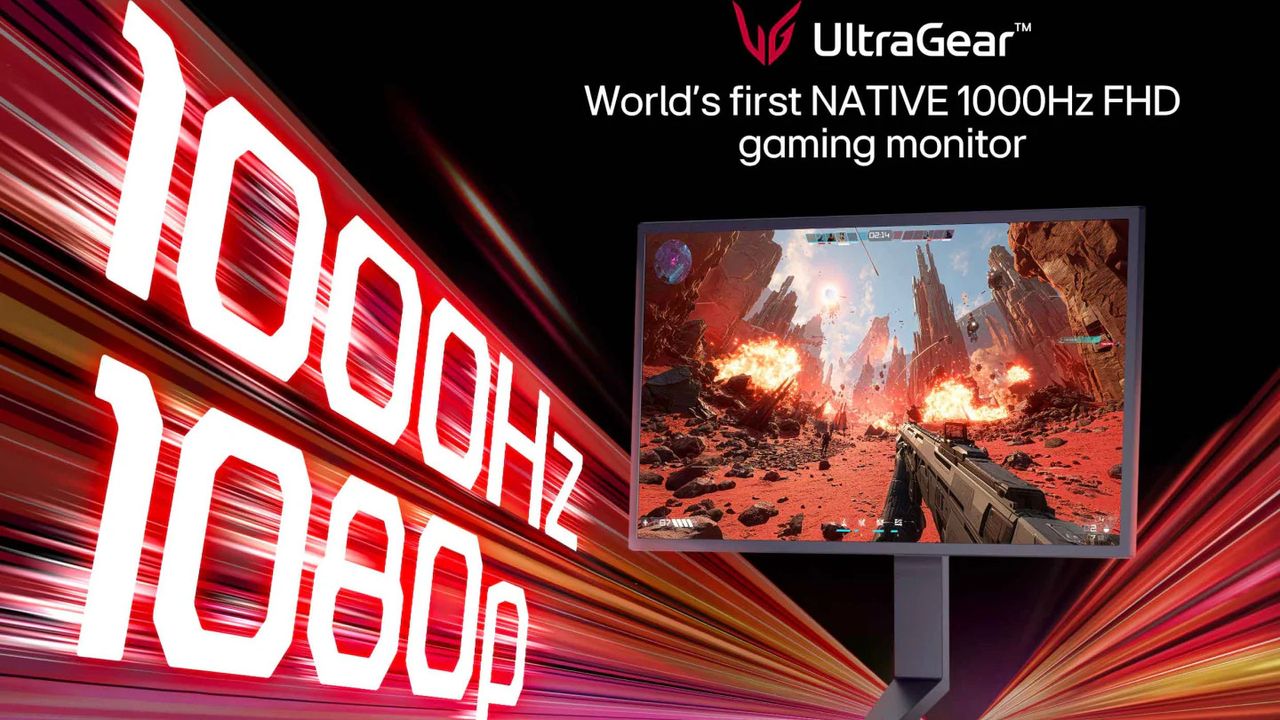
- LG has revealed a new 24.5-inch monitor in the UltraGear 25G590B
- It has a 1,000Hz refresh rate and motion blur reduction tech
- LG notes that it's designed for shooters 'where accurate aiming and near-instantaneous visual confirmation are key to victory'
LG has revealed a new display which it's billing as the 'world's first native 1,000Hz' gaming monitor.
VideoCardz spotted the press release LG issued announcing the UltraGear 25G590B, which is a 24.5-inch monitor with a Full HD (1080p) resolution and the first panel to hit the magic 1,000Hz refresh rate.
But is hitting that threshold really 'magic'? Well, it's a technically impressive achievement, but I'll discuss the reality of what this means in a moment.
First up, let's consider the rest of the specs of the UltraGear 25G590B, although not that many details have been shared so far.
What we do know is that this monitor has an IPS panel and a "low-reflection film" to reduce glare on the screen. LG has also incorporated 'Motion Blur Reduction Pro' tech that "makes fast-moving objects sharper and easier to track".
In other words, this helps you aim better in shooters – the likes of Apex Legends, Overwatch or Valorant – and this is a monitor that's "engineered specifically for first-person shooter games".
LG further notes: "This display provides ultra-fast visual updates, preserving the readability of in-game menus and interfaces while maintaining the crispness of both moving and stationary onscreen objects. The 25G590B is especially well suited to FPS games, where accurate aiming and near-instantaneous visual confirmation are key to victory."
The LG UltraGear 25G590B also has a couple of AI features (well, of course it does). The main use of AI here is to tweak the picture settings according to the game genre being played, but there's also an AI sound ability for a better spatial audio experience and clearer in-game comms, we're told, if you have a compatible headset.
LG's 25G590B gaming monitor is set to go on sale in the second half of 2026. We don't yet have a price.
Analysis: too refreshing?
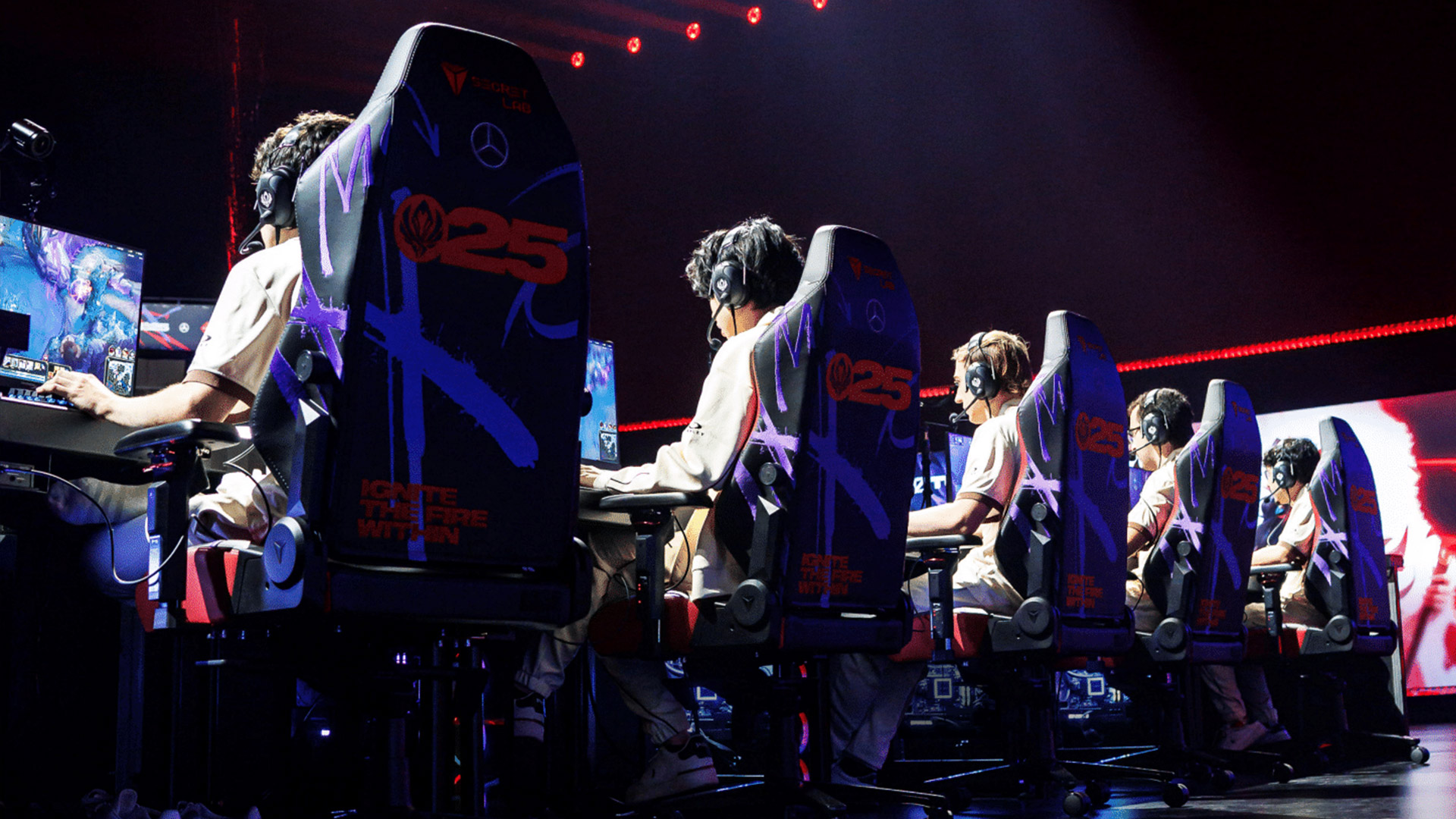
Is this a monitor you'd want to buy? Well, not really – unless you're an aspiring esports professional who plays shooters, which is the target audience, as noted. Or unless you have a lot of money to throw around...
That refresh rate should certainly provide a very smooth and fluid gameplay experience, of course, and as LG notes, it's a 'native' 1,000Hz monitor that runs at that refresh rate in Full HD – as opposed to dual-mode gaming monitors that can drop to 720p resolution to achieve faster refresh rates. (And you don't really want to be pro-gaming with the loss of clarity involved in that particular fudge).
More broadly, though, how fast do refresh rates need to be? While 1,000Hz native is certainly a technical achievement, as observed, what does it mean in practice? The truth is that the vast majority of gamers won't be able to meaningfully tell the difference between 1,000Hz and, say, 360Hz.
The other point to bear in mind with a 1,000Hz monitor is that to get the full benefit of 1,000 frames per second, you need a GPU that can run the game in question at that level – which is no mean feat, even at 1080p resolution. Remember, this means being consistently at (and effectively over) 1,000 frames per second, too, which is rather different to being able to hit that frame rate occasionally.
In short, you'll need a monster graphics card, and the prices of those beefy GPUs are through the roof right now (thanks to the RAM crisis). Besides, for some games, a consistent 1,000 fps may not even be possible with a fully decked out top-end rig (although it is true that competitive shooters are designed for high frame rates).
All that said, even if there are arguments about exactly how much smoothness the human eye can detect – even for the sharper-eyed gaming pros out there – there are folks who claim that a massively high refresh rate can still be 'felt' in the gaming experience. And LG argues that its motion blur reduction tech "helps players follow rapid lateral movement with less effort [and] identify targets more clearly". This could be useful, or a gimmick – time will tell. (And speaking of gimmickry, I very much doubt that gaming pros will want AI 'intelligently' adjusting their picture settings).
The LG UltraGear 25G590B will be a pricey gaming peripheral, but it'll certainly be interesting to see how it's received by critics when the panel emerges later this year.