
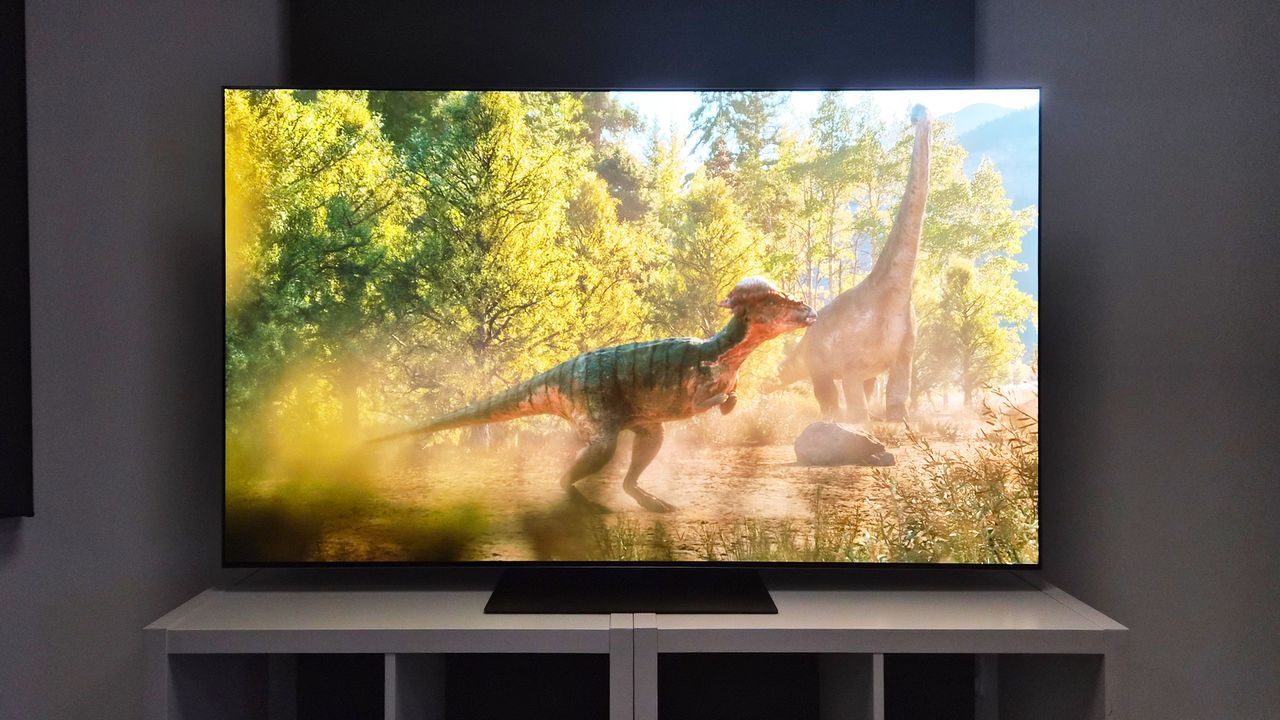
We all love a good comeback story, and that’s exactly what the LG G6 aims to deliver.
First, as the successor to the LG G5, which, while generally solid, came fourth (out of four) in our 2026 flagship OLED shootout.
Second, because when we originally reviewed the G6 mere weeks ago, we noticed a number of niggling flaws impacting its colour accuracy, contrast and dark detail, making it a distinctly four-star OLED.
But, since then, LG has released a series of updates aimed at fixing these problems. Having retested the G6 with its latest software in our dedicated viewing rooms, against its predecessor and key rivals, we’re pleased to confirm the work has paid off – so much so that we’ve updated its score.
Price
The 65-inch G6 we’re reviewing launched with a price tag of £3000 / $3399 / AU$4999. That makes it cheaper in the UK and Australia than the G5 was at launch (£3300 / AU$5299, while US launch pricing has remained unchanged.
We are seeing a smattering of G6 deals start to appear, with some retailers offering it for under £3000. That makes the G6 slightly cheaper than its main Samsung rival, the S99H.
The 65-inch Samsung S99H costs £3299 at launch and remains roughly £200 more expensive, even when discounted – at least for the time being.
Meanwhile, the 2025 flagship OLEDs that are still on sale, including the G5, Samsung S95F and Award-winning Sony Bravia 8 II, are currently vastly cheaper as retailers offer increasingly hefty discounts in an effort to clear stock.
Design
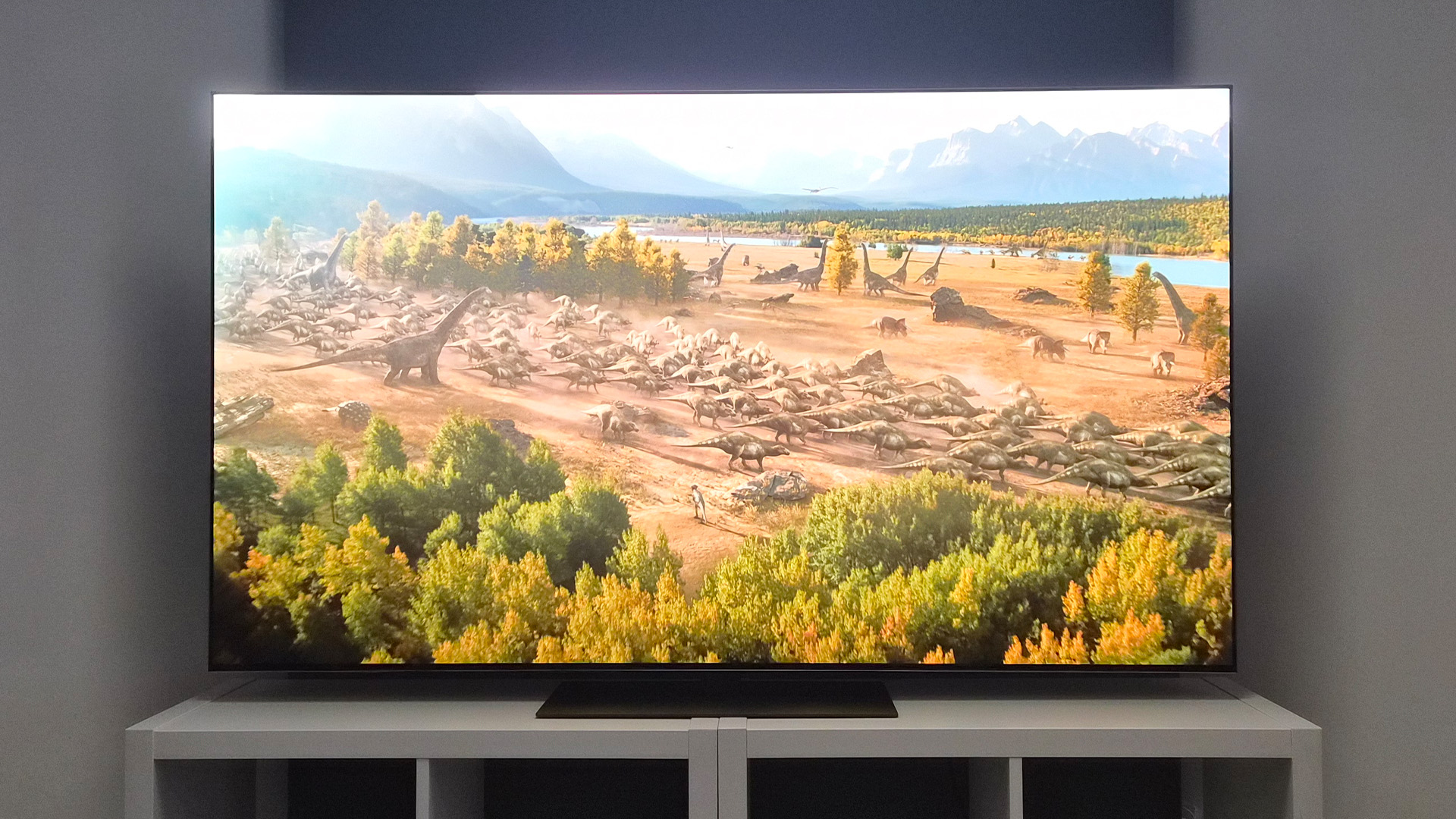
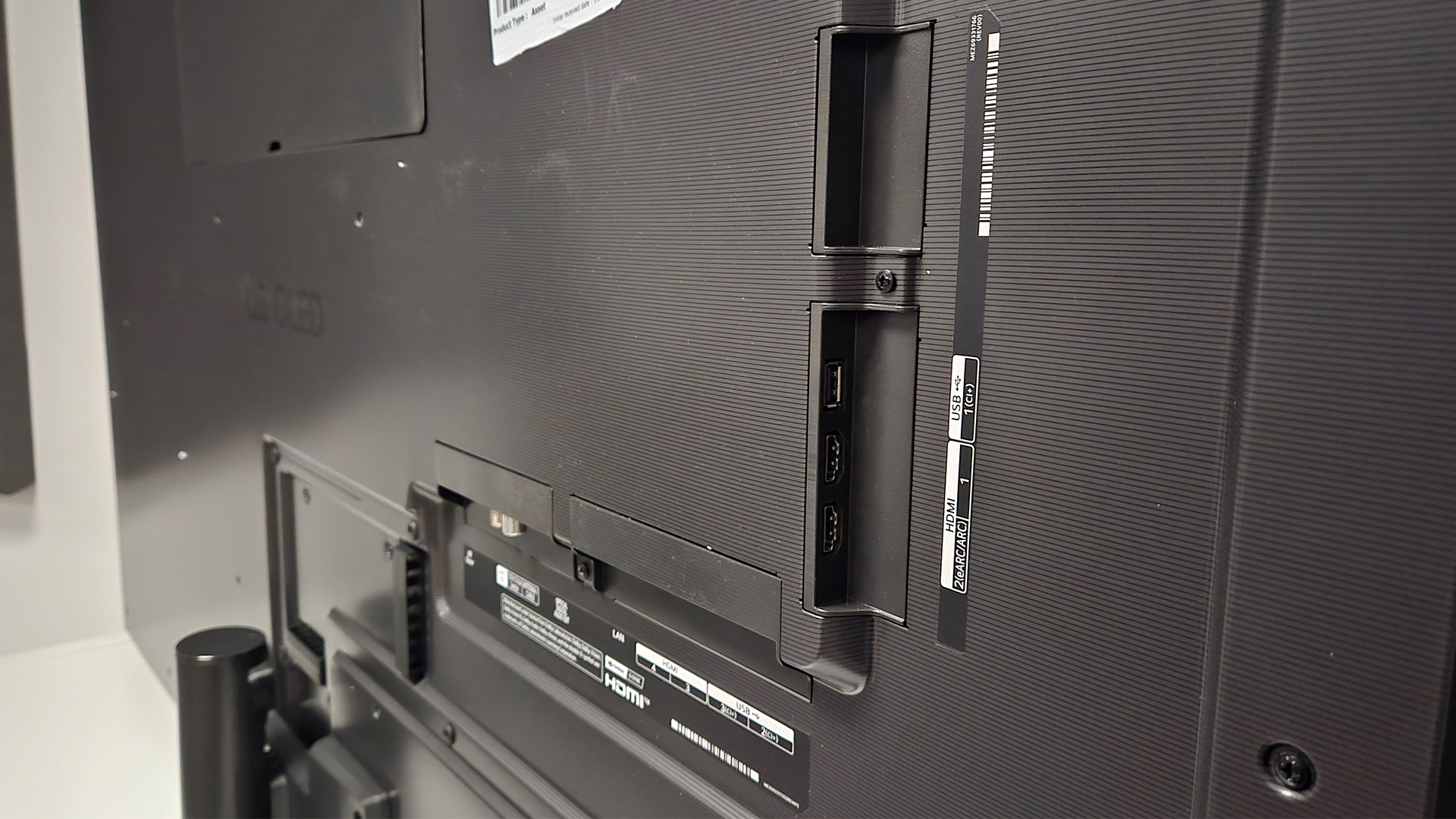
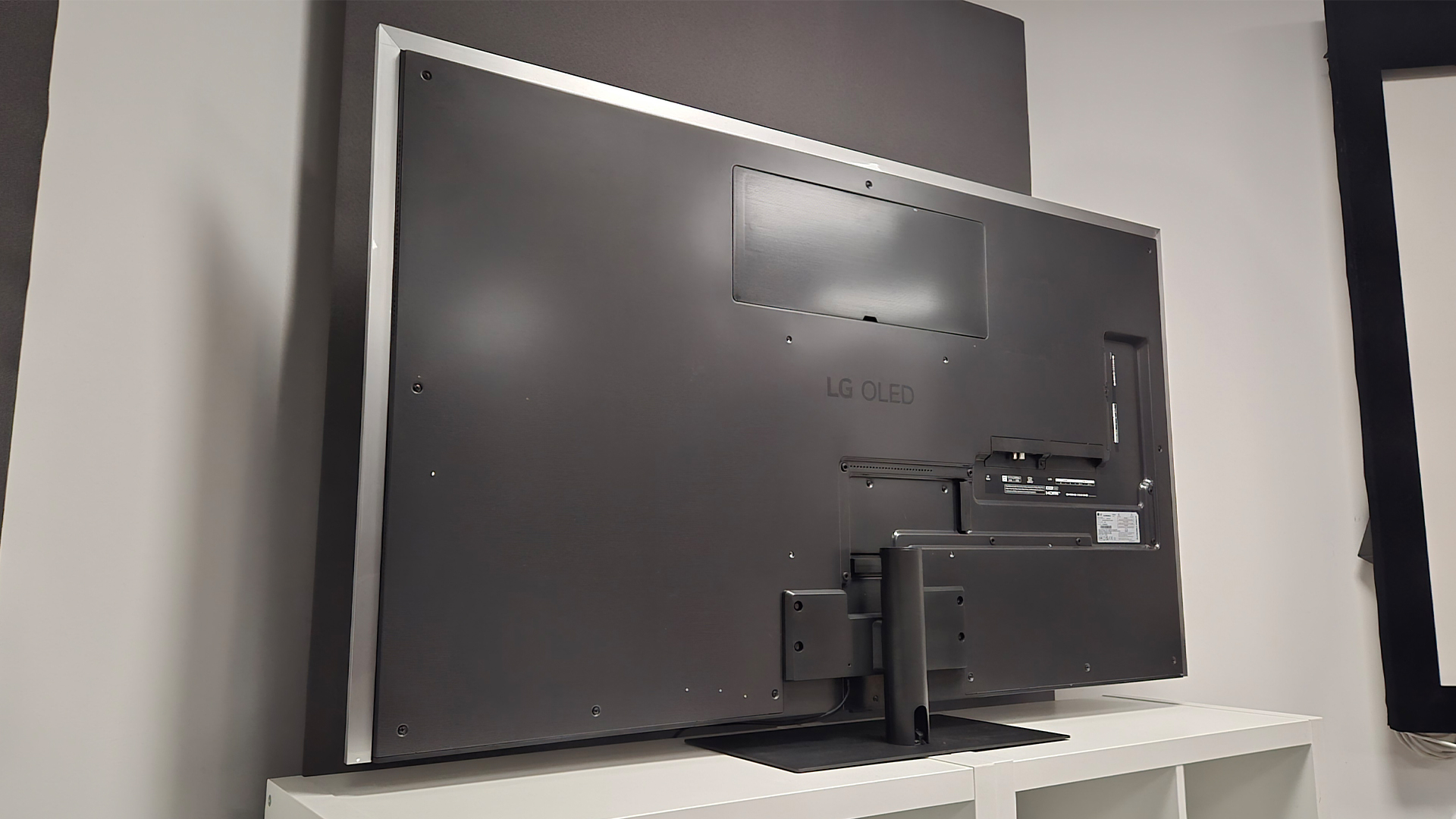
The LG G6 looks identical to the G5 in nearly every way. So much so that we frequently had to check the serial numbers of the two when setting them up on our test benches to make sure which was which.
LG G6 tech specs
Screen size 65 inches (also available in 55, 77 and 83 inches)
Type Primary RGB Tandem OLED
Backlight N/A
Resolution 4K
HDR formats HLG, HDR10, Dolby Vision
Operating system webOS 26
HDMI inputs 4 (all 48Gbps HDMI 2.1)
Gaming features 4K/165Hz, 4K/120Hz, VRR, ALLM, Dolby Vision game mode, HGiG
ARC/eARC eARC
Optical output? Yes
Dimensions (hwd, without stand) 83 x 144 x 2.4cm
The TV is mainly designed to be wall-mounted, hence the picture frame-style design, but the 55- and 65-inch versions are available with a stand if you prefer. The versions without the stand come with a Zero Gap wall mount instead, which allows for the TV to be mounted more or less flush against the wall.
But while the design certainly delivers on the promise of the ‘Gallery’ designation, it’s rather too familiar at this point, having barely changed since 2020’s GX. The upcoming Samsung S95H is a far more exciting take on the same concept.
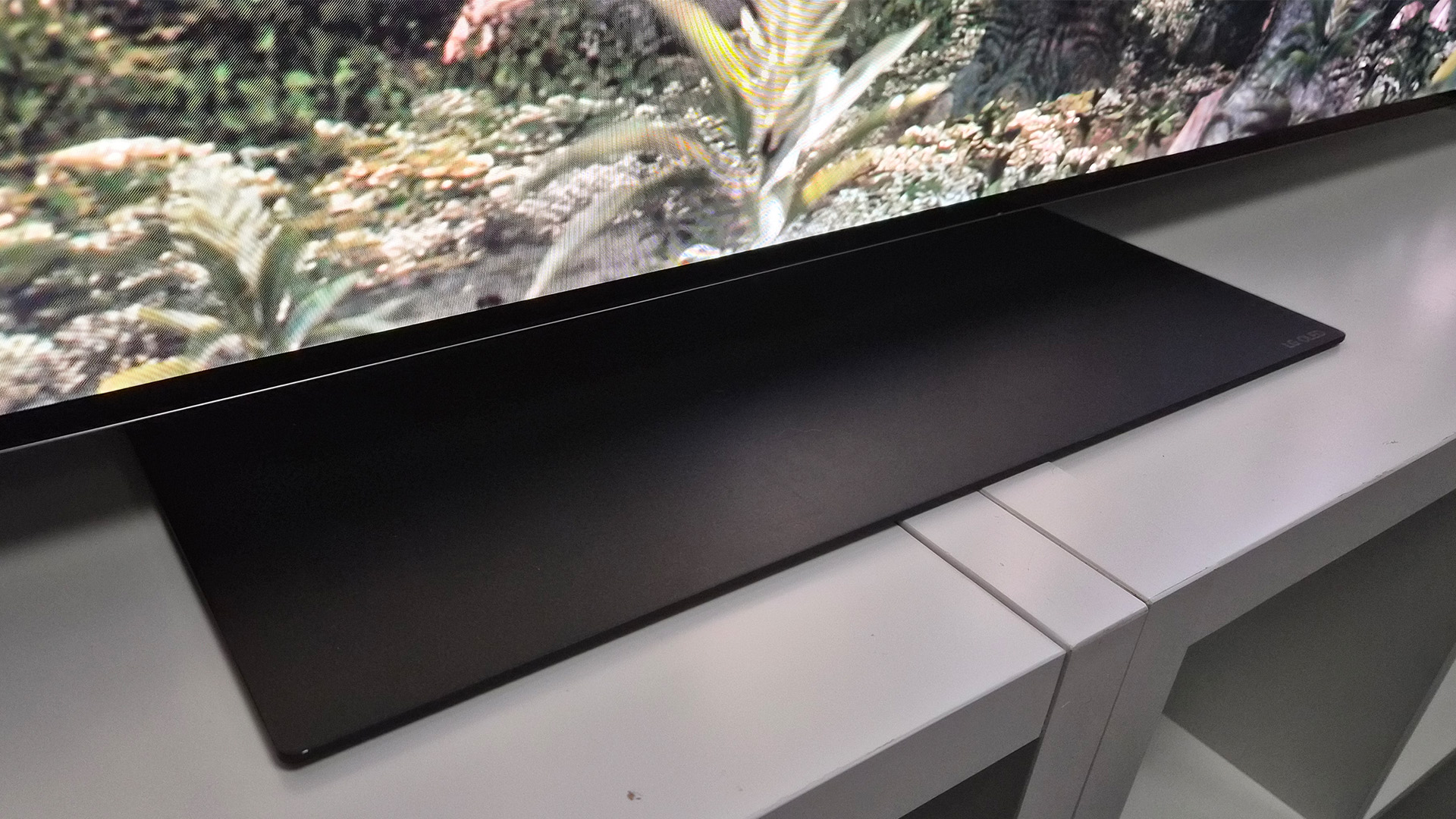
Despite this minor qualm, the G6 is functionally sound and nicely unobtrusive. Our sample came with the pedestal stand, and while that doesn’t have a swivel mechanism, it’s sturdy and indicative of the set's generally excellent build quality.
The stand’s two height options and a fairly thin and flat plinth also make it generally easy to place a soundbar in front of the TV without blocking the screen.
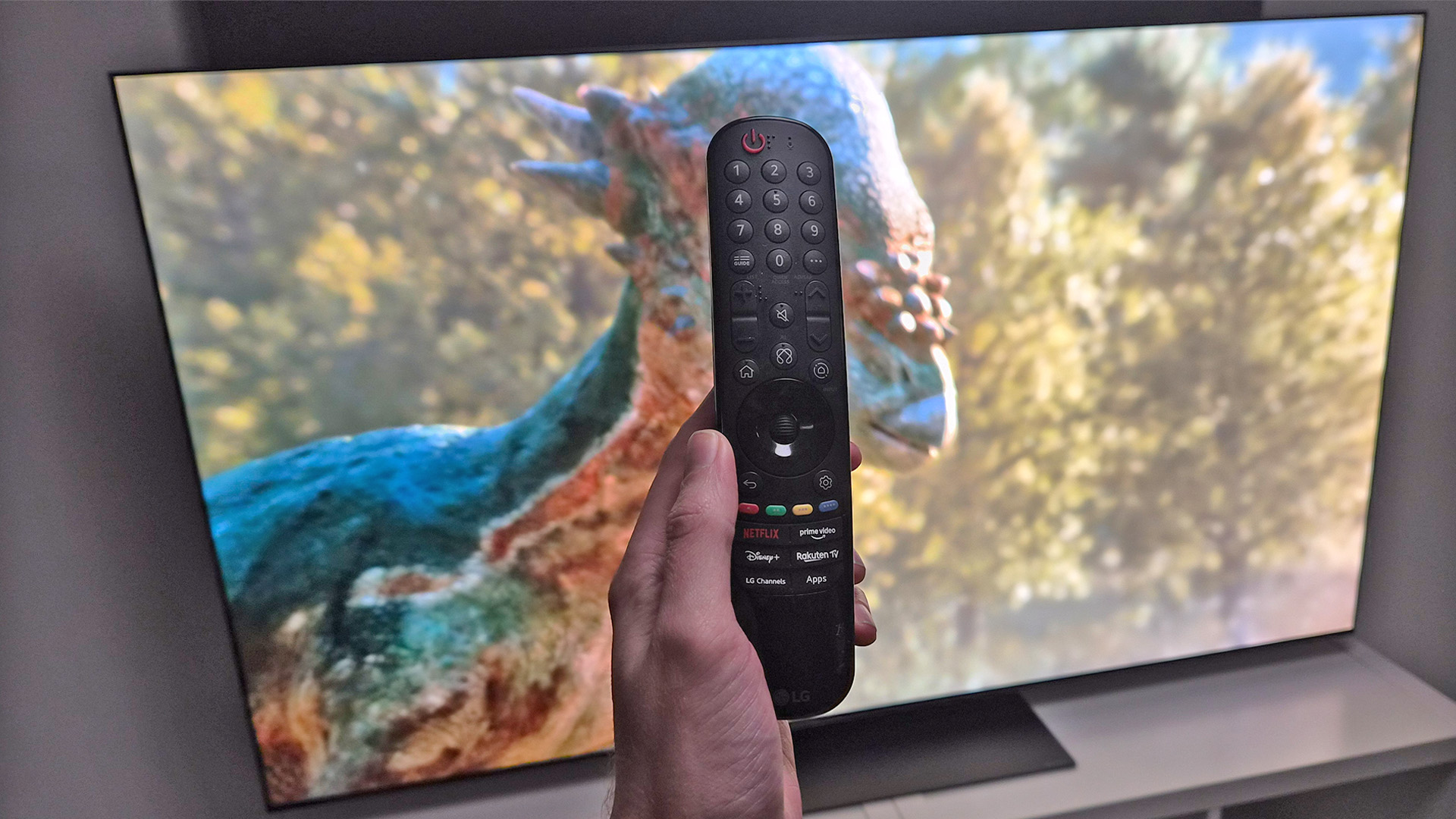
The only big gripe is the lack of changes to the remote. It remains a chunky, cheap-feeling, plastic affair that doesn’t feature backlighting or USB-C charging – two things we’ve come to expect of a set at this level.
Motion controls still feature, adding some occasionally useful point-and-click functionality when navigating the set’s menus, but even so, the remote feels in need of a proper overhaul at this point.
Frustratingly, many markets were treated to a new LG TV remote last year, but the UK still has to make do with the old model.
Features
Like its design, the G6 doesn’t change the key ingredients in LG’s current OLED recipe. At its heart, you’ll find a Primary RGB Tandem OLED panel. That’s the same tech we saw in last year’s G5.
For those unfamiliar with it, Primary RGB Tandem uses a ‘four-stack’ panel structure to try and help an OLED offer higher peak and operating brightness levels, while retaining colour volume and accuracy, even during low light scenes – an area its predecessor, micro lens array (MLA), struggled with, especially against Samsung’s rival QD-OLED technology.
The only technical change to the panel is the inclusion of a new Reflection Free Premium display certification, which promises to reduce reflections to less than 0.5 per cent – meaning it should work better in less than ideal conditions with lots of stray, reflection-causing light.
But, while the fundamental panel tech remains largely unchanged, the inclusion of a new Alpha 11 Gen 3 AI processor means LG is quoting some pretty palpable improvements for the G6.
For starters, the chipset’s new Hyper Radiant Colour Technology system means that the set can offer “20 per cent higher” peak brightness levels than the already dazzling G5.
But more importantly, as peak brightness is one of many screen-quality metrics, the tech also aims to allow the G6 to offer better colour accuracy and a generally “more lifelike” picture. Finally, motion handling, upscaling, tone mapping and audio processing are also meant to be better thanks to the new silicon.
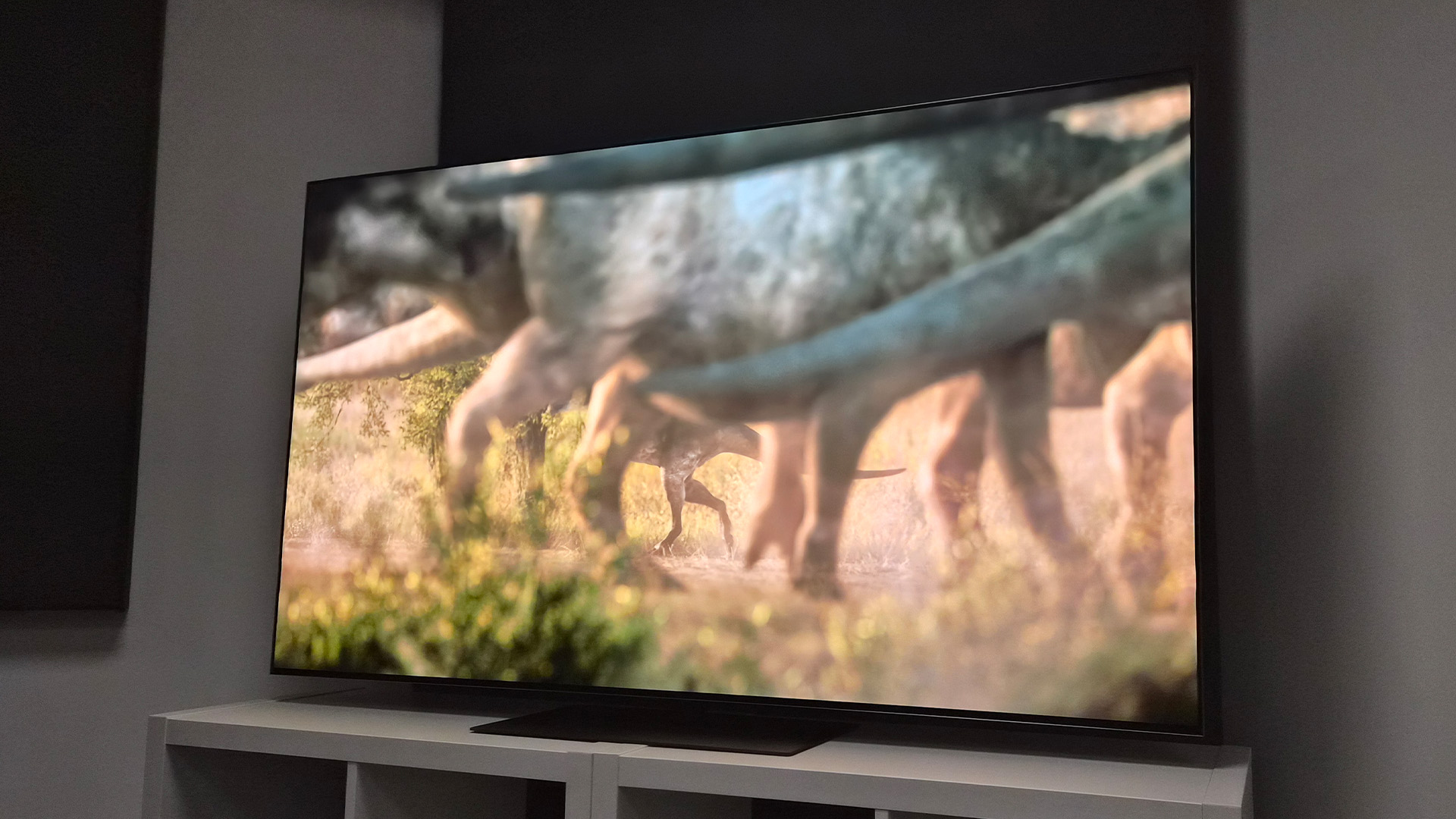
On the subject of audio, the G6 comes built in with Dolby Atmos FlexConnect functionality. This is a hot ticket item that aims to let the TV automatically connect to compatible speakers, including the LG Sound Suite we recently reviewed, to create a surround sound package.
The tech includes the ability to use the G6’s built-in speakers as the central channel, and clever room and viewer location optimisation powers. Though the tech is in its infancy, it’s a nice touch that gives the G6 an element of future-proofing.
However, there is one minor, pigmy-sized elephant in the room when it comes to next-gen Dolby tech. Specifically, the G6 doesn’t support Dolby Vision 2 (“the future of home cinema”, if Dolby is to be believed) – and it seems fairly unlikely that it ever will.
For now, as we’re yet to see any content mastered in the format, it’s not a deal breaker. But it is a minor concern for those who tend to keep their TVs for five years or more, especially as Philips has confirmed its 2026 flagships will support the standard, as will several non-OLED sets from TCL and Hisense.
LG has hinted that it may add the functionality via an over-the-air update at a later date, but the lack of certainty is still a minor frustration considering the G6’s price. People paying this amount don’t want a TV that’s out of date within a year. Though until we see the benefits of Vision 2, we want to emphasise that it's a minor gripe. We don’t currently know how big a deal Vision 2 is in general.
The supported standards remain Dolby Vision, HDR10 and HLG, meaning outside of Vision 2, the only other noticeable absence is HDR10+.
The TV’s broader feature set is, like that of all of LG’s recent flagships, more or less flawless. WebOS 26 supports pretty much every app you can think of, ranging from Now to Apple TV, Netflix, Disney+ and Amazon Prime Video, all of which are present and work correctly. We’re also pleased to see it continue to support niche streaming platforms, including the anime-focused Crunchyroll and Hidive.
Gaming functionality lives up to LG’s strong track record, with all four HDMI 2.1 inputs offering up to 4K/165Hz gameplay with VRR and ALLM, and Dolby Vision Gaming HDR supported.
LG has also added more game-streaming features, including a new low-latency interface and a dedicated controller developed alongside popular gaming peripherals manufacturer Razer, which can be connected directly to the TV – though this is sold as an optional accessory.
Picture quality
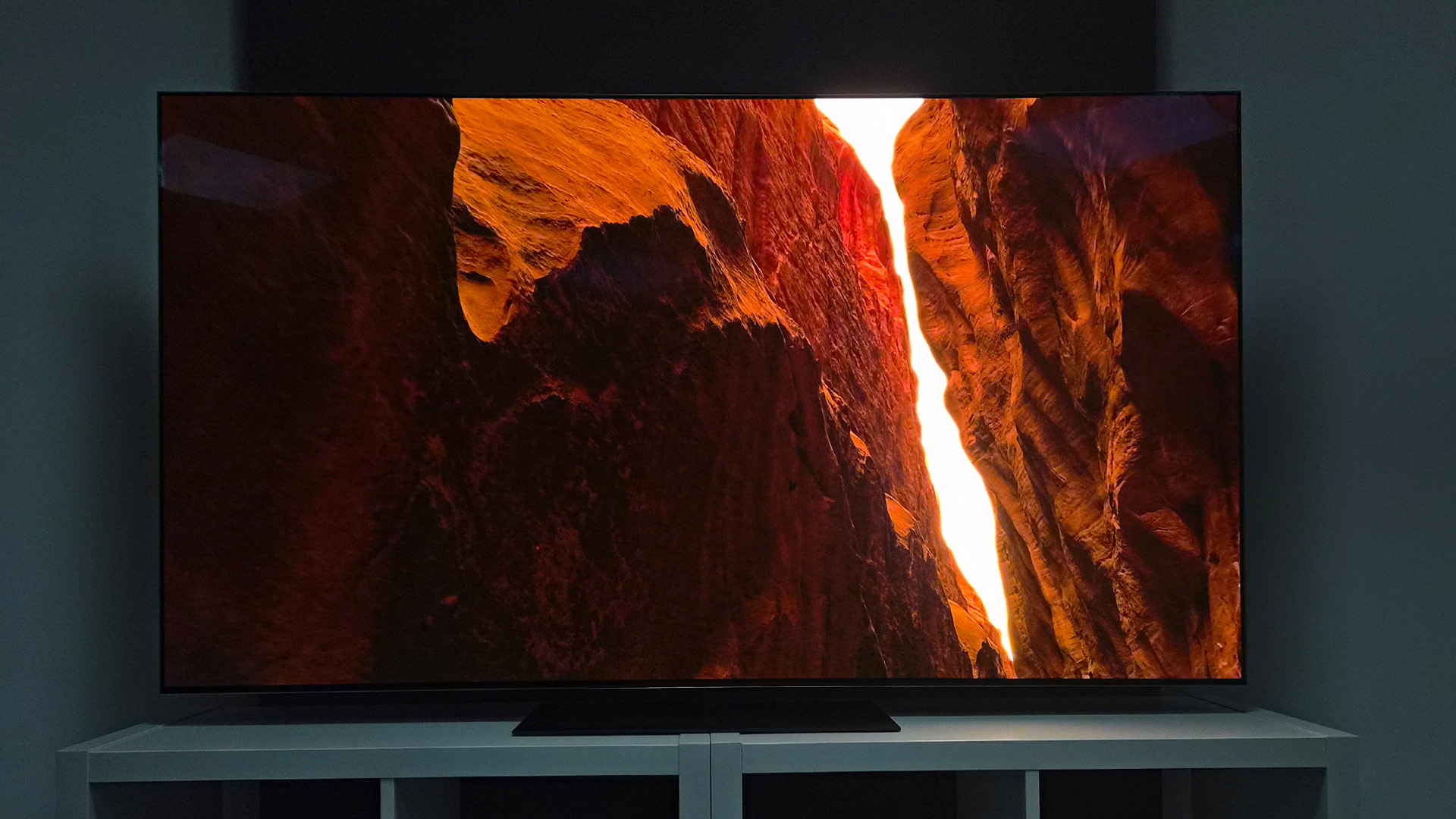
The moment we power on the LG G6, it confirms the firm’s brightness claims. Playing our go-to brightness stress test, Pan, the set offers higher HDR peaks than the LG G5 next to it.
The setting sun has a noticeably brighter centre, while also retaining more detail. A wonderful palette of reds and oranges adds more solidity to the picture.
The only issue is that, as with nearly every set we test, the out-of-the-box standard picture mode is a tad too aggressive. Colours are a bit overbaked, and there’s a slight oversharpening.
Add to this slightly heavy-handed motion handling, which makes the pirate ship's movements feel slightly off, and the picture is a bit too artificial.
Thankfully, with a few button pushes, we switch to Filmmaker Mode, and things immediately pick up. Movements become more cinematically natural, and the skyline retains its intended, bombastic lustre, but with reined-in, more natural colours.
Switching gears with our Civil War test disc, the TV begins to form a pattern as it continues to offer several small refinements to the G5 that add up to a better overall experience.
The flames in a burning night-time forest continue to offer an enthralling amount of extra detail as well as higher peaks, but, more crucially, characters’ skin tones look nicely realistic, retaining reds far better, to the point that the G5’s picture makes them look slightly jaundiced by comparison.
Moving to a daytime scene in a military camp, "balanced" quickly becomes the word that best describes the G6. As a helicopter swoops into the camp over a forest, it's clear LG has backed away from its previous focus on aggressively pushing its TVs' peak brightness at all costs.
The skyline is more refined, with the picture only raising the brightness of the parts it needs to, leading to a smidgeon more contrast. Colours retain a pleasing level of control and accuracy, with greens in particular never veering into oversaturated territory, as often happens when we task less accomplished sets with playing this scene.
In every shot, the G6 feels slightly brighter, richer and more nuanced than its accomplished predecessor.
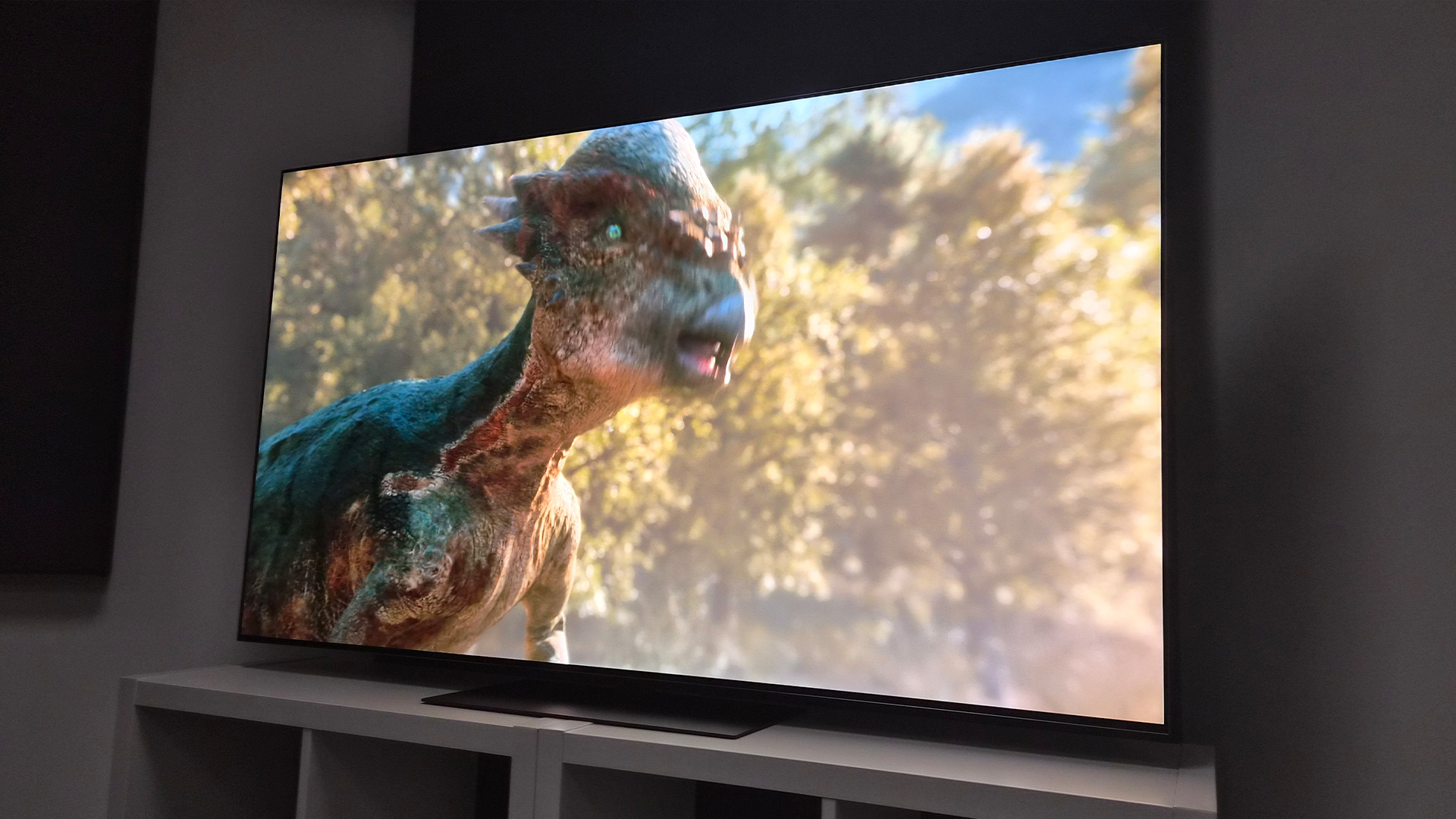
Its strong performance continues with our Sinners 4K Blu-ray, but there is a minor catch.
Dark detail is good, with the barnhouse speakeasy oozing atmosphere and feeling wonderfully immersive, but there is some very minor black crush. Gangster Stack’s face loses definition in the darkest part of the picture, with his outer cheek showing as pure black, where it should be just visible.
Raising the black level in the Near Dark Detail setting does yield some positive results, but it comes at the expense of the punchy, perfect blacks, losing a smidgeon of the picture’s three-dimensionality in the process. It’s a small gripe, but this is a key area in which the older Sony Bravia 8 II retains the lead.
Ultimately, while colour volume in dark scenes, especially with characters' skin tones, is a significant improvement on the G5 (or any other recent LG OLED we’ve tested), the G6 still isn’t the top performer here.
The TV is more accurate and handles the demanding scene much better than the G5, but the Samsung S99H, which features a QD-OLED panel, is a smidgeon warmer and more lifelike. Colours, especially skin tones, boast slightly more volume, making the characters appear more lifelike (which is funny considering most of them are meant to be vampires).
Though it suffers from slightly more severe black crush, the S99H also offers a little more oomph in the brightest part of the picture. The coloured bulbs littered around the speakeasy burn a little brighter, but without sacrificing accuracy. The use of the panel’s additional brightness is limited to where it’s meant to be, just with a bit more intensity than its LG rival. It’s a small difference but important when we’re nitpicking between flagships.
Moving to our final upscaling test, the G6 continues to impress. Playing our old faithful SDR Blu-ray of True Grit, the differences between the G6 and G5 are subtle – even going into this comparison blind, it would be clear that these are two TVs from the same family.
The G6 upscales the film with suitable care, retaining its intentionally grainy, Spaghetti Western feel without flattening it or adding noise. Characters’ stitched, thick cotton clothes are nicely sharp and detailed, and there’s a pleasingly light touch. Here, it feels as though the G6 is carefully improving the experience while remaining true to the source material.
The combination of factors means the G6 is a competitive flagship OLED that will delight movie fans, even if it’s not the best of the best at everything when it comes to picture quality.
Sound quality
Audio quality is a key area in which LG’s flagship OLED TVs have struggled to impress in our review rooms for the past few years. And, while we’re not reaching for the party streamers with the new G6, there’s no denying it is a step in the right direction.
Playing an iconic scene in Sinners, where Sammie, aka “Preacher Boy”, performs the blues, the G6 delivers a noticeably fuller, more robust sound than the G5, which offers up a thin and hollow rendition by comparison.
The guitar’s plucked strings have some bass to them, and Sammie’s wailing vocals are nicely audible and separate from background noise.
As the medley grows, adding new tracks to the mashup, the set delivers a decent sense of directionality, with each addition swooping in as the camera carves a path through each room and musical era.
But it’s still a good deal short of perfect. The low end isn’t powerful enough to deliver the oomph you need to do the scene justice, and the delivery lacks the precision to handle the vocalist's wailing vibrato, which is nearly entirely lost.
The TV also struggles to maintain a rhythmic and tonal hold on proceedings as ever more musical strands are added, and in the end, it becomes more of a cacophony rather than the intended complex medley.
This theme continues as we switch to chapter two of Blade Runner 2049. The speakers’ low end is too weak and flabby for the scene’s synth track, which occasionally sounds more like a child blowing a raspberry, rather than a booming synthetic growl.
Ultimately, while the G6 is certainly an improvement on the G5, it’s still a long way short of rivals such as the Sony Bravia 8 II and Philips OLED910, and is even beaten by certain step-down OLEDs, such as the Sony Bravia 8.
In fact, we’d say the C6 sounds better than the G6, which makes us wonder if the Gallery design is the biggest cause of LG’s G-series sonic struggles.
As ever, though, our criticisms of TV audio quality need only be taken into account if you’re ignoring our strong advice that any new TV should be partnered with a dedicated sound system.
Verdict
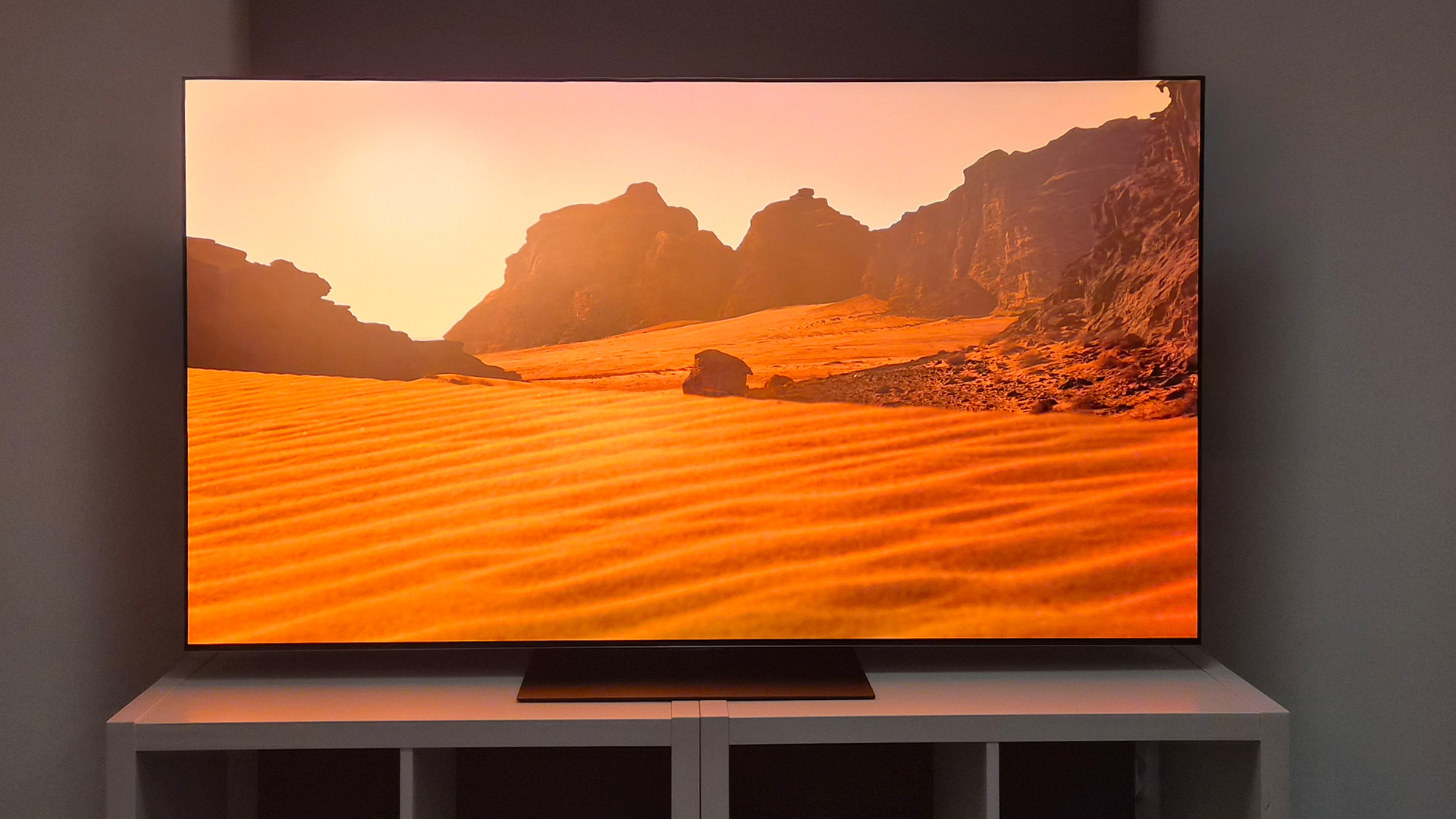
After a rough start, LG’s software updates have turned the LG G6 into a compelling option for home cinema fans looking for a premium, feature-packed OLED.
It doesn’t rethink LG’s approach to OLED TVs, but small refinements allow it to deliver a more nuanced, accurate and ultimately immersive experience.
Our only real gripe is that the TV, especially its remote, are overdue for a redesign. Ideally, one that also updates its built-in speaker hardware, which remains middling at this level.
SCORES
- Picture 5
- Sound 3
- Features 5
MORE:
Read our review of the Sony Bravia 8 II
Also consider the LG C6
For last year's model, see our LG G5 review
Read our Samsung S95F review
Best TVs: flagship OLEDs and budget Mini LED sets tried and tested