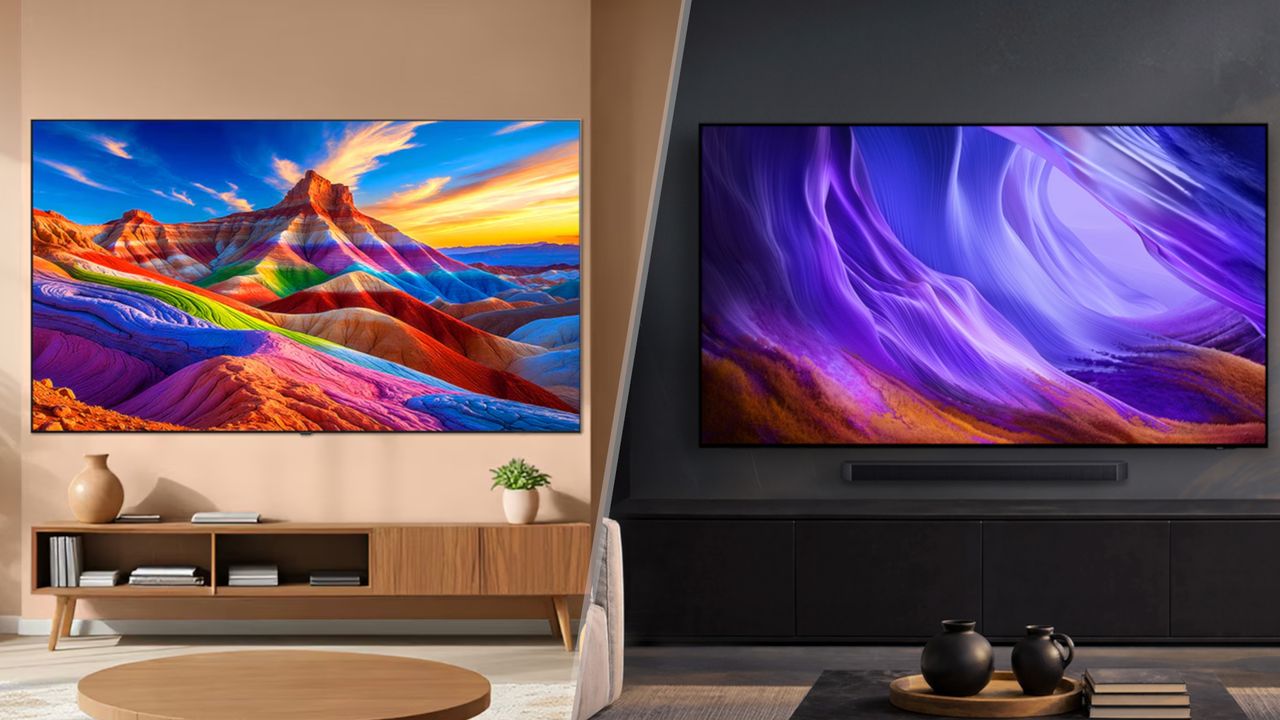
It's that time again. As the weather warms, many of the best TVs of the year are just now rolling out to stores. LG and Samsung, makers of some of the best OLED TVs you can buy, are launching a slate of new OLEDs for 2026, and among those are the ever-popular entry-level models are the LG B6 and the Samsung S85H.
The B6 is the follow-up to one of our top-value OLEDs of 2025, the LG B5. The S85H is the successor to an affordable OLED we recently awarded four stars, the Samsung S85F.
We haven't formally tested either of these OLED TVs yet, so we don't yet know how they stack up when it comes to picture quality and overall performance. That said, it's worth seeing how their specs, features and overall designs compare to one another.
LG B6 vs Samsung S85H: specs compared
LG B6 |
Samsung S85H |
|
|---|---|---|
Sizes |
48", 55", 65" |
48", 55", 65", 77", 83" |
Ports |
4x HDMI 2.1 |
4x HDMI 2.1 |
Resolution |
3,840 x 2,160p |
3,840 x 2,160p |
Refresh rate |
144Hz |
120Hz |
HDR |
Dolby Vision, HDR10, HLG |
HDR10, HDR10+, HDR10+ Advanced, HLG |
Smart TV software |
webOS 26 |
Tizen OS |
ATSC 3.0 support? |
No |
No |
Processor |
Alpha 8 AI Processor 4K Gen3 |
NQ4 AI Gen2 |
First, let's talk about screen size availability. On LG's website, the B6 is only listed in 48-, 55- and 65-inch size options. I fully expect 77- and 83-inch versions of the B6 to arrive in sometime in the coming months in order to compete with the 77- and 83-inch versions of the S85H.
It's also likely that LG will refer to these models with a different model name — the same strategy the brand is using to distinguish the 77- and 83-inch C6H OLEDs from the 42- to 65-inch versions of the C6.
I fully expect 77- and 83-inch versions of the B6 to arrive in sometime in the coming months.
Both of these entry-level OLED TVs support 4K games at up to 120Hz, but the B6 can kick it up to 144Hz with VRR enabled (a benefit for PC gamers).
The B6 supports Dolby Vision, the most popular enhanced HDR format on the market. Like all Samsung sets, the S85H doesn't support Dolby Vision, offering the similar-in-function HDR10+ in its place. The S85H is also one of the first Samsung TVs to arrive with HDR10+ Advanced, a royalty-free alternative to Dolby Vision. From here on out, HDR10+ Advanced will compete directly with Dolby Vision 2, another new HDR format.
LG B6 vs Samsung S85H: design
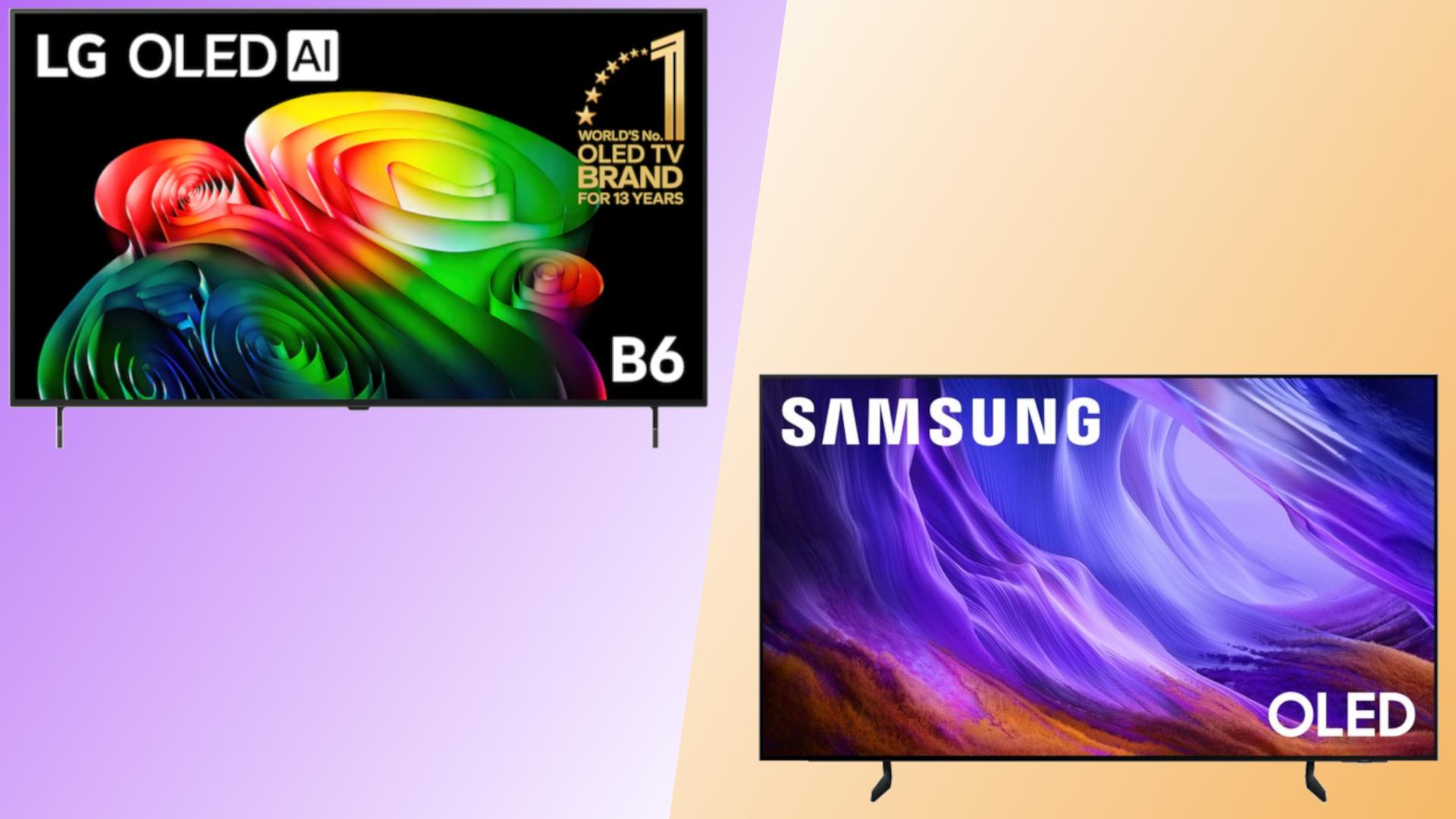
We won't fully understand the ins and outs of these TVs' respective designs until we get our hands on them in the coming weeks. That said, based on information released by LG and Samsung, we can already tell that both TVs largely resemble their predecessors.
Thanks to the self-emissive nature of OLED displays, you can expect the B6 and S85H to showcase remarkably thin panels. In past years, their predecessors have featured a thicker chassis around their midsection.
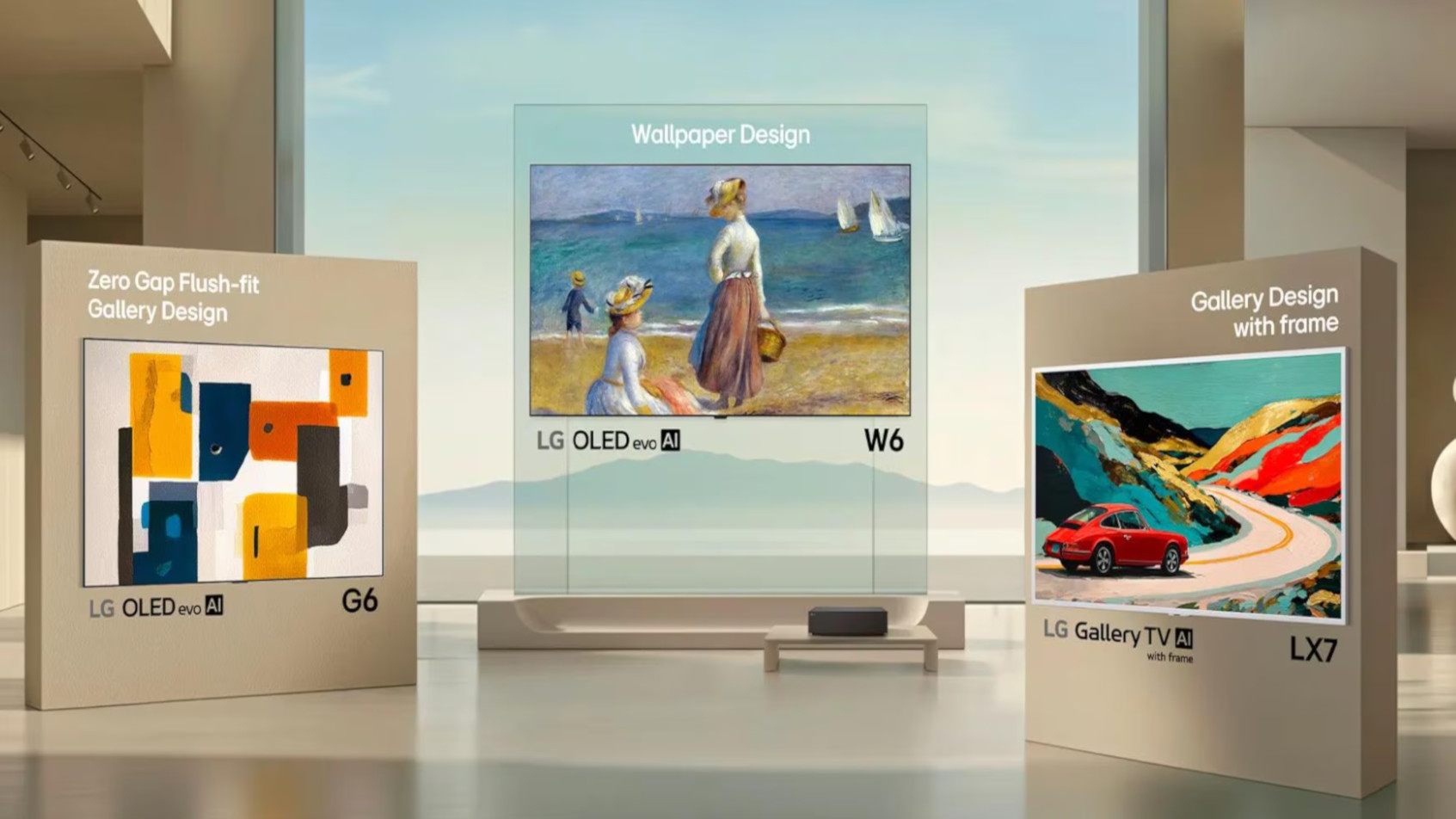
Here's my expert guide to shopping for a 2026 LG TV
Unlike the mid-range Samsung S90H and the flagship-level Samsung S95H, the entry-level S85H does not feature the brand's iconic (and divisive) glare-free display. Instead, its screen is glossy, just like the LG B6's screen.
This year, both LG OLEDs and Samsung OLEDs will arrive with slim, narrow remote controls with a minimal amount of buttons. As has been the case for several years now, Samsung is shipping its 2026 OLEDs with the Samsung Solar Cell remote, which conveniently charges via indoor/outdoor lighting. It's an eminently useful feature that I wish more TV brands would copy.
LG B6 vs Samsung S85H: smart platform and features
The B6 launches with the newest version of LG's proprietary smart platform, webOS 26. In recent years, webOS has seen some significant improvements to its user interface — in addition to a heaping helping of AI-based features I've yet to find a use for.
But no TV-maker has embraced AI over the last few release cycles as firmly as Samsung. The S85H arrives with Samsung's Vision AI suite fused to its Tizen-based smart platform, and while I can easily foresee myself not using many of its AI-based features, the Tizen experience as a whole has gotten a bit of a face lift this year.
Here's my expert guide to shopping for a 2026 Samsung TV
After testing it out on higher-end Samsung TVs recently, I can safely say that the overall navigational experience feels faster and more intuitive. In the past, Tizen has felt clumsy, and it seems as though Samsung has taken additional steps to improve it this year.
One of my favorite aspects of entry-level OLED TVs is that they come jam-packed with many of the same features you'll find on higher-end OLEDs. This is the case with the B6 and the S85H, too.
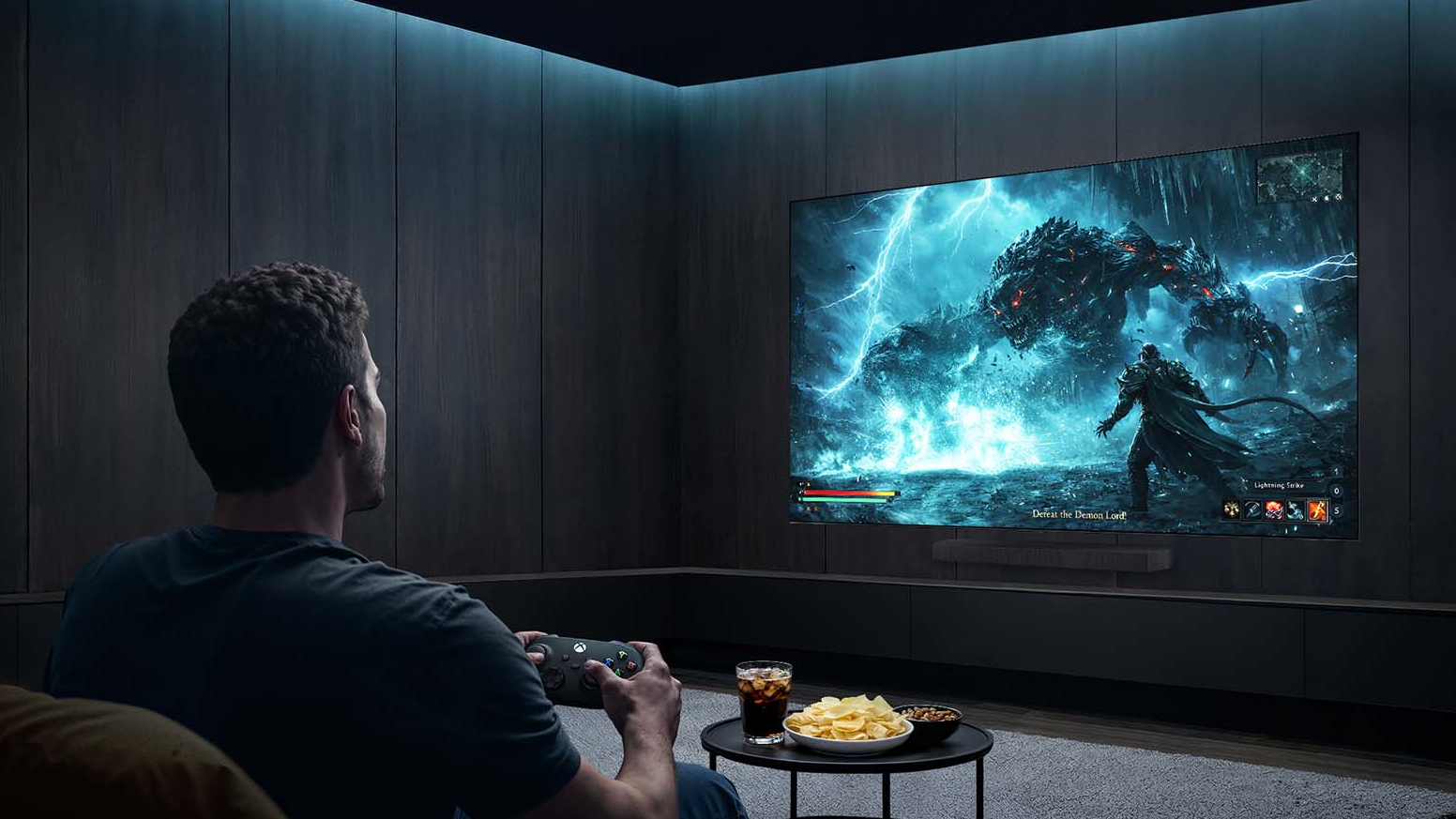
Both models offer an impressive slate of gaming-related features. These include VRR, G-Sync compatibility and some variation of AMD's FreeSync, all of which allow for smother, artifact-free gaming.
As was the case with the B5 and S85F, the B6 and S85H are sure to be popular with budget-conscious gamers in the market for a powerful gaming TV with excellent performance. (It remains to be seen which set offers a faster response time.)
LG B6 vs Samsung S85H: outlook
I've had hardly any hands-on time with either of these entry-level OLEDs, so I can't speak to their performance. With that in mind, let's take a look at their current prices.
Size |
LG B6 |
Samsung S85H |
|---|---|---|
48-inch |
$1,995 |
$1,199 |
55-inch |
$2,495 |
$1,499 |
65-inch |
$3,295 |
$1,999 |
77-inch |
N/A |
$2,799 |
83-inch |
N/A |
$4,499 |
With the caveat that LG's current prices could tumble down to a more-agreeable "street price" in the coming months, the S85H's additional value is undeniable. We've yet to see what a 77- or 83-inch LG B6 could cost, but from where I'm sitting, spending less on a 77-inch S85H than a 65-inch B6 seems like a no-brainer.
Obviously, there's a lot riding on the performance of these competing OLEDs. We'll have a much better idea of which TV comes out on top after we've put them through their paces in our test lab.