
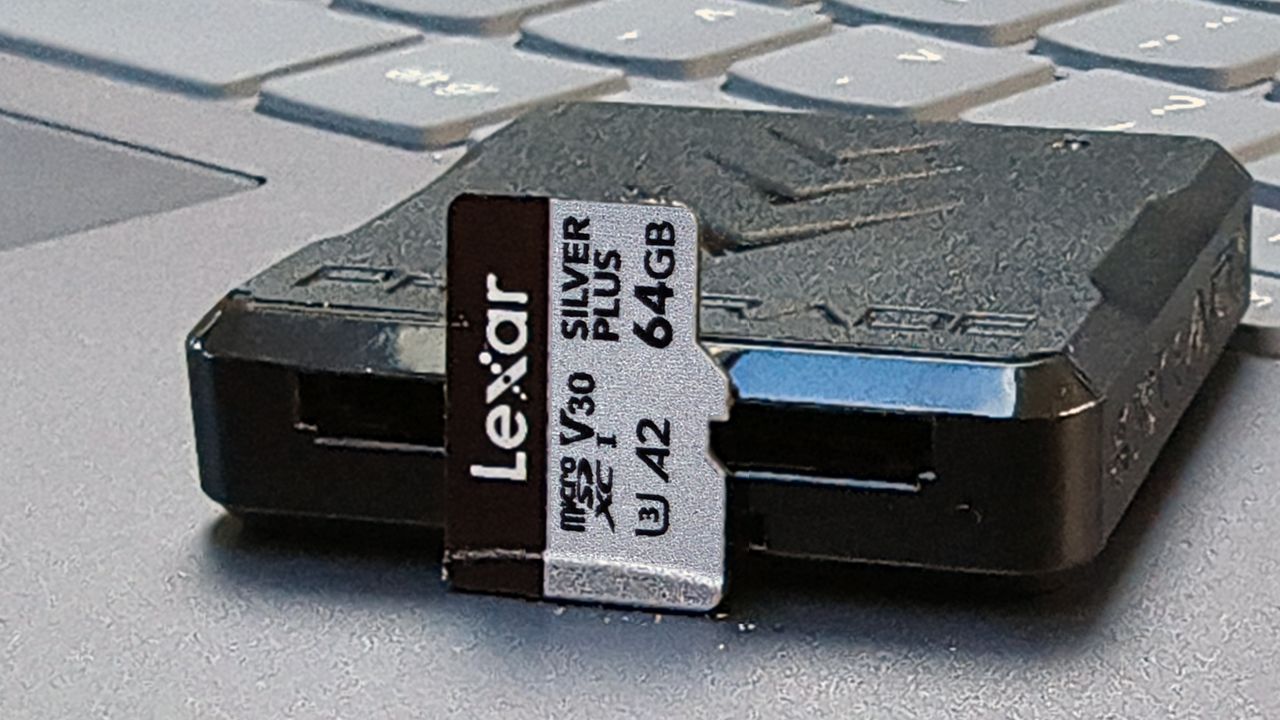
The Lexar Silver Plus is positioned as a fast, versatile UHS-I microSDXC card, capable of handling most demands. It costs less than most premium UHS-II microSD cards, yet with read speeds of up to 205MB/s and a maximum write speed of 150MB/s, it will handle 4K video recording or high-res RAW burst shooting with ease. An A2 app loading speed rating makes this card ideal for use in an Android phone, and you can choose from capacities ranging from 64GB right up to 1TB.
Read more: the best microSD cards
Performance
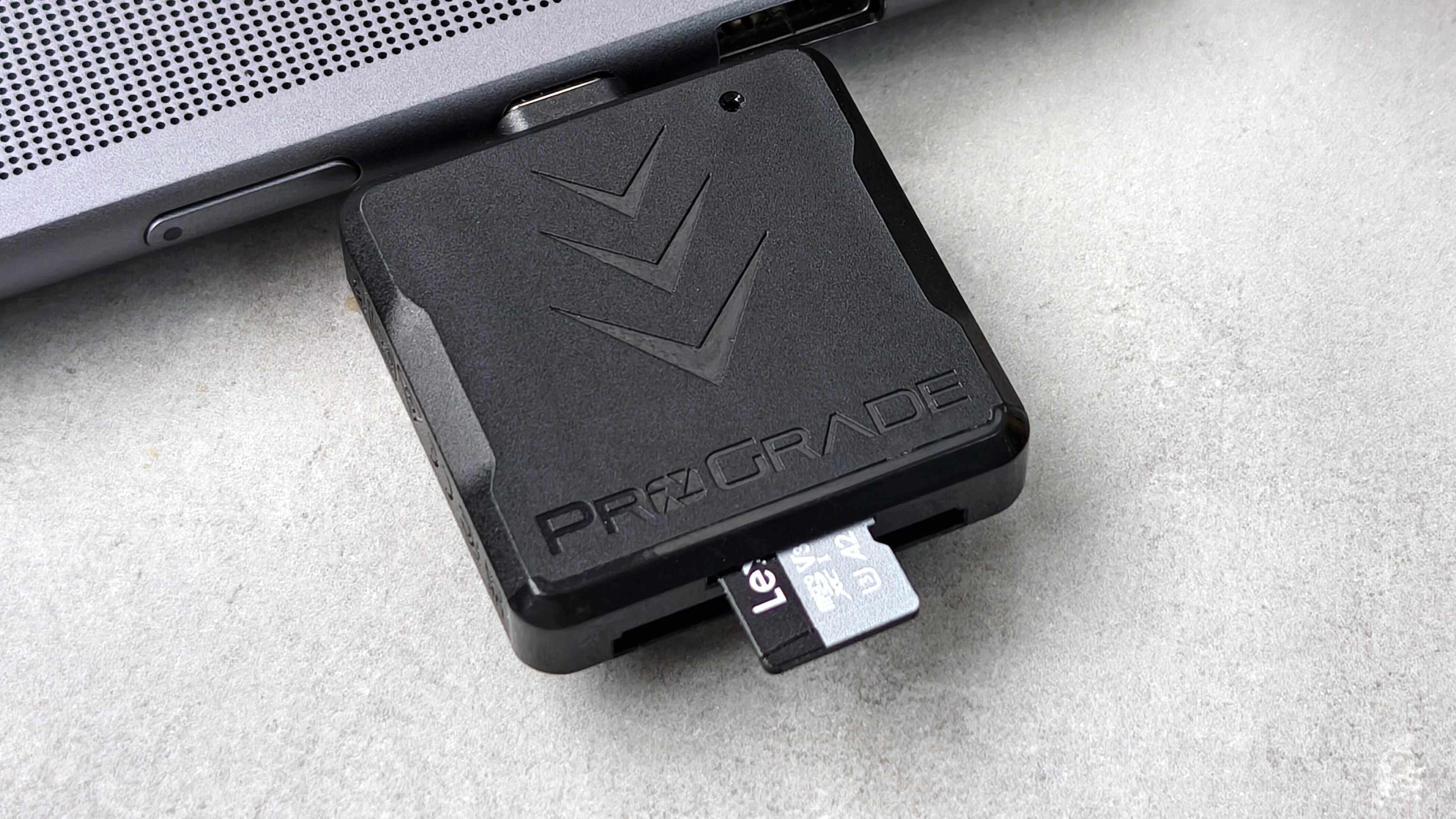
As is often the case, we were sent the smallest capacity version of the Silver Plus card to test. This 64GB model has a slightly slower write speed rating than other capacities in the Silver Plus range (100MB/s, vs 150MB/s for the 128GB-1TB cards), but it is very common for the lowest capacity card in any manufacturer's memory card range to have a slower speed rating. To see whether the performance hit with the 64GB card is as large as Lexar claims, I used the CrystalDiskMark storage benchmarking app which should extract the maximum possible speed from any memory card. I then plugged the microSD card into a fast USB4 Windows laptop via a ProGrade Digital PGM0.5 SD card reader. This USB 3.2 reader has a maximum bus speed of 625MB/s, so there's no chance of it or the test laptop bottlenecking the Lexar Silver Plus during testing.
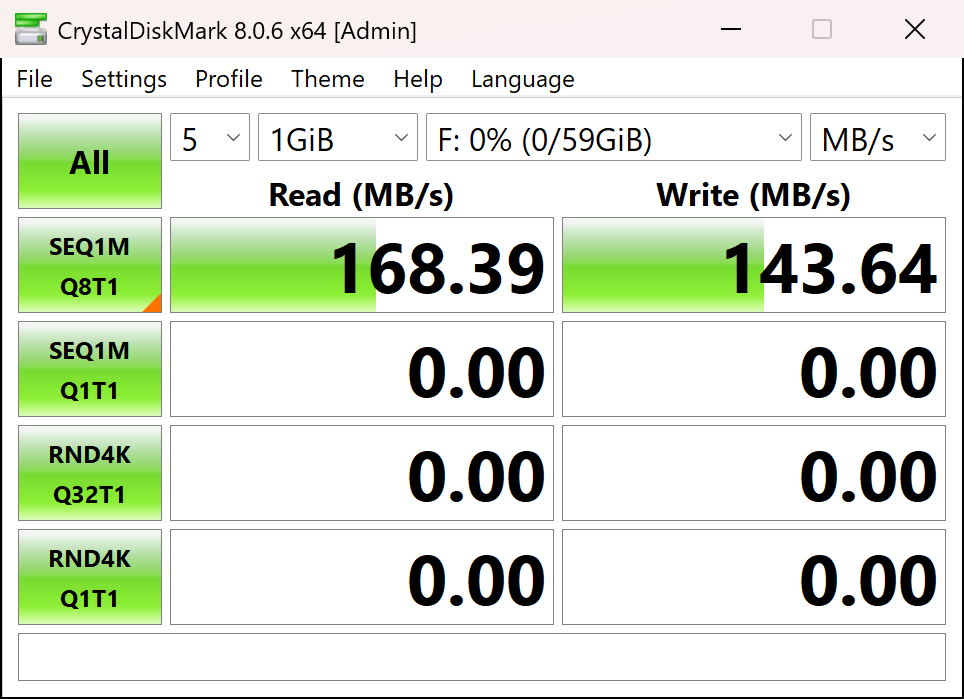
And the speeds I recorded turned out to be pretty good. 168.39MB/s read speed is a bit short of Lexar's 205MB/s claim, but it's far from sluggish. Write speed matters more when the card is used in a camera, and here a 143.64MB/s maximum is very rapid. In fact, it's much closer to the 150MB/s rated speed of the 128GB-1TB Silver Plus cards than the 100MB/s advertised write speed of our 64GB test card, so there doesn't actually seem to be a penalty for choosing the lowest capacity.
All well and good, but what sort of transfer speeds can you expect in real world use? To assess this, I timed how long it too to read one large video file and a folder full of images from the card, and how long it took to write them back to the card (one big file will always transfer faster than a folder of small files totalling the same size).
Lab results |
Read (peak) |
Write (peak) |
|---|---|---|
Large single file |
153 (157) MB/s |
131 (135) MB/s |
Multiple small files |
152 (157) MB/s |
126 (131) MB/s |
In this test the Silver Plus clocked an impressive 131MB/s average write speed when transferring a video file, and this speed didn't drop much when writing multiple small images. Read speed was also very consistent regardless of file type, though as with the CrystalDiskMark test, it's a pity read speeds weren't closer to the advertised 205MB/s.
Verdict
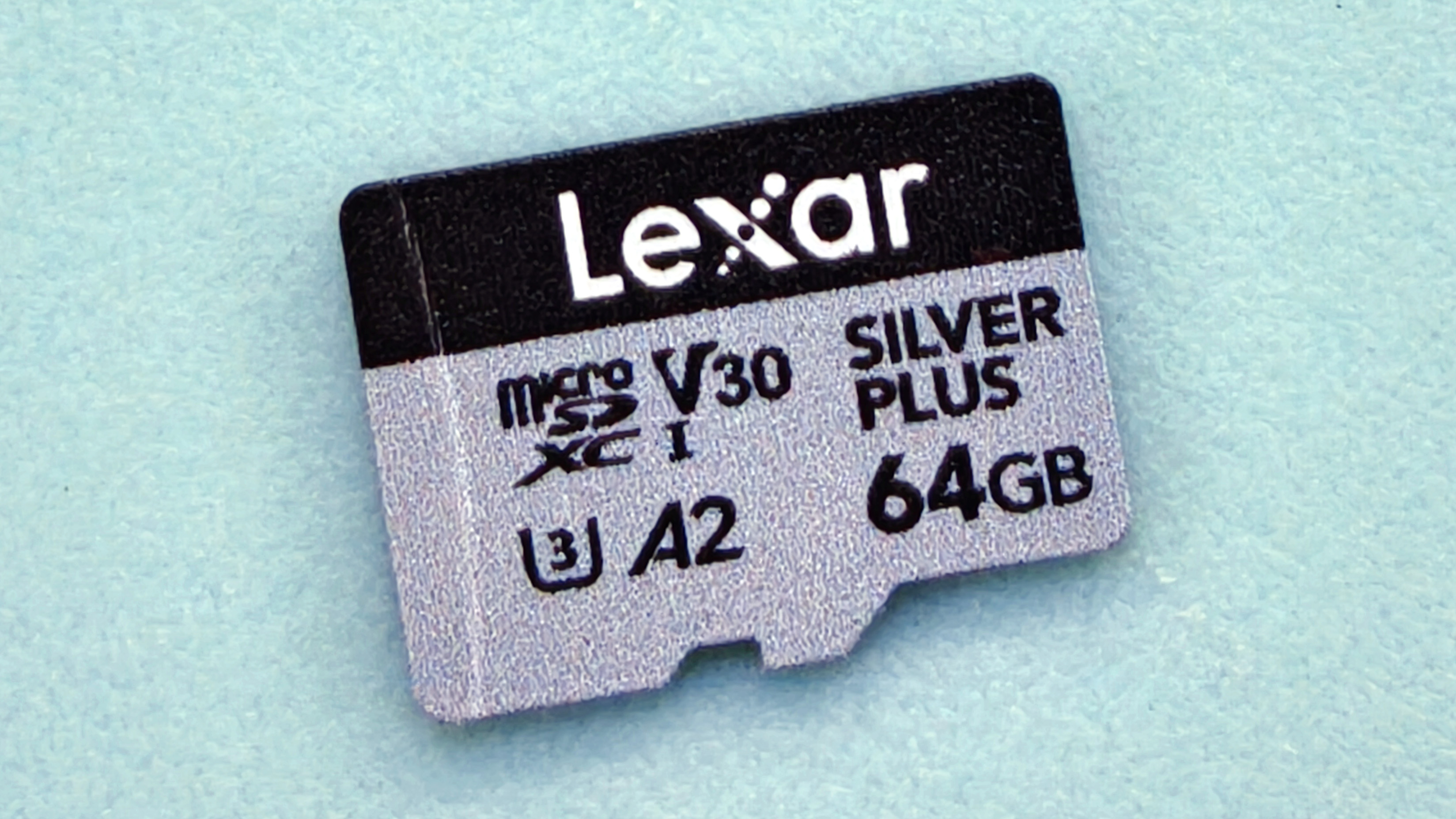
I was impressed by the Lexar Silver Plus microSDXC card. While there are faster microSD cards out there, a real-world write speed of almost 150MB/s means there really aren't many situations where you'd actually need a faster, pricier card. It's a pity I couldn't get closed to the claimed 205MB/s read speed, but write speed is more important when the card is in a camera, and I've got no complaints there. Factor the excellent range of capacities and quick A2 app loading speed and you've got a microSD card that will excel in pretty much any compatible device. Currently the 256GB capacity is the one to go for, as it offers the lowest price per gigabyte of storage, although the 512GB and 1TB cards are almost as good value.