

The Lexar Gold Series CFexpress Type B cards feature a PCIe Gen3x2 interface which plays a part in enabling the fast data transfer speeds. Maximum read speed is a healthy 1900MB/s, and peak write speed is almost as impressive at 1500MB/s. Lexar also says its Gold Type B card can sustain a 1300MB/s write speed, which is great if you plan on using the card to record 4K, 6K or 8K video, where prolonged write speed matters more than peak speed bursts.
Lexar quotes an operating temperature range of -10°C to 70°C and a storage range of -25°C to 85°C for these cards, which should be more than enough for all but the chilliest conditions.
Specifications
Max read speed: 1900MB/s
Max write speed: 1500MB/s
Available capacities: 128GB, 256GB, 512GB, 1TB, 2TB
Build and handling
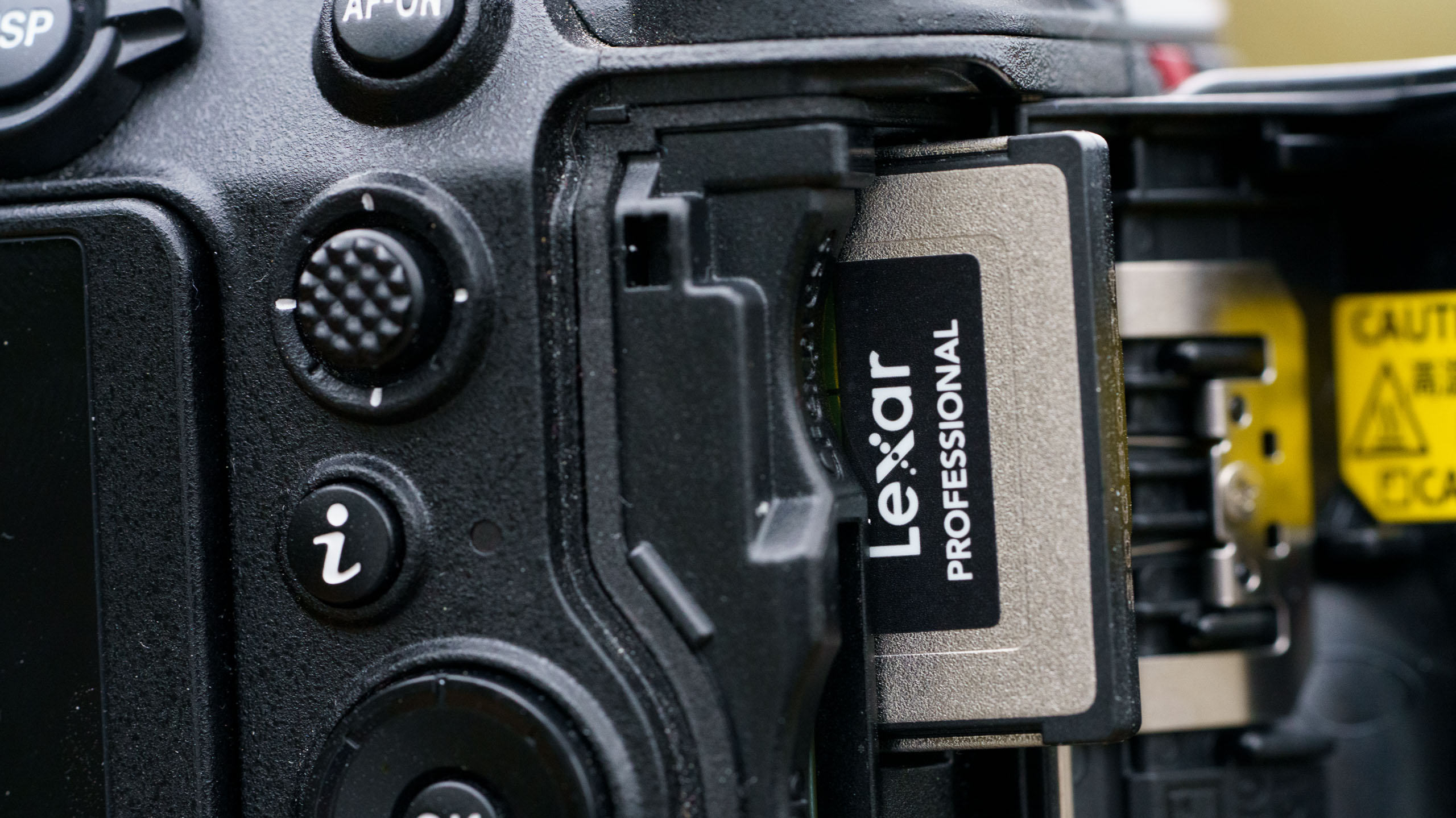
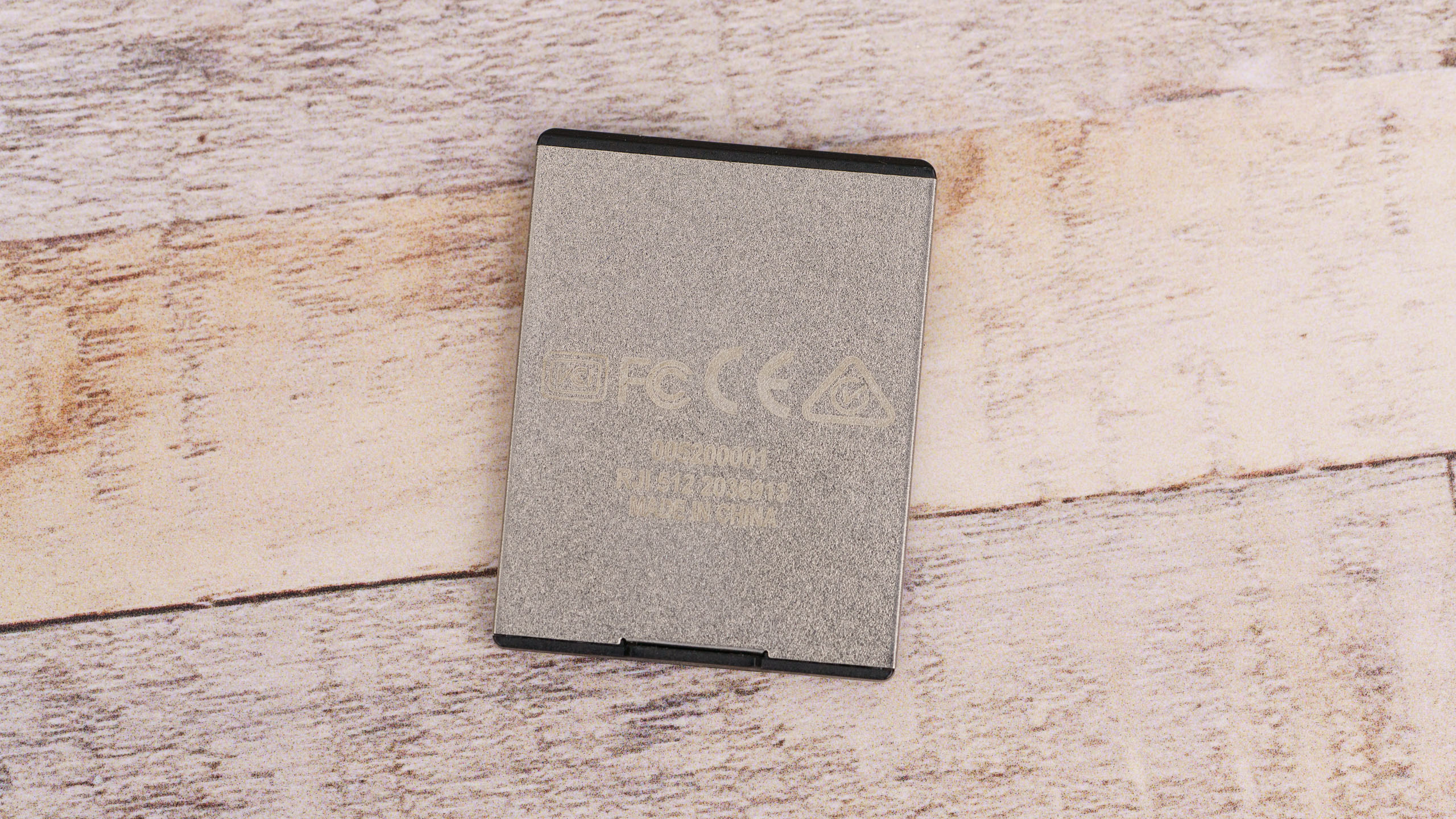
With quoted dimensions of 29.60 x 38.50 x 3.80mm, Lexar’s CFexpress Type B Gold cards are inherently less losable than an SD or microSD card. They also feel a lot more robust. This is particularly true here as the rear metal casing extends around the edges.
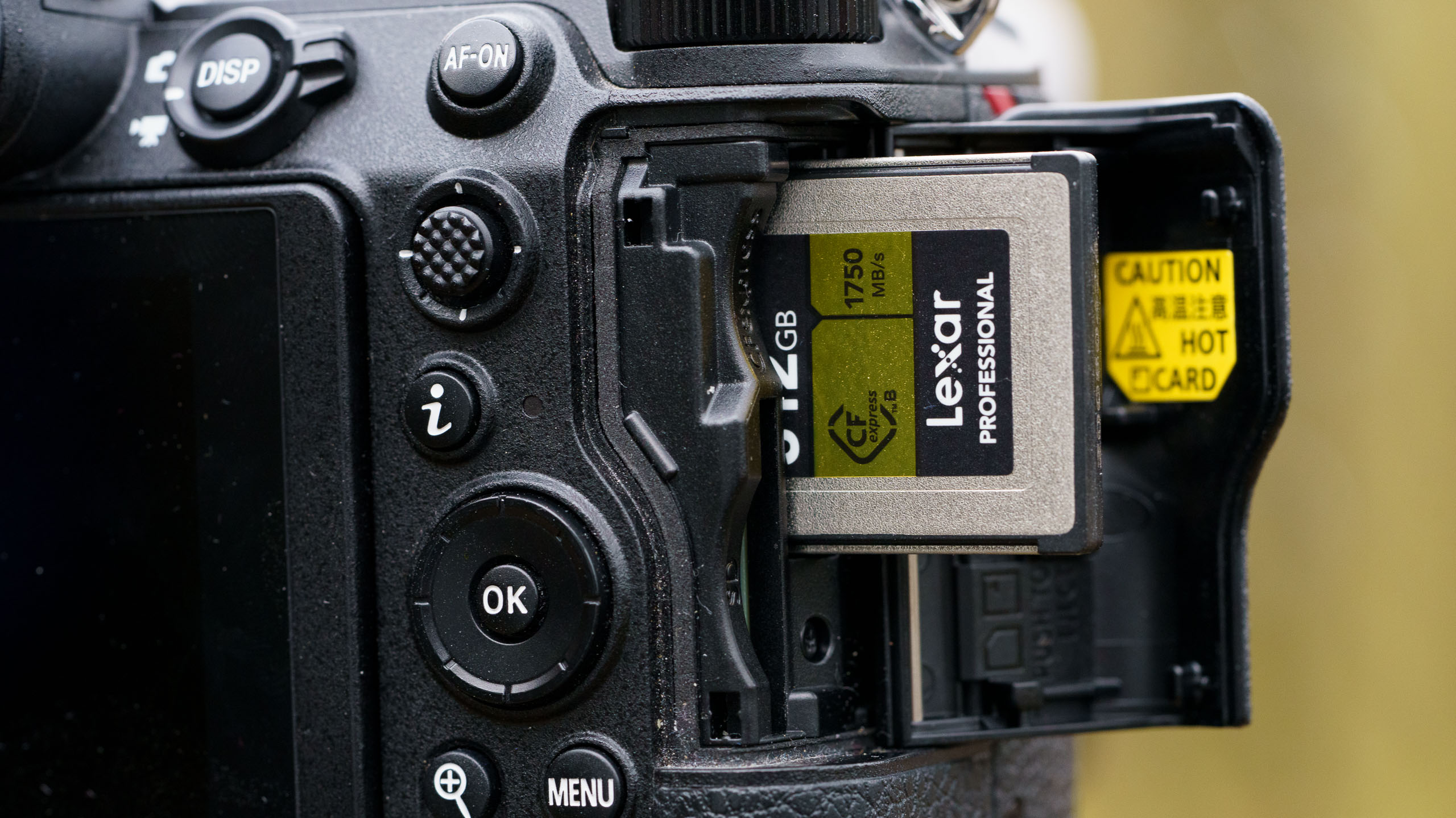
I tested a 512GB Lexar Gold Series CFexpress Type B card in the Nikon Z9 and Nikon Z7 II. It pushed smoothly and easily into the card slots on every occasion, and pops up promptly after being pressed to release it. As with the other cards, a thin lip on the end of the card gives some purchase when it comes to removing the card from the camera.
Performance
Shooting with the Lexar Gold Series CFexpress Type B card in the Nikon Z7 II, I was able to capture 146 Fine-quality JPEGs at 10fps, and 46 14-bit compressed raw files in around 5 seconds. Nikon quotes a maximum of 113 Large Fine-quality JPEGs and 48 Uncompressed 14-bit raw files, so the card actually performs significantly better with JPEGs than is forecast.
The Gold Series CFexpress Type B card also proved capable of recording 4K 60p footage for 30 minutes without a problem. Also, as I had the Z 9 in for testing, I was able to verify that the Lexar card is up to the task of capturing 8K ProRes video at 30p.
I also connected the Gold Series CFexpress Type B card to a fast Windows 11 laptop with USB4, via a USB4 Type B card reader. This ensures no speed bottlenecks so the card should perform at its best. With this test set-up I was able to achieve a maximum read speed of 1691MB/s, and a 1388MB/s peak write speed - not quite a match for Lexar's claims, but not far off.
Verdict
At less than $100/£100, the 128GB Lexar Professional CFexpress Type B Gold Series card offers great value for money. At the other end of the capacity scale, the 2TB version can be had for around $400, which is also highly competitive.
Some will argue that more modern CFexpress 4.0 cards (which are around twice as fast as this Lexar card) are a better buy. While this may be true if you exclusively shoot 8K Raw video and want to guarantee the highest possible write speeds, the reality is CFexpress 2.0 Type B cards like this are still more than fast enough for the vast majority of requirements, and are therefore better value for money for most people.