
Dates: Course begins Wednesday 13th April 2016
Course fee: £7,000
Fail again. Fail better. - Samuel Beckett
You’ve finished the first draft of your novel. Now you can start making your book realise its full potential. This can be a daunting task, especially when you’re facing it on your own. You may have structural weaknesses, loose ends, stilted scenes, characters who shouldn’t be there and some that are missing, thematic inconsistencies or problems you can’t even identify but which stop you from moving forward. This course teaches you how to understand what works and what doesn’t, and how to use this knowledge as a springboard for improvement.
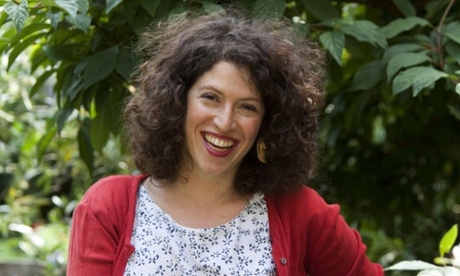
Under the tutelage of Charlotte Mendelson, you’ll learn to revise, rewrite and edit like a professional. Over nine months, you’ll learn to make brave and bold decisions, take literary risks, and improve your novel on every level.
The final draft is the most demanding part of the writing process, both technically and emotionally, and it can also be the most rewarding. This course offers a supportive atmosphere among a group of like-minded writers facing the same challenge and led by someone by who not only has done this many times before for her own work, but who is also an experienced teacher. Working in a close-knit class of just six people, you’ll receive in-depth feedback about every element of your novel.
Regular workshops and private tutorials deal with issues specific to your work, using apposite examples from literary history to inspire you to find your own way through any stubborn difficulties. Much of the course is focused on reading and writing. You’ll be expected to have the discipline and drive to push yourself to complete your work, including at least 8-10 hours of autonomous writing per week. It’s a demanding schedule, and it won’t be easy, but the satisfaction it offers is immense. And so are the potential rewards – at the end of the course, you’ll be given the opportunity to meet editors from major publishing houses and to talk to an established agent about your work.
If you’re interested in signing up for How to finish a work of fiction and would like more information please email masterclasses.support@theguardian.com or contact us on +44 (0) 20 3353 3099 between 9.30am and 5.30pm, Monday to Friday. If you’d like us to contact you, please click here and tell us what time works best for you.
Course programme
The course will consist of three teaching semesters and one semester of independent work.
Week 1: Introductory session - Wednesday 13 April
There will be an extended discussion about the nature and purpose of the course, its etiquette and expectations, and the ambitions and preoccupations of the group. There will be dedicated time for students to present themselves and their work to the wider group and a schedule will be devised determining in which order the students’ work will be presented. At the end of Week 1, an exercise on structuring a novel will be set, and the results presented by each student ahead of his or her first workshop.
Weeks 2 – 4: Intensive critiquing and editing workshops -Wednesdays 20, 27 April and 4 May
Two students will receive feedback per session, for 60 minutes each. Students will have their work critiqued by the tutor and the group once during this period. There will also be a 30-minute session ahead of the workshop, which will focus on the overall structure of an individual’s project. This structure will be discussed and analysed by the course tutor and the rest of the group.
Weeks 5 – 7: Second cycle of intensive critiquing and editing workshops - Wednesday 11, 18, 25 May
Two students will receive feedback per session, for 90 minutes each. Students will have their work critiqued by tutors and the group once during this period.
Weeks 8 – 10: Learning through reading - Wednesday 1, 8, 15 June
Charlotte will select passages from literary works, which masterfully demonstrate the type of literary techniques and effects the students are trying, perhaps unsuccessfully, to achieve in their own work. The group will examine the way in which works are transformed from first draft to published text. The aim of this part of the course is to exemplify how, through close reading, deconstruction and textual analysis, students will be in a position to improve and develop their technique and approach to editing and re-writing.
Weeks 11 – 12: Individual private tutorials with tutors - Wednesday 22, 29 June
Three students will be seen each week. Students will receive complex and thorough assessment of their work, advice for improvement, editing notes, and a detailed plan of areas on which to concentrate during their period of self-reliance.
Weeks 13 – 24 - Wednesday 6 July to 21 September
Part of the experience of being a writer is learning to be alone, sitting with panic and resolving problems without a dedicated support network. During this period, students will be expected, for the most part, to work alone and move toward the completion of a final draft. However, there will continue to be a room for students to meet in once a week to discuss individual concerns as a group, should this be necessary. In addition, Charlotte will be available one and a half hours per week at an allocated time to deal with individual concerns, although the emphasis during this period will be for students to live with their problems, make their own choices and cultivate a sense of self-reliance.
Weeks 25 – 30: Toward the final draft – final intensive critiquing and editing workshops - Wednesdays 28 September, 5, 12, 19, 26 October and 2 November
Two students will receive feedback per session, for 90 minutes each. Students will have their work critiqued by tutors and the group twice during this period. By week 30, students should be near to completing their final draft. At this point students will have the opportunity to meet with an editor from a major publishing house.
Weeks 31 – 34: Individual private tutorials with tutors - Wednesdays 9, 16, 23, 30 November
Three students will be seen each week. Students will receive final editing notes, and specific advice on any areas to polish or re-draft. Students will have the opportunity for two individual sessions, each of 1-hour duration, during this period.
Week 35: Practical session on the publishing process - Wednesday 7 December
Charlotte will address the practicalities of preparing work for submission to agents and publishers.
Week 36: Closing workshop - Wednesday 14 December
There will be a thorough summation of the course, followed by an opportunity for students to pitch their work to leading publishers and agents.
Note: Session dates may change - any changes will be discussed with the group
Profile of the course tutor
Charlotte Mendelson is an award winning author whose latest novel, Almost English, was Longlisted for the Man Booker Prize 2013 and the Baileys Women’s Prize for Fiction 2014. Her novel, When We Were Bad, was shortlisted for the Orange Prize for Fiction, and was chosen as a book of the year in the Observer, Guardian, Sunday Times, New Statesman and Spectator. She is also the author of Love in Idleness and Daughters of Jerusalem, which won both the Somerset Maugham Award and the John Llewellyn Rhys Prize.
Timings and specifics
The course will have places for 6 participants. The group will meet for one three hour session per week on aWednesday evening (6.30pm-9.30pm) for a period of 6 months, 3 months at the beginning and 3 months at the end of the course (see above for exact dates), at the Guardian building at Kings Place, London N1 9GU. please note the schedule may change and there are occasional sessions on a Tuesday evening. During the middle 3 months you will work in your own time, with weekly moments for telephone or face-to-face consultation with Charlotte if necessary.
Submission process and deadline
The course is selective and prospective candidates will be required to supply the following in their application:
• The first three chapters of a first draft or a single submission of no more than 5,000 words
• A brief contextual statement of what this work is trying to achieve
• A covering letter detailing why you feel the course would be of benefit
Please note that prospective students may be asked to attend an interview to assess their approach to writing and their interest in the course.
Submissions can only be made electronically and should be emailed to: masterclasses.support@theguardian.com. On receipt of your application, you will receive an electronic confirmation.
The deadline for application is Wednesday 30 March 2016. All candidates will be notified as to the result of their application no later than 10 days post submission.
Please note that no correspondence will be entered into with unsuccessful candidates.
Assessment
Writers who successfully complete the course will receive a successful completion certificate from UEA, which will be made on the basis of ongoing assessment and a final submission of at least 15,000 words.
Refunds
Refunds will not be given to students who miss sessions or drop out of the course once the full fee has been paid.
More information
If you would like more information about the course or have any questions please email masterclasses.support@theguardian.com or contact us on +44 (0) 20 3353 3099 between 9.30am and 5.30pm, Monday to Friday. If you’d like us to contact you, please click here and tell us what time works best for you.













