On the margins
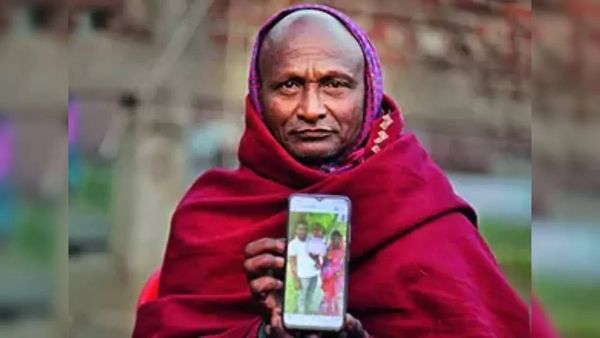
The physically and mentally challenged have always remained an unacknowledged underclass, permanently trapped in the peripheries of societal awareness, political mobilisation, and policymakers’ concern (Page 1, ‘Special’ report, “In the pandemic, the disabled remain an invisible minority”, June 15). The pandemic has exacerbated their misery. The makers of the Constitution seemed to have missed a group of people that defied a typical classification.
The Rights of Persons with Disabilities Act, 2016, except for a token increase in the reservation of government jobs and in the number of disabilities from seven to 21 conditions, has neither materially improved the lives of the disabled nor has helped to create a new narrative of social responsibility to help them.
What the disabled need is the elimination of physical and attitudinal barriers that make their everyday lives miserable. The architecture of public spaces and public utilities is distinctly disabled-unfriendly. Nobody seems to have noticed the lapse of the two-year deadline set by the Disabilities Act to ensure that the disabled get barrier-free access to public infrastructure and transport systems.
The biggest barrier the disabled face is not physical, it is attitudinal which is impervious to statutory exhortations. There is no formal or informal system to check whether the enacted laws have achieved the professed objectives. The disabled have another ‘handicap’. They are not a vote bank.
V.N. Mukundarajan,
Thiruvananthapuram
E-learning
Online education can never be a substitute for classroom education, however advanced the tools of learning employed in its teaching methodology may be (Editorial page, “Streamed education is diluted education”, June 13). Even if streaming is interactive, it has its own limitations, and interactions cannot be as comprehensive as in a classroom. Imparting theoretical knowledge of any course, especially the sciences, without demonstrating the applications of theory in a laboratory setting would be nothing but a mockery of education. Already, the majority of Indian graduates have been found to be unemployable for various reasons.
If online education is encouraged for the sake of boosting Gross Enrolment Ratio (GER), the employability of our graduates may soon touch its nadir. If online education goes mainstream, one would shudder to think about the quality of those graduates.
Kosaraju Chandramouli,
Hyderabad