Your item “Soul star Laura Mvula warns school cuts will leave music as the preserve of the wealthy,” (News, last week) reflects a situation that has worsened in schools over the last four years at least.
Plymouth Music Accord (a local charity) started funding tutors to go into secondary schools to teach children a musical instrument where there was an affordability issue. We now have six projects in five schools. Around 100 children have been involved, many having achieved GCSE and A-level in music, and several have secured places at some of the top universities, including Oxford.
For many years we have funded tickets to enable mainly primary school children to experience live musical concerts – up to 120 at a time.
What is really worrying is that it is noticeable that local schools have significantly reduced their staffing and spending on music because of continued Department for Education pressures on budgets and the focus on league tables. Music is disadvantaged in the current model, Progress 8. As a result, maths and English are prioritised because they attract double points. The study of A-level music is being centralised and not available in a range of schools as it used to be.
There is no doubt that the current government’s education policy is short-changing children whose aptitude is towards the arts and music. They and the arts economy will be poorer for it in the future – when it will be too late.
Peter Holt
Chairman
Plymouth Music Accord
Tax avoidance is a scandal, too
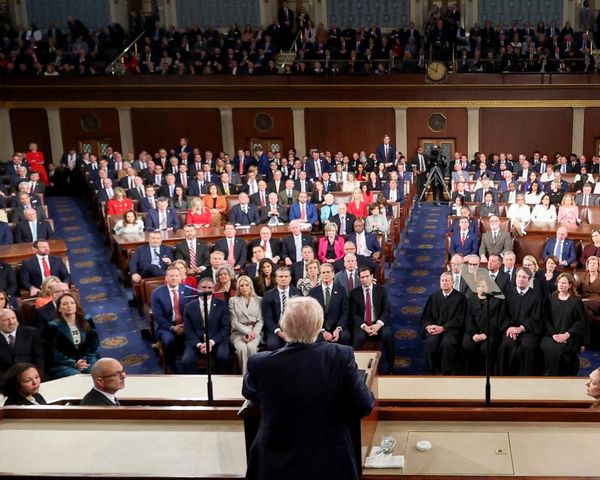
It is heartening that even leading Republican party figures have withdrawn their support for Donald Trump on the latest evidence of his reprehensible attitude to women (News, last week).
It is shocking, however, that the revelations regarding his non-payment of vast sums of tax have not produced a similar response. Neither has personal or corporate tax avoidance in this country or elsewhere ignited anything approaching the same degree of disgust among the public or politicians.
While tax avoidance is less direct in its effect, and its impacts and victims cannot be precisely identified, large-scale withholding of taxes does have hugely damaging effects on individuals.
In the UK we need look no further than lengthy waits in accident and emergency units and withdrawal of benefits from the sick and disabled on the grounds of lack of government funds and the need to “balance the books”, to find the real suffering inflicted by tax avoidance by the rich.
While sexual assaults on women and the sense of entitlement to such conduct displayed by Trump and others of like mind are despicable “sins of commission”, personal and corporate tax avoidance is a calculated “sin of omission”. The difference in the degree of outrage in the public and political response to these similarly dishonourable attitudes and behaviours reveals the distorting power that money too often exerts on people’s thinking.
Social justice demands that we come to see money and its uses in a very different light, and take its misappropriation much more seriously.
Teresa Belton
Norwich
The late abolition of slavery
In his letter last Sunday (“Britain’s role in slavery”), Chris Birch avers that Britain abolished slavery 40 years after France, that is in 1834. In fact, it was almost 100 years later.
As social scientist Joseph Hanlon has pointed out, the 1833 abolition act initially only applied to the West Indies. He writes: “By the early 1920s Britain was under increasing pressure from the League of Nations temporary slavery commission.
“In 1924 Britain was forced to admit that slavery was still practised in Sierra Leone [of all places – a colony founded for freed slaves!], northern Nigeria, Gambia, Aden, Burma and Hong Kong. … Slavery was finally abolished in Sierra Leone on 1 January 1928.” That is the date that should be used for the abolition of slavery in the British empire.
Ian Wishart
Chislehurst
Another wave of energy
Your excellent article “Tidal lagoon project could open the way for £15bn revolution in UK power generation” (News, last week) showed followers of renewable energy how important Charles Hendry’s forthcoming review of tidal lagoons will be. What was interesting was the implication that Swansea Bay was the only game in town, even described as a prototype. Yet there is an alternative scheme, using similar technology, ready to go at a quarter of the cost, which could provide substantial employment on the Lancashire coast.
My company’s plan for a tidal hydro electric plant at the estuary of the River Wyre could power more than 50,000 homes in Fleetwood, by producing more than 200 GWH of electricity every year, at a total build cost of well under £300m. The average energy cost over the project’s 125-year lifespan is significantly cheaper than either wind or solar power. Ours could be the first tidal power scheme in England, and Swansea Bay tidal lagoon could be the first such scheme in Wales.
There is room for both, especially if the Hendry review recommends the use of the tides around our coast as a key aspect of our future energy needs.
Bob Long
National Energy Wyre
Fleetwood