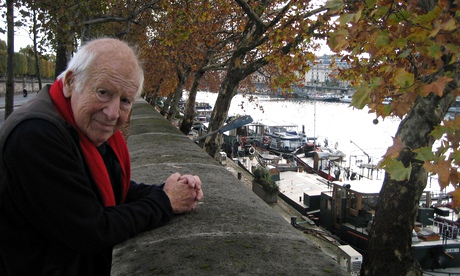
Pam Nixon writes: Back in the late 1950s, when I was a sixth former at Lincoln Girls’ high school, my boyfriend from the boys’ grammar school was always talking about his amazing history teacher, Charles Hannam, who was both a socialist and an atheist. His accounts of someone so unusual, holding views that were thrillingly outrageous in a provincial cathedral city at the time, made a deep impression on me. Such a lasting impression, in fact, that when many years later I wrote a semi-autobiographical novel, But I’ll Remember This, I based the hero on him.
After the book was published I received emails from several of the school’s old boys, now men in their 70s, who all recalled Charles’s brilliant teaching. Some even said he had changed their lives. Because I knew nothing of Charles’s history, I had made up a personal background for him in the novel. Eventually I sent him a copy of the book, with apologies for stealing his personality. He responded with great good humour and amusement, sending me in return a copy of the last volume of his own autobiography, Outsider Inside, which includes an account of his time as a teacher in Lincoln.
Although I never did meet Charles, my husband and I were at least able to attend his very moving funeral service at Spiceland Quaker Meeting House in Devon.
Frank Vigon writes: I worked with Charles Hannam when I was a young head of humanities at Henbury school in Bristol, and we became firm friends.
After his brilliant book on teacher training was published, he became persona non grata in a number of schools, but I am pleased to say that at Henbury we ignored that nonsense and hosted Charles and his students with great pleasure. He was a natural teacher who was incapable of just sitting at the back and watching students; he had a real delight in interacting with them.
He told lovely stories, and was full of stimulating ideas and thoughts, which flew out at a tangent to everything he did. He really was an “out of the box” thinker, curious and stimulating.
To my great regret I let our friendship lapse when I moved to the north west of England. It is to my even greater regret that he never knew that I became head of two comprehensives, but I think he would have been pleased to know that I ran both schools in ways that remained true to a child-centred approach that had been reaffirmed and encouraged by Charles. This was the central theme of his philosophy: the children came first and they deserved teachers who had been thoughtfully and carefully trained rather than just thrown in at the deep end.
I owed much to Charles during my early career, and his ideas and philosophies shaped my own. Thousands of children and many teachers for whom I have been responsible also owe a great deal to his fresh, open-minded thinking.
Pam Lunn writes: I was a student of Charles Hannam’s at Bristol University’s school of education in the early 1970s. Our cohort of young graduates arrived to start PGCE training in the midst of what we might now call the education culture wars. During our year’s training we were expected and encouraged to discuss big ideas and principles in education.
Charles was part of a rather extraordinary and inspirational team of lecturers and tutors who encouraged us to be “reflexive practitioners”, although that wasn’t a term in use at the time. This extended to inviting us to keep diaries of our probationary year, which resulted in his book The First Year of Teaching (1976), which used our writings to paint a vivid picture of the realities faced by teachers beginning their careers.
Charles was a key part of an approach in Bristol that saw education as a significant part of the development of human culture and civilisation, and schoolteachers as the carriers of that.