It did not take long to test the limits of Shabana Mahmood’s declaration that she would do “whatever it takes” to stop the boats.
Our exclusive report, shared with Le Monde, that the French authorities are planning to use nets to foul the propellers of dinghies attempting to make the crossing to Britain risks being a step too far.
What the home secretary meant, we hope, was “whatever it takes – without putting the lives of vulnerable migrants even more in danger”.
If it were possible to ensure that the migrant boats can be disabled and towed back to shore without loss of life, the French, who are being paid by the British government to intercept migrants, would be bound to consider the plan. But it seems unlikely that any such guarantee can be given.
Remi Vandeplanque, a French coastguard official and representative of the French customs union Solidaires Douanes, has warned that there is “no way” to carry out such manoeuvres safely, and that this tactic will lead to deaths.
“There are usually at least 50 people on board [a dinghy], sometimes more. Whatever you do, you will create panic or distress, and one day there will be a disaster. The first time, maybe it will be OK, once or twice. But it’s clear that one day there will be fatalities caused by this,” he said.
It might be argued that so many lives have been lost on small boats in the Channel – 26 have died this year so far – that the balance of risk lies with using aggressive and unconventional methods to prevent dangerous crossings in the first place. But that is not an acceptable calculation to make.
What is more, the symbolism of using nets to trap desperate people – most of whom, it must be remembered, are accepted as genuine refugees if they make it to the United Kingdom – is unpleasant. When The Independent warns of the dangers of dehumanising people, this is the sort of thing that we mean.
To be fair to the home secretary and the prime minister, they do balance their rhetoric of punitive measures with the promise of restoring safe and legal routes for genuine refugees. Indeed, one of the welcome features of the pilot scheme for returning migrants arriving by small boat to France is that it includes a small pathway for vetted refugees to come in the opposite direction.
This is a principle that should be expanded, so that there is an alternative to the dangerous route across the Channel. Once such safe and legal routes are established, then we can discuss unconventional attempts to foil the dinghy traffic.
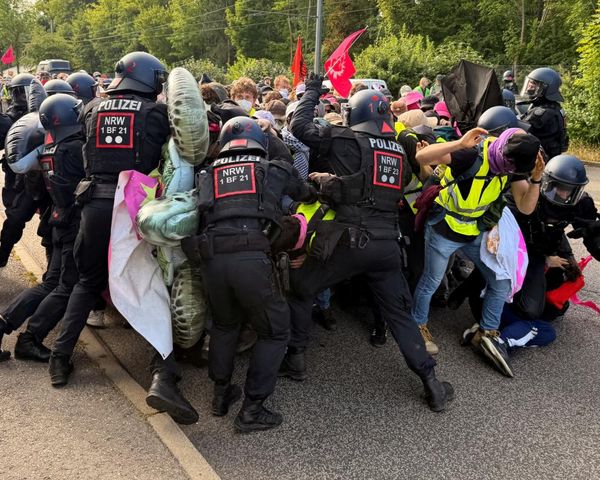
We accept, of course, that some of the necessary measures of immigration enforcement will make many compassionate people feel queasy. Stopping migrants from getting on the dinghies in the first place will involve some use of force. Puncturing the boats before they set off means the use of knives, which may be why there have been no further reports of the French authorities using that tactic since a few months ago.
At the other end of enforcement, many liberals will shy away from the use of physical restraint to put people who have no right to be in this country on a plane. But this cannot be avoided if we are to have immigration controls. Open borders may be an admirable ideal, but no country in the modern world has tried it in practice – for good reasons.
Therefore, those who want the fair rules, firmly enforced, that must underpin a compassionate asylum and immigration policy must accept that some measures will be hard to stomach. Those measures cannot include, however, anything that increases the risk to the lives of migrants.
Shabana Mahmood is showing much-needed leadership on the migration issue
Mahmood’s controversial asylum reforms could cause a political hurricane
From New Labour to Blue Labour – is Shabana Mahmood now the true heir to Blair?
‘Narrative of far-right lies’: Readers debate Labour’s asylum plans
Labour is at a crossroads on illegal migration
Angela Rayner’s reappearance is a further damning of Starmer’s leadership