This is an appeal to the idealists, the dreamers, the hankerers after a new, sunny kind of British politics, where the spending axe is buried and a thousand flowers bloom. Please don’t be beguiled into throwing away your vote.
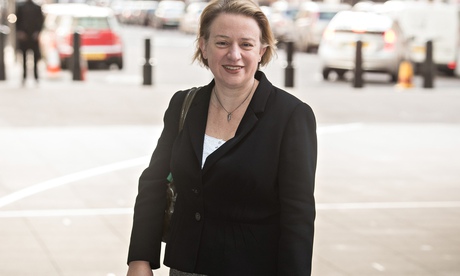
Watching the seven-strong leaders’ debate, which already seems an age ago, anyone on the left found it heart-warming to see the economic argument being turned upside down. Instead of starting from the grim necessity of deficit reduction, the Greens’ Natalie Bennett, Plaid Cymru’s Leanne Wood and the SNP’s Nicola Sturgeon rejected austerity, and instead prioritised human decency and fairness.
The Oxford academic Simon Wren-Lewis pointed out in a piece for the New Statesman last week that the Conservatives have been incredibly successful at redefining the purpose of economic policy as deficit reduction. “If you asked any economist what the aim of government policy should be,” Wren-Lewis wrote, “he or she would probably say it was to increase the welfare of the public, or ... to raise standards of living.”
The decision to fetishise deficit reduction has not only failed – the Tories promised to eliminate it, and instead have cut it in half, only as a share of GDP – it has also, Wren-Lewis reckons, been extremely costly, and not just for the economy.
Listening to Ed Balls’s masochistic, iron chancellor mood music, it is tempting to conclude that Labour is fighting on precisely the same ground as the Tories: for fiscal prudence and against irresponsibility; for the hawks in the City and against the benefit-scroungers.
Which is why the Greens and the SNP have seemed like a breath of fresh air, exposing the other parties’ mean-spiritedness, and lifting the debate above the tired old bickering about black holes and tax bombs.
But the SNP are deceiving the electorate, and the Greens are deceiving themselves. As the Institute for Fiscal Studies’ analysis showed last week, the SNP’s plans, which involve increasing public spending by 0.5% a year in real terms, while promising to reverse some of the Tories’ welfare cuts, are no more generous than Labour’s. In fact, the SNP would still be cutting spending by 2019-20, leaving public spending in that year lower than under Labour. As the IFS’s Gemma Tetlow pointed out, this seems to be “somewhat at odds” with Sturgeon’s rhetoric.
As for the Greens, their involvement in the debates has been refreshing indeed. The party has some practical and perfectly implementable plans, for improving energy efficiency by insulating the nation’s homes, for example. But their tax and spending plans involve some absolutely heroic assumptions. The IFS has questioned Labour’s ambition to raise £7.5bn from a crackdown on tax evasion; the Greens would bank on making £30bn from this – in addition to the £25bn a year they would hope to raise by the end of the parliament from a new wealth tax.
The principles are sound: wealth, in particular property wealth, is arguably undertaxed in Britain. But that figure of £25bn looks hopelessly overambitious. And £30bn is almost a fifth of the entire amount raised from income tax each year.
So while Sturgeon’s anti-austerity, anti-establishment rhetoric is little more than a pose, Bennett’s promises amount to fantasy economics.
And don’t be fooled by Balls’s posturing either. As the IFS confirmed last Thursday, the two main parties’ tax and spending plans put them further apart than at any general election since 1992. The electorate faces a clear choice.
George Osborne’s pledge to eliminate the entire deficit by 2018-19 requires an extra £12bn reduction in welfare spending, and £30bn of additional cuts in Whitehall departments’ budgets. Given how aggressively the government has already sought out savings over the past five years, it’s hard to see how either of those goals could be achieved without a fundamental reshaping of the state. Further deep cuts of the size Osborne is contemplating would also imperil a fragile economic recovery.
In reality, the Conservatives’ cuts look so impossible that a Tory government would probably end up having to increase taxes: the IFS reckons taxes rise by an average of £5bn in the 12 months after a general election. And given that one of their flagship manifesto promises is to cut inheritance tax for some of the country’s wealthiest homeowners, at a time when Britain faces a desperate housing crisis, it’s unlikely that equity will be top of Osborne’s mind when he decides where the burden should fall.
Labour, by contrast, needs to find what the IFS described as a “mere” £1bn or so more in cuts to meet its more modest budget pledges. Ed Miliband may wear a dark suit and live in north London, but he’s in a radically different political place from the Conservatives, even before you take into account Labour’s promises to increase the tax burden on the rich; get rid of zero-hours contracts; give employees a say on executive pay; and protect tax credits.
Sturgeon, Bennett and Wood have energised the economic debate over the past three weeks; but unless Labour forms the next government, they can do absolutely nothing to protect Britain from another savage round of cuts.