The worst crime the BBC committed with the Panorama programme that aired the week before last year’s US presidential election was that it gave Donald Trump a good reason to criticise it.
Mr Trump has built his career on untruths and wild exaggerations. He launched his presidential ambitions in 2011, casting “real doubts” about Barack Obama’s birth certificate – and he has debased the terms of the political debate ever since, mainly in America, although that contagion has spread.
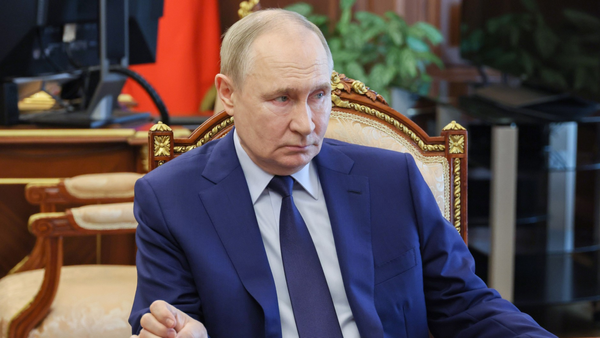
Possibly the most serious criticism of him, though, is that, in 2021, he tacitly encouraged his supporters to storm the Capitol in an attempt to overturn the results of a democratic election. Which is why those who care about democracy and freedom should be so dismayed by the BBC’s error in editing the footage of Mr Trump’s speech that day to make his incitement to violence appear to be more explicit than it actually was.
The BBC has played into Mr Trump’s hands. The corporation has handed him a moral and legal stick with which to beat it.
By misrepresenting Mr Trump, and by failing to correct the error and to apologise for it for far too long, the BBC cut the ground from under the feet not just of those who are critical of the US president, but of those who seek to defend the BBC as a priceless fortress of public service journalism.
The president’s claim against the BBC, filed in a Florida court, is without legal merit. The programme was not broadcast in the US, except to a small number of subscribers to extraterritorial services and to rule-breakers who know how to evade geographical restrictions. Mr Trump suffered no measurable electoral disadvantage in an election that he won, and his reputation is such that it is hard to see how the programme could have reduced his standing in the eyes of right-thinking people.
One guide to defamation law in Florida says, for example: “You must be able to prove that you suffered damages such as losing a job, the inability to get a job, or being denied some other opportunity as a direct result of the defamation.”
Mr Trump’s claim for $10bn (£7.4bn) damages is hypocritical, opportunistic and bullying. It is designed to intimidate the BBC into settling for a sum in the low millions – a tactic that seems to have worked with CNN and CBS in other cases. We trust that the BBC will stand firm, while acknowledging its mistake, and that all good people should come to its aid.
We understand why Sir Keir Starmer has to manage his relationship with Mr Trump in the British national interest. We therefore have no truck with Sir Ed Davey’s attempt to differentiate the Liberal Democrats by being more stridently anti-Trump, and “demanding” that the prime minister condemn this, that and the other. Everyone else who cares about the BBC should rally to its defence.
It is not perfect – no journalistic enterprise can be – but it is self-critical, always trying to be right, fair and independent. It is a flame of hope for millions of people around the world whose rulers seek to deny them the truth.
As the corporation faces the 10-yearly review of its charter – the current one expires at the end of 2027 – the same themes will be rehearsed as always. Is the BBC adapting to technological change? Is it biased, monopolistic or old-fashioned? Can a funding model based on a kind of poll tax still be justified?
These are all good questions, although the answer tends to resolve itself to a variant of Winston Churchill’s view of democracy: that the BBC is the worst form of public service journalism except all those other forms that have been tried from time to time.
As it is under attack from the great bully of the White House, everyone who cares about free speech, good journalism and democracy should be strident in defence of the BBC.
Donald Trump can smell money in his battle with the BBC
‘A self-inflicted situation’: Readers on Trump’s BBC lawsuit
How the BBC can fight the $10bn Trump lawsuit… and win
After the Bondi attack, Jews will wonder where in the world they can feel safe
This ‘crackdown’ on violence against women must be more than mere words